St Uny’s Church, Lelant: A Medieval Parish Church in Cornwall
Site at a Glance
- Rating
- 4.7
- Popularity
- Medium
- Country
- United Kingdom
- Primary era
- Medieval
- Eras represented
- Medieval
- Civilizations
- English
- Site type
- Religious
- Remains
- Church
On this page11 sections
History
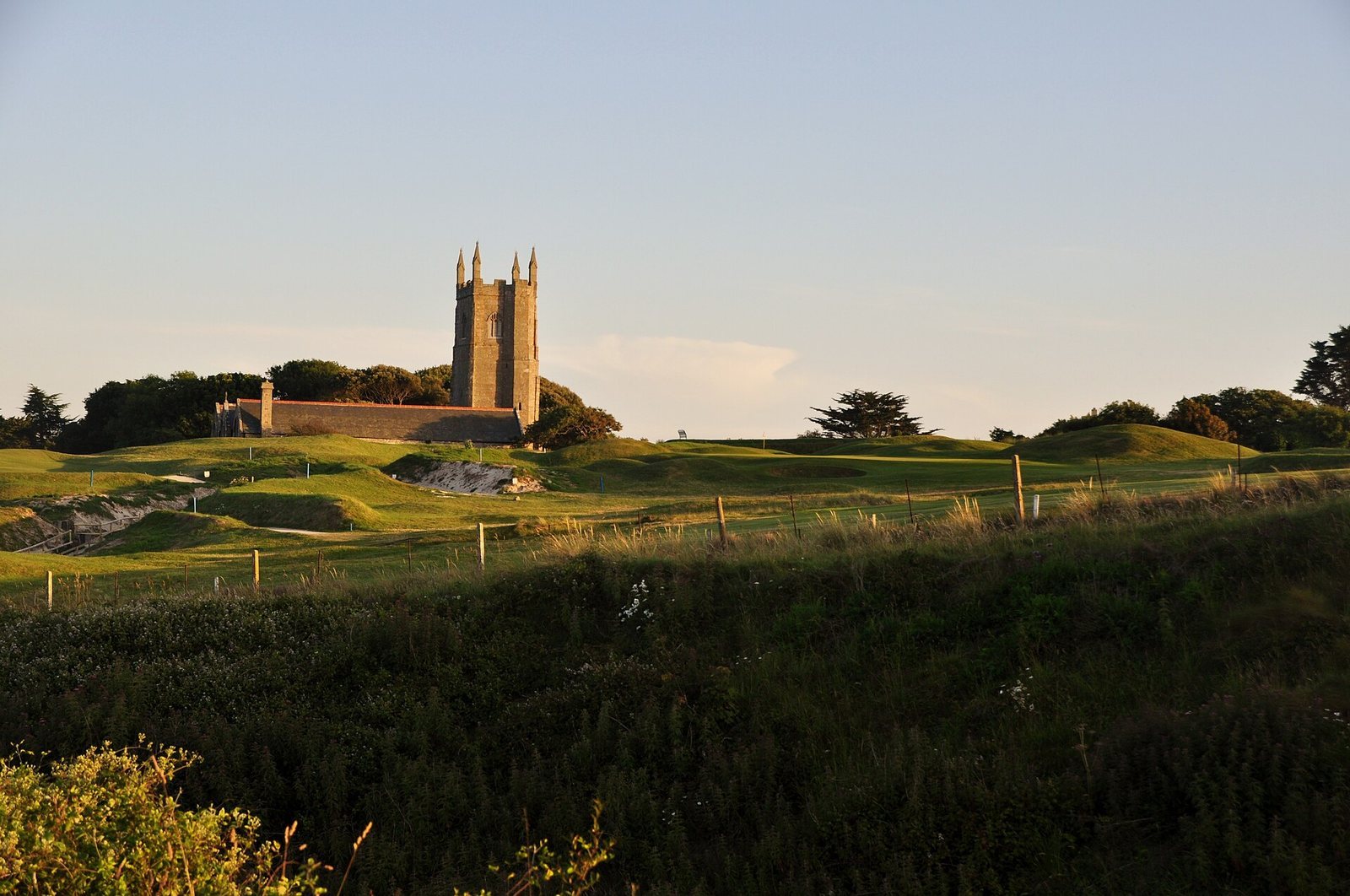
St Uny’s Church, Lelant, is the Church of England parish church in Cornwall, United Kingdom, and is dated to 1101. Its medieval fabric includes Norman arcades and Perpendicular windows, styles associated respectively with Romanesque architecture in Norman England and a later English Gothic style marked by strong vertical lines. The church belongs to the Diocese of Truro in the Province of Canterbury, within the Archdeaconry of Cornwall, and follows the Broad Church tradition of Anglicanism, which allows a wide range of theological views.
Medieval church and ecclesiastical changes
In 1170, Thomas Becket, Archbishop of Canterbury, referred to the church as the Church of Saint Euni. Around 1150, it had been given to Tywardreath Priory, a religious house governed by a prior. It was later sold to Bishop Bronescombe of Exeter. In 1272, Bronescombe assigned it to Crediton collegiate church, a church served by a community of clergy, and made the parish a vicarage, an office held by a vicar responsible for the congregation’s spiritual care.
Parish life and language
In the late 15th and early 16th centuries, the vicars resisted requests from people in Towednack and St Ives to secure burial rights in their own communities. The requests were granted in 1542. The vicars then moved their home to St Ives, where they remained for three centuries.
A 1572 court deposition describes an argument during an All Saints’ Day service. A woman used an insult in English, which witnesses distinguished from Cornish, described as the parish’s usual language at the time. The testimony gives Kernowek as the Cornish word for the language, Kalan Gwav for Allhallowtide, Dy Halan Gwav for All Saints’ Day, and Nos Kalan Gwav for Hallowe’en. Allhallowtide is the Christian period encompassing All Saints’ Day and All Souls’ Day. Related seasonal observances around the turn of November are known as Allantide in Cornwall and Calan Gaeaf in Wales. St Uny’s feast is observed on 1 February.
Repairs and later history
At the start of the 18th century, wind-blown sand had left the church in poor condition. The parish raised money for repairs in 1727, and a churchwardens’ entry from 1731 records a day’s labour removing sand from the building. J. D. Sedding restored the church in 1873.
Lightning damaged the tower’s north-west pinnacle on 12 December 1878. An inspection then found that the bell-chamber floor had largely rotted away, leaving the bells supported by their frame. Money intended for work on Truro Cathedral was redirected to make the tower safe. Repairs were completed and the bells rehung in January 1880. The church was designated a Grade I listed building on 4 June 1952.
The church holds a copy of a letter from Charles I thanking the people of Lelant for their support during the English Civil War, fought from 1642 to 1651. Henry Jenner (1848–1934), the first Grand Bard of the Cornish cultural organization Gorseth Kernow, and the artist Peter Lanyon (1918–1964) are also associated with the church through their burials there.
Remains
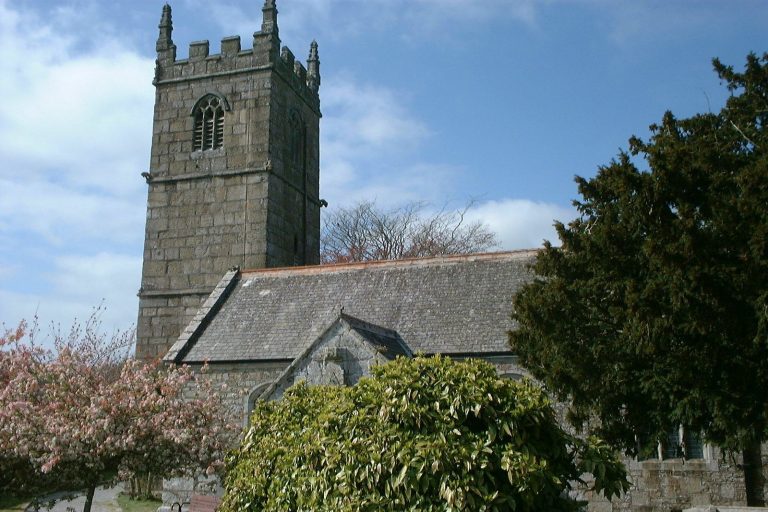
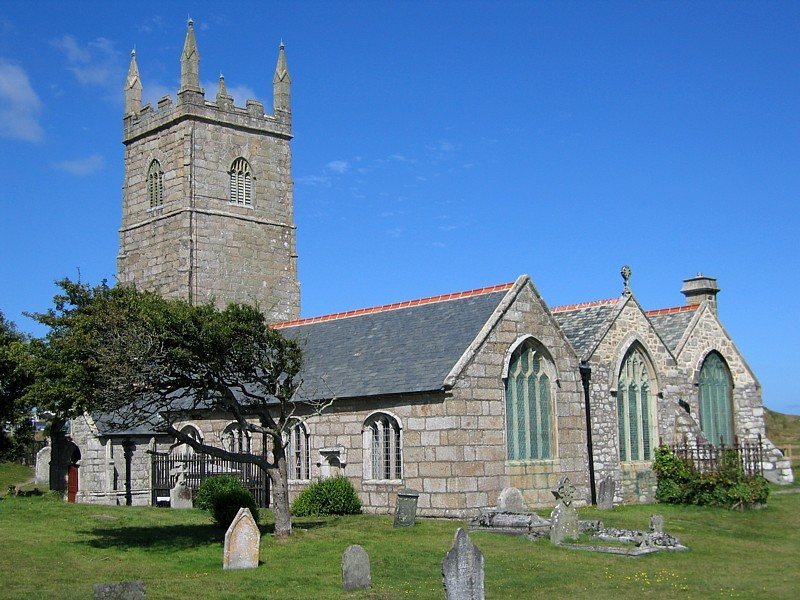
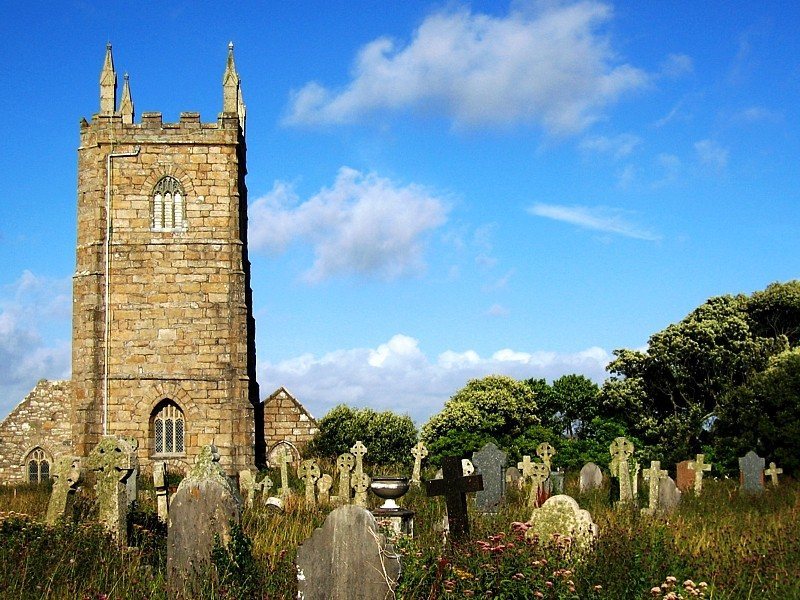
The medieval church is built entirely of granite. Its arrangement includes a nave, north aisle, north chancel, and tower, with four medieval crosses placed around the church and cemetery.
Church fabric and furnishings
Nave and windows
Parts of the nave, the main body of the church, have arcades, rows of arches, in the Norman style. All the windows are Perpendicular, a later English Gothic style whose designs emphasize vertical lines. Granite forms the medieval building throughout.
Tower, bells, and organ
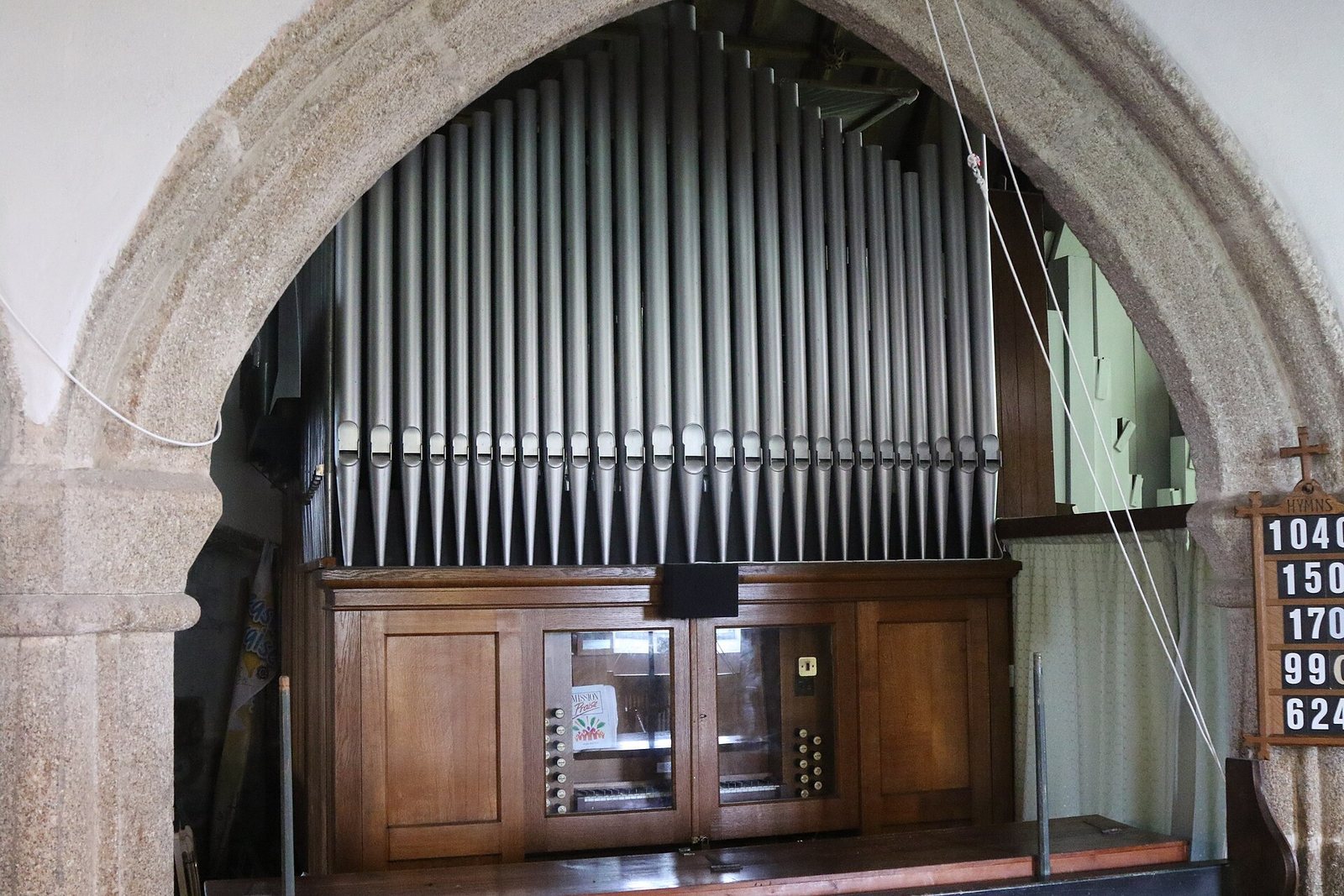
The tower contains six bells made by John Taylor of Loughborough. The two oldest date from 1836. The organ, made by John Hele of London, Exeter, and Plymouth, was installed in the north chancel and opened on 13 May 1913. It was later moved to the west end of the north aisle, then returned to the north chancel in 1989.
Churchyard crosses and memorials
Medieval crosses
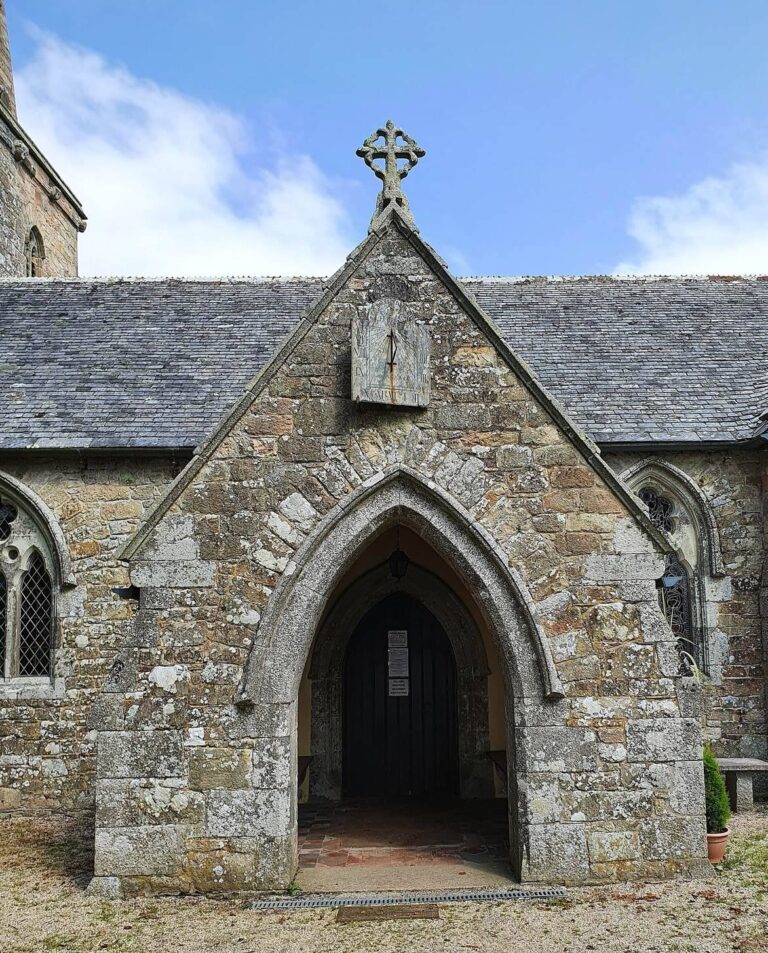
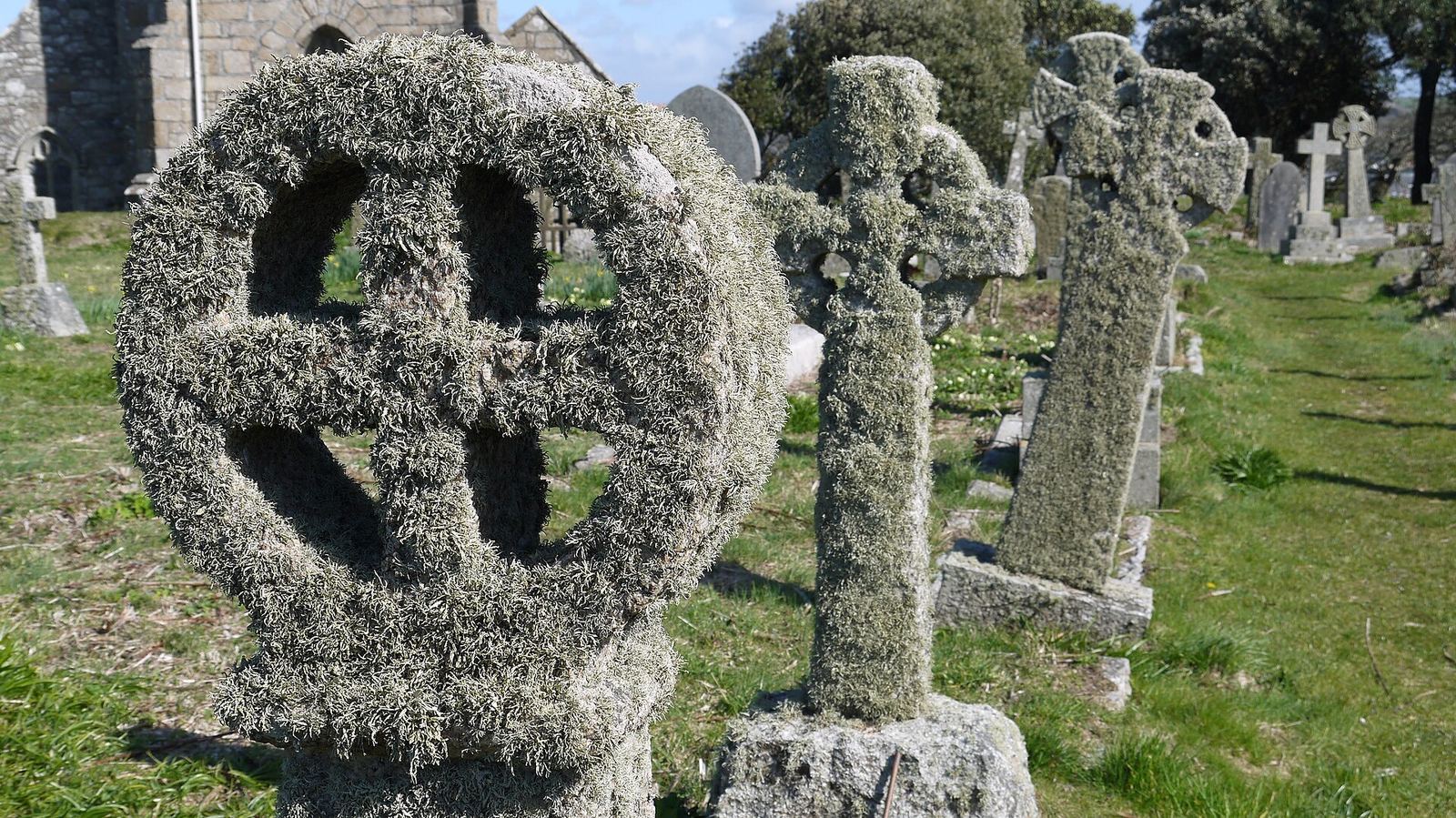
Four medieval wheelhead crosses are associated with the church. On this type of cross, the arms join within a circular ring. One stands to the left of the porch, two are south of the church in the churchyard, and the fourth is at the centre of the cemetery west of the church.
Memorials and burials
Two memorials commemorate men named William Praed, dated 1620 and 1833. The Praeds’ home was at Trevethow in the parish. The church is also the burial place of Henry Jenner, a Cornish scholar and language revivalist, and Peter Lanyon, a modernist painter associated with the St Ives art community.