Gokstad Mound: A Viking Age Ship Burial in Norway
Site at a Glance
- Rating
- 4.4
- Popularity
- Medium
- Country
- Norway
- Primary era
- Medieval
- Eras represented
- Medieval, Modern
- Civilizations
- Norse, Norwegian
- Site type
- Burial
- Remains
- Burial Mound
On this page8 sections
History
Gokstad Mound is a Viking Age burial mound at Gokstad Farm in Sandefjord, Vestfold, Norway. Also called the King’s Mound, it contains a ship burial dating to around 900, within the Viking Age, the period of Scandinavian history associated with Viking activity from the late eighth to the eleventh century. The burial provides evidence of an exceptionally high-status funeral from that period.
Burial and discovery
The mound was found to contain the Gokstad Ship in 1879. Norwegian antiquarian and archaeologist Nicolay Nicolaysen led its excavation from April to June 1880. Dendrochronology, which dates wood by comparing its tree rings with established sequences, places the ship’s construction in 885–892 and the burial chamber’s timber in 895–903. The burial therefore took place around 900, roughly a decade after the ship was built.
The person buried with the ship belonged to the Viking Age’s highest social stratum and had died in battle at about 40. The deceased was long identified as Olaf Geirstad-Alf, a petty king, or ruler of a smaller territory, who was traditionally said to be Halfdan the Black’s half-brother. The timber dates weigh against this identification, and the person’s identity remains unknown.
The grave had been reopened not long after the burial, a practice known as mound-breaking. Possible motives include searching for valuables, preventing the dead from returning, recovering objects believed to have special power, or performing a ritual.
Restoration and later research
Human remains were reburied in the mound on 16 June 1928. Following two years of restoration, the site was dedicated in July 1929. An event on 20 July drew an estimated 2,000 to 3,000 people, including King Haakon VII and Norwegian cultural and government officials. Haakon also spoke at an official ceremony later that month.
In 2007, the sarcophagus and coffin were removed because the bones were at risk of deterioration; the bones are kept at the University of Oslo. A university project begun in 2009 aimed to study the skeleton and grave goods, investigate the mound through surveys, soil sampling and excavation, and examine the surrounding landscape, including Viking Age farms and halls.
In January 2014, Norway submitted a World Heritage proposal that included Gokstad Mound alongside other sites. The World Heritage Committee returned the proposal for further work in July 2015. As of January 2017, its future remained undecided.
Remains
Mound and setting
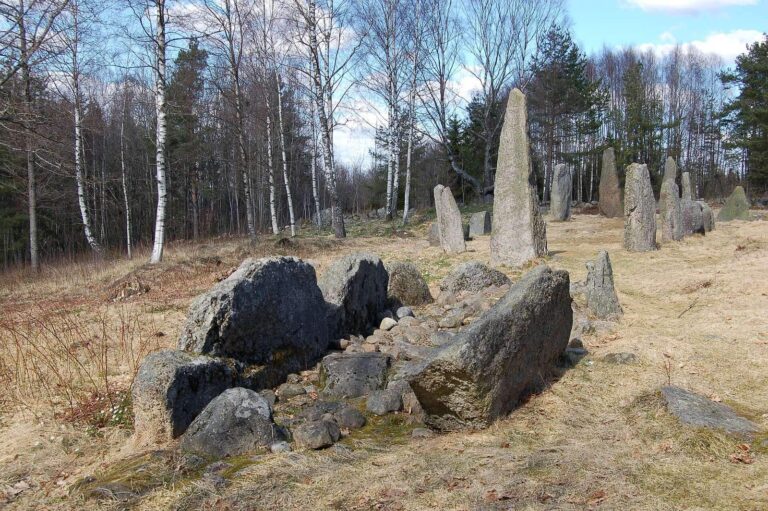
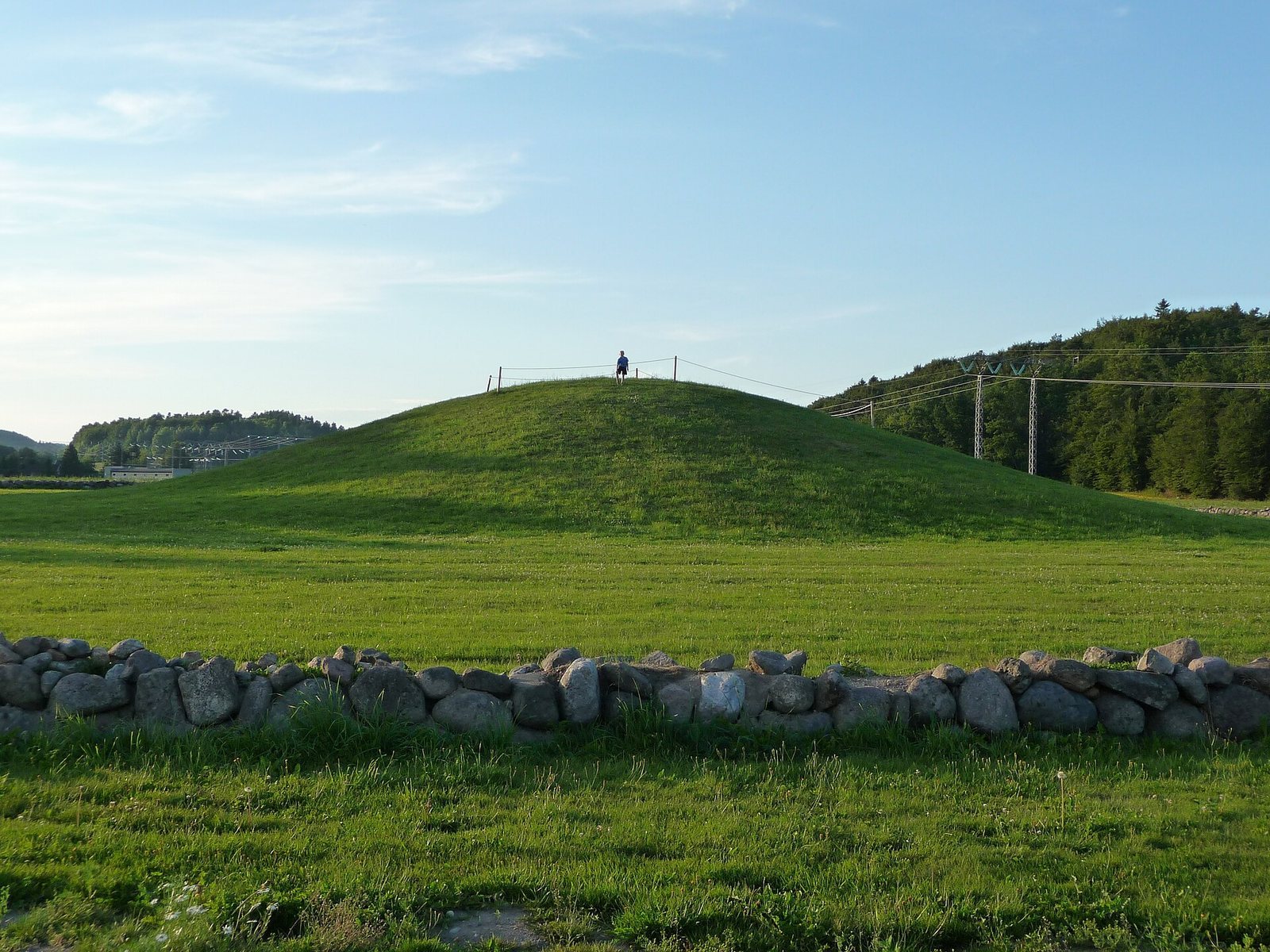
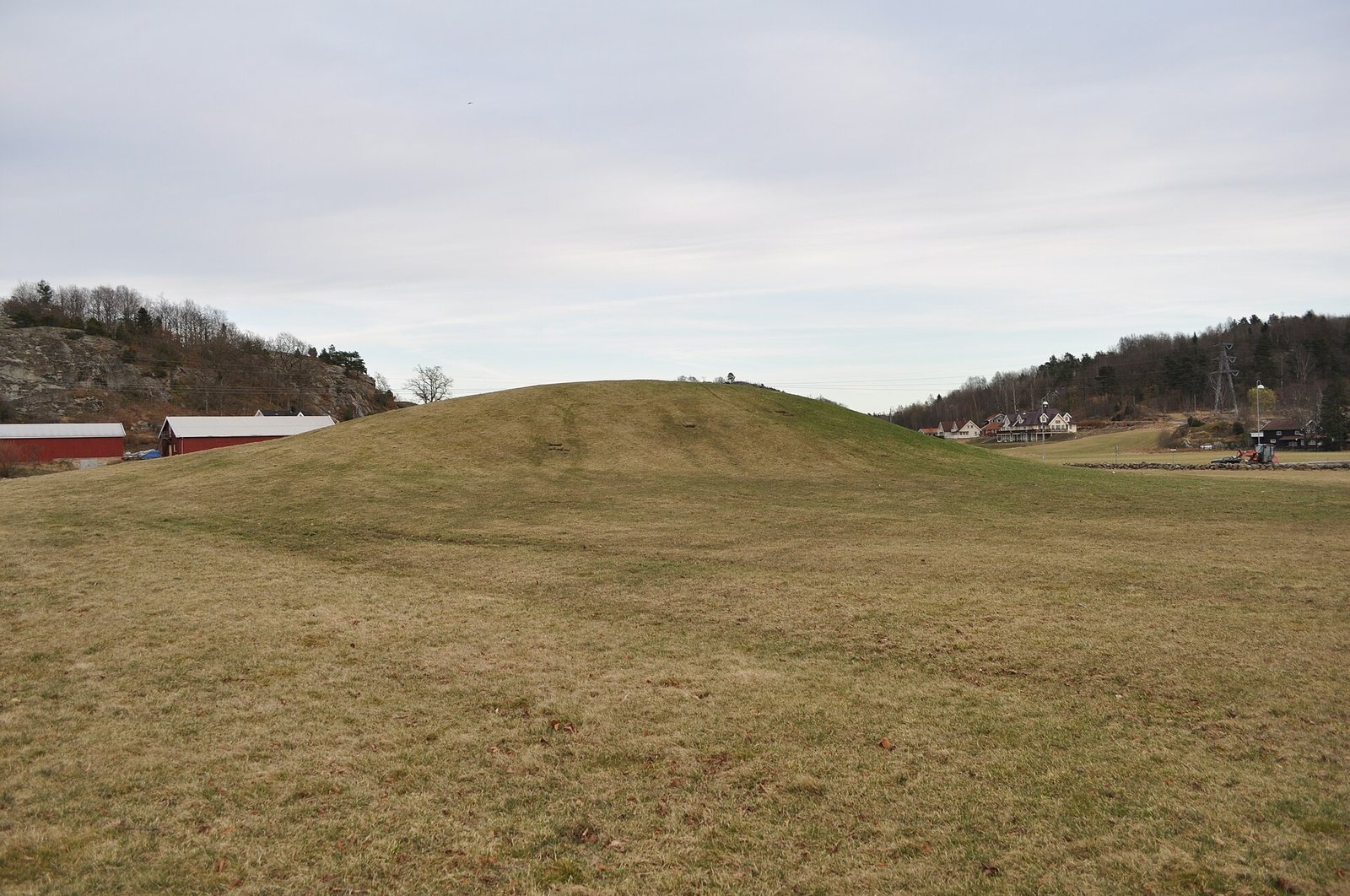
The mound measured 50 metres across and 5 metres high when measured during the 1880 excavation. In the Viking Age, sea level was nearly 4 metres higher than today, and the mound is thought to have stood close to the shore. During the 1929 restoration, a low stone fence was built around it and birch trees were planted along the boundary.
Ship and burial chamber
The Gokstad Ship was built mainly of oak and measures 23.8 metres long by 5.2 metres wide. It had 16 pairs of oars and is estimated to have reached a top speed of 12 knots. The ship is now displayed at the Viking Ship Museum in Oslo.
The burial chamber was shaped like a tent and contained the bones of a man estimated to have been 181–183 centimetres tall. His remains were secured to an oak plank inside a lead coffin, which was placed in a syenite sarcophagus, a stone coffin made from coarse-grained igneous rock. Several layers of birch bark covered the chamber. Remnants of silk interwoven with gold thread were found between the roof logs and may have come from a richly woven tapestry on the chamber’s inner walls.
Grave goods and animals
Objects placed in the grave included a gaming board with horn counters, fishing hooks, kitchen utensils, a sleigh, three smaller boats, and harness fittings made of lead, iron and gilded bronze. The burial also held 64 shields, 32 yellow and 32 black. Six beds were included: one had carved animal heads, while the other five were simpler in form. The animals buried with the deceased were two peacocks, two goshawks, eight dogs and twelve horses.
Heimdalsjordet
About 500 metres south of the mound, at Heimdalsjordet, ground-penetrating radar and magnetic surveys in 2011 detected settlement traces and several smaller burial mounds. Partial excavations in 2012 and 2013 indicated that some of the traces came from a marketplace.