St. Stanislaus Bishop Church in Jodłowa: A Baroque Roman Catholic Church
Site at a Glance
- Popularity
- Low
- Country
- Poland
- Primary era
- Early Modern
- Eras represented
- Early Modern, Modern
- Civilizations
- Habsburg, Polish–Lithuanian Commonwealth
- Site type
- Religious
- Remains
- Church
On this page7 sections
History
St. Stanislaus Bishop Church in Jodłowa is a Roman Catholic church in Poland, built between 1670 and 1679 in the Baroque period of European art and architecture. It is dedicated to St. Stanislaus of Szczepanów, an 11th-century bishop of Krakow venerated as a martyr and saint. A predecessor parish church on the site was destroyed by fire in 1656. The present building was consecrated in 1683 by Mikołaj Oborski, an auxiliary bishop who assisted the bishop governing the Krakow diocese.
Twentieth-century changes and protection
From 1900, the church served as a center of devotion to the Infant Jesus, Jesus Christ represented as a child in Christian devotional art. Its devotional figure was a copy of one from the Carmelite church in Prague, associated with a Catholic religious order. During the 1920s and 1930s, the nave was extended and the ceilings over the main nave and sanctuary area were changed.
On 3 November 1971, the church complex was entered in the register of historic monuments as A-151. The old linden trees around the church have natural-monument status, a designation for protected natural features.
In 2008, the devotional figure of the Infant Jesus was transferred to the newly built Sanctuary of the Infant Jesus, a shrine dedicated to that devotion.
Remains
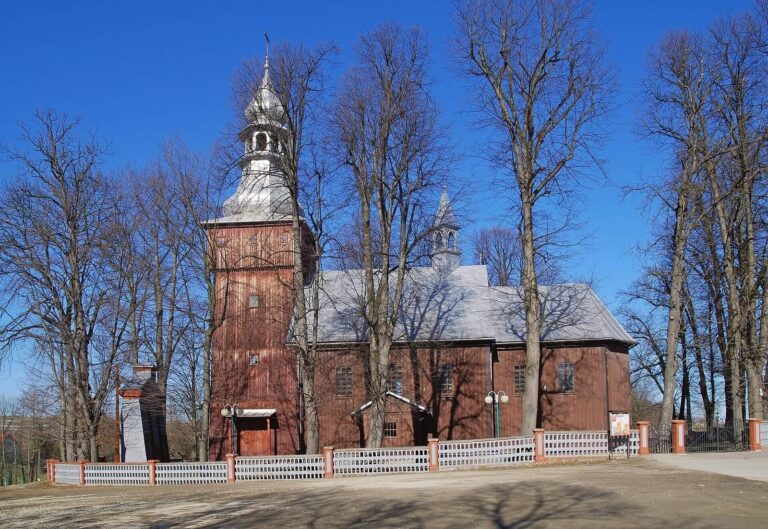
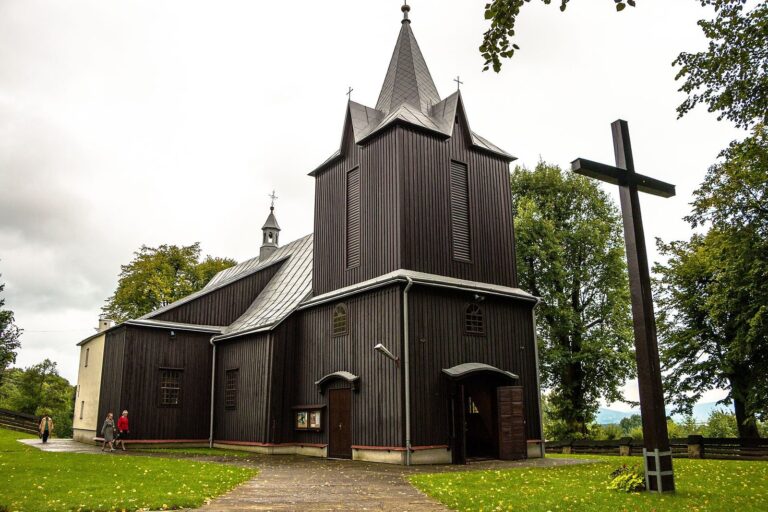
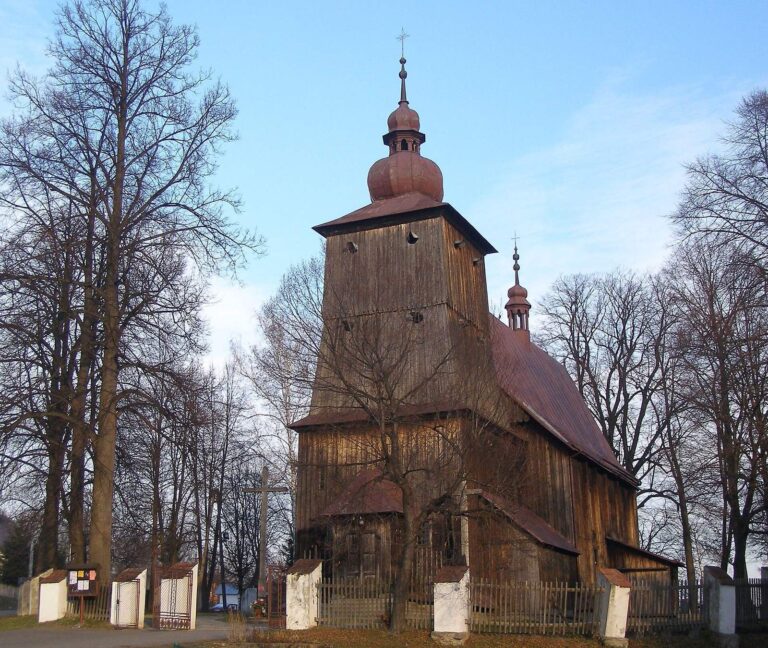
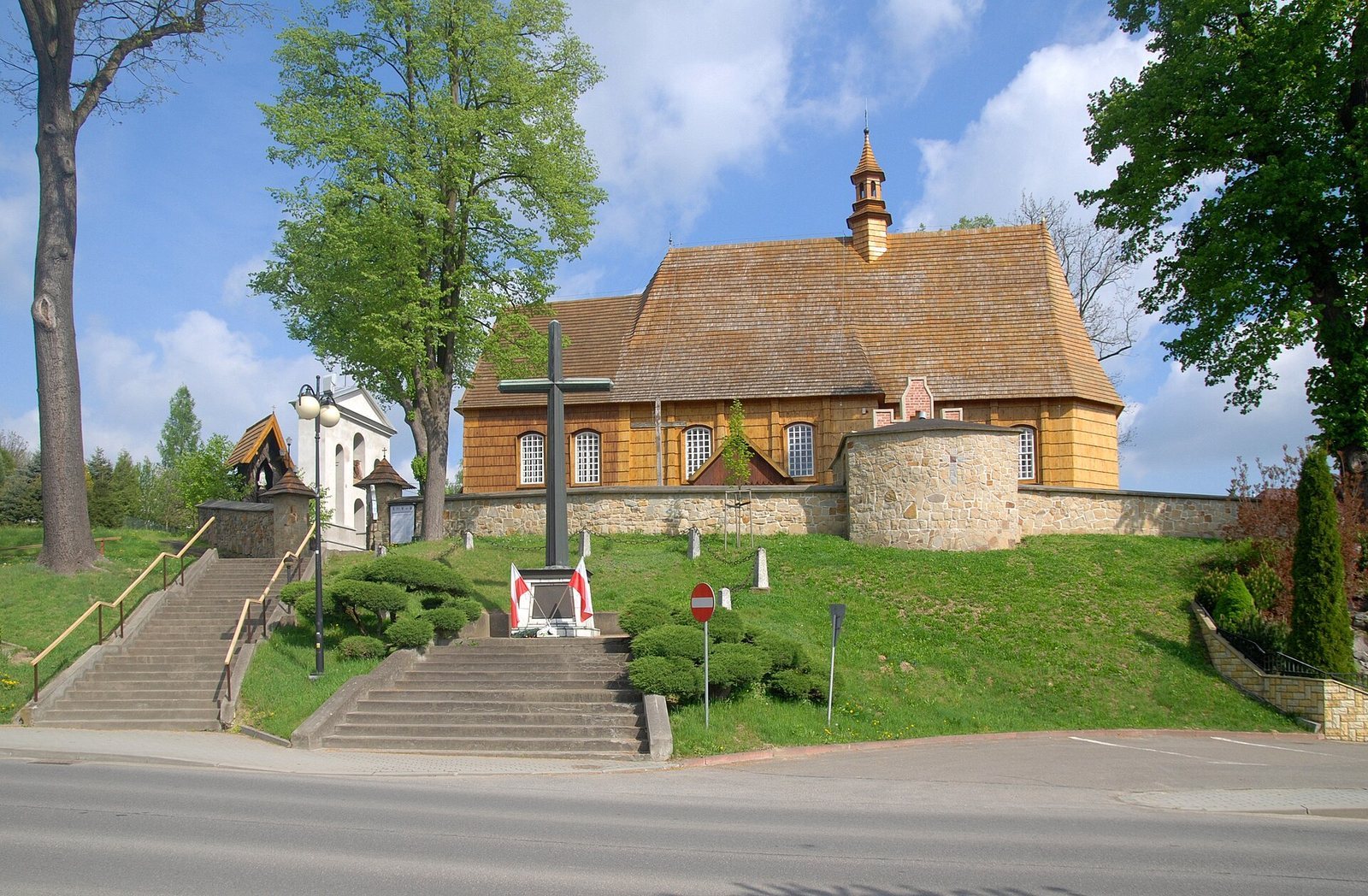
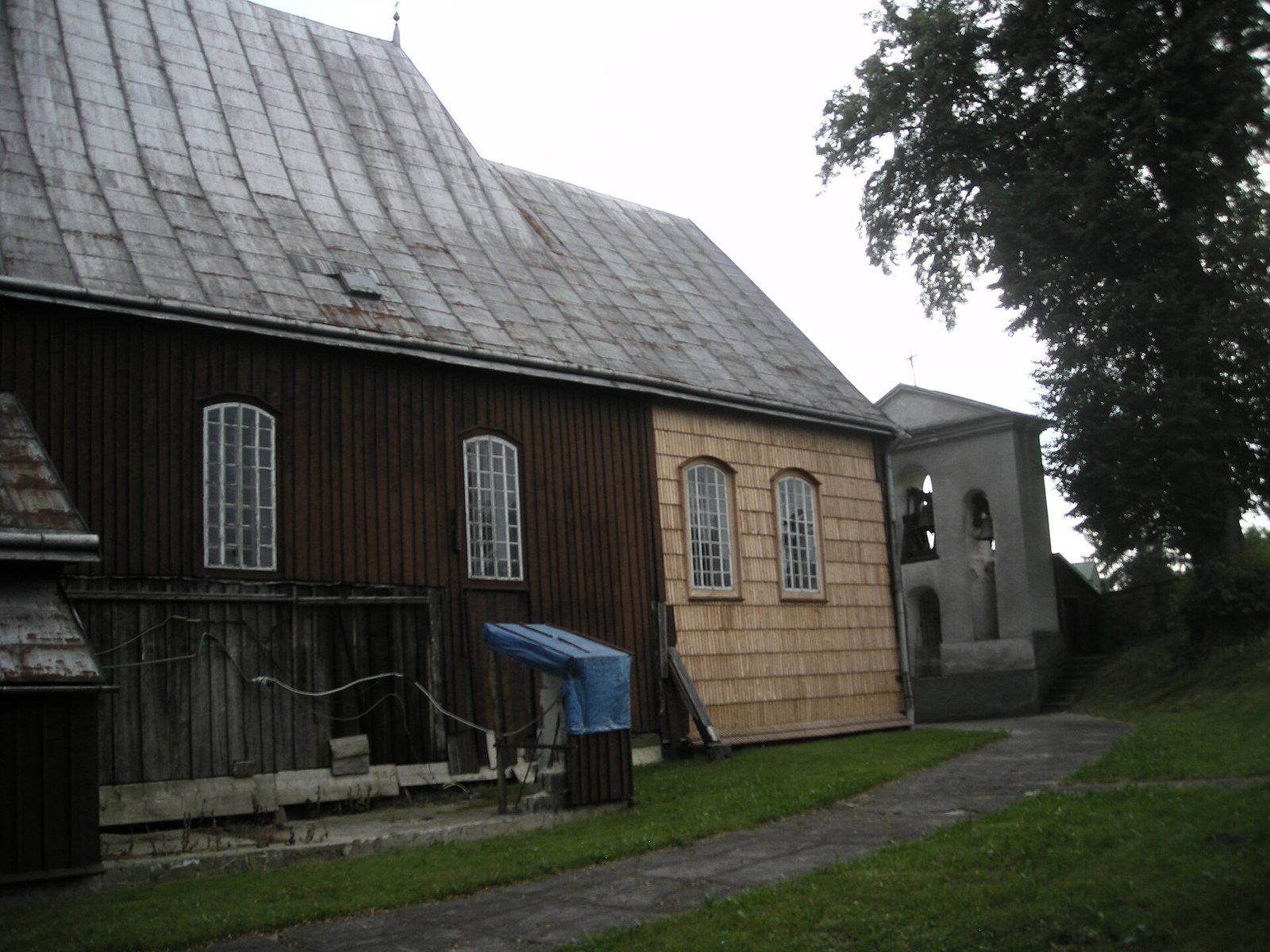
The church stands in the center of Jodłowa village, with its main axis aligned east to west and the sanctuary toward the east. It is a three-aisled timber building made from interlocking horizontal larch and fir logs, resting on a stone base.
Church building
Structure and plan
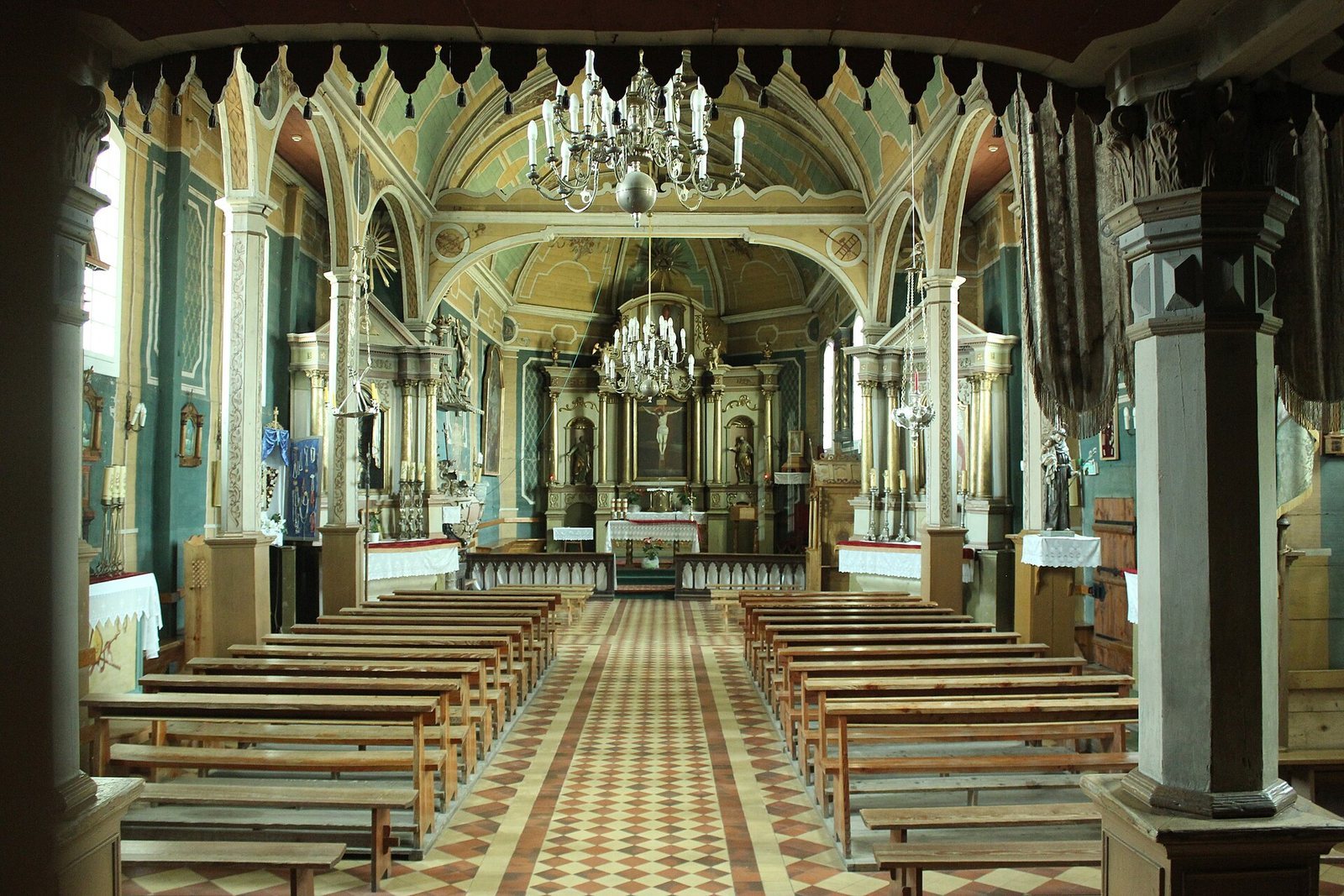
The church has a gable roof covered with sheet metal and a Baroque bell turret, a small tower on the roof for a bell. The presbytery, the area around the main altar, ends in three sides. Semicircular arches separate the central nave from the side aisles. The main nave and presbytery have false vaults, ceilings that imitate vaulting without forming full structural vaults.
Interior and furnishings
Figural and ornamental paintings in several colors cover the interior; Józef Dutkiewicz painted them in 1932. The main altar and the altars in the side aisles are Baroque. Two other side altars are Neoclassical, a European architectural style. The boat-shaped pulpit is Rococo, another European artistic style, while the stone baptismal font dates to the 17th century and is Renaissance in style, a European artistic period.
The main altar holds a painting of St. Nicholas, traditionally identified as an early bishop of Myra. Dated 1528, the painting was placed in the altar in 2011. Barbara Czajkowska-Palusińska undertook its restoration and conservation.
Bell tower and grounds
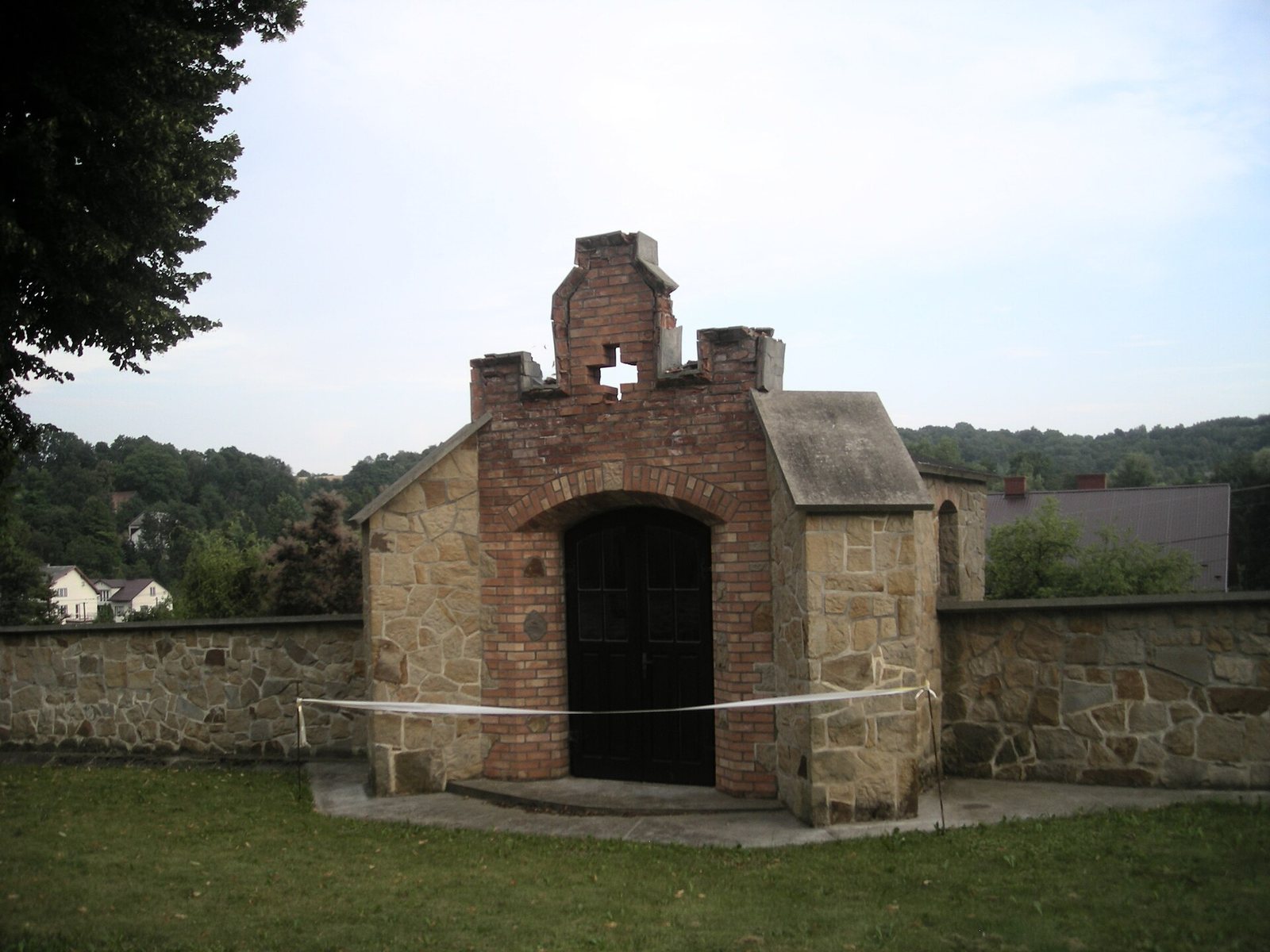
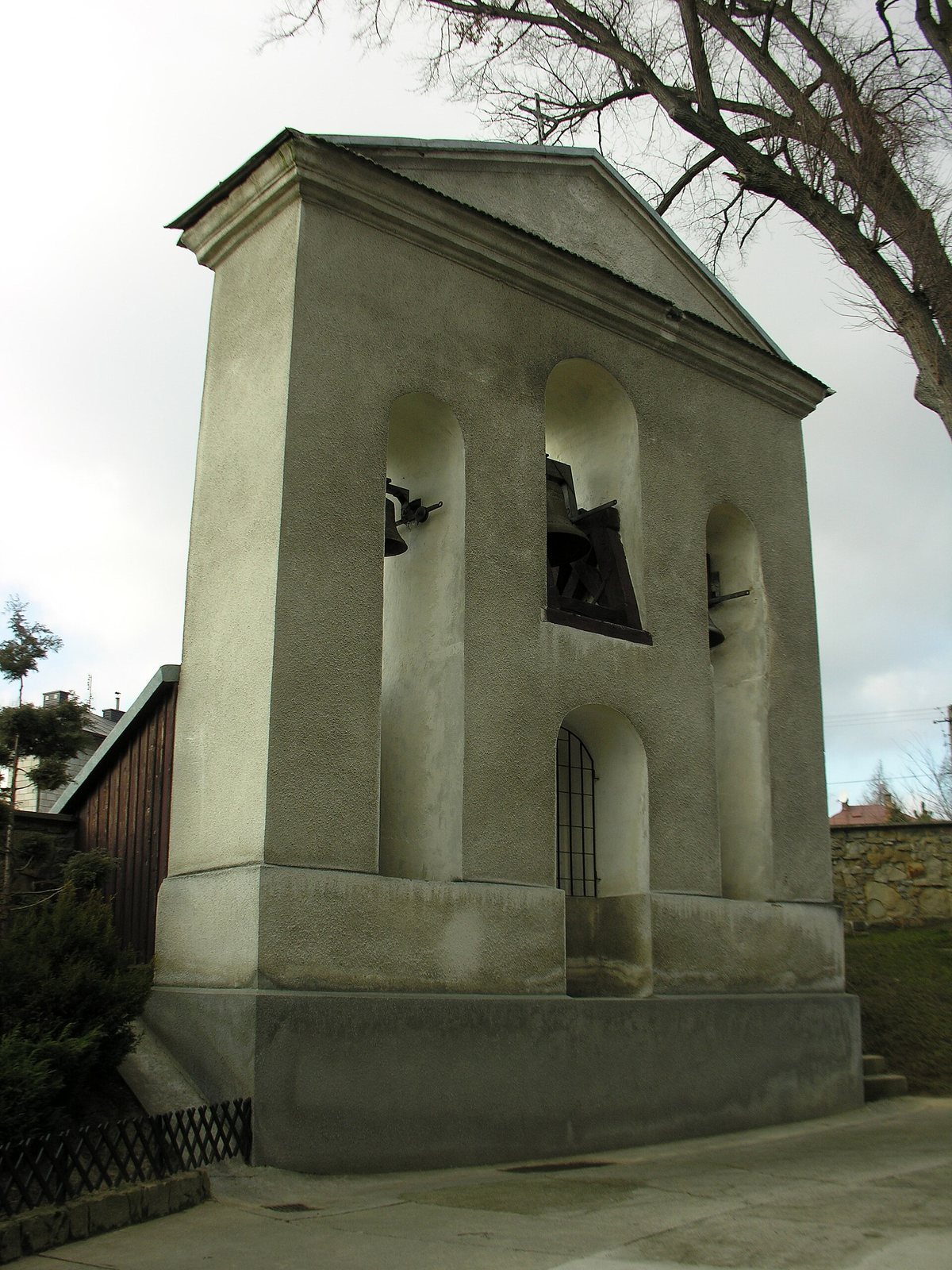
A freestanding Neoclassical bell tower stands beside the church. Dating from around the turn of the 18th and 19th centuries, it contains three bells. The complex also includes an enclosure with gates and chapels, a cemetery, and old linden trees around the church.