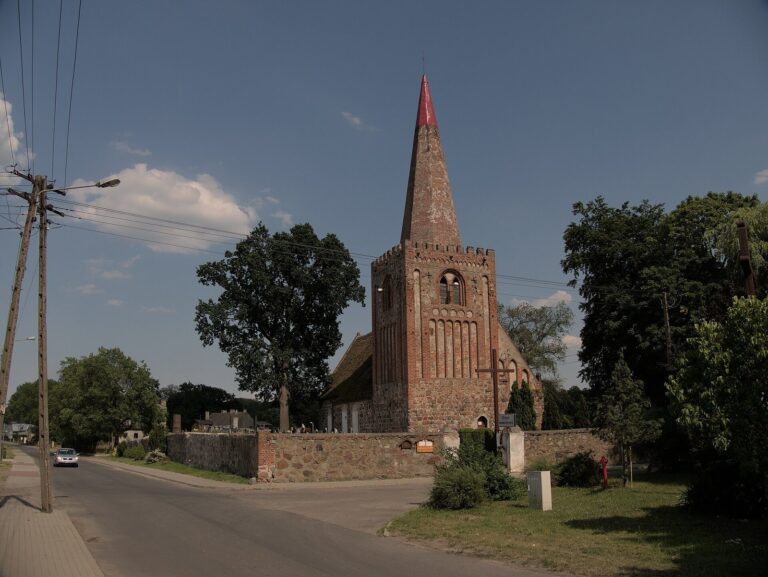
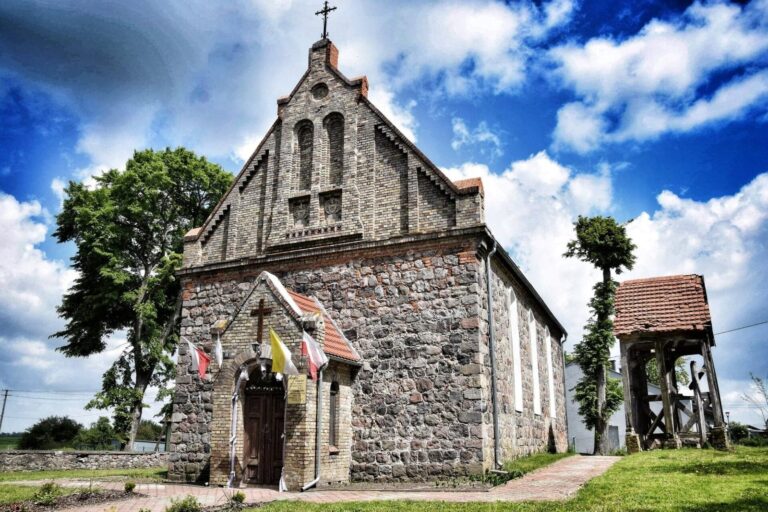
Church of the Assumption of the Blessed Virgin Mary in Załęże: A 13th-Century Roman Catholic Church
Site at a Glance
- Popularity
- Very Low
- Country
- Poland
- Primary era
- Medieval
- Eras represented
- Medieval, Modern
- Civilizations
- Unclassified
- Site type
- Religious
- Remains
- Church
On this page7 sections
History
Medieval foundation
The Church of the Assumption of the Blessed Virgin Mary in Załęże is a Roman Catholic church in Poland, built in the second half of the 13th century. Its dedication refers to the Catholic belief that Mary was taken into heaven, body and soul. The church serves as a filial church, attached to the Parish of Our Lady Queen of Poland in Tetyń rather than functioning as an independent parish church.
Nineteenth-century alteration
In 1857, a tower was added above the western part of the church. The building had originally been without a tower.
Postwar worship and protection
After the Second World War, priest Wiesław Stojarczyk consecrated the church for Catholic worship on 3 May 1954. It was entered in Poland’s register of monuments on 31 August 1956.
Remains
Church building
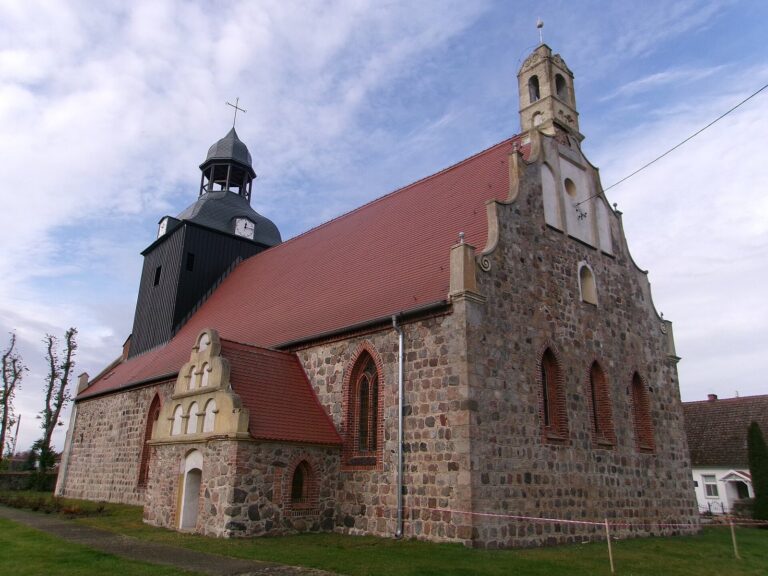
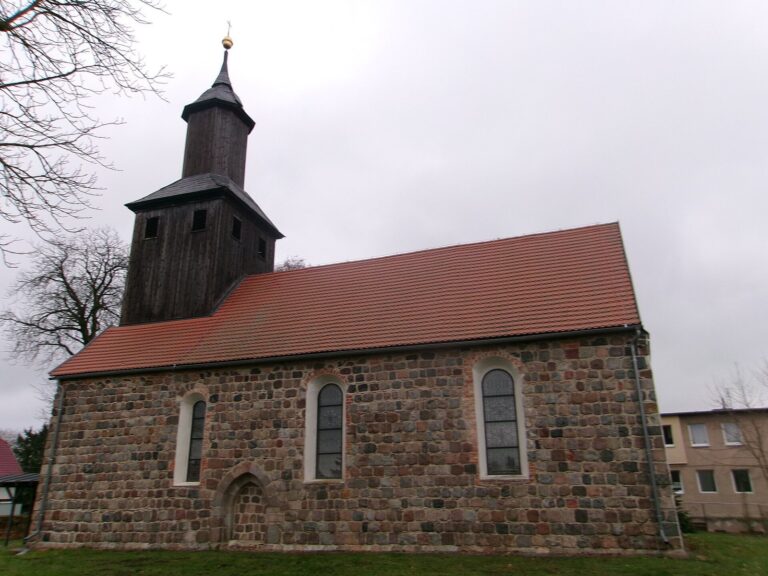
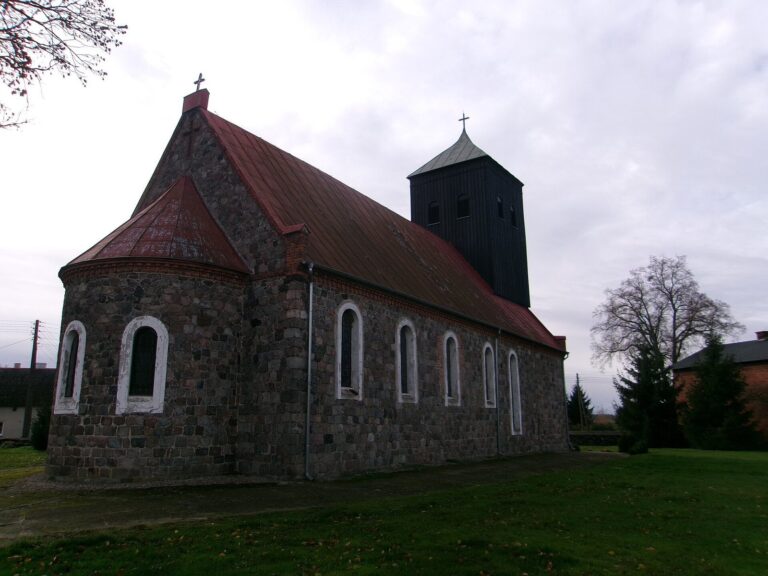
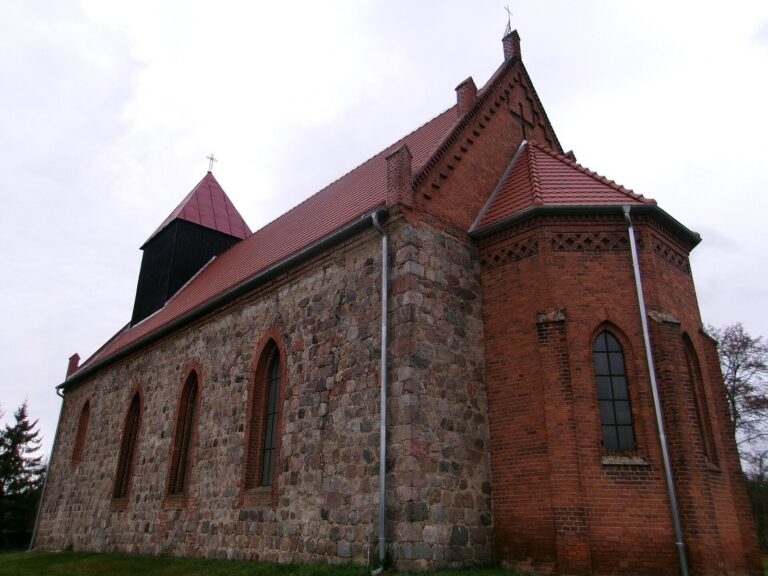
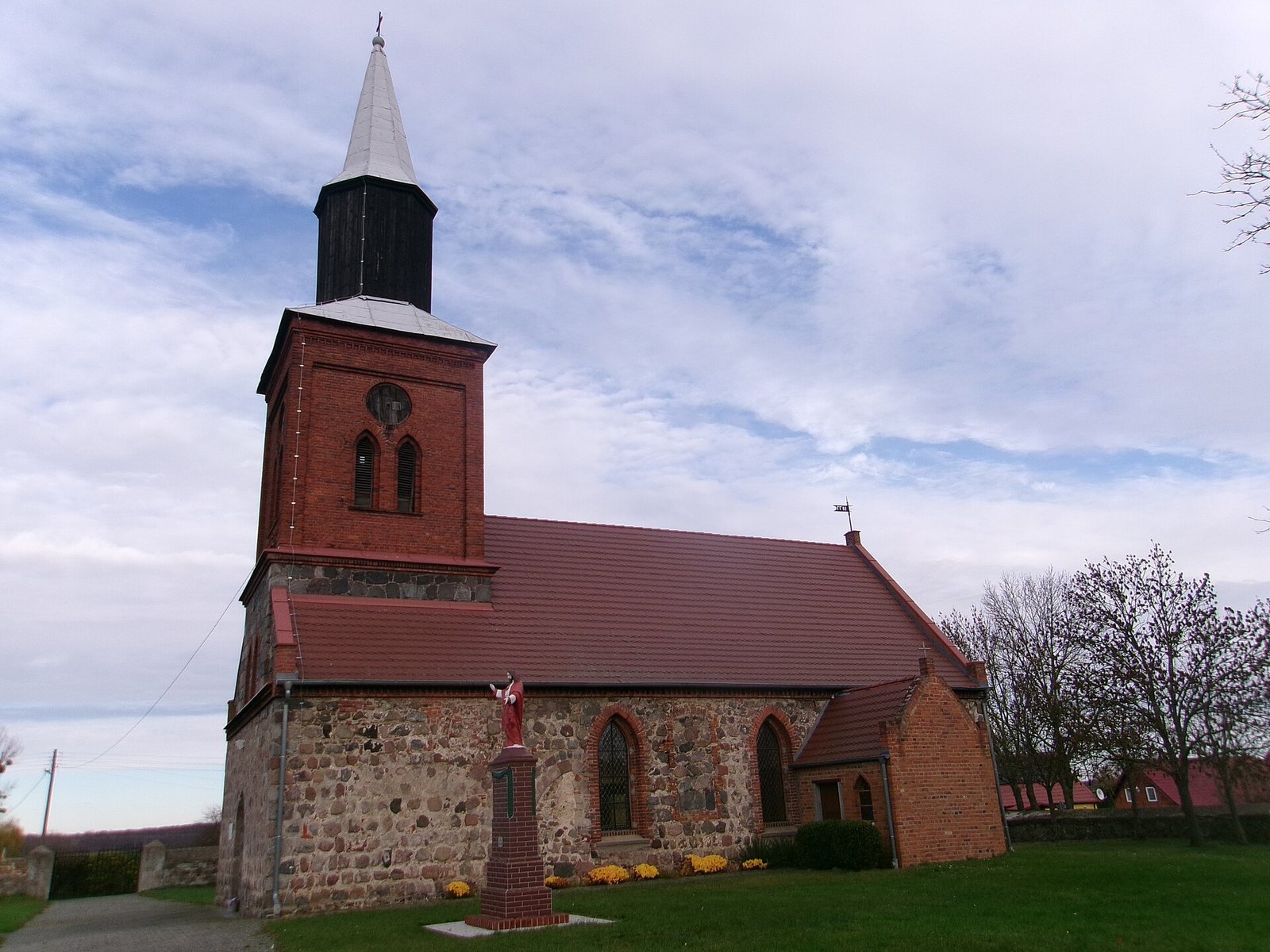
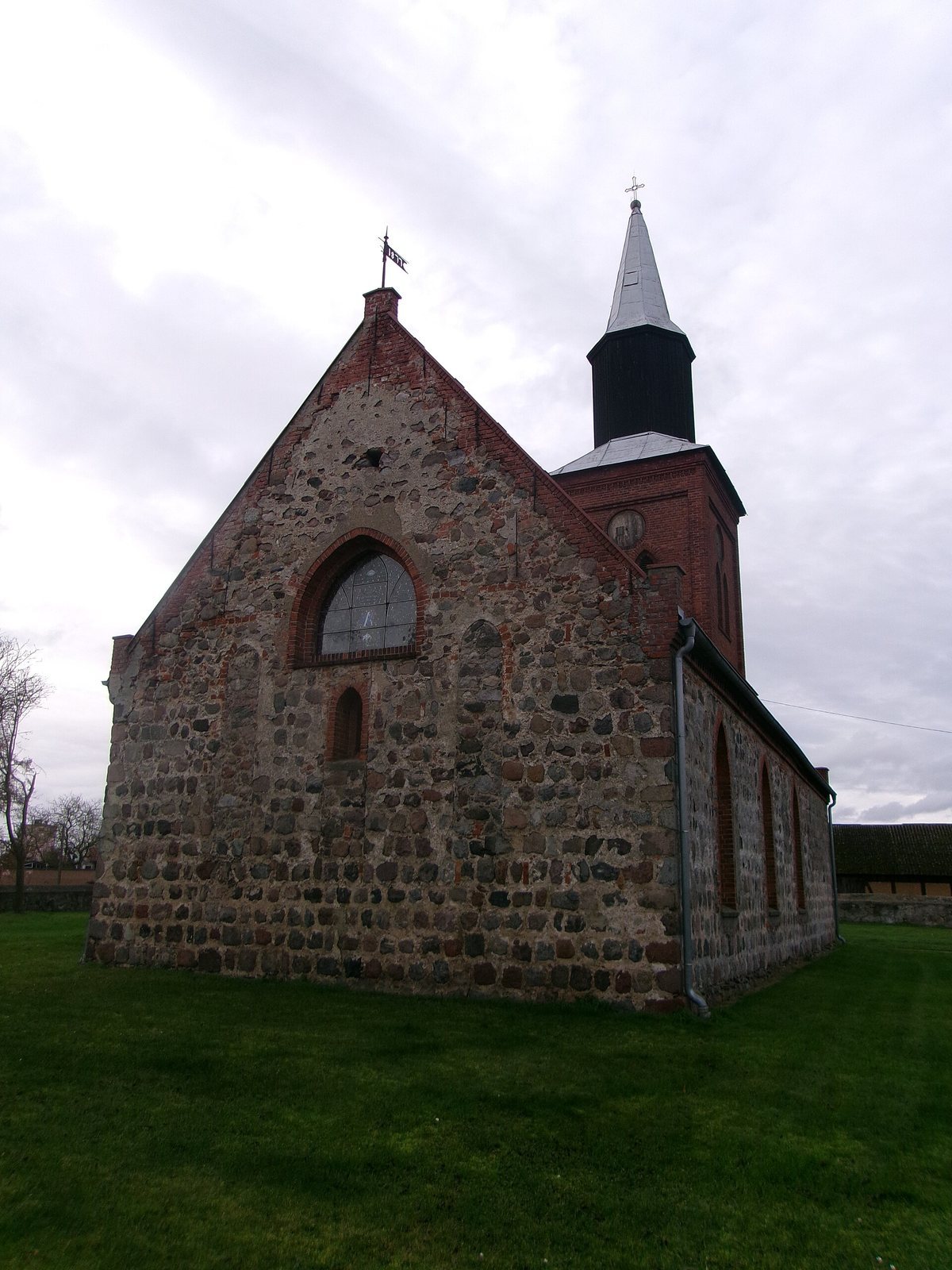
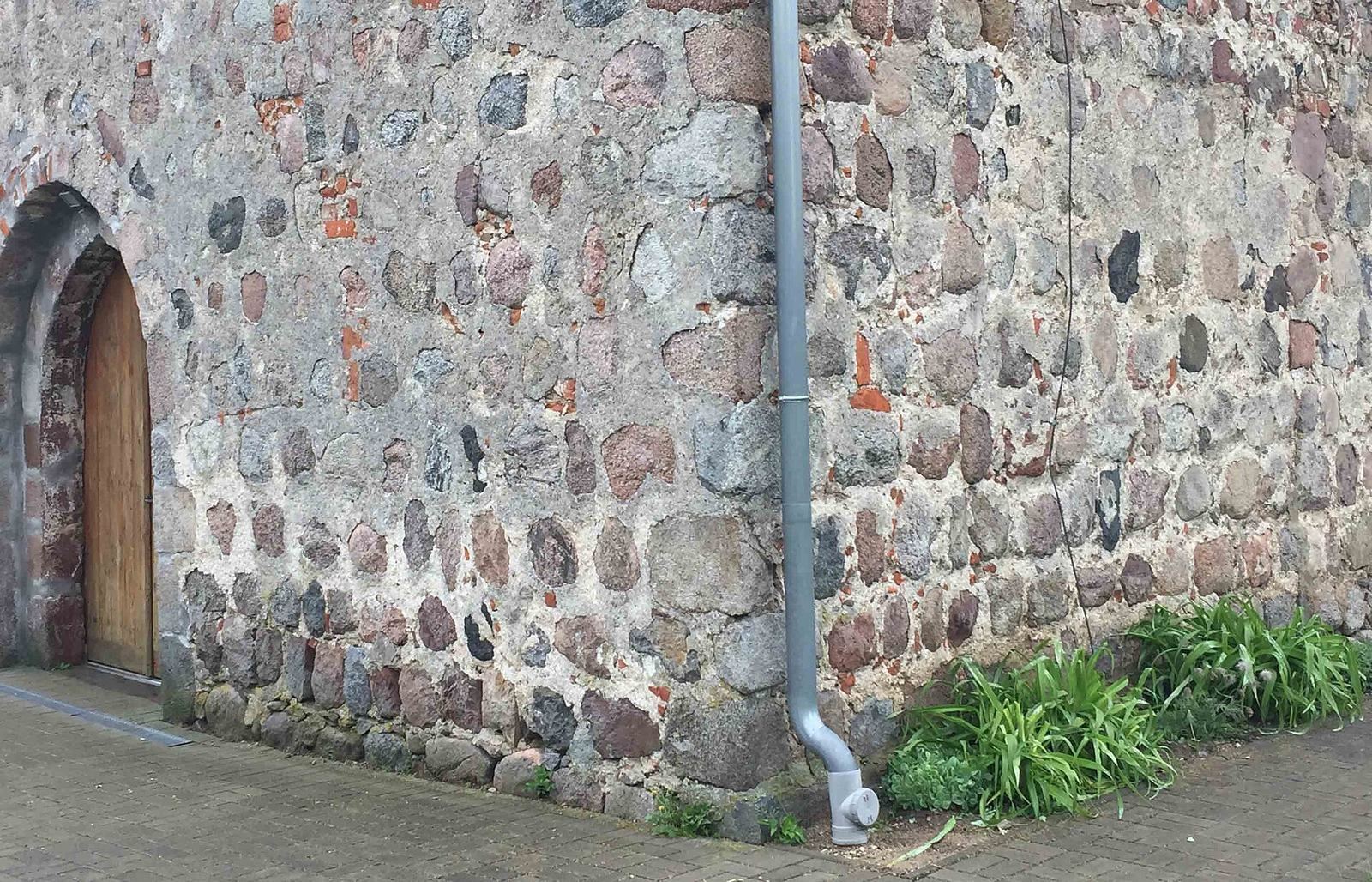
The church is a rectangular, single-room hall measuring 14.3 by 7.85 metres, built from granite blocks. Its tower has a brick-built face with paired windows and a clock. Above it is a polygonal wooden section, capped by a sheet-metal-covered roof structure topped with a cross. A sacristy, a room used by clergy for worship, is attached to the south side; it is in the Neo-Gothic style, a revival of medieval Gothic design. The west wall has a recessed entrance with two stepped offsets. On the east elevation, traces of three blocked pointed-arch windows remain, and the central opening was altered by a Neo-Gothic window. Three windows on each side of the eastern walls were widened and constructed in the 19th century. A granite boulder bearing a mason’s checkerboard mark is set in the southeast corner, in the ninth horizontal course below the top. Inside, the wooden ceiling has angled sections.
Cemetery enclosure
A stone wall encloses the former cemetery around the church. Its brick gate dates to the 15th century. The cemetery also contains a monument to those killed in the First World War, adapted after 1945 as a pedestal for a figure of Christ.