Stone Gate: Medieval Gradec Gate and Marian Shrine in Zagreb


Site at a Glance
- Rating
- 4.7
- Popularity
- Medium
- Country
- Croatia
- Primary era
- Early Modern
- External website
- Open
- Eras represented
- Medieval, Early Modern, Modern
- Civilizations
- Habsburg, Hungarian
- Site type
- Military
- Remains
- Gate
On this page8 sections
History
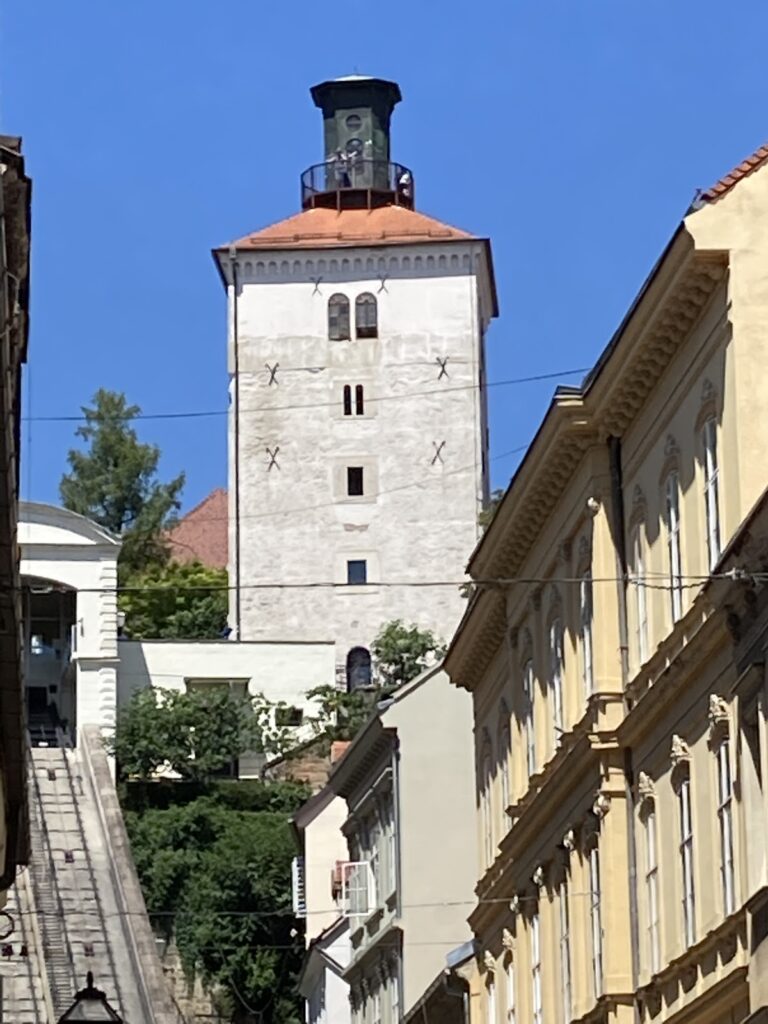
Stone Gate is the only surviving medieval gate of Gradec in Zagreb, Croatia, a settlement that became part of the city’s historic Upper Town. Built as part of the town’s fortifications between 1242 and 1266, it preserves a medieval defensive structure whose present appearance largely derives from rebuilding in 1760.
Foundation of the fortified town
After the Mongol destruction of the city in 1241, Béla IV, king of Hungary from 1235 to 1270, granted Gradec the status of a free royal city. This privilege placed the settlement directly under the Hungarian crown and required the construction of walls and fortifications. Stone Gate formed part of that defensive system, one of four gates built around the old town. It is generally believed to have been completed in 1266, although its precise construction date is uncertain, and it first appears in fifteenth-century records.
The gate was damaged by fires in 1645, 1674, 1706, and 1731. Rebuilding in 1760 gave it much of the form seen today. The rooms above the passage were adapted for an elementary school in 1776 and became a girls’ school during the second half of the nineteenth century.
Protection and civic use
Several proposals to demolish Stone Gate met opposition from local residents. The nearest attempt, in 1907, was stopped by the Brothers of the Croatian Dragon, a Zagreb fraternity founded in 1905. After taking over the rooms above the gate from the city, the fraternity established the Zagreb City Library, the Historical Archive of Zagreb, and the Museum of the City of Zagreb there. Its headquarters remain in the gate building.
Stone Gate also has a place in Croatian literary history through The Goldsmith’s Treasure, an 1871 historical romance by August Šenoa, a nineteenth-century Croatian writer known for historical novels. The story concerns the goldsmith Petar Krupić and his daughter Dora, who lived on Kamenita Street. A statue of Dora Krupić was placed beside the western entrance in 1929.
The Marian shrine
The gate’s religious importance is associated with the fire of 31 May 1731. While surrounding buildings burned, the painting of Mary and the infant Jesus survived, with damage limited to its frame. The widow Modlar arranged for the image to be moved into the gate passage and for an altar to be erected for its veneration. On 31 May 1991, Zagreb Archbishop Franjo Kuharić proclaimed Our Lady of the Stone Gate the patron of Zagreb. The date is observed as Zagreb Day, and the shrine remains a Roman Catholic place of prayer and devotion.
Stone Gate is entered in the Register of the Cultural Heritage of the Republic of Croatia and is protected as a cultural monument. No damage was recorded at the gate after Zagreb’s earthquake of 22 March 2020.
Remains
Stone Gate occupies a rectangular stone tower belonging to the former Gradec fortress. A carriageway passes through it, while Kamenita Street runs between the two entrances. The outer entrance faces north and the inner entrance opens west, so the two openings are not aligned. The street is currently closed to road traffic. The stone construction contrasts with the largely wooden buildings of the medieval town.
Fortified tower and passage
The gate’s original appearance is unknown. A sixteenth-century description states that the tower initially had no roof and records a bridge across a ditch leading to the entrance. A roof was added in 1555. The surviving structure therefore combines the defensive framework of the medieval fortress with later alterations that shaped its present form.
Our Lady of the Stone Gate
The passage contains the shrine dedicated to Our Lady of the Stone Gate. The image was originally displayed above the gate entrance before being placed inside the passage in 1731. It was set into a Baroque altar that had survived the fire of 1674. Ivan Korta designed the ornamental Baroque wrought-iron grille installed in front of the altar in 1778.
The painting’s artist is unknown, although it is generally attributed to a skilled local painter active probably in the sixteenth or seventeenth century. Measuring 57 by 47 centimetres, it is painted on linen and shows Mary holding a sceptre and the infant Jesus holding an orb topped by a cross. Angels surround the figures. A plaque above the painting carries the inscription, “Help in all troubles and against fire.”
The image survived the fire of 31 May 1731 while its frame burned. A tradition says that the flames stopped at the edge of the image. In 1929, an expert commission examined the painting after flames destroyed its wooden support and established that it had not been painted on fire-resistant material. Gold crowns were added to Mary and Jesus on 31 May 1931, the two-hundredth anniversary of the painting’s survival.
The passage includes a kneeler, benches, and a place for lighting candles. Prayers and numerous small stone votive tablets cover its walls. These tablets are offerings placed in a sacred place to express thanks or fulfil a vow, often after a prayer is believed to have been answered. The chapel and passage continue to be used for lighting candles, placing flowers, and praying before the image.
Dora Krupić memorial
A statue of Dora Krupić stands in a niche beside the western entrance. Ivo Kerdić, a Croatian sculptor who died in 1953, made the sculpture in 1929. Its position beside the gate connects the surviving medieval structure with the literary setting created by Šenoa’s historical romance.