St. Odile: A Catholic Forest Sanctuary and Pilgrimage Site in Freiburg
Site at a Glance
- Popularity
- Medium
- Country
- Germany
- Primary era
- Early Modern
- Eras represented
- Medieval, Early Modern, Modern
- Civilizations
- German, Habsburg, Habsburg Austria, Holy Roman Empire, Merovingian
- Site type
- Religious
- Remains
- Sanctuary
On this page8 sections
History
Early chapel and pilgrimage
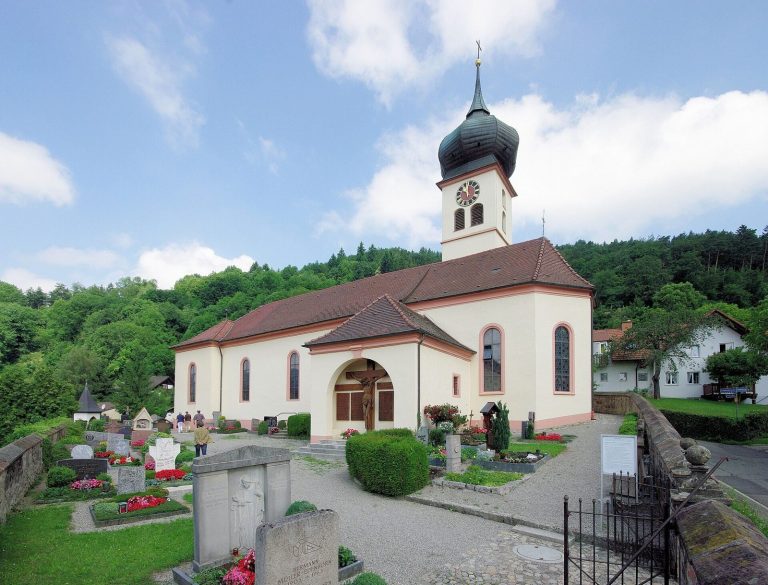
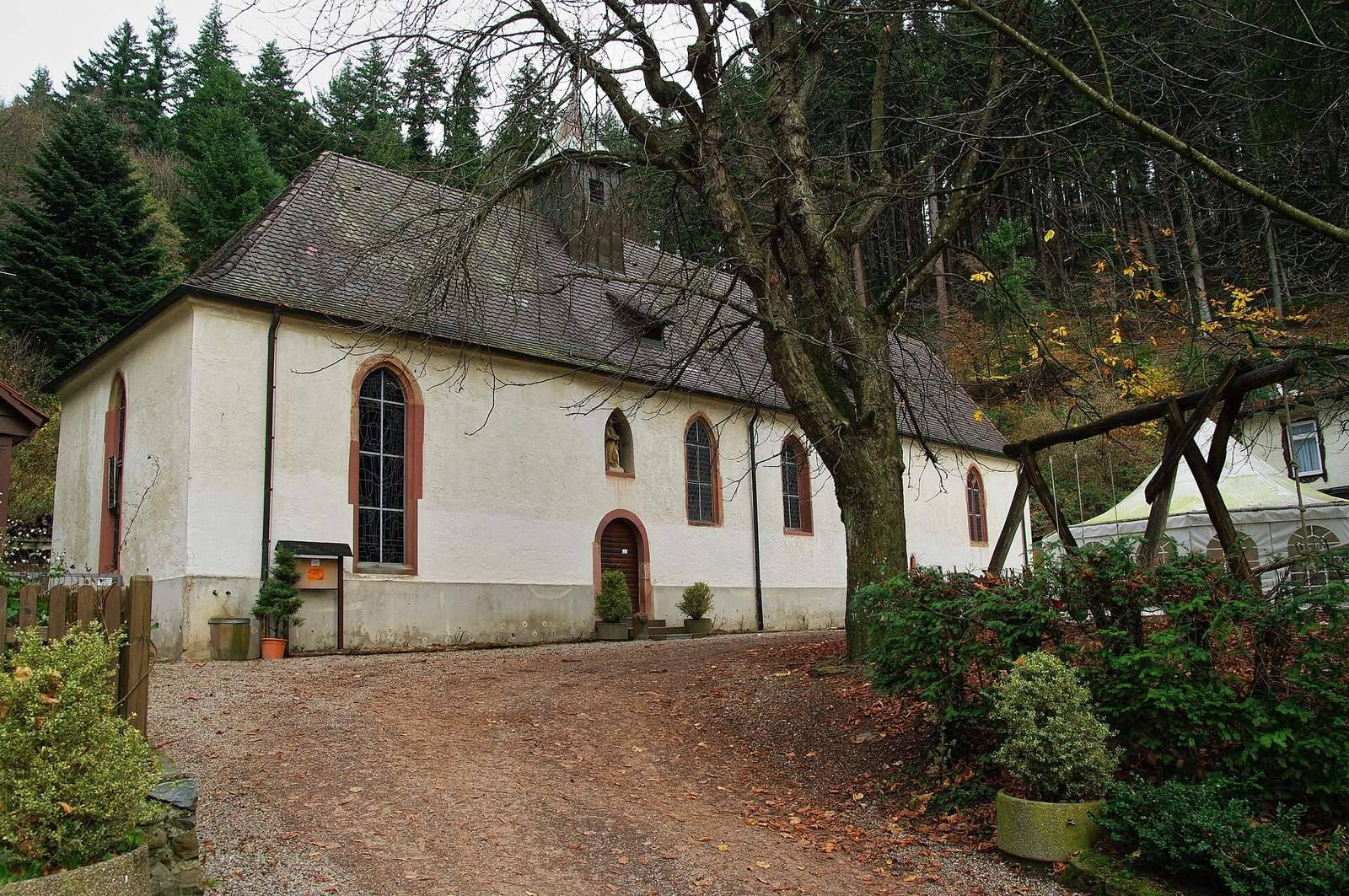
St. Odile is a Catholic forest sanctuary and pilgrimage site in Freiburg, Germany, in the upper St. Odile ravine. Its first chapel is dated to around 679, and a new chapel was built about 1100. Pilgrimage began at some point between the seventh and thirteenth centuries, reaching its peak in the sixteenth century. The sanctuary is regarded as one of Germany’s oldest pilgrimage destinations. Its earliest surviving written references date to 1428 and 1456.
In 1503, Freiburg councillor Peter Sprung and his wife, Elizabeth Zehenderin, funded a new church. It was consecrated in 1505.
War damage and closure efforts
During the Thirty Years’ War, a major European conflict fought from 1618 to 1648, Swedish forces looted the church several times from 1632 onward. Repairs were made in 1648. The church was badly damaged again during the 1713 siege of Freiburg by French commander Claude Louis Hector de Villars, prompting extensive rebuilding in 1714.
In 1770, imperial measures under Joseph II, a Habsburg ruler and Holy Roman Emperor, began suppressing subsidiary chapels and abolishing hermitages and forest sanctuaries. Further closure measures followed in the 1780s, and in 1788 the chapels’ estates were slated for transfer to the parish of Horben. Public protest secured permission to reopen St. Odile in 1791. That decision was later cited in opposition to a closure attempt by the Baden government in 1807.
Later construction and restoration
A new friary was built in 1885–86. The present inn, constructed in the late 1880s, replaced an earlier building destroyed by fire.
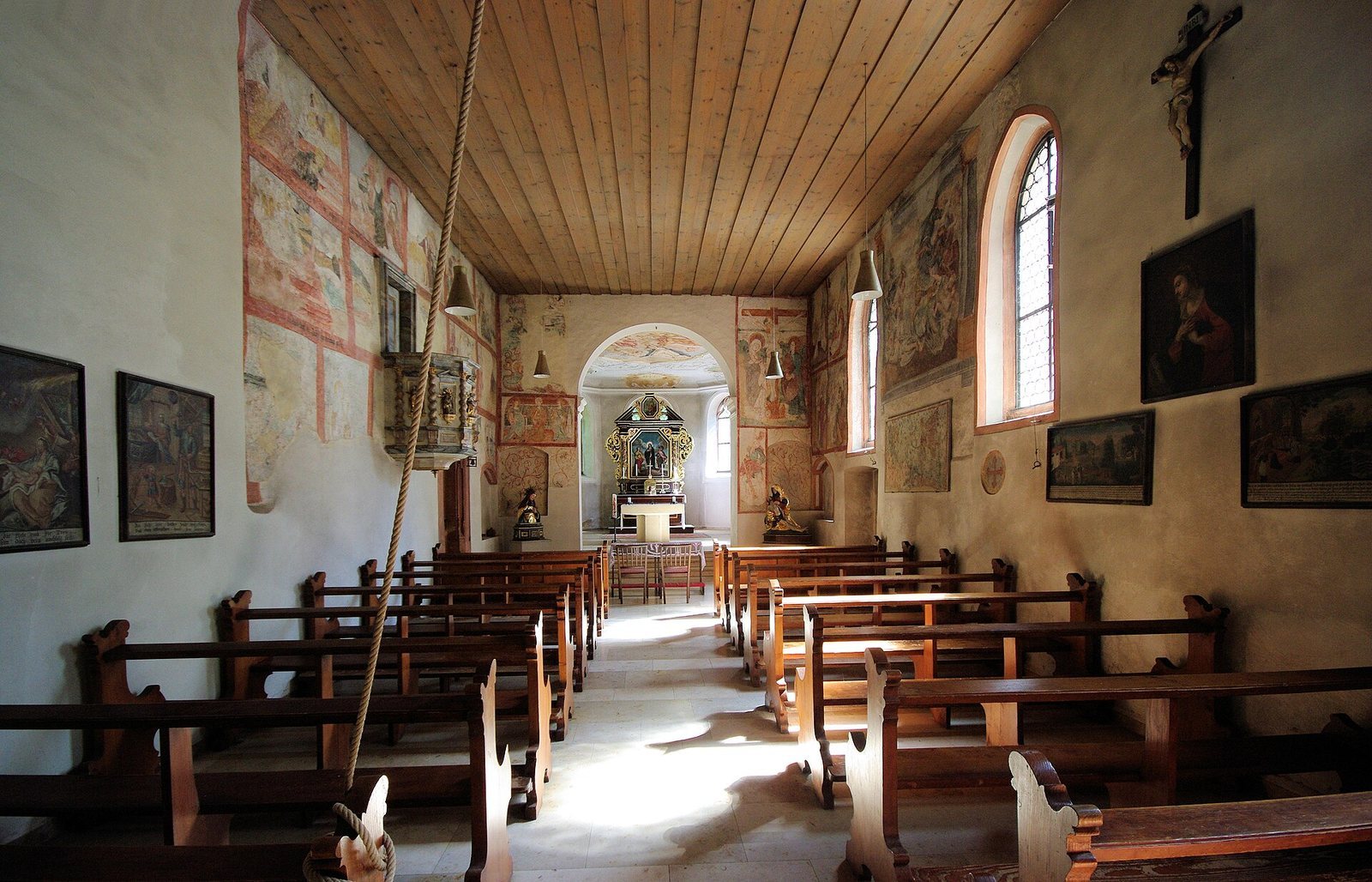
Restoration work in 1966–67 revealed medieval frescoes. Further renovation from 2015 to 2017 included work on the chapel roof structure. Moisture from the spring prompted the installation of automated window ventilation and heated seat cushions.
Remains
The sanctuary’s physical complex includes a chapel, a friary, and an inn. A spring is incorporated into the church, while a devotional path runs through the surrounding ravine.
Setting and devotional route
The sanctuary stands in a forest clearing at about 480 metres elevation, in the upper St. Odile ravine within Freiburg’s municipal forest and south of the Roßkopf. St. Wendelin is about 750 metres away. A steep Stations of the Cross route branches from a road in the lower ravine and leads to the chapel and inn. Its eight chapels recall events in Jesus’ journey to crucifixion.
Church, spring, and bell
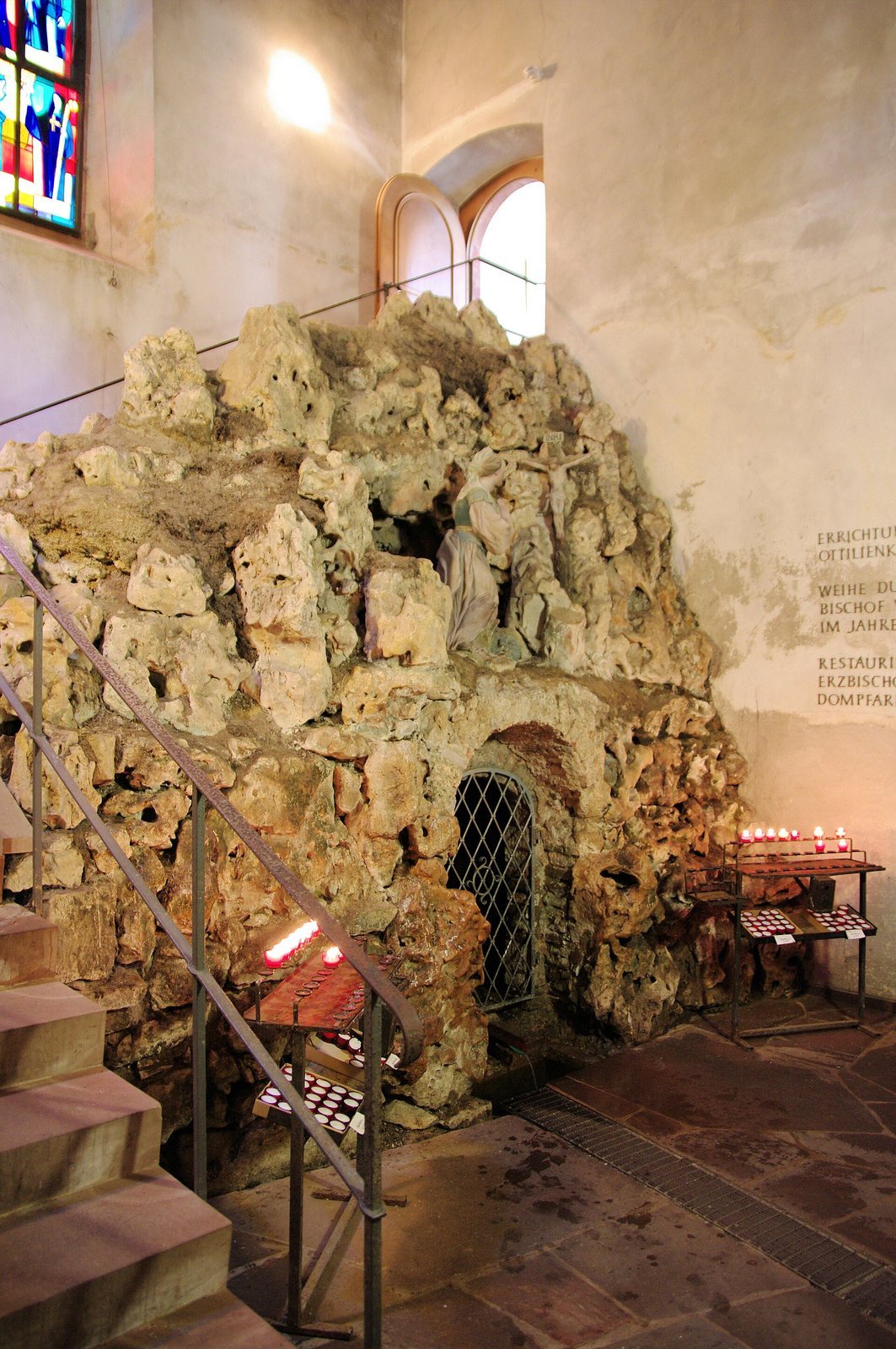
The church stands beside a spring that was once freestanding and is now enclosed as a grotto accessible from inside the building. The spring’s radon-bearing water is traditionally believed to ease eye ailments. The church has no tower; a roof turret holds a 58-kilogram bronze bell in a historic wooden frame. Freiburg bellfounder Johann Baptist Koch made the bell in 1892. It is tuned to a″ and rung by hand.
Furnishings and painted decoration
Three altars in the choir date to 1663–64 and are Baroque, belonging to a European artistic style that flourished from the seventeenth into the eighteenth century. The pulpit dates to 1753. Early sixteenth-century frescoes depict the chapel’s patrons, Saints Odile, Lucia, and Jodocus, as well as scenes concerning Anna and Joachim, the parents of Mary. In 2017 the church received a compact positive organ, a small type of organ, made in 2007 by the Wegscheider workshop in Dresden. It stands in the choir near the altar and has one keyboard and six sound registers.