St. Mary’s Church, Dublin: A Former Church of Ireland Parish Church
Site at a Glance
- Popularity
- Medium
- Country
- Ireland
- Primary era
- Early Modern
- Eras represented
- Early Modern
- Civilizations
- English
- Site type
- Religious
- Remains
- Church
On this page7 sections
History
Parish origins
St. Mary’s Church, Dublin, is a former parish church of the Anglican Church of Ireland in Ireland. In the early Middle Ages, Dublin’s north side was served by St. Michan’s parish and the Abbey of St. Mary. After the monasteries were dissolved, the abbey was largely closed, and a separate parish of St. Mary’s took shape in the late seventeenth century.
On 20 November 1697, an Act of Parliament separated St. Mary’s from St. Michan’s and established it as a distinct parish. The parish also had a chapel of ease off Dorset Street, a subsidiary place of worship for parishioners living some distance from their parish church. It was commonly called the Black Church.
Construction and parish life
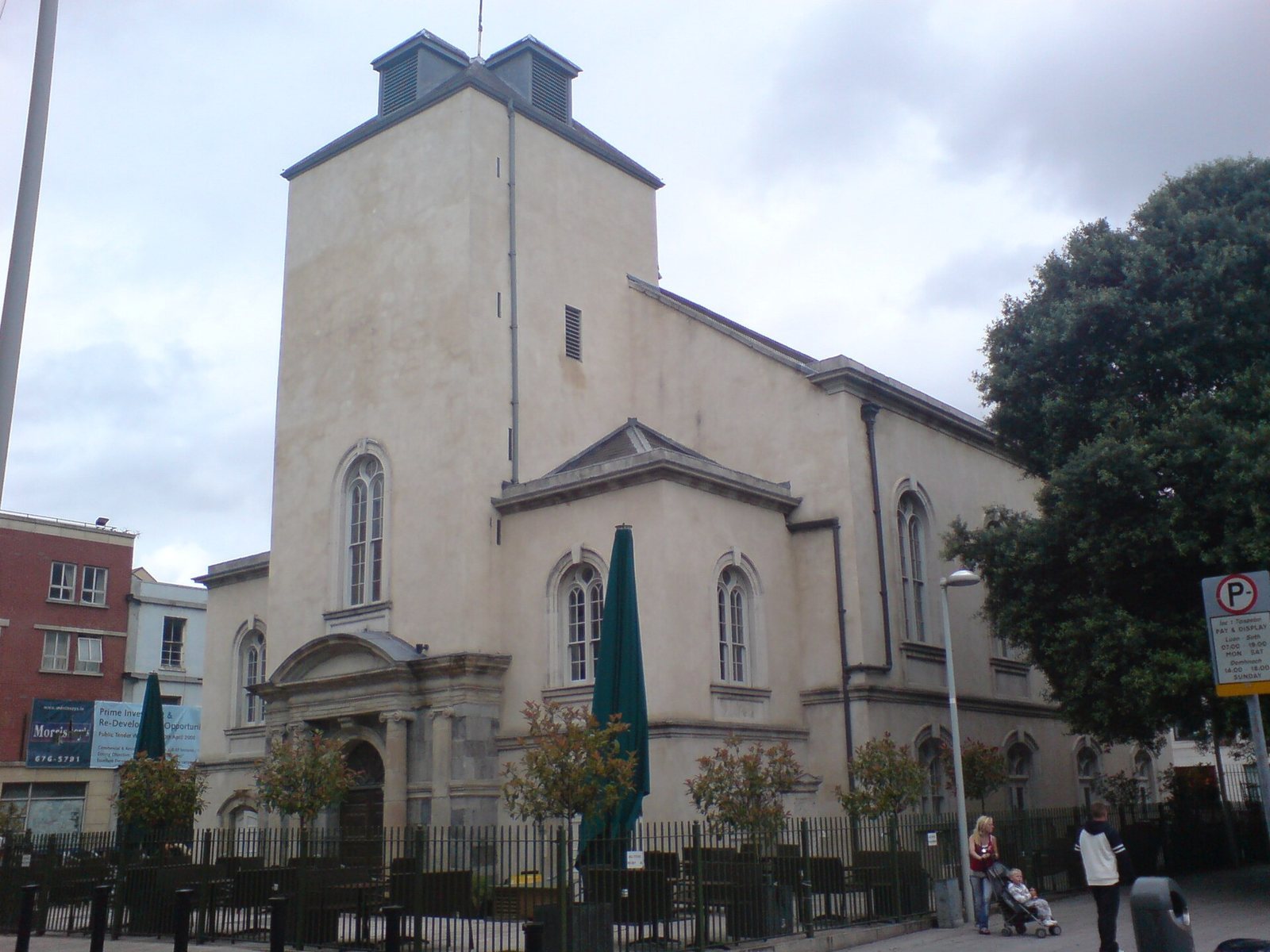
Sir William Robinson designed the church in 1697, and construction began the following year. Its foundation stone was laid in 1700, and the church was consecrated in 1701. Thomas Burgh supervised part of the work. One of the first large buildings on newly laid-out Mary Street, it was built while nearby Langford House was under construction. Named for the Virgin Mary, it served north-side parishioners as a Church of Ireland place of worship.
The parish register names Peter Broun, also recorded as Browne, as the first rector. He later became provost, or head, of Trinity College Dublin. The first churchwardens were Robert Rochfort and Allen Brodrick, then Ireland’s attorney general and solicitor general. Later rectors included John Francis, who served from 1705 to 1723, and Dixie Blundell.
Arthur Guinness married at the church in 1761. Among those baptized there were James Caulfeild, Earl of Charlemont, in 1728; playwright Richard Brinsley Sheridan in 1751; revolutionary Theobald Wolfe Tone in 1763; and playwright Seán O’Casey in 1880. Tone was born nearby at 44 Stafford Street, later renamed Wolfe Tone Street.
The adjoining churchyard held the graves of Archibald Hamilton Rowan, an Irish political reformer associated with the United Irishmen, and Mary Mercer, founder of Mercer’s Hospital. Those buried there also included philosopher Francis Hutcheson, politicians Sir Boyle Roche and Henry Maxwell, judge Lord Norbury, William Fletcher, and priest and controversialist Walter Shirley.
Closure and conversion
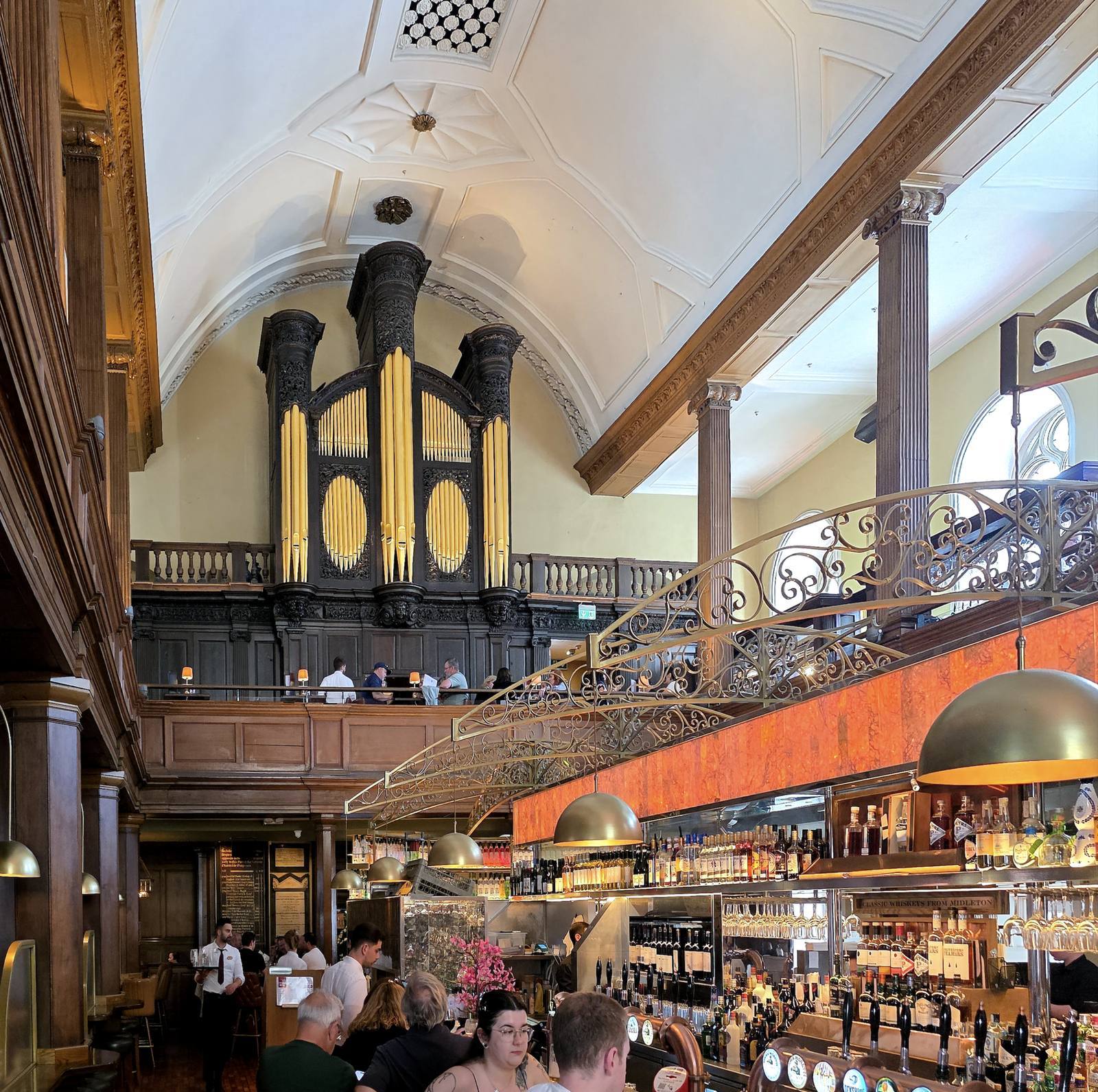
The church closed and was deconsecrated in 1986, meaning it was no longer formally set apart for religious use. The building first became a retail outlet and was later converted into a pub and restaurant. Initially called the John M. Keating Bar, the business took the name The Church after changing hands in 2007.
Remains
Church building
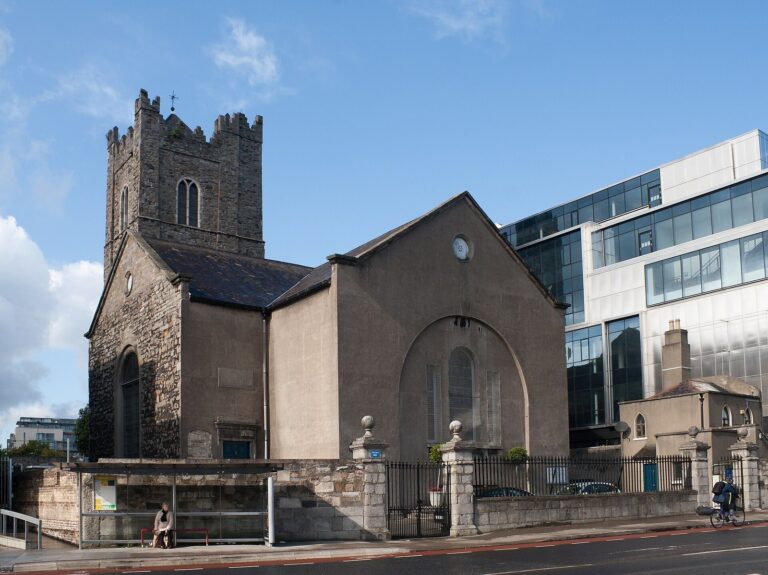
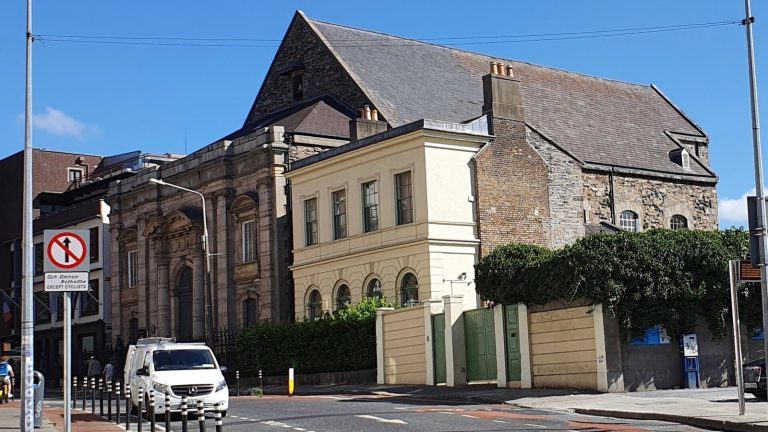
The former church stands at the corner of Mary Street and Jervis Street, beside Wolfe Tone Square. It was the first church in Dublin built with galleries, raised platforms providing additional seating. Its organ was made by English organ builder Renatus Harris.
Former churchyard
The former churchyard has been converted into Wolfe Tone Square, a public park. Gravestones from the burial ground are stacked at the southern end of the square.