St Margaret Pattens: A Historic Church on Eastcheap
Site at a Glance
- Rating
- 4.6
- Popularity
- Medium
- Country
- United Kingdom
- Primary era
- Early Modern
- Eras represented
- Early Modern, Modern
- Civilizations
- British, English
- Site type
- Religious
- Remains
- Church
On this page11 sections
History
Early church and its name
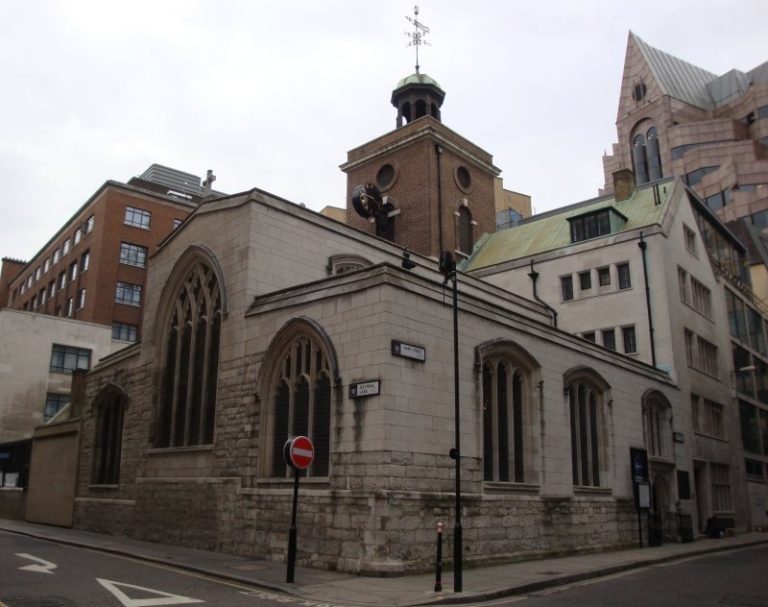
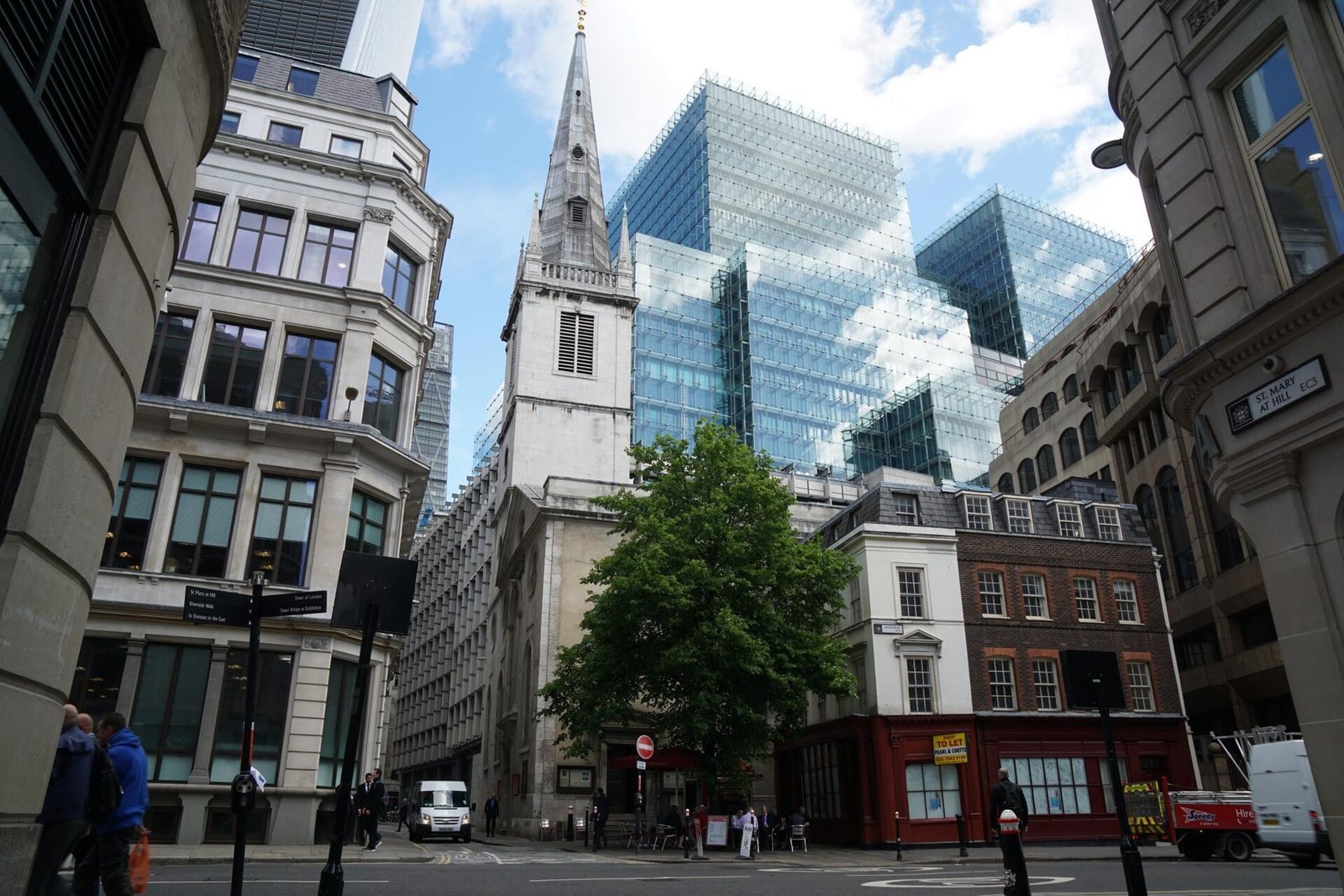
St Margaret Pattens is a church on Eastcheap in the City of London, United Kingdom. Founded before 1067, it is first mentioned in a charter William I issued for Westminster Abbey. The early church was probably wooden, and it belonged to the abbey until the dissolution of the monasteries during the Reformation. Dedicated to Saint Margaret of Antioch, a Christian saint traditionally venerated as a martyr, it remained Roman Catholic until 1538.
A stone church replaced the earlier building at an unknown date. After falling into disrepair, it was demolished in 1530 and rebuilt in 1538. The name Pattens is traditionally associated with wooden-soled overshoes, later fitted with raised iron rings to help people cross London’s muddy streets. Parishioners were asked to remove their pattens when entering the church. The church has a longstanding connection with the Worshipful Company of Pattenmakers, a City of London craft guild. A less certain explanation links the name to Ranulf Patin, a medieval canon, or clergyman attached to St Paul’s Cathedral.
Rebuilding after the Great Fire
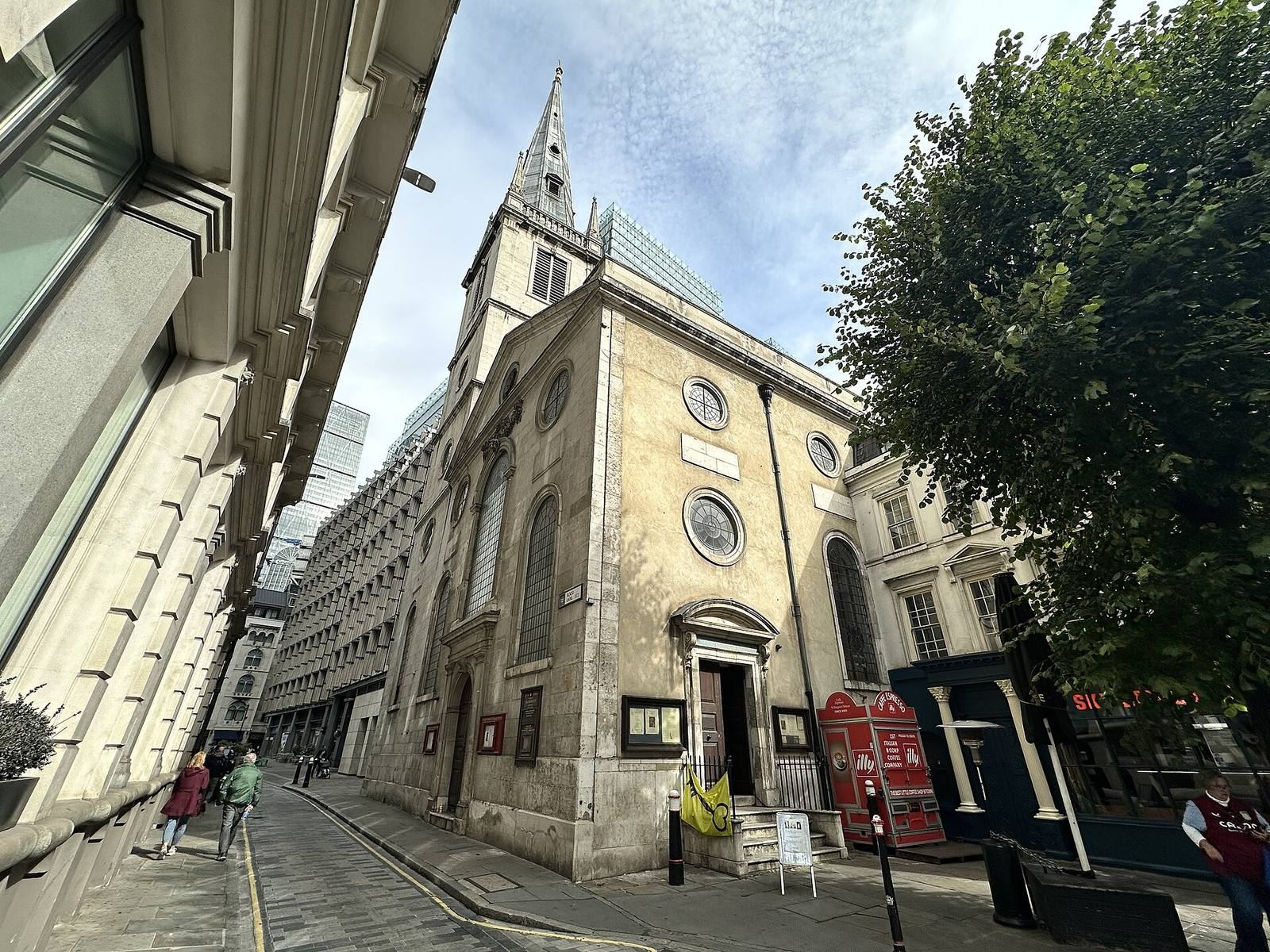
The Great Fire of London destroyed St Margaret Pattens in 1666. Rebuilding did not begin immediately, and the present church was constructed between 1684 and 1687 to the design of Christopher Wren, a prominent English architect.
Later history
Thomas Birch, who served as the church’s rector for many years and was also a historian, was buried there in 1766. The church escaped significant damage during the Second World War, including the 1940 Blitz, the German bombing campaign against Britain. After postwar restoration, it stopped serving as a parish church in 1954 and became one of the City of London’s guild churches, which serve particular communities without having their own parish. Its weekday congregation consists mainly of people working in nearby offices. The church’s benefice, an ecclesiastical office associated with the Lord Chancellor, remains connected to that office, and the church is under the Bishop of London’s jurisdiction. It was listed as a Grade I building on 4 January 1950.
Remains
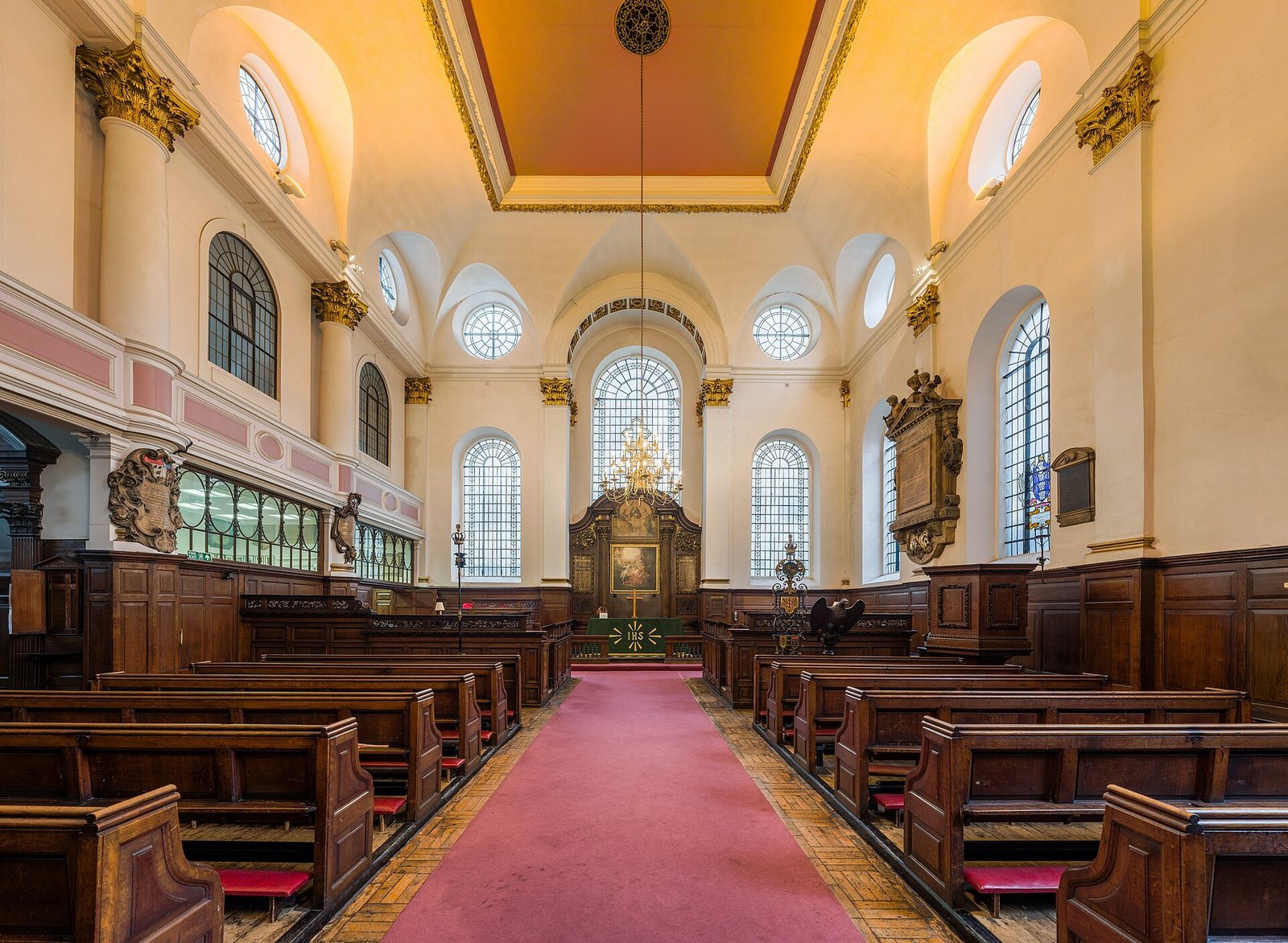
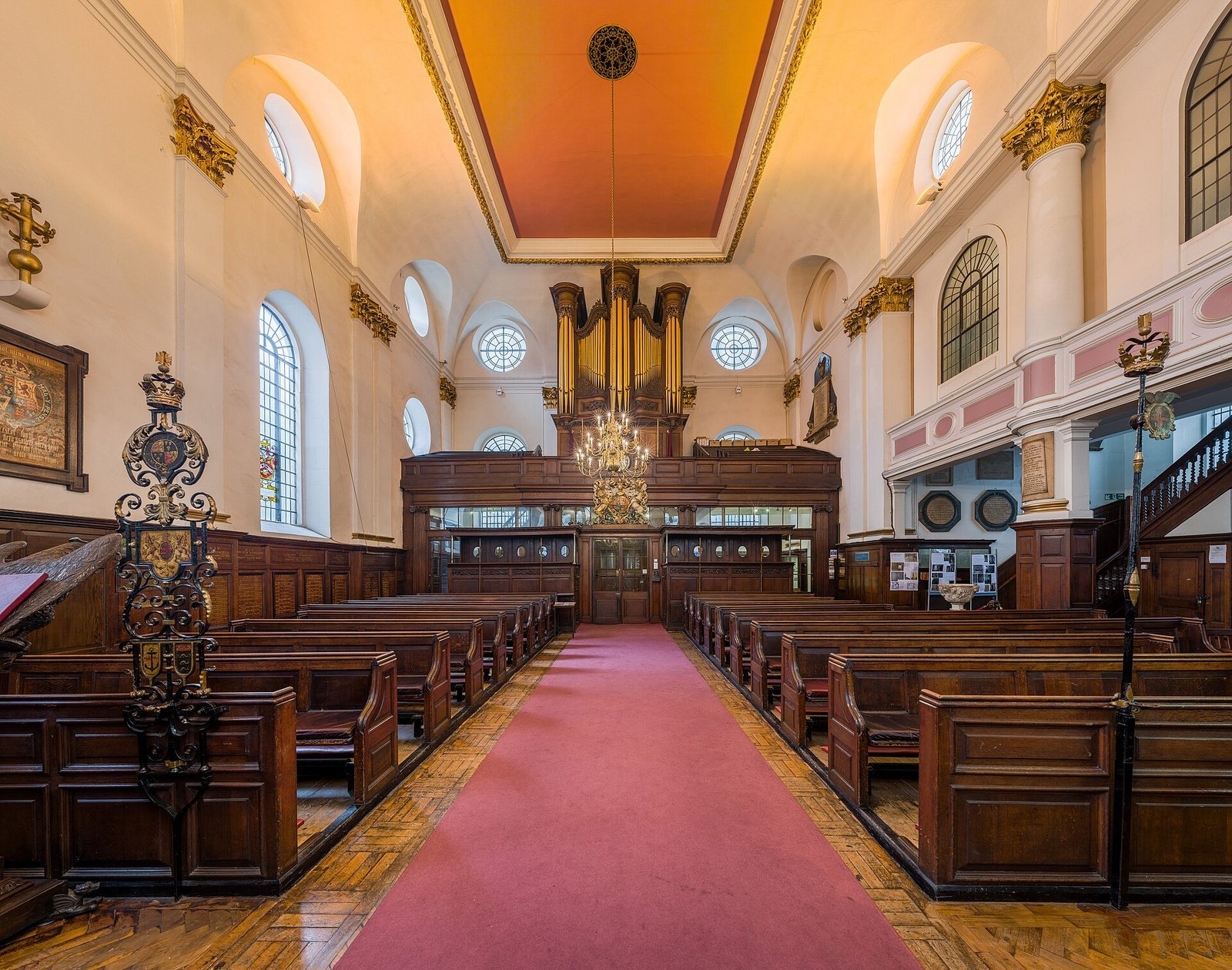
The church has a simple rectangular interior beneath a vaulted ceiling, with a north aisle and a gallery. Its tower and interior retain features from different stages in the building’s history.
Tower and spire
The tower was added between 1698 and 1702. Its spire rises to 200 feet (61 metres), making it the third-highest of Wren’s spires. It is the only one he designed in a medieval style and is sometimes described as his only “true spire.” The tower also houses the office of the Archdeacon of Hackney, a senior church official with oversight responsibilities in a defined area.
Interior and furnishings
Aisle and gallery
Corinthian columns, a classical type with ornate capitals traditionally decorated with acanthus leaves, separate the north aisle from the main space. The gallery was later divided off to create community rooms.
Altar and fittings
Much of the original interior furnishing survives, including the pulpit, altar wall and panelling. The altar painting shows Christ in Gethsemane and is by Carlo Maratta, a painter associated with the Roman Baroque.
Pews and punishment box
The church has London’s only canopied pews, which date from the seventeenth century and were intended for churchwardens. The initials CW on one pew have been interpreted as referring either to Christopher Wren or to a churchwarden. A punishment box carved with the Devil’s head was used to seat wrongdoers during services.
Organ
Thomas Griffin installed the organ in 1750. G. M. Holdich renewed it in 1856, and Forster and Andrews did so again in 1886. It was enlarged in 1911 and restored by Rushworth and Dreaper in 1954, when its pedals were extended. The post-restoration couplings, controls linking keyboards or a keyboard and the pedals for simultaneous playing, were II/I, II/II 4′, I/P and II/P.