St Lawrence Jewry, London: A Church of England Guild Church
Site at a Glance
- Rating
- 4.5
- Popularity
- Medium
- Country
- United Kingdom
- Primary era
- Early Modern
- Eras represented
- Early Modern, Modern
- Civilizations
- British, English
- Site type
- Religious
- Remains
- Church
On this page11 sections
History
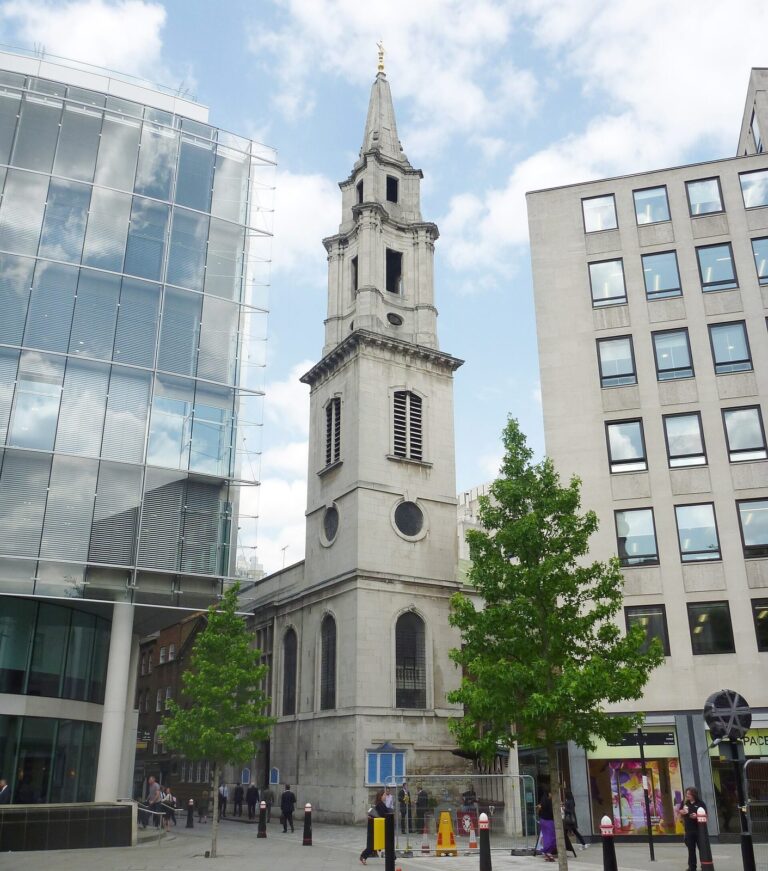
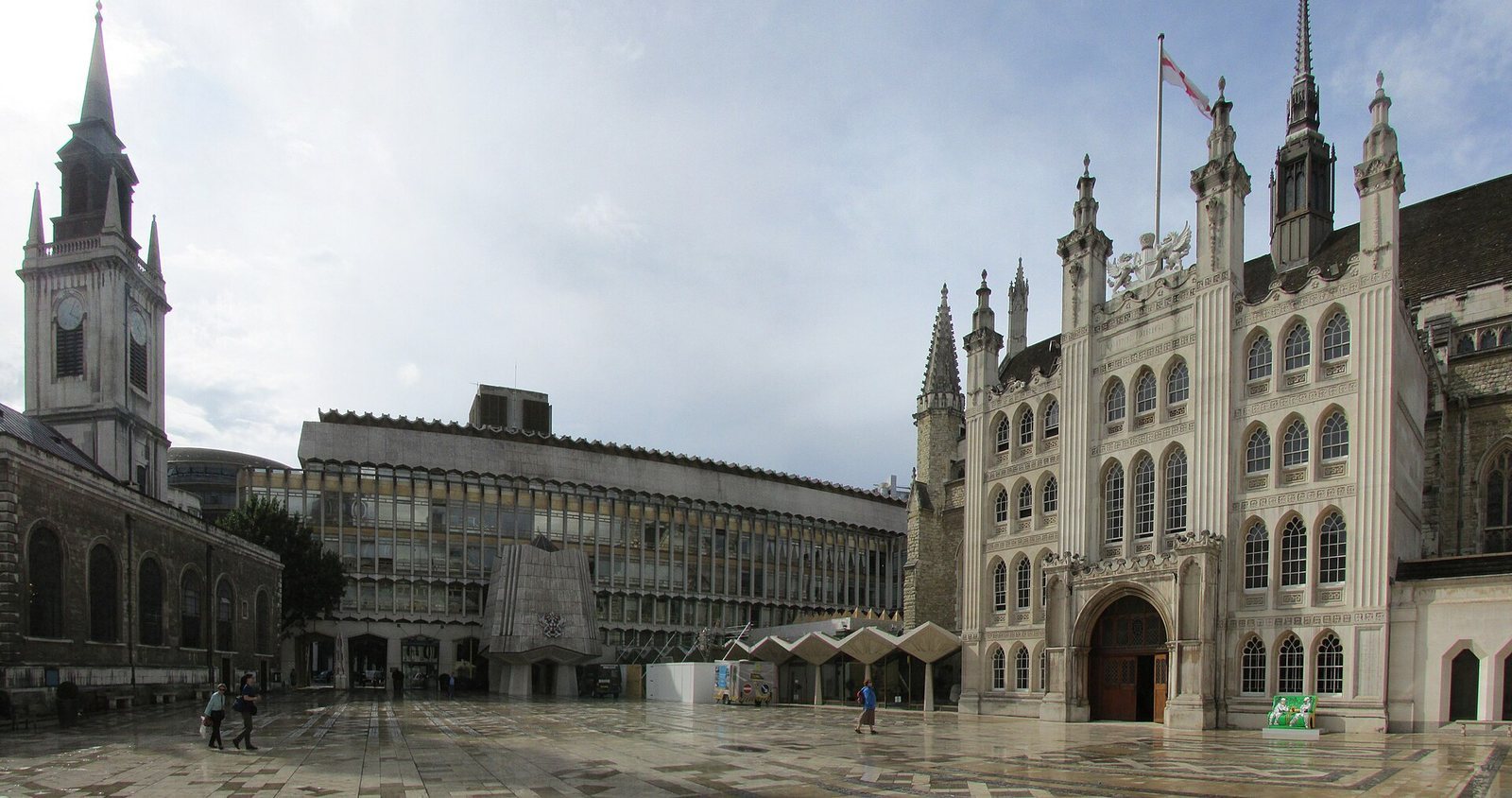
St Lawrence Jewry is a Church of England church on Gresham Street beside Guildhall in London, United Kingdom, within the Diocese of London. It originated in the twelfth century as a Roman Catholic church dedicated to St Lawrence, an early Christian martyr traditionally associated with death on a gridiron. After the Great Fire of London in 1666, architect Christopher Wren designed its replacement in English Baroque, a form of Baroque architecture developed in England in the late seventeenth century.
Medieval origins and reconstruction
The medieval church stood near the Jewish quarter centred on Old Jewry. From 1280, Balliol College, Oxford, held the right to appoint a clergyman to the church. Thomas More preached there. In 1618 the building was repaired.
The Great Fire devastated much of the City of London in 1666 and destroyed the medieval church. Wren’s replacement was built from 1670 to 1677. The parish was combined with that of St Mary Magdalen, Milk Street, whose church was not rebuilt.
War, restoration, and civic role
German bombing during the Blitz heavily damaged the church on 29 December 1940. It was listed as a Grade I building on 4 January 1950. The City of London Corporation arranged its restoration because Balliol College could not meet the cost; Cecil Brown restored the church in 1957 to Wren’s design.
John Tillotson, Archbishop of Canterbury from 1691 to 1694, and the merchant Francis Levett were buried at the church. It was also the setting for the wedding of Levett’s niece Ann, daughter of William Levett, Dean of Bristol and former Principal of Magdalen Hall, Oxford.
St Lawrence Jewry now serves as a guild church, serving a civic and guild community rather than a parish congregation. It has no parish of its own, is not answerable to local parish authorities, and is not required to hold Sunday services. It is the official church of the Lord Mayor, the City of London’s civic officeholder, and the City of London Corporation, the city’s governing body. Associated livery companies, London trade associations with roots in craft and trade guilds, are the Girdlers, Loriners, Distillers, Actuaries, Insurers, Chartered Architects, Constructors, and Entrepreneurs. The New Zealand Society UK holds its annual Waitangi Day observance at the church in February, marking the 1840 Treaty of Waitangi, a founding document in New Zealand’s history.
Remains
Church architecture
Exterior
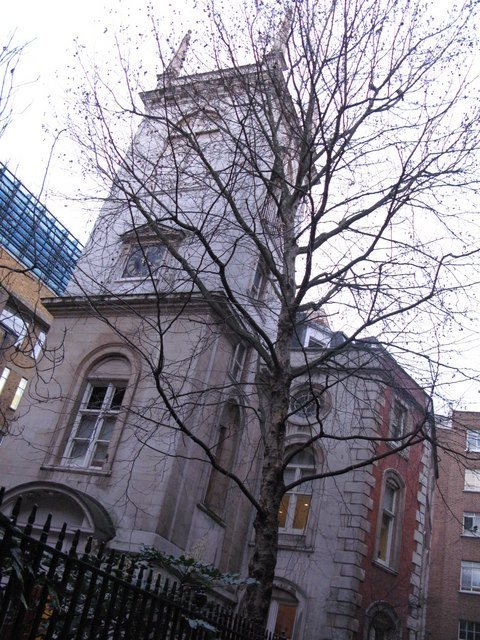
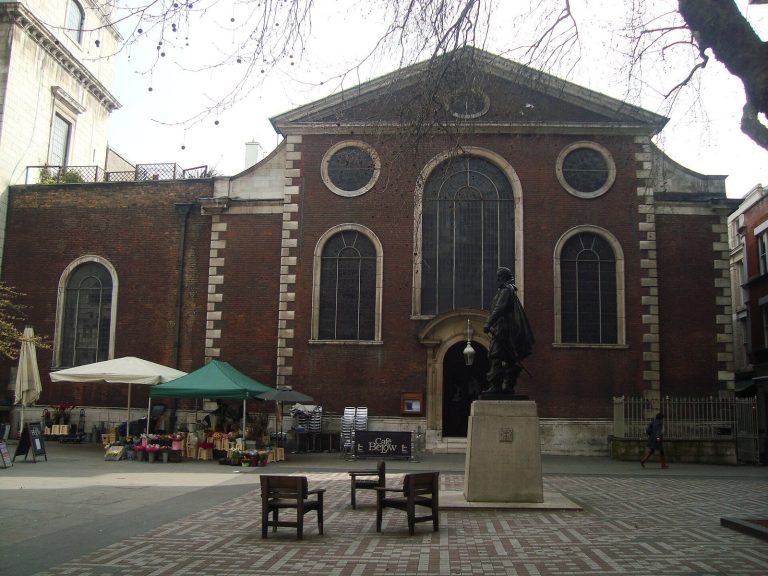
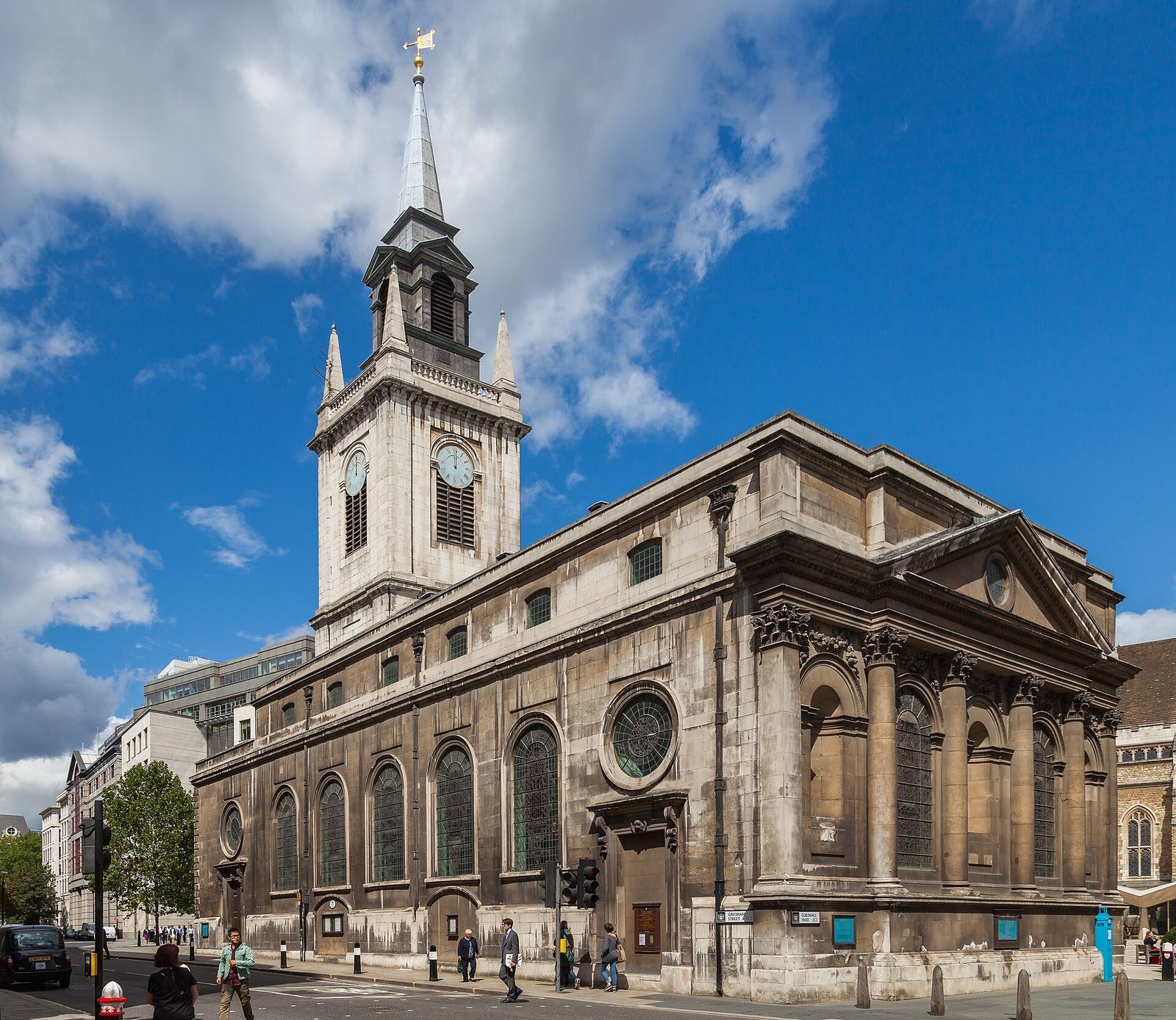
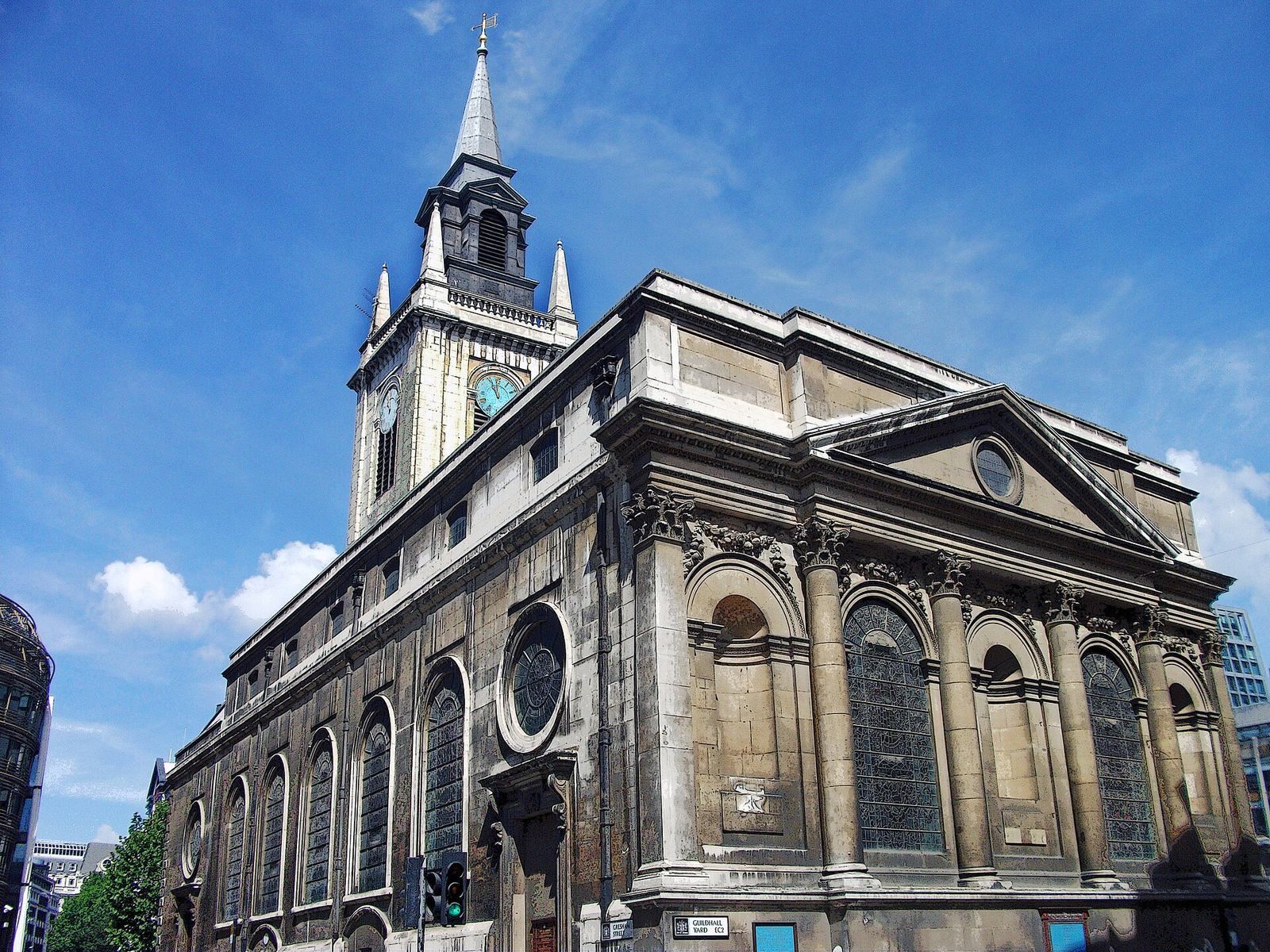
The church is faced entirely in stone and measures 81 feet (25 metres) long by 68 feet (21 metres) wide. Its east front has four attached Corinthian columns, whose capitals are elaborately ornamented. They rise from the basement and support a triangular pediment, set against a high upper wall. In 1839, architect and writer George Godwin praised the facade’s classical character and observed that the pediment was an ornamental surface rather than an extension of the roof.
Interior
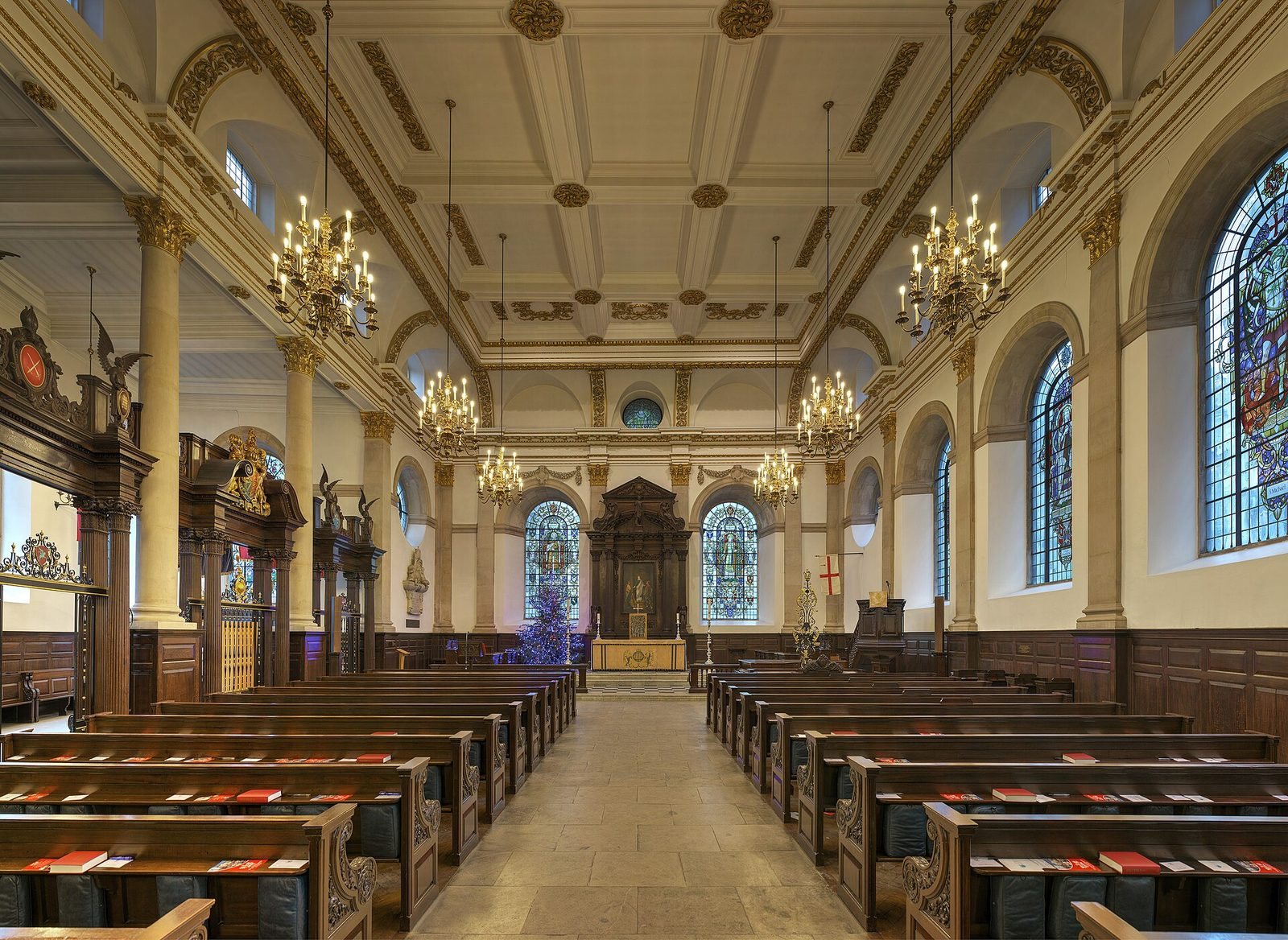
A side aisle runs along the north side of the church. Corinthian columns divide it from the main central worship space and carry an entablature, the horizontal structure supported by columns. Around the main body of the church, this structure rests on pilasters, shallow wall-mounted forms resembling columns. The ceiling is arranged in recessed panels decorated with wreaths and branches. In 1618, individual donors paid for stained glass in every window.
Bell and weather vane
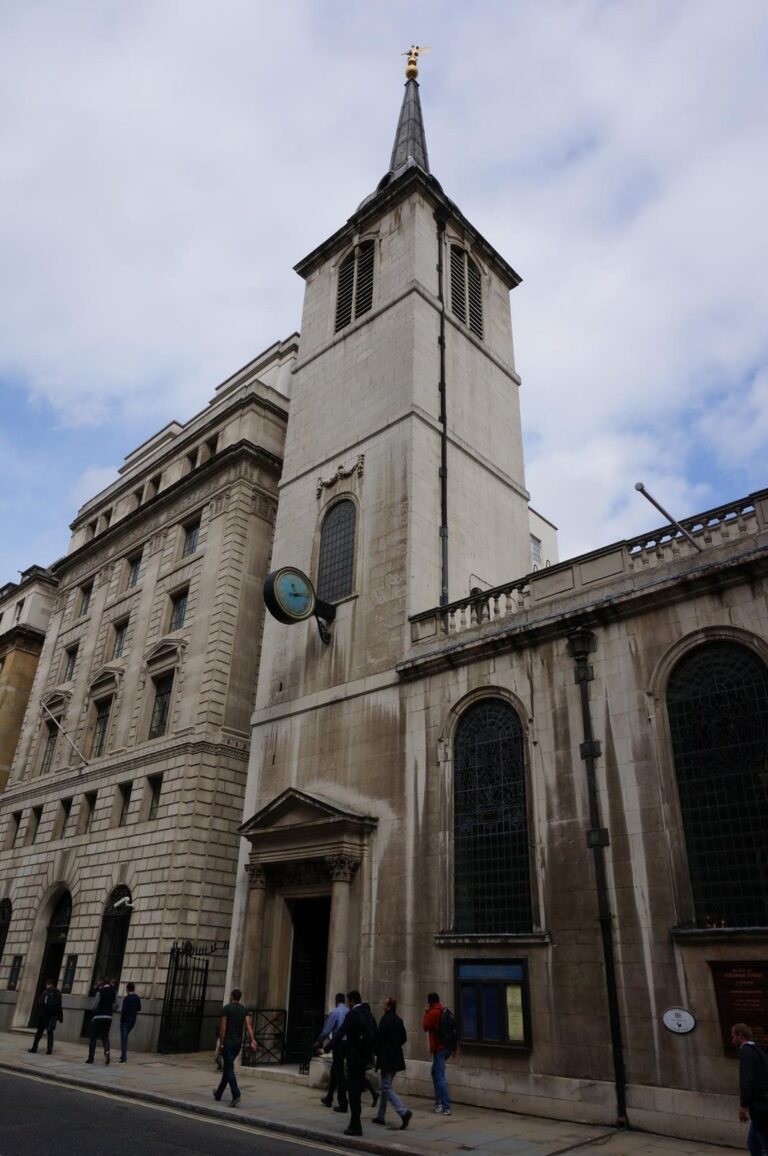
The church has a ring of eight bells cast in 1957 by the Whitechapel Bell Foundry. They were designed for change ringing, a method in which bells sound in changing sequences. A weather vane on the church takes the form of a gridiron, recalling the instrument traditionally associated with St Lawrence’s martyrdom.
Roman amphitheatre and relocated fountain
Roman amphitheatre
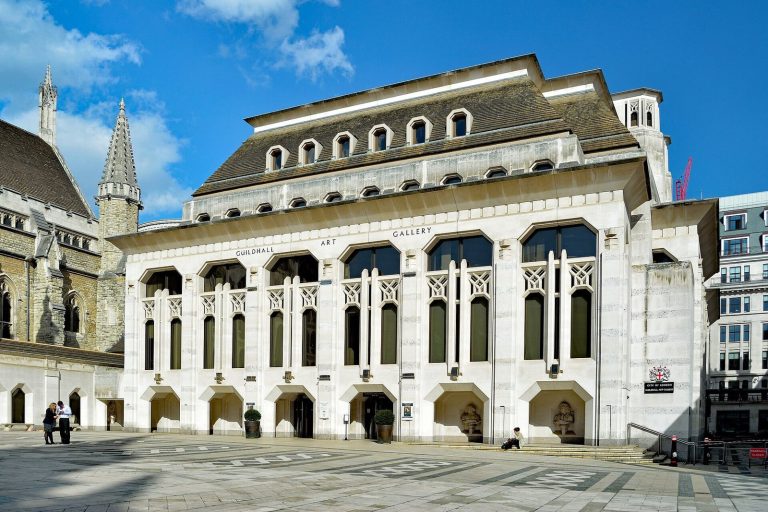
The church’s unusual alignment may relate to the possibility that it occupies the site of London’s Roman amphitheatre. Rediscovered in 1988, the amphitheatre’s remains lie beneath Guildhall Art Gallery.
St Lawrence and Mary Magdalene fountain
A drinking fountain showing St Lawrence and Mary Magdalene was installed near the church in 1866. Architect John Robinson designed it, and Joseph Durham made its bronze sculpture. The fountain was taken apart into 150 pieces in the 1970s and stored by the City for fifteen years. Its parts were reassembled at a foundry in Chichester in 2009; in 2010, the fountain was moved to the east side of Carter Lane Gardens, near St Paul’s Cathedral.