St Laurence’s Church, Northfield: A Medieval Parish Church in Birmingham
Site at a Glance
- Rating
- 4.8
- Popularity
- Medium
- Country
- United Kingdom
- Primary era
- Medieval
- Eras represented
- Medieval, Modern
- Civilizations
- British, English
- Site type
- Religious
- Remains
- Church
On this page13 sections
History
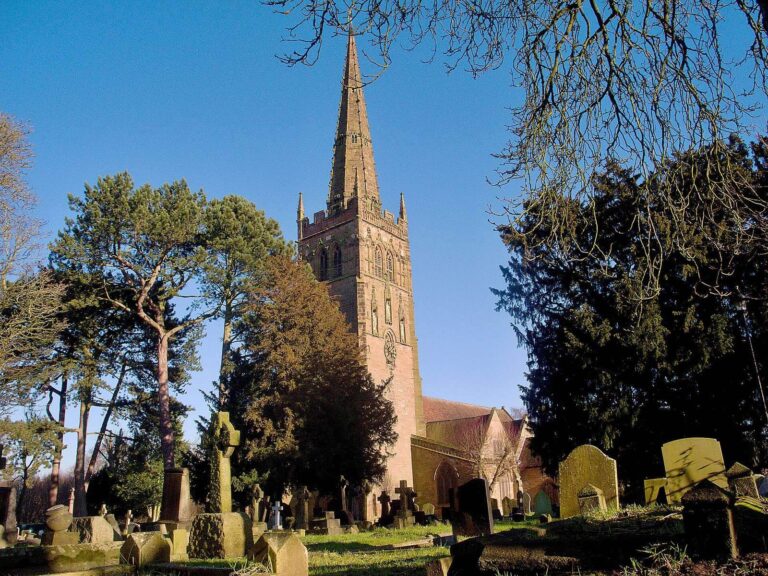
St Laurence’s Church, Northfield, is a Church of England parish church in Northfield, Birmingham, United Kingdom, founded in 1150. Its medieval fabric includes Early English work, an early phase of English Gothic architecture associated with the late 12th and 13th centuries. The church continues to serve the parish of Northfield within the Diocese of Birmingham and the Province of Canterbury.
Early references and foundation
A priest at Nordfeld is listed in the Domesday Book, William the Conqueror’s 1086 survey of land and resources. The later Norman church, built in the style introduced to England after the Norman Conquest, probably occupied the site of an earlier Saxon church. St Laurence’s and its parish were originally controlled by the Priory of St James at Dudley, a monastic house headed by a prior.
Parish governance and memorial
Keble College, Oxford, holds the advowson of the rectory, the right to nominate a candidate for the church office. St Laurence’s is Grade I listed, England’s highest statutory category for buildings of exceptional interest.
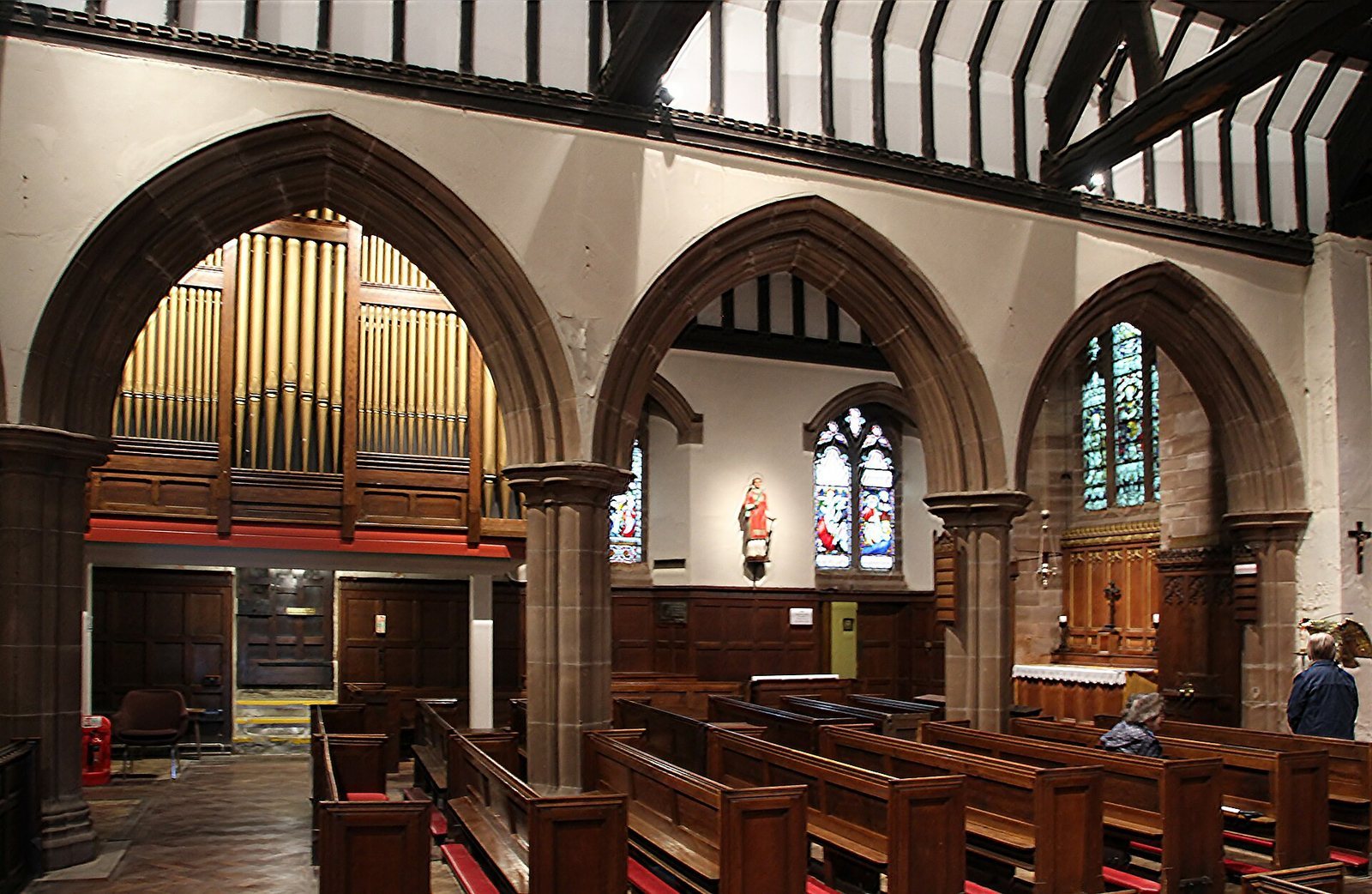
Herbert Austin, 1st Baron Austin, and Lady Austin gave the church a new organ in memory of 2nd Lieutenant Vernon James Austin, who died in 1915. Built by the Compton Organ Company, it was opened on 22 March 1937.
Remains
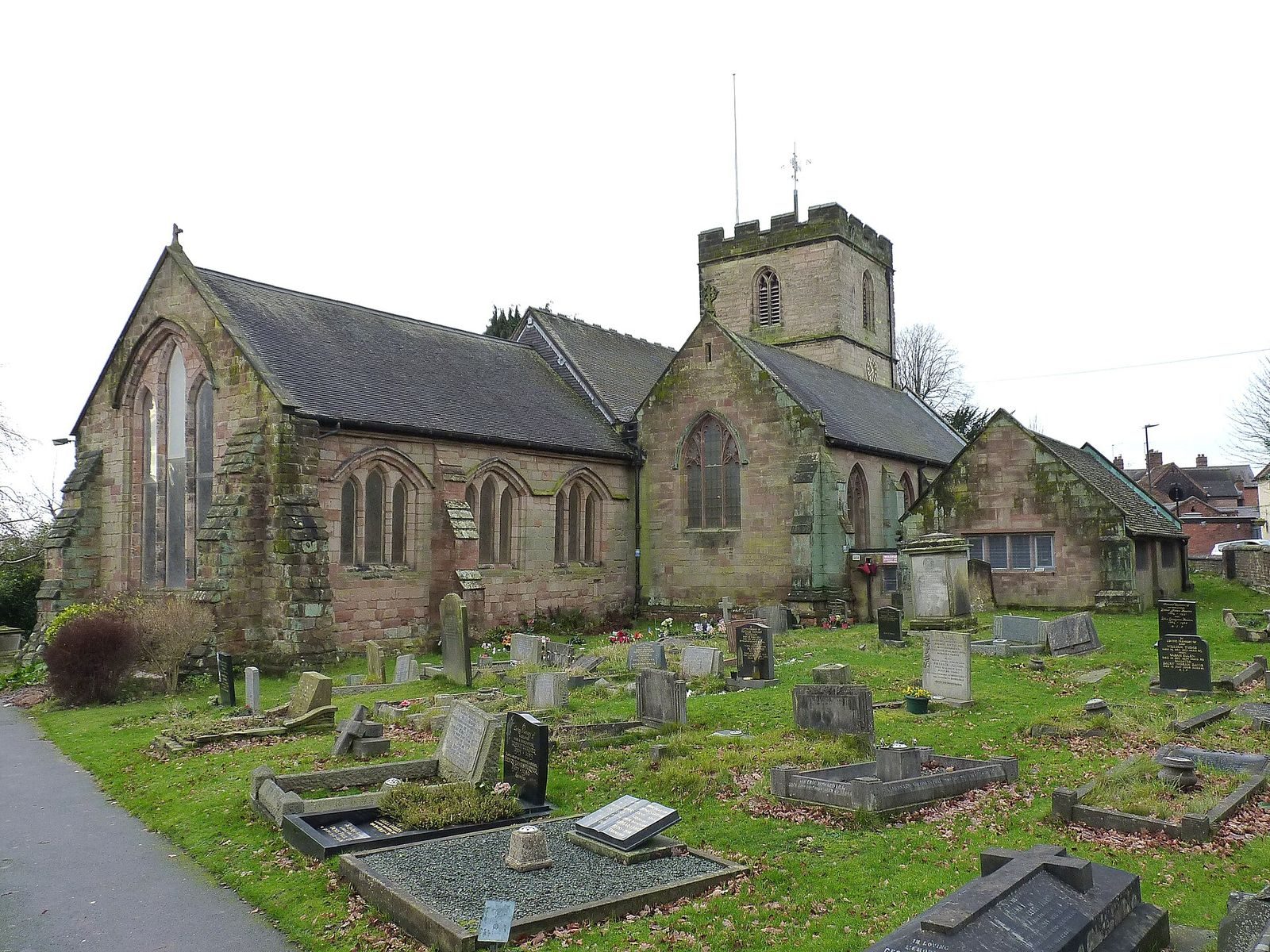
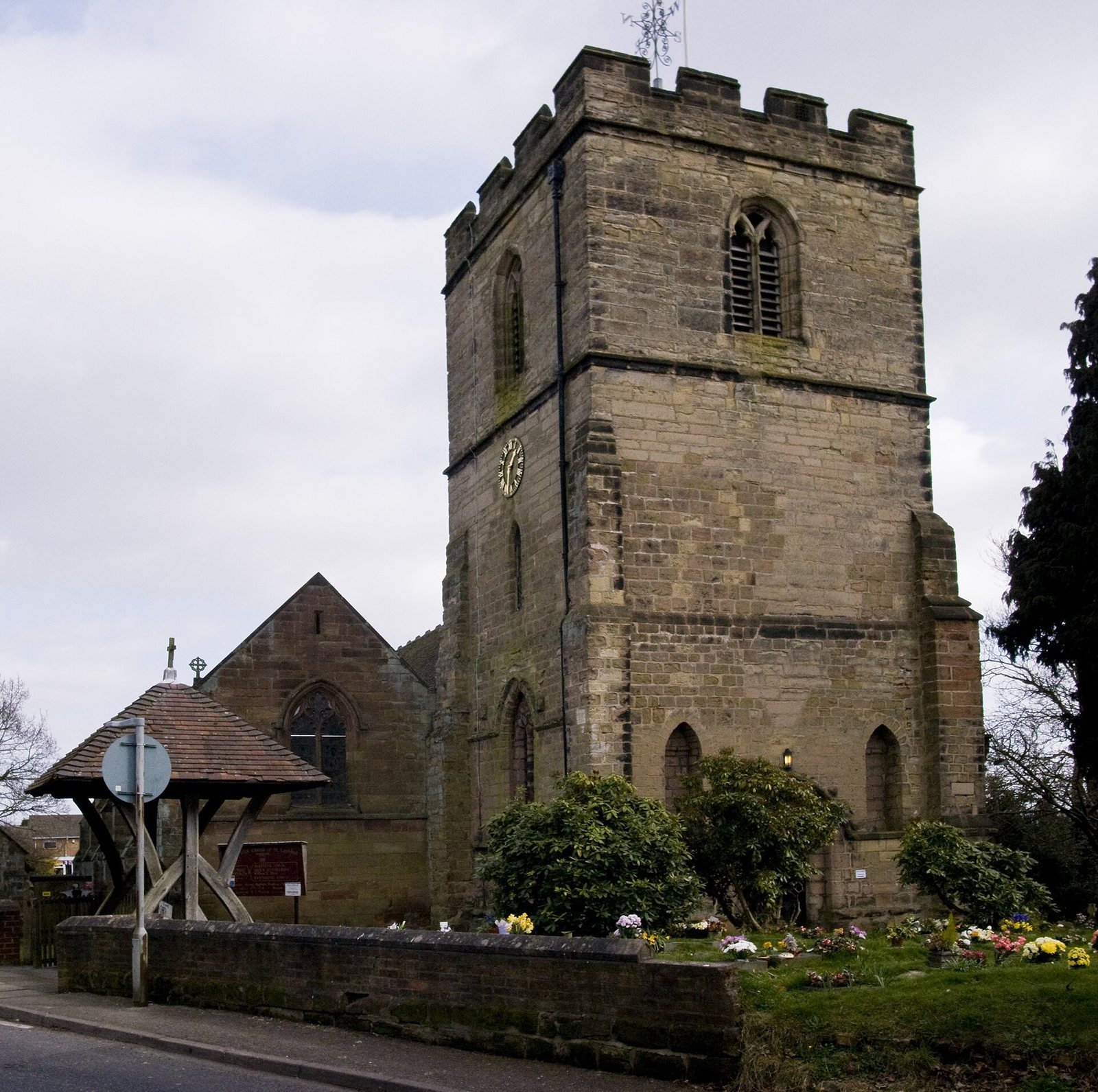
The church’s surviving fabric spans medieval and later work. Its tower and chancel date to the 12th or 13th century, and the building contains some of the county’s finest Early English work. North and south aisles contain separate chapels, while a 14th-century timber porch stands outside the south door.
Medieval structure and chapels
Tower, chancel, and porch
The tower’s stonework includes a gridiron, an iron cooking grate associated with the martyrdom of Saint Laurence, an early Christian martyr. The chancel, the part of the church near the altar, dates with the tower to the 12th or 13th century. Outside the south door, a rare timber porch survives from the 14th century.
Aisles and chapels
The south aisle contains a Lady Chapel, dedicated to the Virgin Mary. A separate chapel dedicated to St Laurence occupies the north aisle, which was added in 1900 by the architect George Frederick Bodley, an English architect associated with the Gothic Revival.
Clock and bells
Clock
Installed in 1888, the clock was made by J. B. Joyce & Co. of Whitchurch. It struck the hour and was designed with provision for quarter-hour chimes to be added later. Its gravity-regulated mechanism used a pendulum made of zinc and iron to reduce variation caused by temperature changes. The pendulum’s bob weighed 2 cwt, and it beat once every 1¼ seconds. The dial measures 4 feet (1.2 metres) across and has gilded hands and figures.
Bells
The bell ring was enlarged from eight bells to ten on 20 November 1999. At the same time, a ringing chamber was formed at ground level at the foot of the tower.
Organ
The organ has three keyboards and pedals. It is built on the extension principle, allowing pipes to serve multiple stops across a range of pitches.
Stained glass
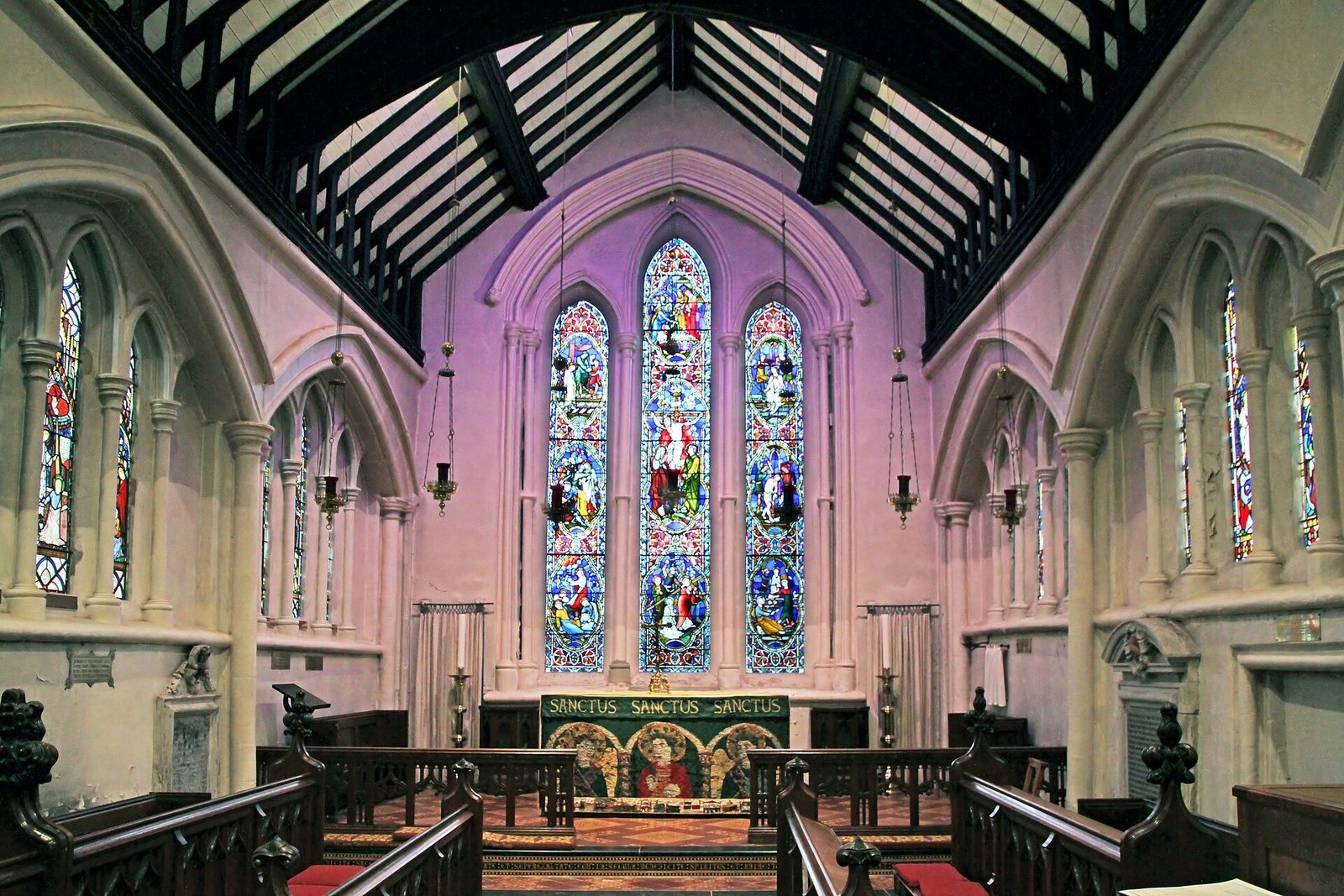
Almost all the stained-glass windows are by Hardman & Co., a Birmingham firm known for its stained glass and church work. Their deep colours and ornate designs include detailed reproductions of 13th-century stained-glass designs. Subjects include scenes from the Passion and Resurrection of Christ, the Adoration and Nativity, the Presentation of Christ in the Temple before Simeon, the Annunciation, the descent of the Holy Spirit upon the Apostles, Christ’s appearance to St Thomas, the Transfiguration, Christ walking on the Sea of Galilee, and the raising of Lazarus. Another window is credited to Pugin and Kempe.
Churchyard and surroundings
An extension of the churchyard between Kings Norton and Bristol Road contains sixteen war graves of service personnel: one from the First World War and fifteen from the Second World War. Nearby are nail makers’ cottages, the Great Stone Inn, the old school, and the Village Pound.