St Laurence’s Church, Bradford-on-Avon: An Anglo-Saxon Church
Site at a Glance
- Rating
- 4.8
- Popularity
- Medium
- Country
- United Kingdom
- Primary era
- Medieval
- Eras represented
- Medieval
- Civilizations
- Anglo-Saxon
- Site type
- Religious
- Remains
- Church
On this page8 sections
History
Origins and possible early use
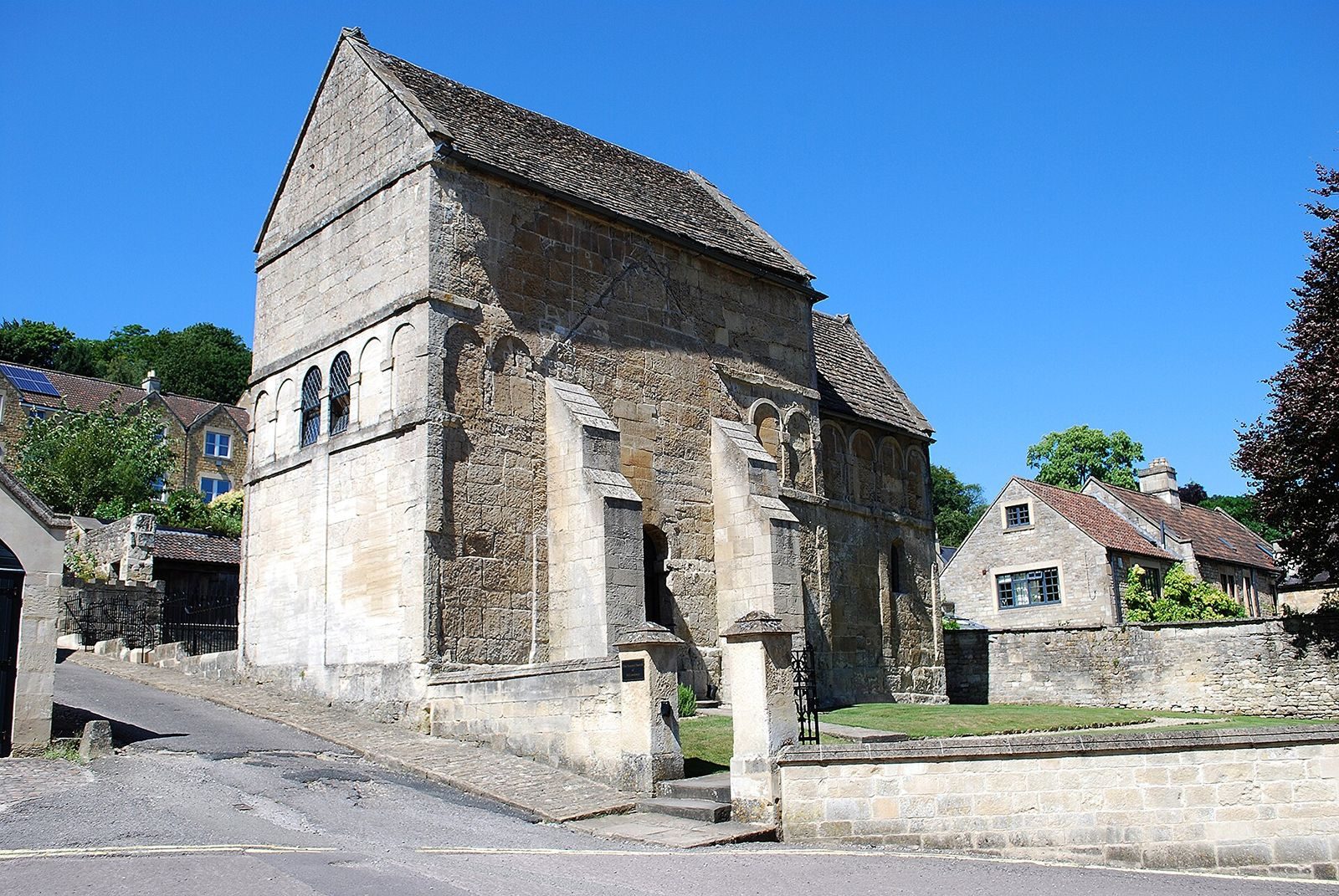
St Laurence’s Church is an Anglo-Saxon church, from the early medieval period in England before the Norman Conquest, in Bradford-on-Avon, United Kingdom. Most of its present structure is generally dated to the 10th or 11th century, though its date remains debated. It is among the few surviving Anglo-Saxon churches in England without evident later medieval rebuilding or alteration, despite subsequent changes and reuse.
William of Malmesbury, a medieval English chronicler, wrote that a small church was founded at Bradford-on-Avon around 700 by Aldhelm, an Anglo-Saxon churchman and abbot of Sherborne. His account does not prove that the church he described was St Laurence’s. H. M. Taylor argued that the present building’s walls, to their full height, belonged to Aldhelm’s time.
Another possibility is that the church was built after 1001, when King Æthelred the Unready gave the site to nuns from Shaftesbury Abbey, a religious house for women who had fled Viking attacks. The nuns cared for the body of Edward the Martyr, Æthelred’s half-brother and a former king of England. St Laurence’s may have served for a time as Edward’s mortuary chapel, a place associated with burial or funerary rites. This possible role may help explain the church’s small scale and elaborate design. Its dedication is to Laurence of Rome, an early Christian martyr and saint.
Reuse and rediscovery
The church later served several practical purposes, including as a gardener’s home, a poor school and a charnel house, a place for storing human bones. For many years, the nave, or main body of the church, was used as a school, while the chancel, its eastern part, became a cottage. Both spaces were divided into more than one storey, and houses and stables were built around the church.
William Jones, rector of nearby Holy Trinity, rediscovered the building in 1856. Its Anglo-Saxon character was recognized during the 19th century, and restoration work carried out between 1870 and 1880 removed later additions. The work also eliminated interior stairs and filled in windows. St Laurence’s received Grade I listing in 1952, a designation for buildings of exceptional architectural or historic interest.
Remains
The compact stone building adapts a monastic plan on a miniature scale. It stands on rising ground near Holy Trinity, a larger parish church from the Norman period following the Conquest.
Plan and proportions
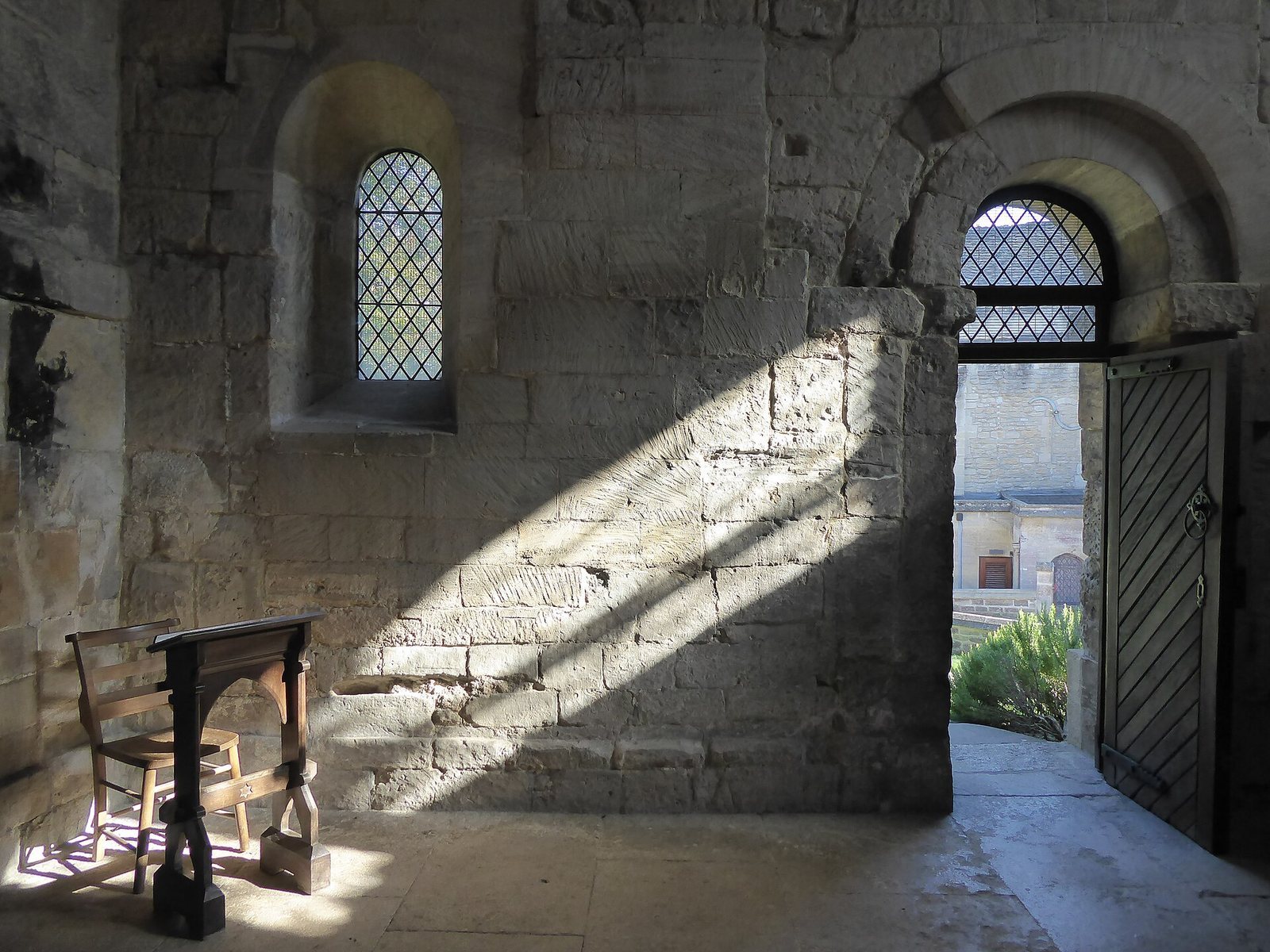
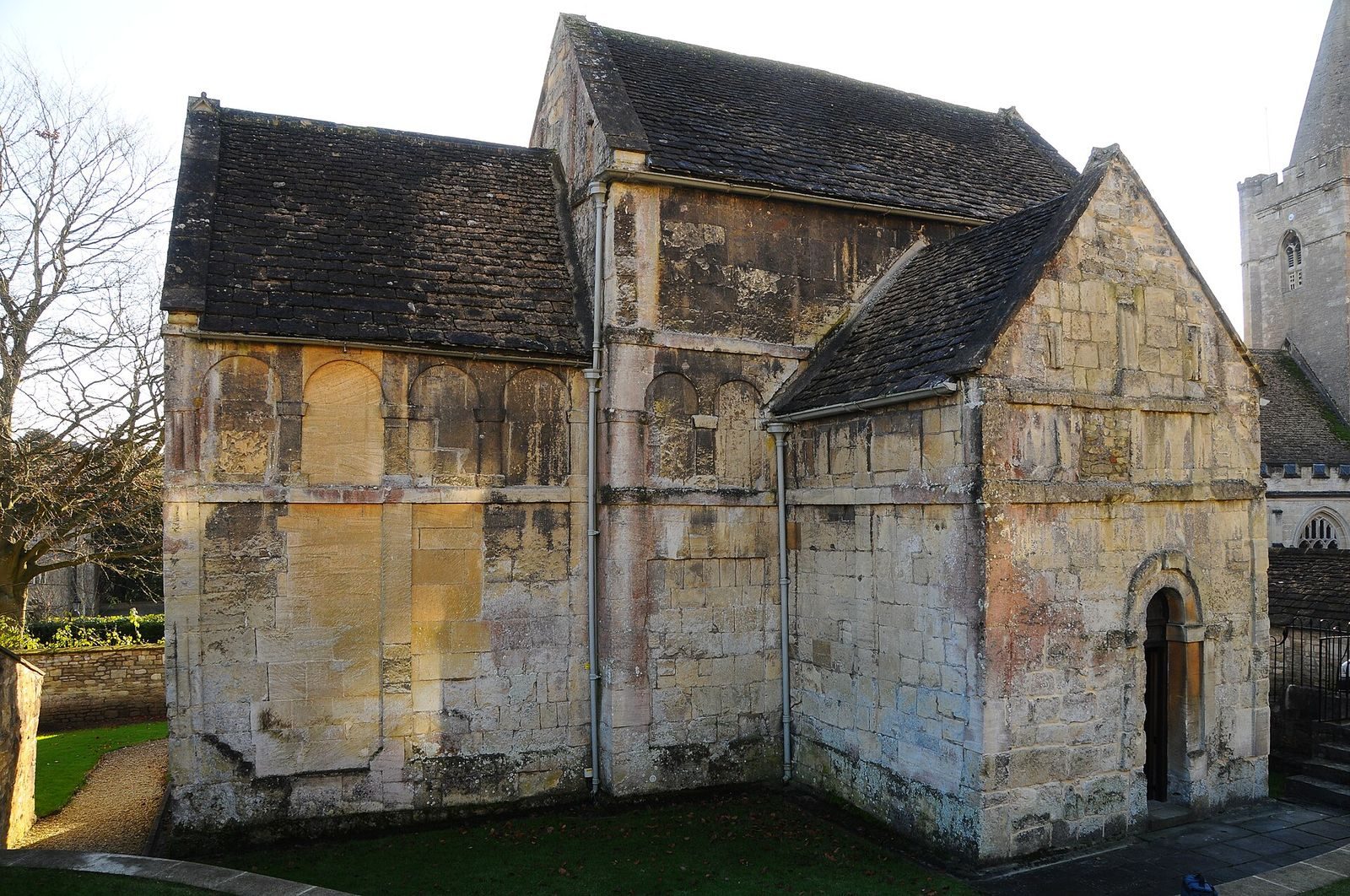
The original arrangement had four principal spaces: a nave without side aisles, an eastern chancel, and a side chamber, or porticus, on each side. The north chamber survives; traces of the south chamber’s former roof indicate its original height. Unusually narrow doorways connect the parts, which appear almost separate from one another. The nave measures about 7.5 metres long and just over 4 metres wide, with an interior height of around 8 metres. The nave and chancel are both notably tall in proportion to their length. The surviving structure preserves much of its final Anglo-Saxon form.
Exterior and sculpture
Wall decoration
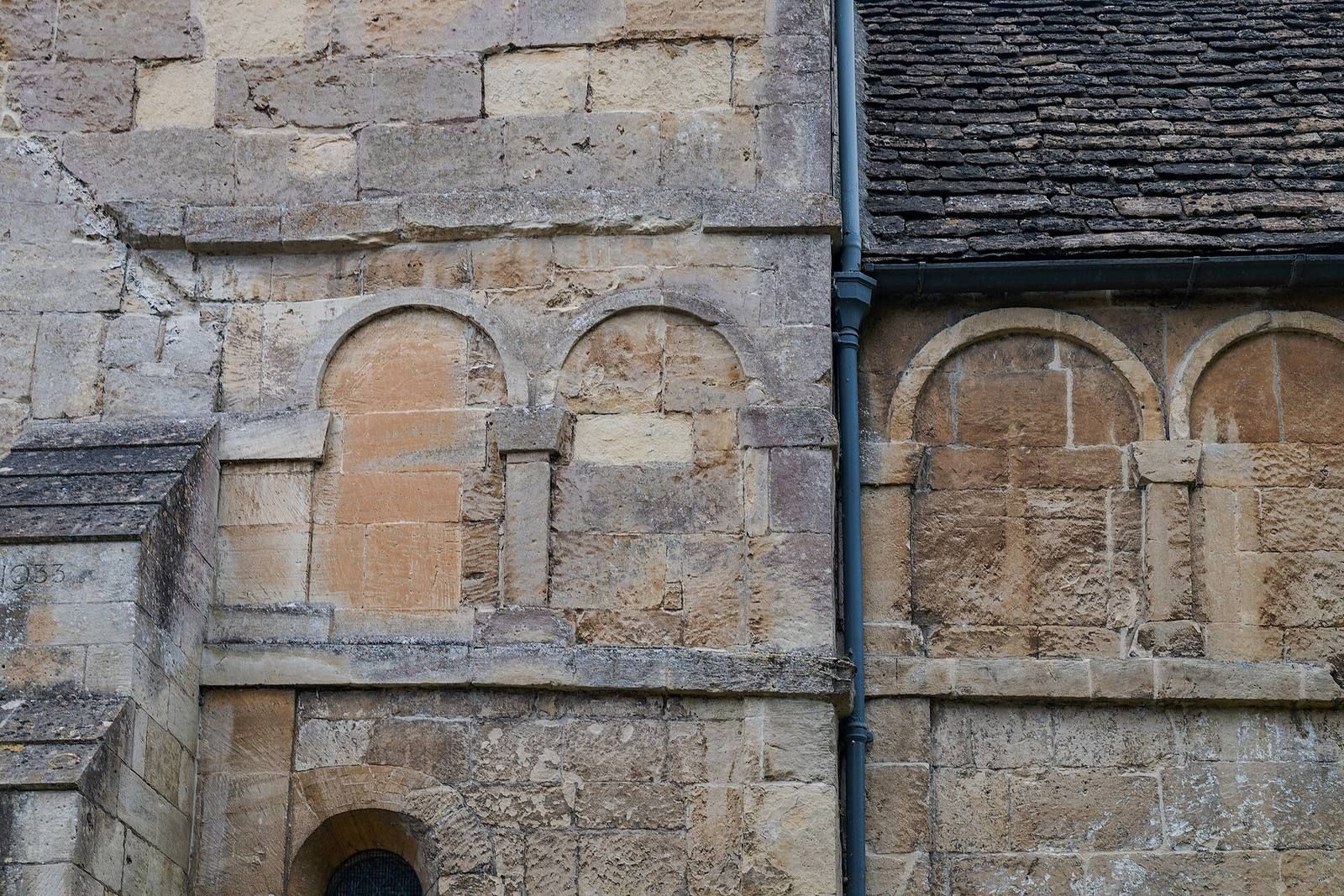
The exterior walls have a blind-arcade frieze, a band of arches without openings, and projecting stone pilaster strips, shallow vertical bands of masonry. The arches are formed by substantial stonework projecting from the wall, rather than by lines cut into its surface. Comparable treatments appear at St Andrew’s Church, Great Dunham; St Mary’s Church, Tasburgh; All Saints’ Church, Earls Barton; and St Peter’s Church, Barton-upon-Humber.
Carved figures
Two relief carvings of angels, each about half life-size, are set high above the chancel arch. Their outstretched bodies extend horizontally. They may once have flanked a larger sculpted Crucifixion positioned above the arch. Fragments of large relief carvings suggest that the church originally had richer decoration.