St Gregory’s Minster: An 11th-Century Church in Kirkdale Valley
Site at a Glance
- Rating
- 4.7
- Popularity
- Medium
- Country
- United Kingdom
- Primary era
- Medieval
- Eras represented
- Medieval, Modern
- Civilizations
- Anglo-Saxon, British, English
- Site type
- Religious
- Remains
- Church
On this page11 sections
History
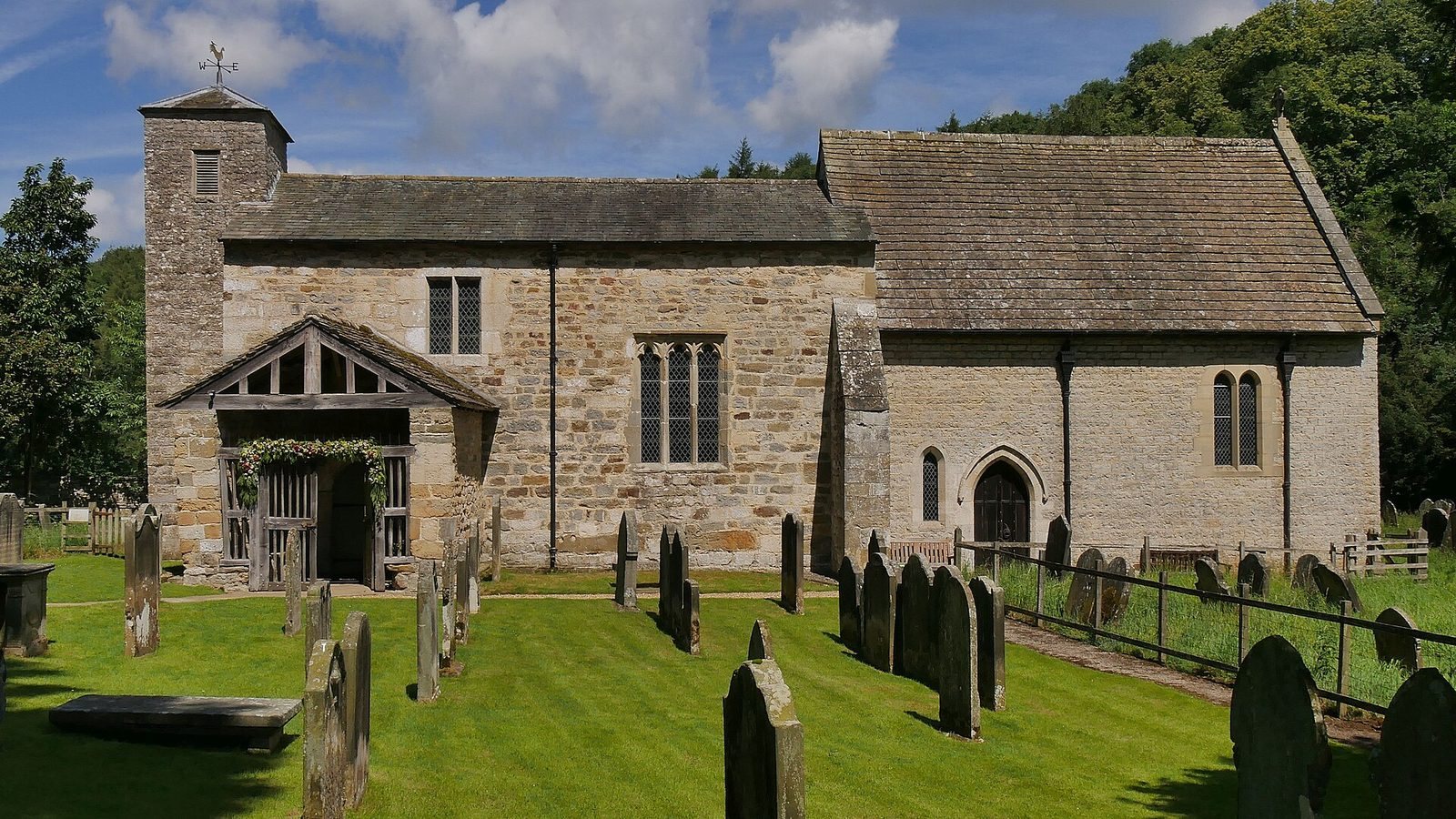
St Gregory’s Minster is an Anglican parish church in Kirkdale valley, near Welburn and Kirkbymoorside in the United Kingdom. The present church was built around 1060 on the site of an earlier church. A minster is a church with a historic role serving a wider community, whether or not it has a continuing monastic community. Kirkdale valley served surrounding settlements as a centre until 1866, although the valley itself was never settled.
Early religious traditions
The minster’s origins are uncertain. In his account written in 731, the early English monk and historian Bede described a small community of monks established under royal protection near Lastingham in 659. The community may have been preparing a burial place for Æthelwald, a king of Deira, an Anglo-Saxon kingdom in northern England. Bede placed it in remote moorland where robbers and wild animals were said to roam. The episode has been tentatively linked to the minster’s early history. Memory of a sacred place appears to have endured into the period of Danish rule, when Danish law and authority prevailed in parts of England.
Rebuilding in the 11th century
An inscription associates the rebuilding of the ruined church with Orm, son of Gamal. It says that he bought the church and rebuilt it from the ground up for Christ and St Gregory, pope from 590 to 604. The inscription places the work during the reign of Edward the Confessor and the earldom of Tostig of Northumbria, dated 1055–1065. The nave is also dated to a rebuilding in 1065.
Later use and restoration
The north aisle was added in the 12th century to serve a growing population. Famine and plague later reduced the population by half. Major modifications followed in the 15th and 19th centuries.
A major restoration took place in 1907–1909. Georgian fittings, including a gallery and individual seats, were removed as part of an effort to return the church to a medieval appearance. The building was listed at Grade I in 1955, the highest listing category in England, for buildings of exceptional historical or architectural interest.
Dedicated to St Gregory, the church is part of the Diocese of York, a church district overseen by a bishop. It belongs to Kirkdale parish, a local ecumenical partnership in which congregations share worship and ministry. The partnership includes St Saviour’s Church, Harome; St Hilda’s Church, Beadlam; All Saints’ Church, Nunnington; and St John the Baptist’s Church, Pockley.
Remains
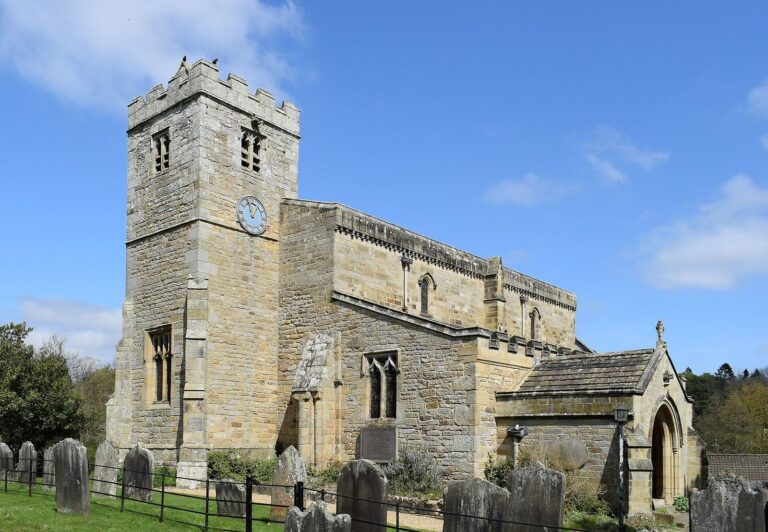
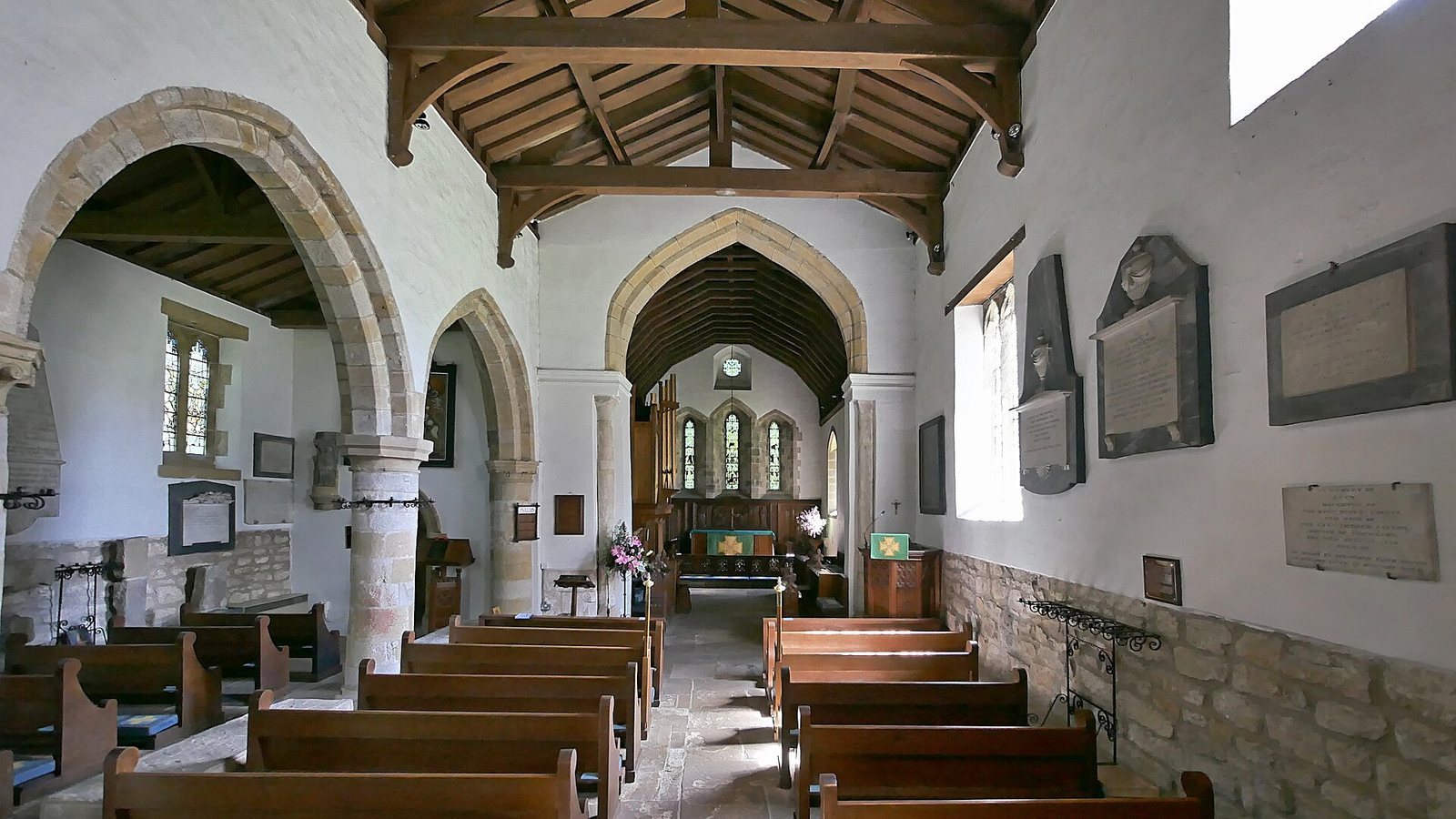
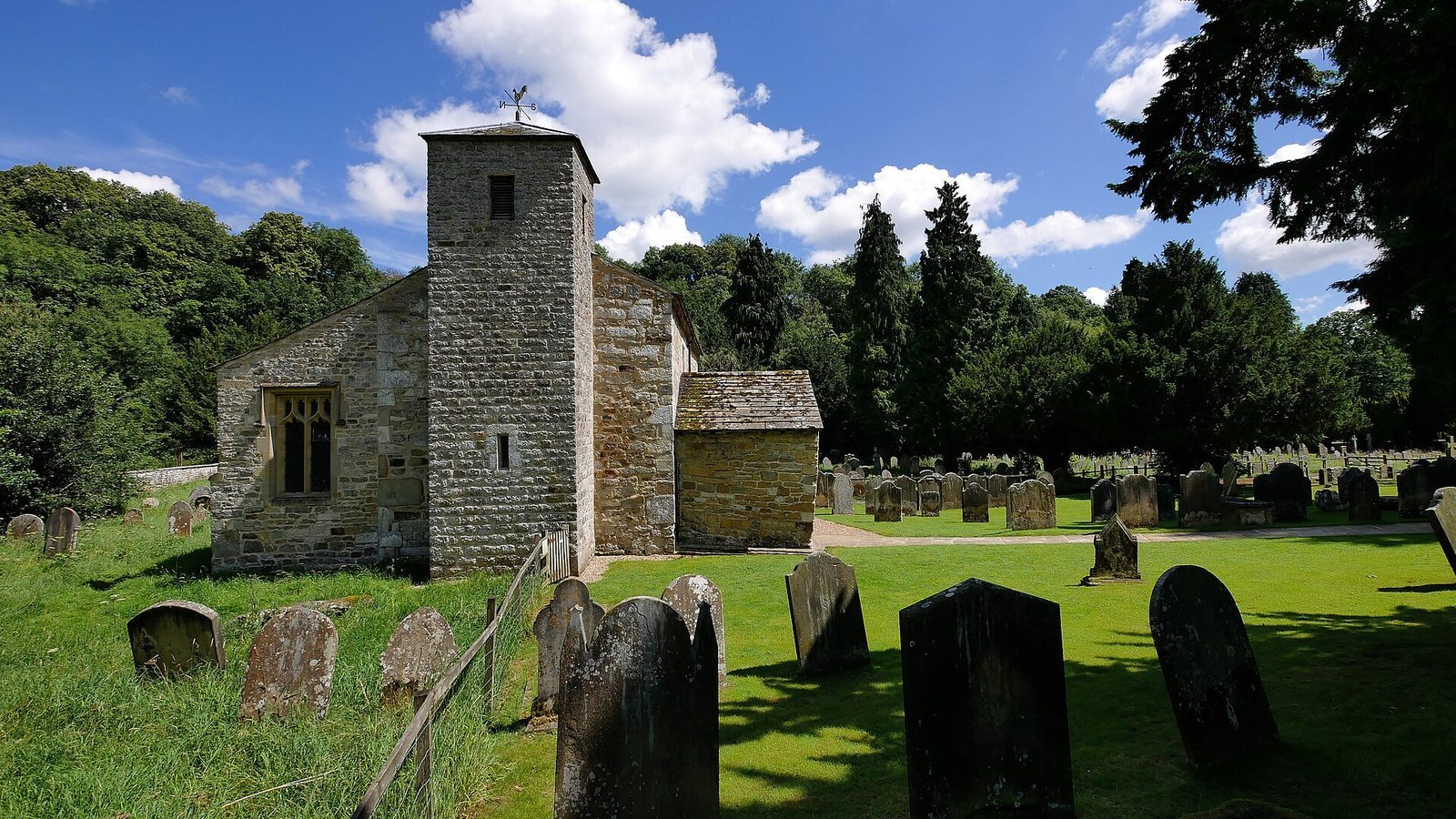
The church stands amid a large cemetery in Kirkdale valley, with Kirkdale Cave, known for prehistoric animal-bone finds, nearby. Its layout brings together a mid-11th-century nave, a north aisle, a chancel and a tower, reflecting several phases of building. In age and style, it resembles St Hilda’s Church, Ellerburn.
Main church fabric
Nave and north aisle
The principal nave dates to the middle of the 11th century. Two grave slabs from the 10th century were built into its south wall during rebuilding. The north aisle dates to the 12th century.
Chancel
Rebuilt in 1881, the chancel incorporates the 13th-century southeast entrance used by priests and masonry from the east window. Stained-glass windows were installed in the east wall and the north wall of the aisle at the same time. The rebuilt chancel is disproportionately large beside the tower and nave.
Tower and bells
The tower was added in 1827 and has a medieval appearance. It holds two medieval bells: Gregory, cast around 1300, and Peter, cast around 1500. Both were restored in 1998.
Entrances and sundial
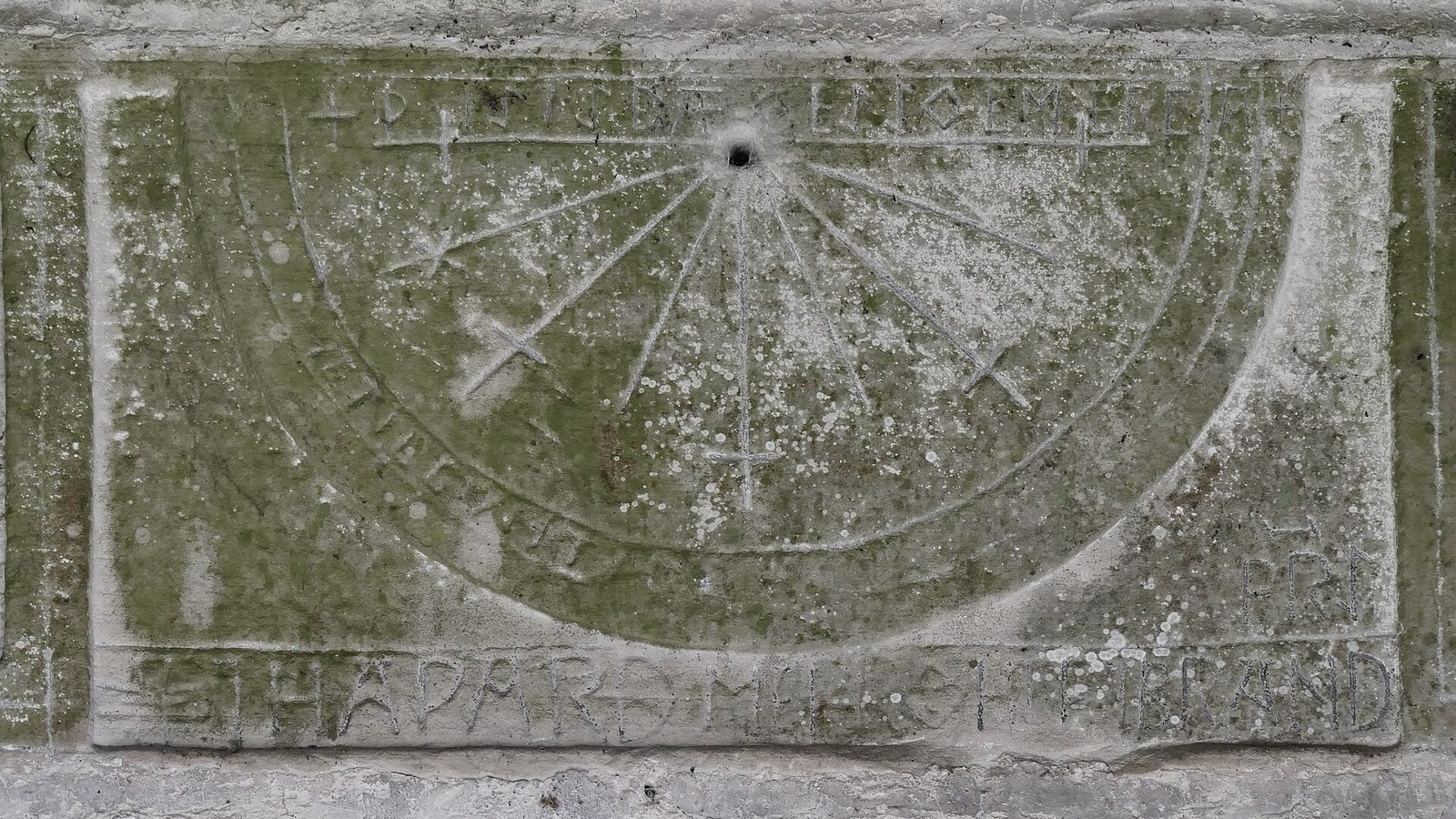
The 12th-century doorway in the west wall was replaced by the present opening, which leads into the tower. The church door also dates to the 12th century. Above the entrance on the south side, beneath the porch, a rare canonical sundial marks traditional Christian prayer times rather than ordinary clock hours. It is the best preserved of several similar local church dials. After being covered with plaster for about 700 years, it was rediscovered in 1771 during construction of the porch. Its inscriptions describe it as a marker of the sun at each prayer time and name Haward as its maker and Brand as a priest. Two inscribed stones flank the dial.
Interior features and grave slabs
A 13th-century baptismal font stands near the entrance. Two Anglo-Saxon grave slabs, dated to the 8th and 9th centuries, were brought into the church during the 1907 restoration; another Anglo-Saxon slab lies in the porch. The organ, made by Abbott Smith in Leeds in 1910, was installed in 1923.