St Florent Abbey: A Benedictine Monastery in Anjou, France
Site at a Glance
- Popularity
- Medium
- Country
- France
- Primary era
- Medieval
- Eras represented
- Medieval
- Civilizations
- Unclassified
- Site type
- Religious
- Remains
- Monastery
On this page10 sections
History
Return to Saumur
St Florent Abbey was a Benedictine monastery in Anjou, near Saumur in France, dedicated to Florent of Anjou, a local Christian saint. It followed the earlier Abbey of Saint-Florent-le-Vieil, also known as Mont-Glonne, whose monks had left during Viking attacks. After about a century away, the community returned to Saumur in the tenth century and settled within the castle enclosure rather than reoccupying its former home. The old abbey’s territory remained attached to the new community as a dependency with a special status.
A foundation legend offers a vivid, though probably unreliable, account of the return. It says that the monk Absalon brought relics, sacred objects associated with a saint, from Tournus after taking them from its monks. He and his companions took refuge in a cave near the Loire. Theobald I, Count of Blois, then allowed them to settle in Saumur’s castle and summoned twelve Benedictine monks from Fleury-sur-Loire. According to the story, Tournus later returned sacred vessels, books, and charters from Mont-Glonne. Absalon’s companion Hélie led the new community and attended the consecration of its basilica on 2 May 950; a cloister was also built. The tale’s details are considered doubtful, although the community’s return to Saumur is plausible.
Relocation and growth
In 1026, Foulques Nerra, Count of Anjou, captured Saumur and its castle. The monks declined an offer to move to Angers and instead settled on the left bank of the Thouet, near its meeting with the Loire. Their new site was at Verrie, on land already belonging to the community, near the church of Saint-Hilaire-des-Grottes. The estate had been acquired in 849. The relocated house became known as Saint-Florent-lès-Saumur, distinguishing it from Saint-Florent-du-Château at Saumur. Six monks returned to the rebuilt castle and raised a modest chapel, which the bishop of Angers consecrated.
The abbey grew during the second half of the eleventh century. Its church project began in 1026 and the church was dedicated on 15 October 1041, though construction continued later in the century. In 1070, Abbot Guillaume received the village church and churches at Gometz-la-Ville and Gometz-le-Châtel from Geoffroy, Bishop of Paris.
Dependent houses and church rights
St Florent developed an extensive network of priories, monastic houses often dependent on an abbey, and held rights over churches and parishes. These dependencies lay across dioceses, territories administered by bishops, in regions including Angers, Paris, Rennes, Nantes, Vannes, La Rochelle, Luçon, Le Mans, and Angoulême. Among the French holdings were Montilliers, founded in 1026; La Fosse near La Rochelle, given by the lords of Montreuil-Bellay in 1064; and Saint-Nicolas de La Chaize-le-Vicomte, given in 1080. Saint-Nicolas-des-Eaux, also called Saint-Nicolas-de-Castennec, was founded in 1120. Two monks of St Florent were present when its foundation deed was drawn up at the cloister of Saint-Martin de Josselin.
Some dependent houses had their own earlier histories. Bruyères-le-Châtel had begun as a nunnery in 670, was destroyed by the Normans, and was re-established as a priory by St Florent in 1070 before later joining La Saussaye. Saint-Surin de Châteauneuf-sur-Charente was founded in the twelfth century by Girard II, Bishop of Angoulême. In England and Wales, the abbey’s dependencies included Saint-Pierre de Sele at Upper Beeding, associated with the church of Beeding and local tithes; Monmouth, founded by Guihenoc in the eleventh century and confirmed by William the Conqueror; and Andover, whose church, tithes, and other possessions William granted to the abbey. Andover’s priory was dissolved in 1414, while Saint-Pierre de Sele’s holdings passed to a college in the sixteenth century.
The abbot could appoint clergy to a number of designated parishes, including churches in and around Angers and Saumur, as well as at Gastines in the Diocese of Le Mans. A separate group of parishes in the exempt territory of Saint-Florent-le-Vieil answered only to the abbot and the pope. The abbey’s surviving necrology, a record of deaths arranged by calendar day, also preserves anniversaries for abbots of other monasteries. One entry gives 26 August as the death day of Pierre Mahé, abbot of Notre-Dame du Tronchet.
War, relics, and religious conflict
During the Hundred Years’ War, the prolonged conflict between the English and French crowns, the abbey was converted into a fortress and occupied at different times by armed bands. The monks kept watch there. Royal letters dated 24 November 1369 required people living on the levee on the right bank to maintain a day-and-night watch at the abbey. Abbots Jean and Louis du Bellay repaired damaged buildings and rebuilt the church and convent. The commendatory system, under which an abbatial office and its income could be assigned to an abbot who did not live in or directly manage the monastery, brought further difficulties. Some priories passed into lay hands or to unsuitable religious leaders, while chapels serving dependent houses became storehouses or stables. Disputes between abbots and monks added to the disorder.
In 1475, while campaigning in Picardy and Normandy, Louis XI found the body of Saint Florent in the church of Saint-Georges at Roye. After returning to Tours on 24 November, following the Treaty of Picquigny and the end of the Hundred Years’ War, he made a pilgrimage to the abbey on 7 December. A royal order transferred the relics from Roye to Saumur in 1480. After Louis XI’s death, the canons of Roye recovered part of them.
Violence returned during the French Wars of Religion, conflicts between Catholics and Protestants. On 15 May 1562, after a Franciscan preacher had been insulted and threatened by tenant farmers, Lieutenant Bourneau of Saumur, royal officers, and Huguenots, French Protestants, entered and plundered the abbey and church. They smashed reliquaries, containers for relics, and altars, and burned relics, the organ, and woodwork. The monks fled until the military leader Montpensier occupied Saumur. Royal letters in October 1567 ordered a reorganization of the guards, but Huguenots seized the abbey by force in January 1569 and again in April 1576. Puygaillard could not bring assistance. Royal garrisons occupied the site in 1585 and 1593, with the monks bearing the cost.
Reform and suppression
After peace returned, communal religious life and discipline weakened. The monks had agreed in 1637 to join the Congregation of Saint-Maur, a Benedictine reform group, but its introduction at St Florent was conditional on payment of a lifelong pension. During a 1657 inspection, Bishop Claude de Rueil found the tabernacle, altars, and reliquaries neglected. The church was dirty, parts of its floor were untiled, and it lacked a crucifix, organ, confessionals, and a funeral pall. He also reported that the library no longer existed. The monks rejected his proposed rules.
The community had declined from 36 monks before the Reformation to between 10 and 12 at a later date. In 1790, eleven monks remained, and an inventory listed 6,000 volumes and five manuscripts in the library. Three monks sought release from monastic life, including the 63-year-old cellarer René Joubert; the others had not yet decided. Revenue assessments in a later period put the abbey’s income at 32,000 to 35,000 livres, with 12,000 going to the abbot.
The French Revolution brought the abbey’s suppression. In 1790 it was declared national property and divided into three lots sold to different owners, while the principal church and convent buildings remained state property. The settlement around the abbey became a municipality and, in 1794, joined with neighboring Saint-Hilaire to form Saint-Hilaire-Saint-Florent.
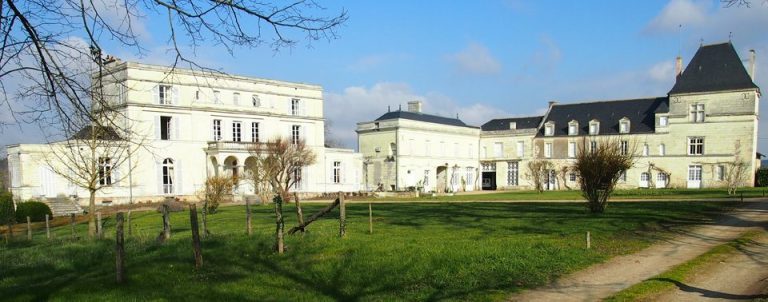
The former abbey church and most monastic buildings were demolished during the nineteenth century. The principal buildings had served for a time as a hospital for military patients with scabies and, from 1803, as the residence of Senator Louis-Nicolas Lemercier. In 1806, Lemercier asked engineer Charles-Marie Normand to demolish the church to open the view over the valley. The surviving remains were classified as historic monuments in 1964 and 1973, and the crypt has been the subject of restoration by the city of Saumur and the Fondation du Patrimoine.
Remains
Abbey church
Plan and building phases
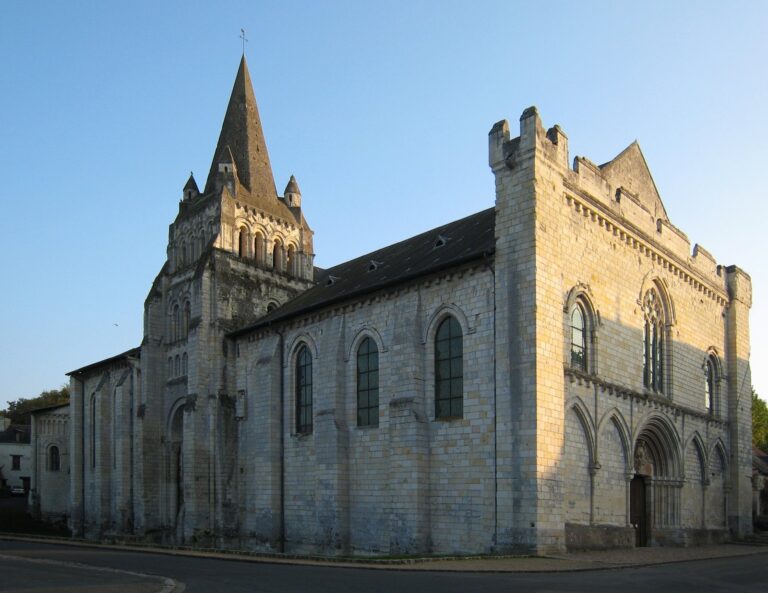
The abbey church measured 75 metres long and 21 metres wide. Its seven-bay nave had side aisles and was probably covered by a pointed barrel vault, a tunnel-shaped ceiling with a pointed cross-section. A bell tower rose above the crossing, where the nave and transept intersected. The choir, dating from the eleventh-century church, had a passage around it called an ambulatory. In the twelfth century the church was rebuilt, with its earlier crypt and choir retained. Its architectural forms included Romanesque, associated with rounded arches; Gothic, associated with pointed forms; and Classical designs derived from ancient Greek and Roman building.
Surviving portions
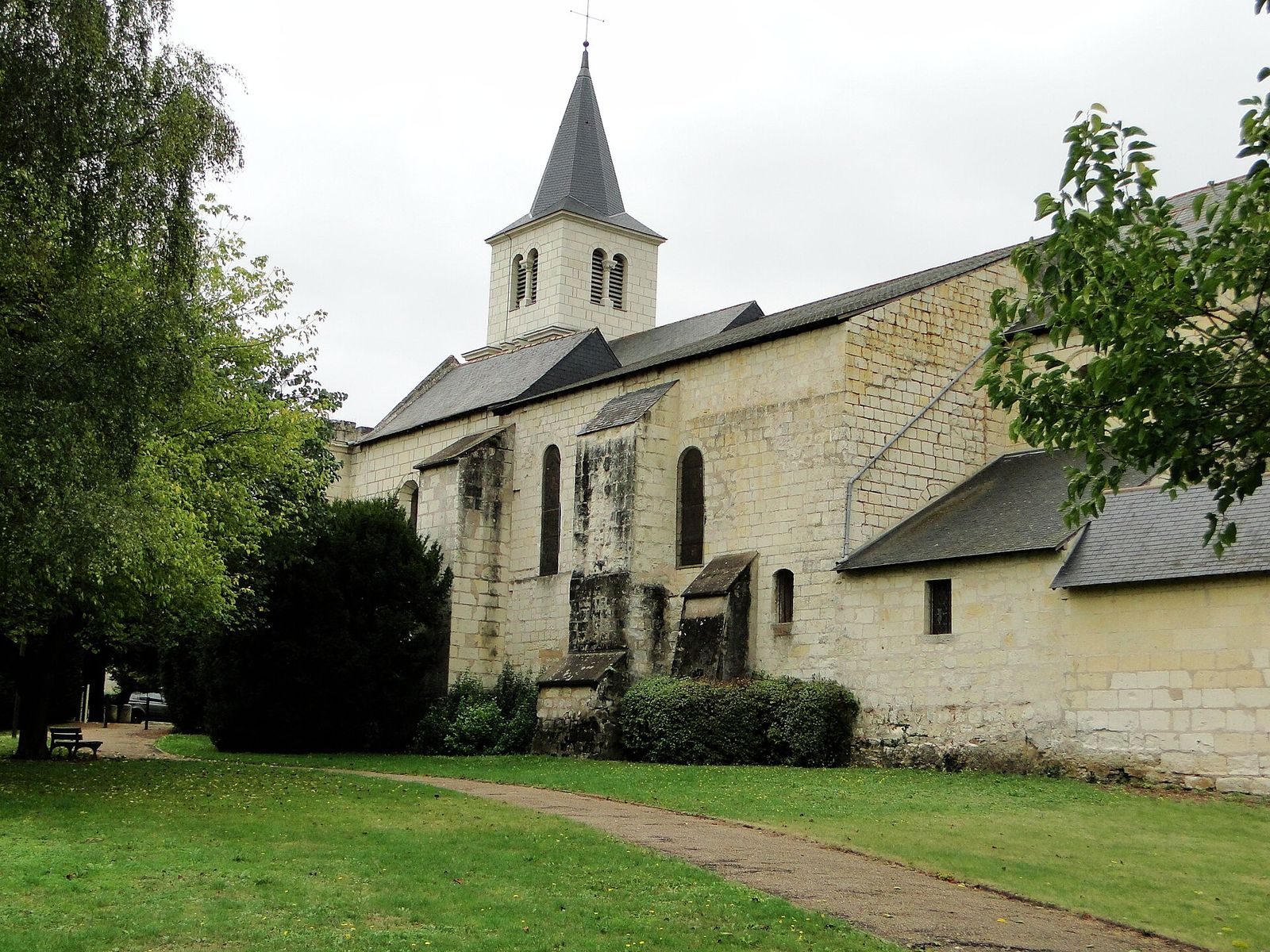
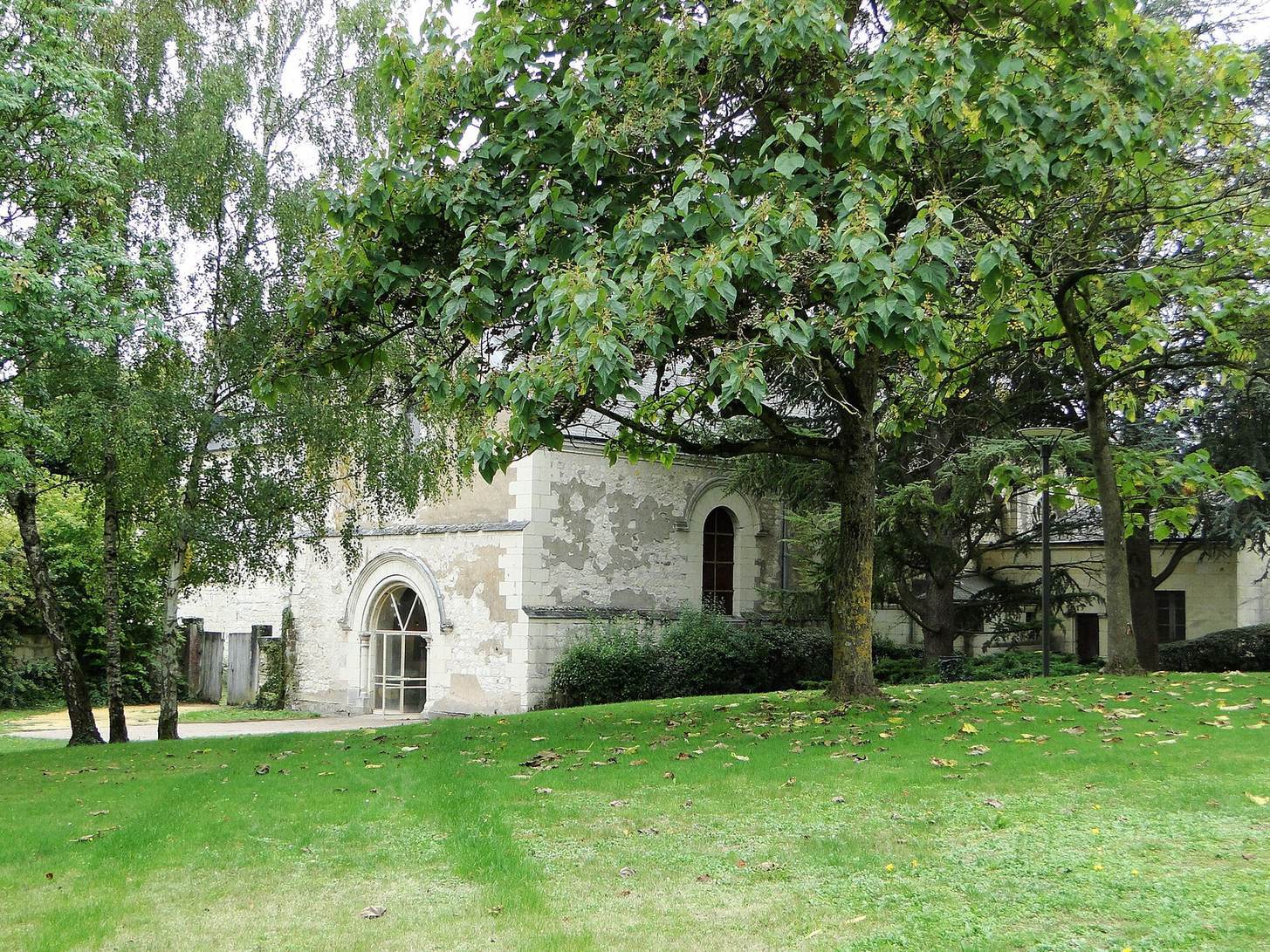
The church’s narthex, the entrance porch at its western end, and its crypt were spared when the building was demolished. They are the surviving parts of the former abbey church.