St. Fabian and Sebastian: A Late Gothic Church in Ramsau, Germany
Site at a Glance
- Rating
- 4.8
- Popularity
- High
- Country
- Germany
- Primary era
- Early Modern
- Eras represented
- Early Modern, Modern
- Civilizations
- German, Holy Roman Empire
- Site type
- Religious
- Remains
- Church
On this page12 sections
History
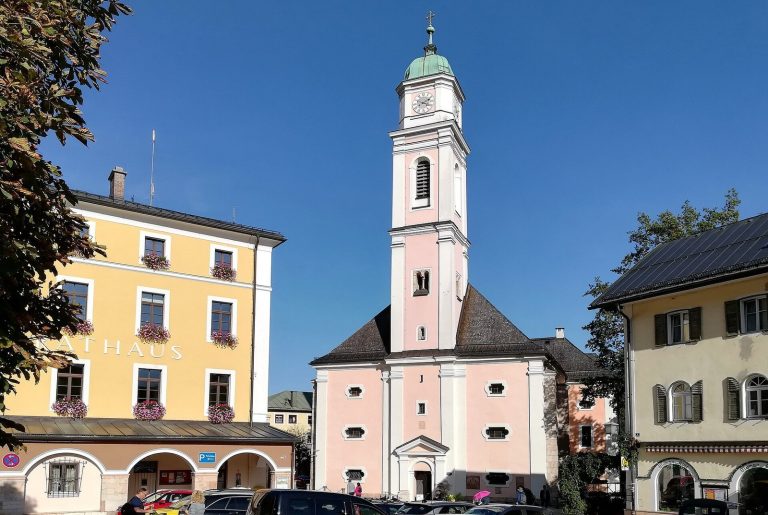
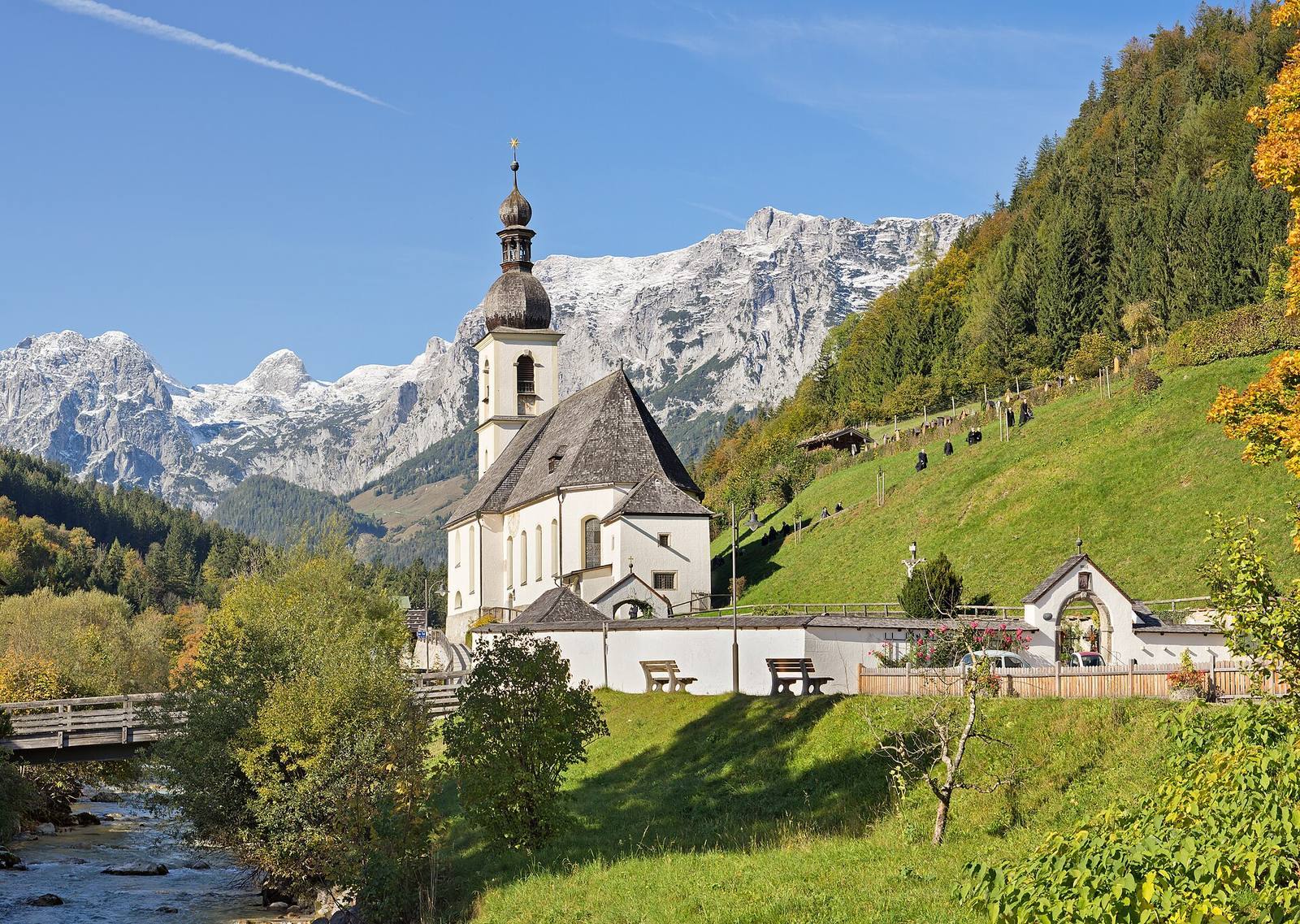
St. Fabian and Sebastian is a Roman Catholic church in Ramsau, Germany, built in 1512 in the Late Gothic style, the later phase of medieval Gothic architecture. Gregor Rainer, prince-provost of Berchtesgaden, ordered its construction. A prince-provost combined church leadership with authority over a territory. The church was dedicated to Saints Fabian and Sebastian, early Christian martyrs.
Foundation and parish development
For about 150 years, the church was served from Berchtesgaden. A stone tower was added in 1610–11. From 1657, a canon lived beside the church as vicar, or deputy parish priest, and a rectory was built for him in 1659. A walled churchyard was laid out around the church in the mid-seventeenth century, and the eastern cemetery has been associated with it since 1658.
Remodelling and parish life
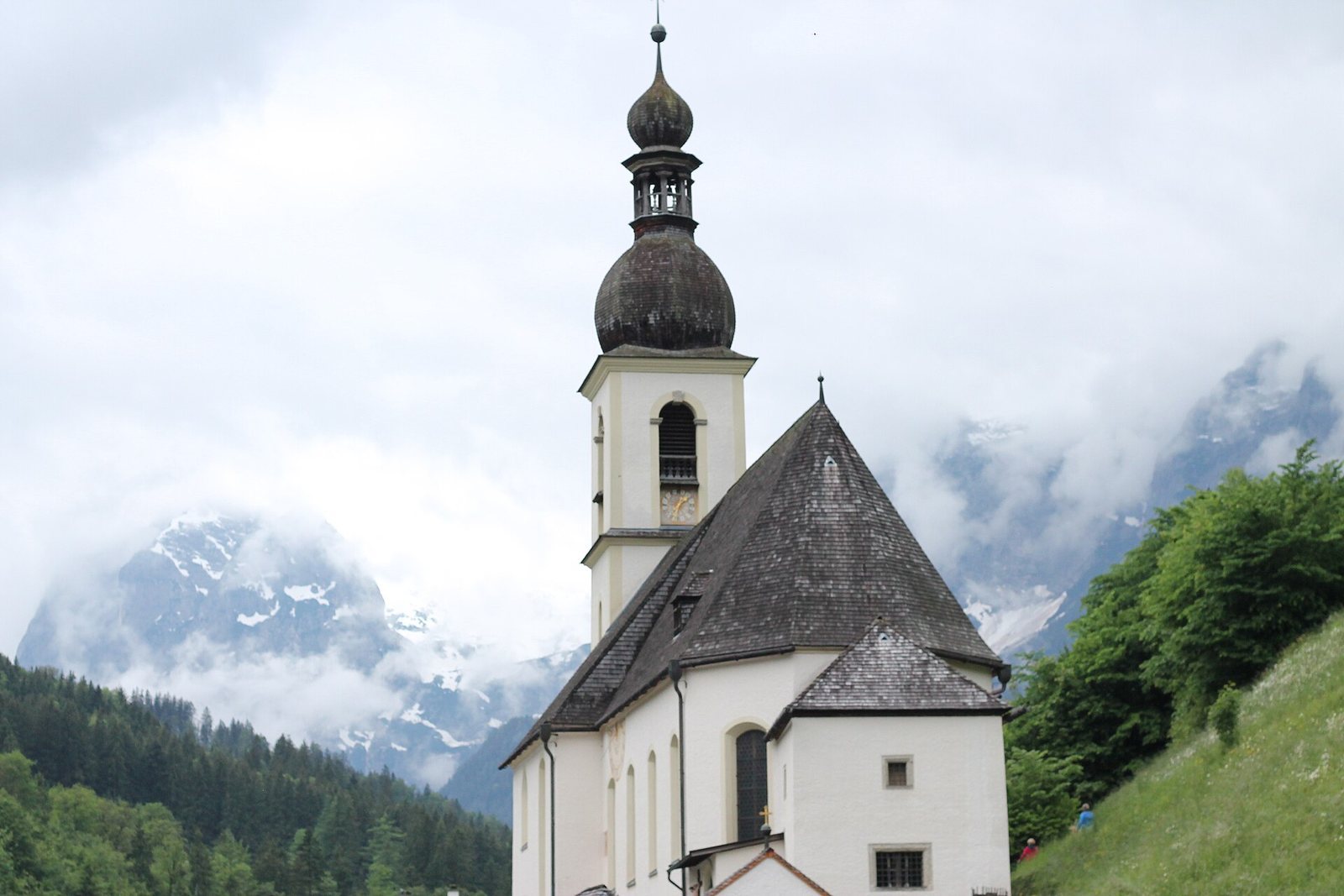
The church was remodelled in Baroque form, a European style known for dynamic shapes and elaborate ornament, in the late seventeenth century. A new tower topped by an onion-shaped dome followed in 1700. After secularization, the transfer of church authority or property to secular control, Ramsau became an independent parish in 1812, and the church became its parish church. It is part of the Archdiocese of Munich and Freising.
In 1815, the Austrian Catholic priest and hymn writer Joseph Mohr stopped at the Ramsau rectory while travelling to Mariapfarr. At the priest’s request, he stayed for several weeks to help with parish work. The following year, Mohr wrote the lyrics of “Silent Night” in Mariapfarr.
Cemetery, landscape art, and recognition
From 1949, an uphill cemetery extension was enlarged three times. The church and its surroundings also became a recurring subject for landscape artists, including Wilhelm Bendz, Thomas Fearnley, Ferdinand Runk, Ferdinand Laufberger, Wilhelm Busch, Otto Pippel, Will Klinger-Franken, Heinrich Bürkel, Carl Triebel, Leopold Munsch, and Loos. Early views by Fearnley and Loos showed the church from the west; by the late nineteenth century, artists increasingly depicted it from the opposite side. The church forms the centre of the protected ensemble “Parish Church of St Sebastian with surroundings” and is recognized as a landscape-defining individual monument.
Remains
The church stands in central Ramsau, in the Taubensee area. Its ground plan measures 35.7 by 11.7 metres, and its roof is covered with wooden shingles. The surrounding cemetery grounds and associated buildings extend to the east, north, and west.
Church and interior
Building form
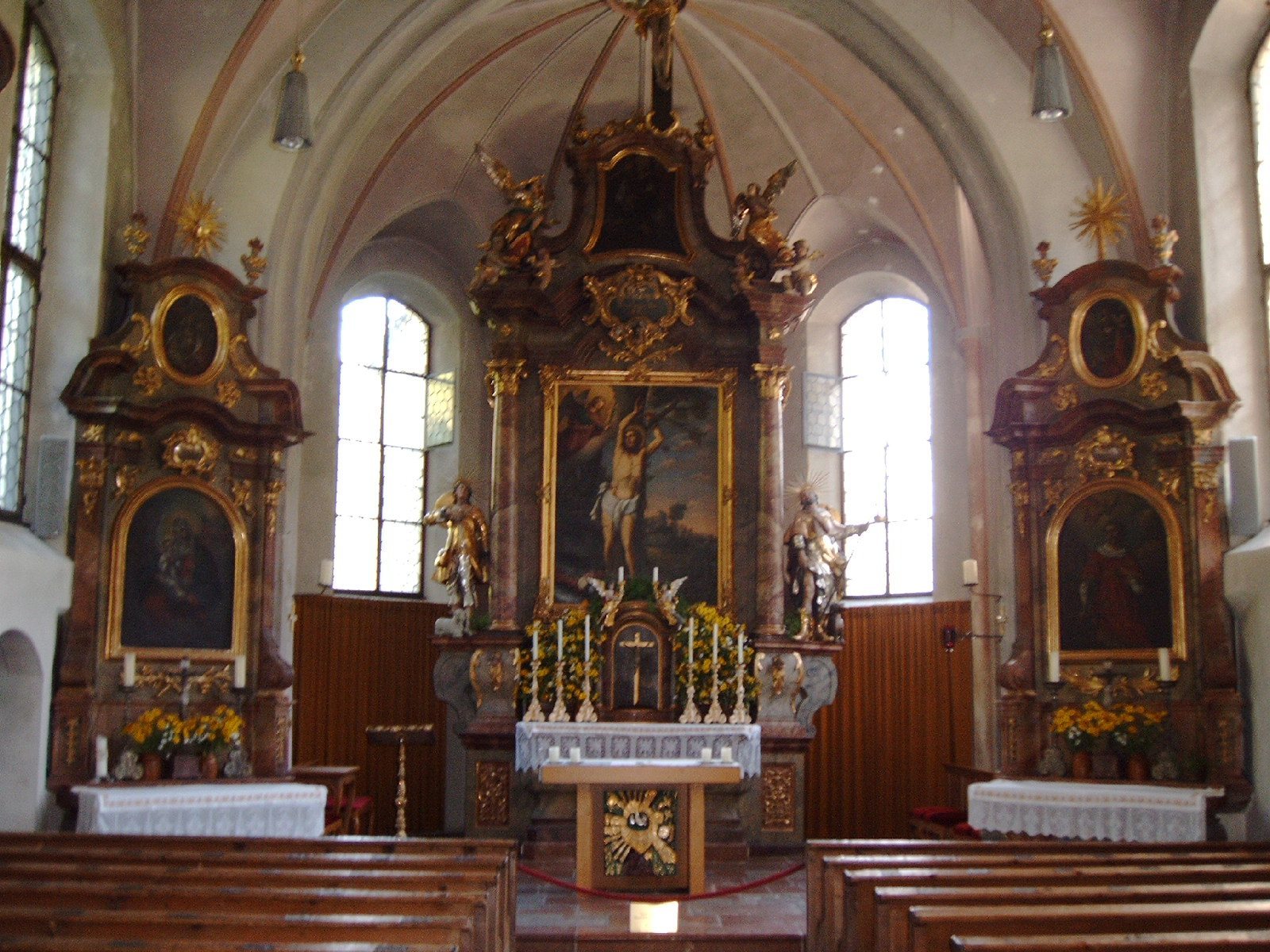
A cross vault, formed where barrel-shaped vaults intersect, is among the church’s structural features. The building’s interior includes an apse, the rounded end that contains the sanctuary, as well as a raised organ gallery.
Altars and figures
The apse contains the high altar and four side altars. An altar facing the congregation was added after the Second Vatican Council, the 1962–65 gathering of Catholic bishops. The church also has a baptismal font. On the organ gallery’s protective railing stand painted wooden figures of Jesus and the twelve apostles. Estimated to date from around 1430, they predate the church; their original location and maker are unknown, although a local craftsman is considered possible. Along with an apostle group at Marktschellenberg, they are regarded as among the most valuable small Late Gothic sculptures from the former Berchtesgaden territory ruled by prince-provosts.
Cemetery grounds and associated buildings
Cemeteries
The historic cemetery lies east of the church and includes a mortuary and a former children’s cemetery. Its uphill extension is known as the Mountain Cemetery, while a newer elevated cemetery lies to the north. The eastern cemetery contains a memorial to Ramsau residents killed in the Second World War.
Buildings and memorials
A sacristan’s house marks the eastern end of the ensemble. To the west are the rectory and parish office, with a memorial to community members killed in the First World War between the rectory and the church.
Landscape setting
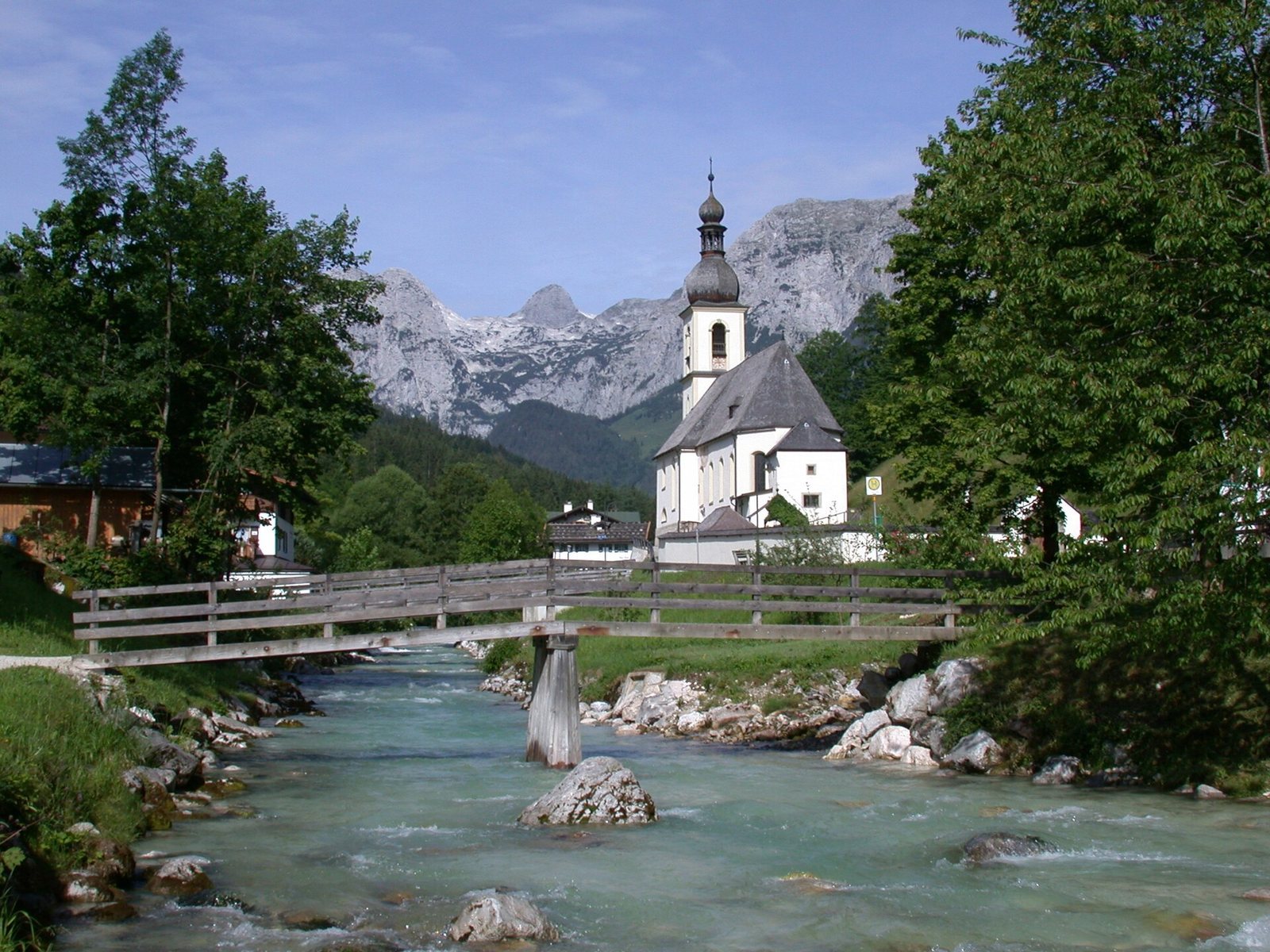
From the eastern viewpoint, the Ramsauer Ache stream and the Ertlsteg footbridge lie in the foreground, with the Reiter Alpe mountain massif behind. From the west, the Hoher Göll mountain forms the backdrop to views of the church.