Pont Fawr: A Seventeenth-Century Bridge over the River Conwy
Site at a Glance
- Rating
- 4.6
- Popularity
- Medium
- Country
- United Kingdom
- Primary era
- Early Modern
- Eras represented
- Early Modern
- Civilizations
- English
- Site type
- Infrastructure
- Remains
- Bridge
On this page6 sections
History
The crossing and the 1630s bridge
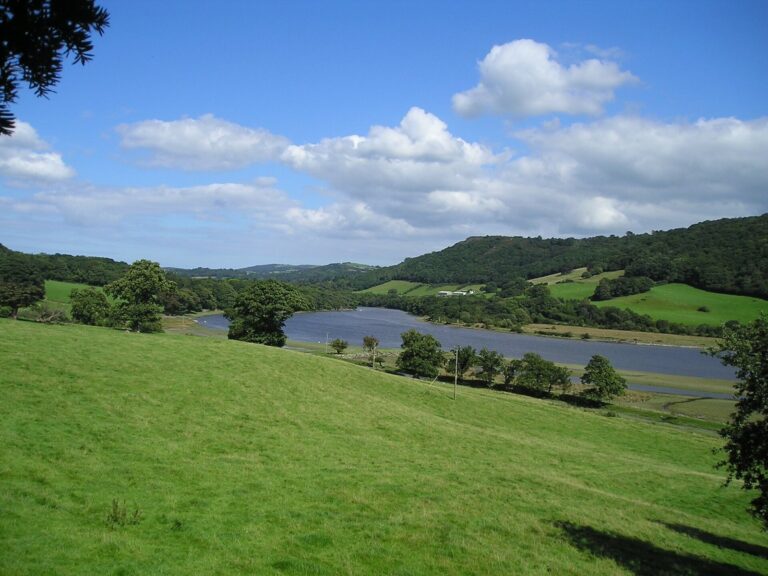
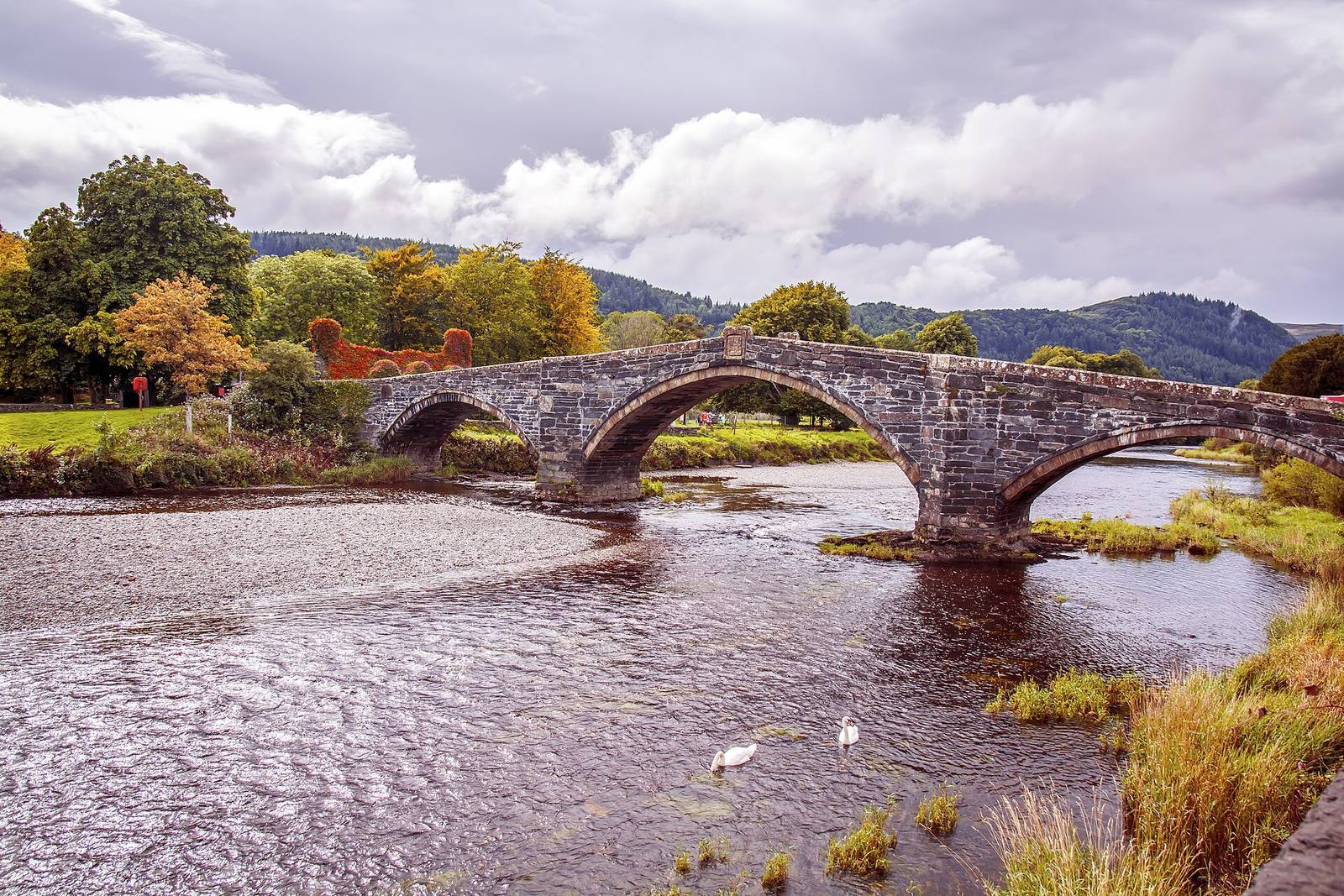
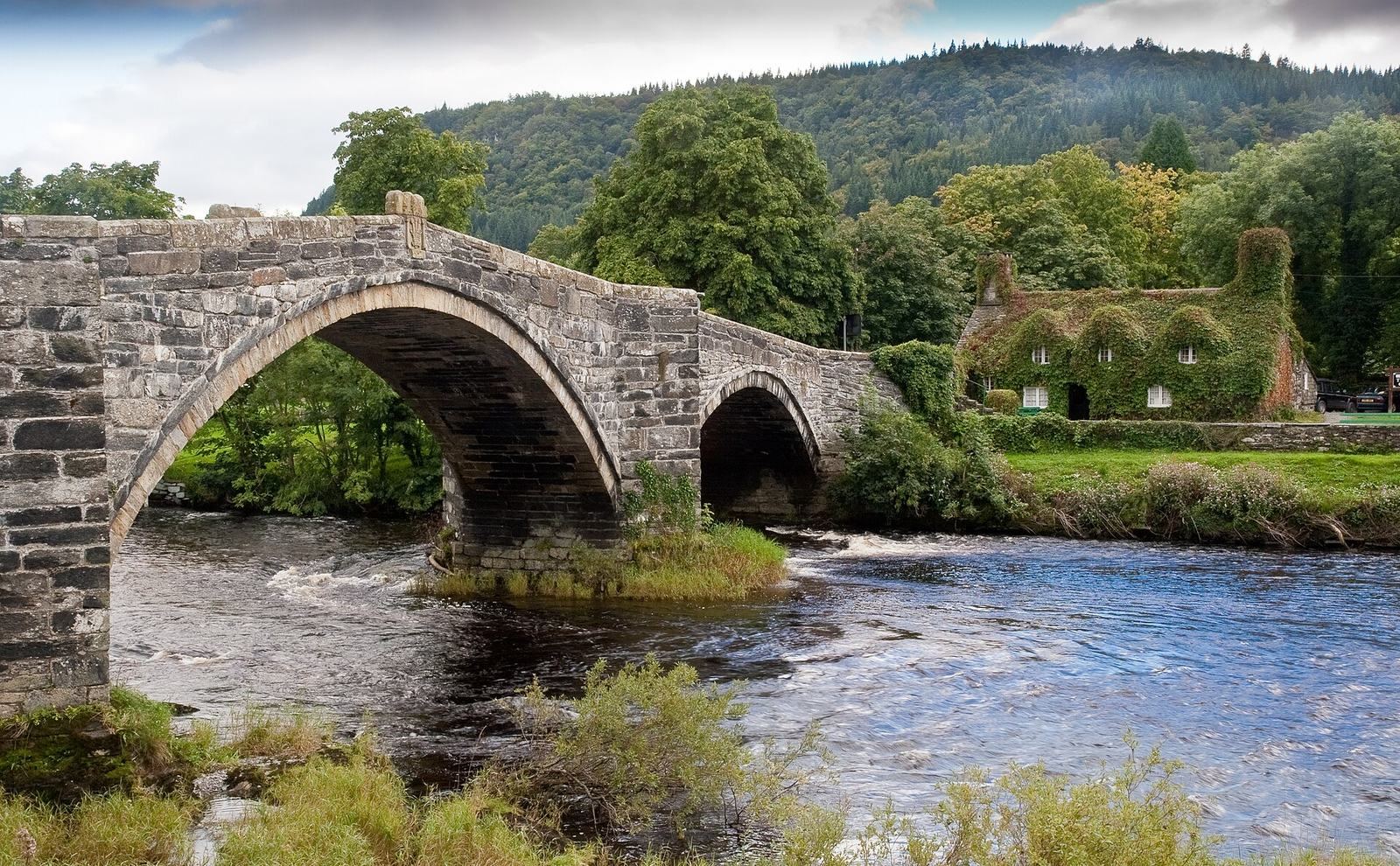
Pont Fawr, also known as Llanrwst Bridge, carries vehicle and pedestrian traffic across the River Conwy at Llanrwst, Wales, United Kingdom. The present bridge was completed around 1636, replacing an earlier structure destroyed by flooding.
The river crossing was considered relatively easy to make and helped Llanrwst develop as a market town. Before bridges were built, people crossed by boat or on horseback. Under the former county system, the bridge connected Caernarfonshire with Denbighshire. An earlier bridge at the site was mentioned in 1626, when townspeople complained that it was dangerous. After flooding destroyed it, permission to rebuild was granted in 1634. The new bridge cost £1,000, a very large sum in the seventeenth century.
Sir Richard Wynn commissioned the bridge. Its design is traditionally credited to Inigo Jones, an English architect and designer, although no surviving documentary evidence confirms his involvement. Wynn, treasurer to Queen Henrietta Maria, had connections with Jones, who designed a plaque for him that was placed in Llanrwst Church. Architectural historian Edward Hubbard considered this attribution more plausible than other Welsh claims linking Jones to buildings. John B. Hilling also supported it, noting that the king’s Privy Council, an advisory body in royal government, directed the rebuilding while Jones served as Surveyor General to Charles I.
Repairs and later recognition
Floods repeatedly damaged the bridge. Its western arch was rebuilt in 1675 and again in 1703. In the early eighteenth century, another flood swept away an arch on the Gwydir side, which was also rebuilt in 1703. Hubbard judged the reconstruction work to be poor in quality.
The bridge appeared in eighteenth-century topographical studies, including Thomas Pennant’s A Tour in Wales in 1788. John Laporte painted it in 1800, and Hugh Hughes depicted it during the nineteenth century. Hilling later described it as one of Wales’s finest stone bridges.
Pont Fawr is a Grade I listed building, a category for buildings of exceptional architectural or historic interest; its listing dates to 25 January 1951. It is also a scheduled monument, a monument protected by law.
Remains
Structure and setting
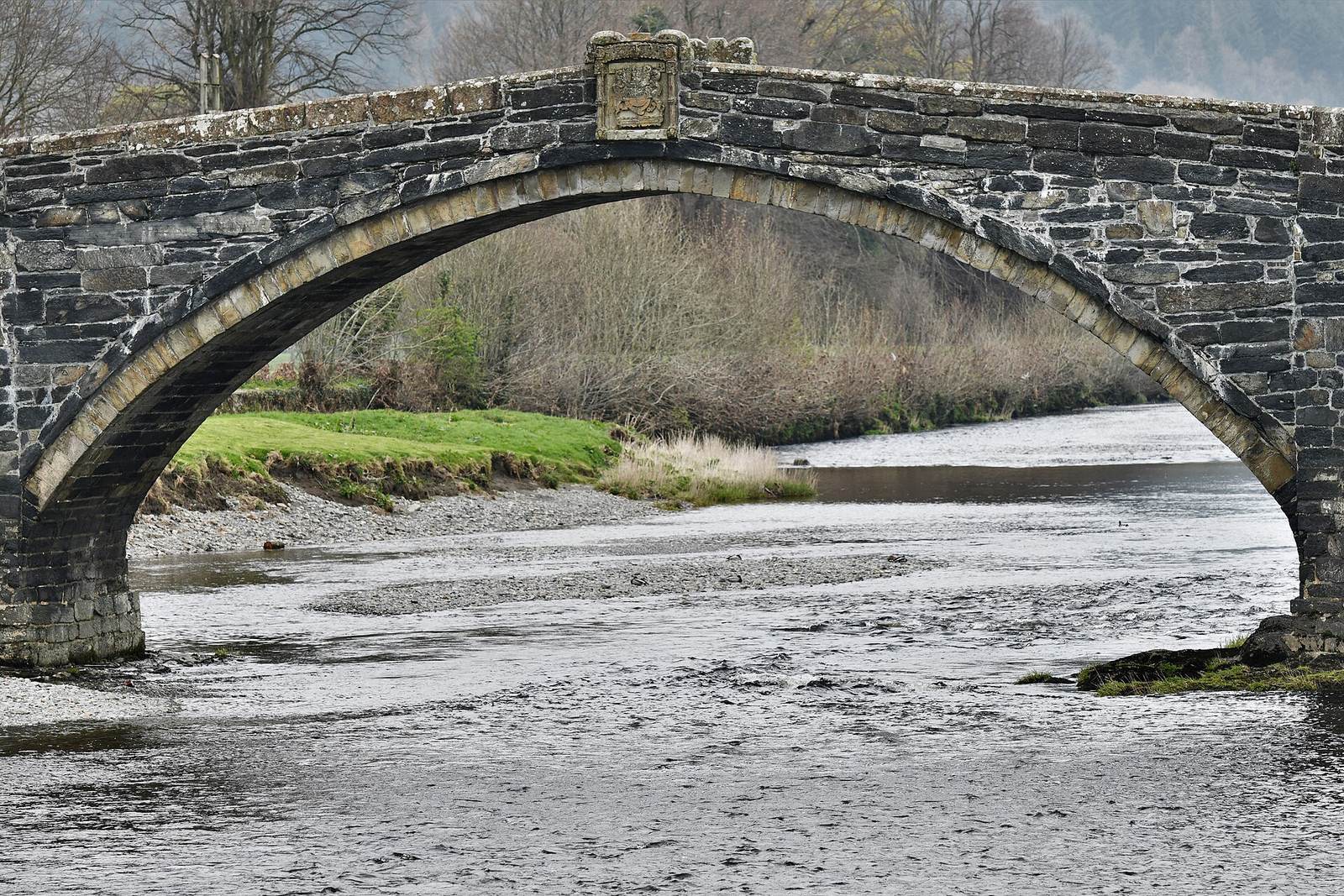
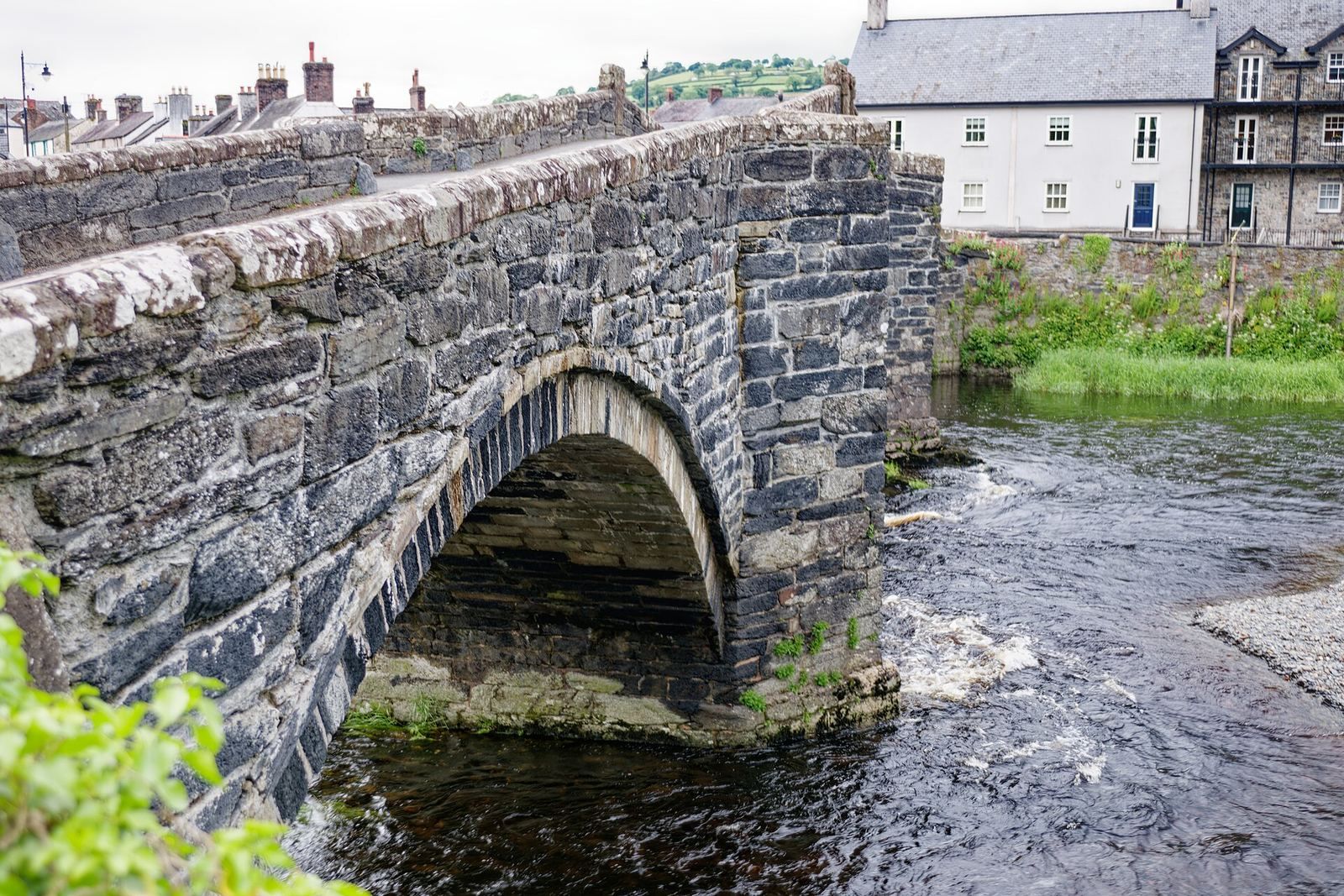
The bridge is 51 metres long and has three arches supported by two piers standing in the river. Its masonry combines gritstone and Welsh slate rubble, meaning irregular stones set in the structure, while the road surface is modern tarmac. The deck’s upward curve, or camber, restricts the view along the bridge, and large vehicles can have difficulty entering and leaving it. These constraints have contributed to repeated damage. The mansion Tu Hwnt i’r Bont stands at the far side of the bridge. A local claim holds that striking a particular spot halfway along one parapet can make the entire bridge vibrate.
Dates and carved arms
Datestones on both sides give the completion year as 1636. Carved above them, the south side bears the arms of the House of Stuart, the royal dynasty, with the initials CR. On the north side are the Prince of Wales’s feathers and the initials CP.