St Dunstan’s, Stepney: A Historic Parish Church in East London
Site at a Glance
- Rating
- 4.7
- Popularity
- Medium
- Country
- United Kingdom
- Primary era
- Medieval
- Eras represented
- Medieval, Modern
- Civilizations
- Anglo-Saxon, British, English
- Site type
- Religious
- Remains
- Church
On this page11 sections
History
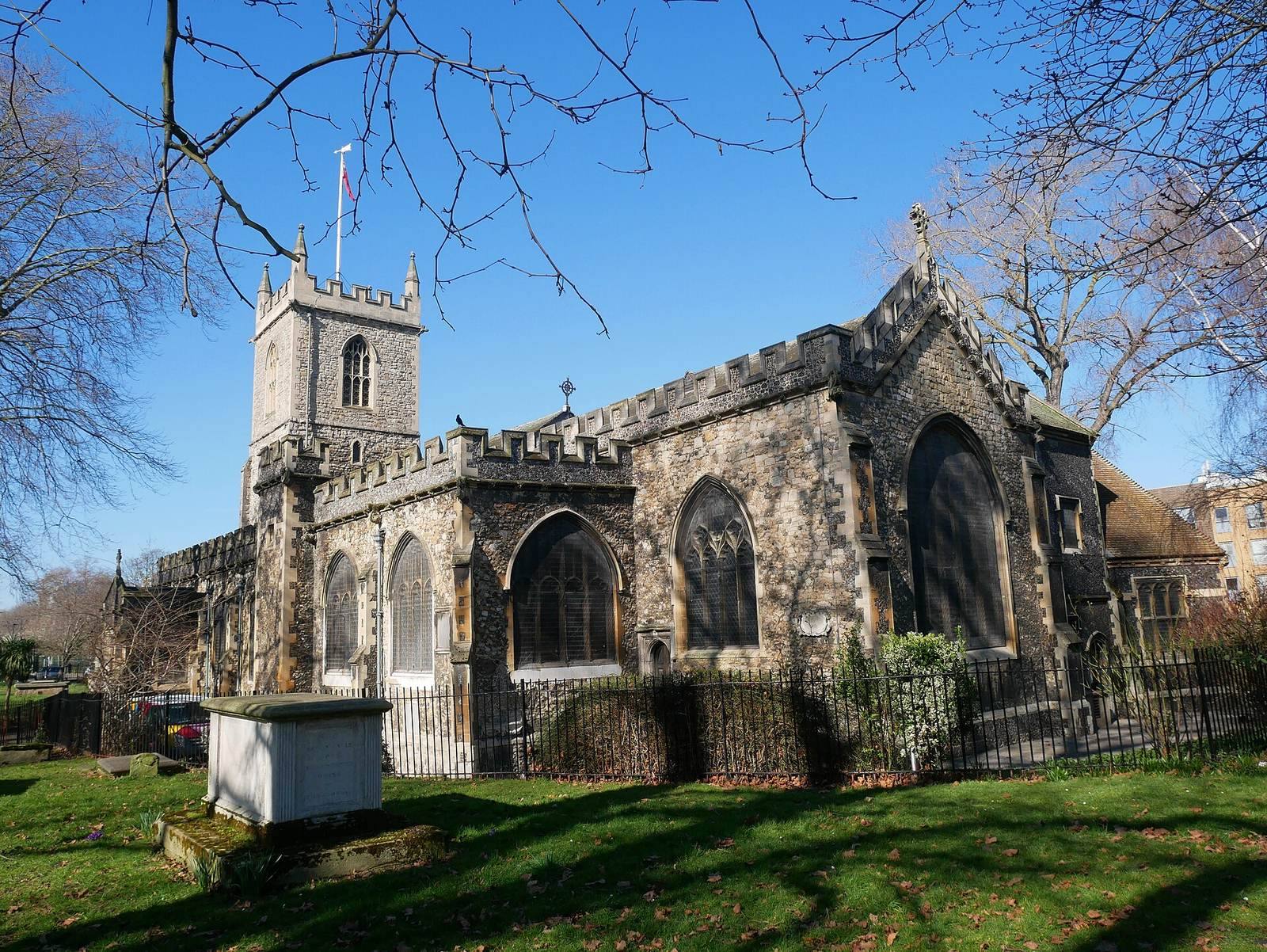
St Dunstan’s, Stepney, is a Church of England parish church in Stepney, London, United Kingdom, whose traditional refoundation around 952 is associated with Dunstan, an English churchman. The present church is the third building on the site, with a main body built chiefly in the fifteenth century and a chancel about two centuries older.
Origins and dedication
At the time of the traditional refoundation, Dunstan was Bishop of London and lord of the manor of Stepney. He is said to have replaced an existing wooden church with a new structure probably incorporating stone, and may have consecrated it as the local bishop. A separate tradition credits him with physically shifting a church to align it east to west. This may have happened at Stepney, but the story is also associated with a church at Mayfield.
After Dunstan was formally recognized as a saint in 1029, the church was dedicated to St Dunstan and All Saints, a dedication it retains. Dunstan is the patron saint of Stepney, bell ringers, bell founders, metalworkers, and musicians; he may also have experimented with casting bells in his own foundry. His feast day, 19 May, is marked at the church with white hangings and vestments, the liturgical color used for non-martyr saints in Anglican and Catholic practice.
Parish and maritime connections
Known as the Mother Church of the East End, St Dunstan’s once served a parish covering much of what later became inner East London. Hackney is believed to have been its first daughter parish, formed from part of an existing parish, and became independent early. Whitechapel followed in the fourteenth century, with other parishes established later. Bow began as a chapel of ease, a place of worship for people living far from the main parish church, before becoming the center of an independent parish. The blacksmith’s tongs associated with Dunstan were later adopted in the coat of arms of the London Borough of Tower Hamlets.
Stepney’s seafaring trade gave the church the name Church of the High Seas. The Bishop of London was responsible for registering births at sea, and those records were kept at St Dunstan’s. A local tradition held that British warships and children born at sea belonged to the parish, an idea echoed in the rhyme, “He who sails on the wide sea, is a parishioner of Stepney.” Stepney’s bells also appear in the nursery rhyme “Oranges and Lemons”; their mention is associated with sailors’ and dockworkers’ demands for wages, which employers often withheld.
The local Whitechapel Bell Foundry, established in 1570, cast the Stepney bells. Its work belonged to an East End metalworking tradition reaching back at least to the fourteenth century. Maritime philanthropy was also part of the parish’s history. Prisca Coborn founded a charity in 1701 for widows of Stepney sailors. Sir Charles Wager was patron of the Stepney Society, which held the annual Cockney’s Feast, also called the Stepney Feast, to raise money for local boys’ apprenticeships as seamen or training in other maritime trades.
Seventeenth-century parish and churchyard
William Greenhill served as vicar for about seven years while continuing to preach at Stepney Meeting House, a place of worship for Protestant groups outside the Church of England. He was ejected from his post after the Restoration, the return of the monarchy in 1660. Around 1665, the churchyard was enlarged during the Great Plague of London, the major epidemic of 1665–1666. Over one eighteen-month period, 6,583 people died, and 154 were buried in the churchyard in a single day in September 1665. Many sailors were buried there, as was Roger Crab, a seventeenth-century hermit who lived on herbs, roots, leaves, grass, and water.
Later changes and restoration
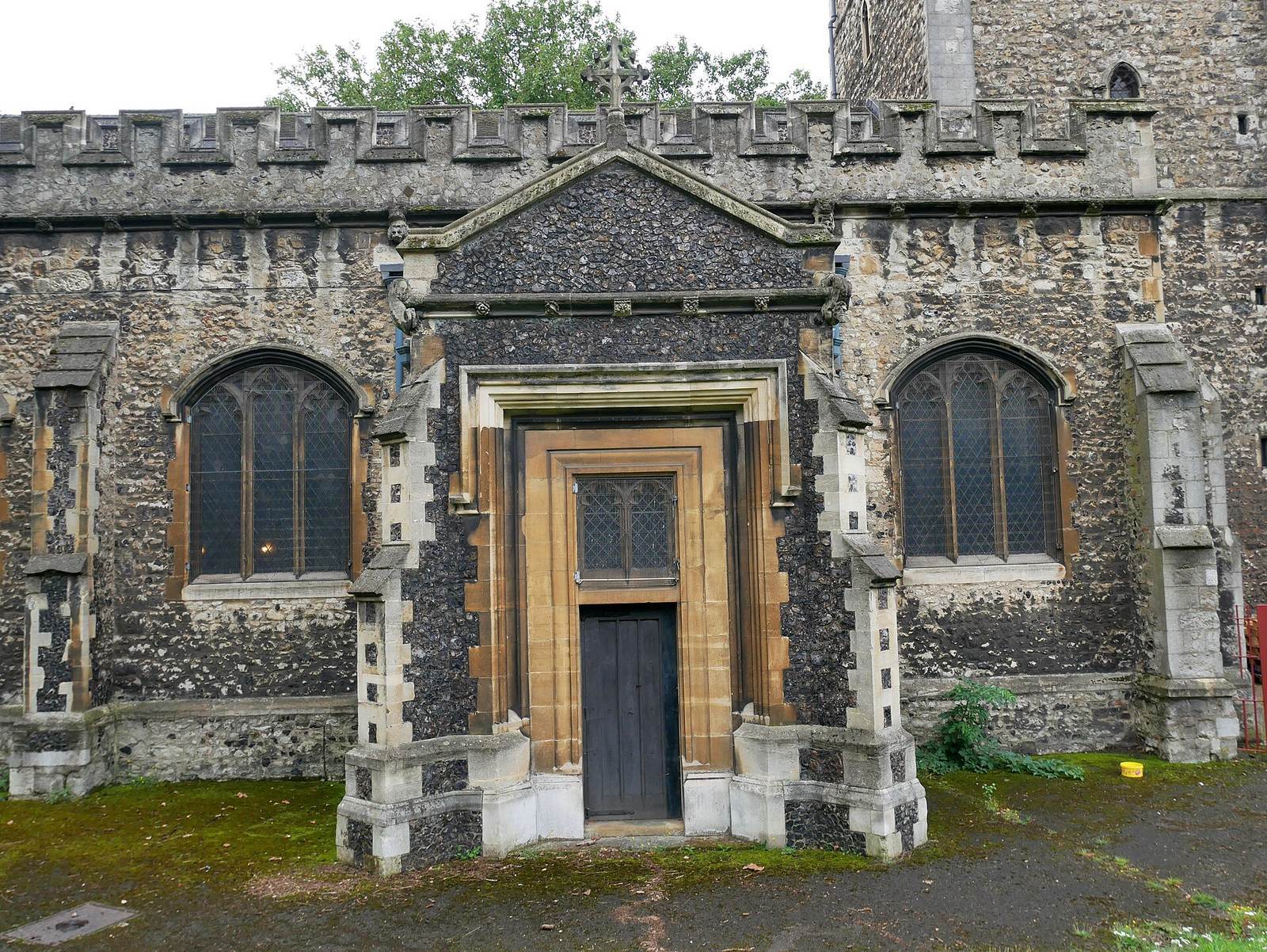
A porch and parish room were added in 1872, followed by extensive restoration in 1899. A fire on 12 October 1901 destroyed the vestries and part of the main building. Further restoration followed. During the Second World War, air raids devastated the surrounding district, while the church suffered comparatively limited damage. In January 1945, a German V-2 ballistic missile landed in the north-west part of the churchyard, damaging the tower and destroying stained-glass windows. Cyril Wontner-Smith later restored the church.
The churchyard closed to burials in 1854. From 1885 to 1887, high ground around the church was removed and the Metropolitan Public Gardens Association transformed the grounds into a public garden designed by its landscape gardener, Fanny Wilkinson. The garden opened in 1887. St Dunstan’s is Grade I listed. Today it is an inclusive Anglo-Catholic church, a tradition within Anglicanism that emphasizes Catholic liturgy and sacramental practice.
Remains
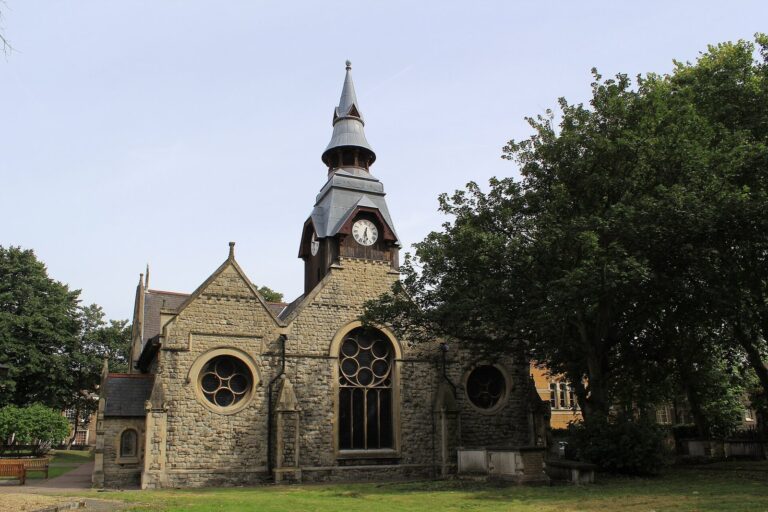
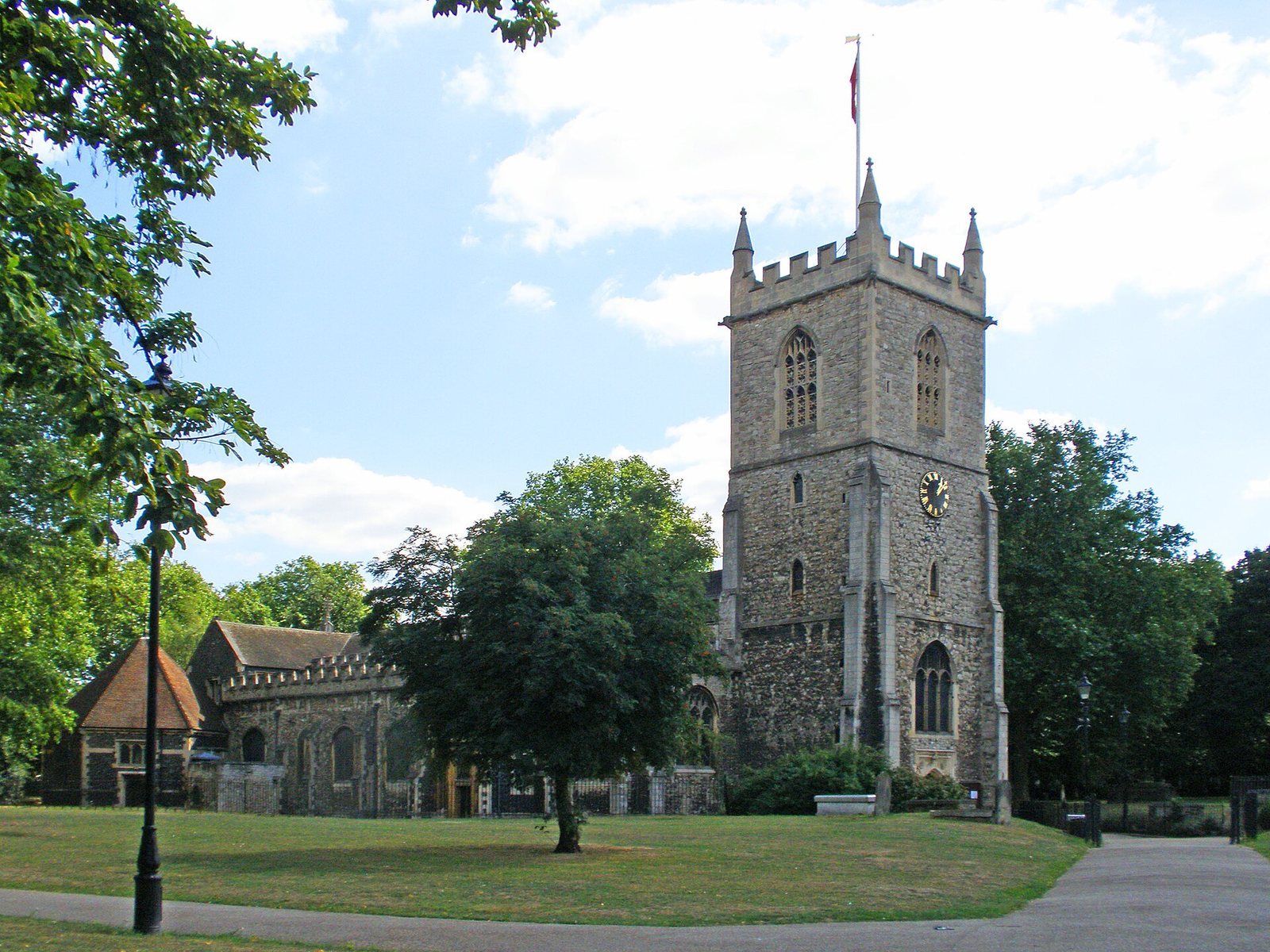
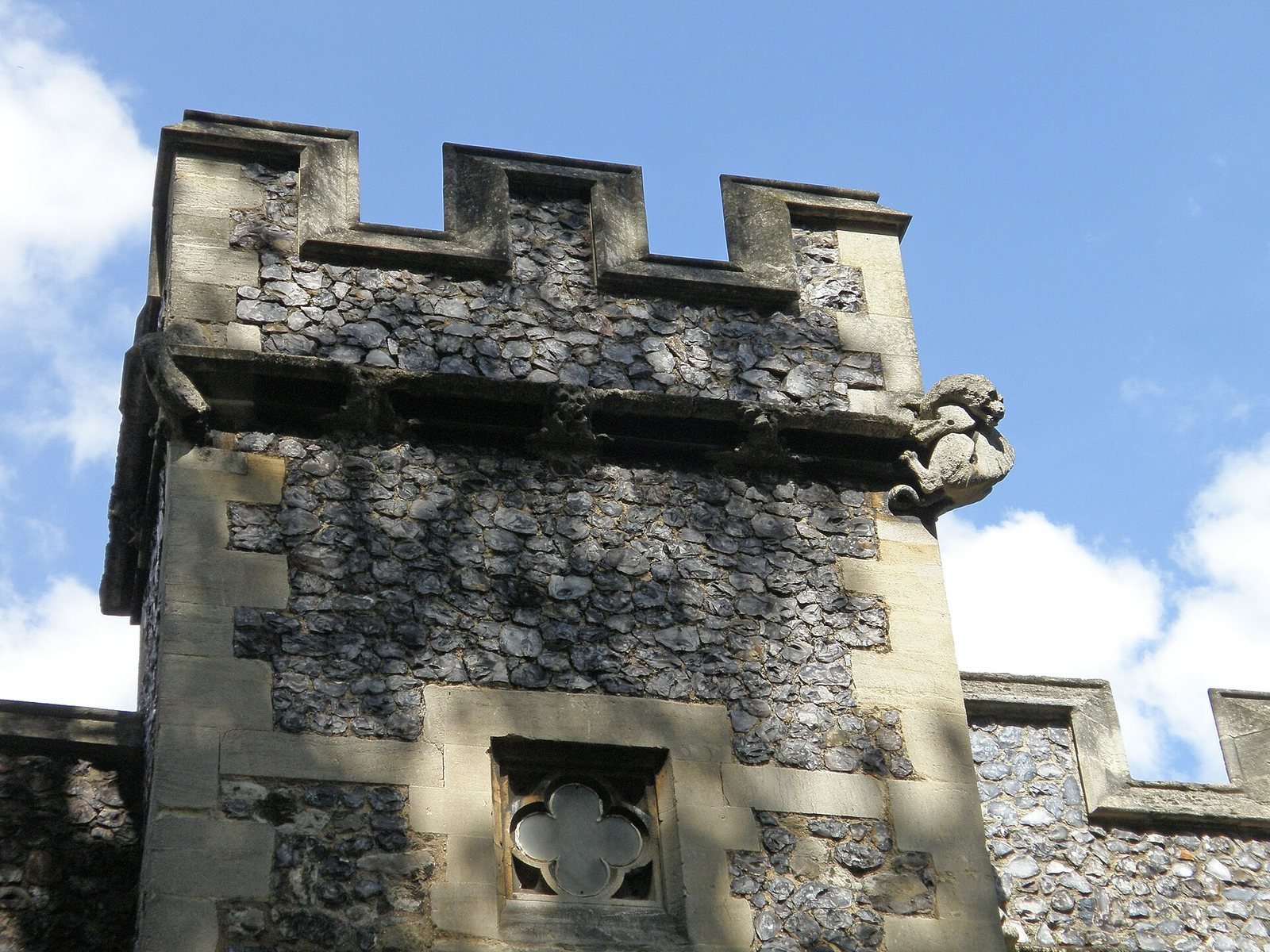
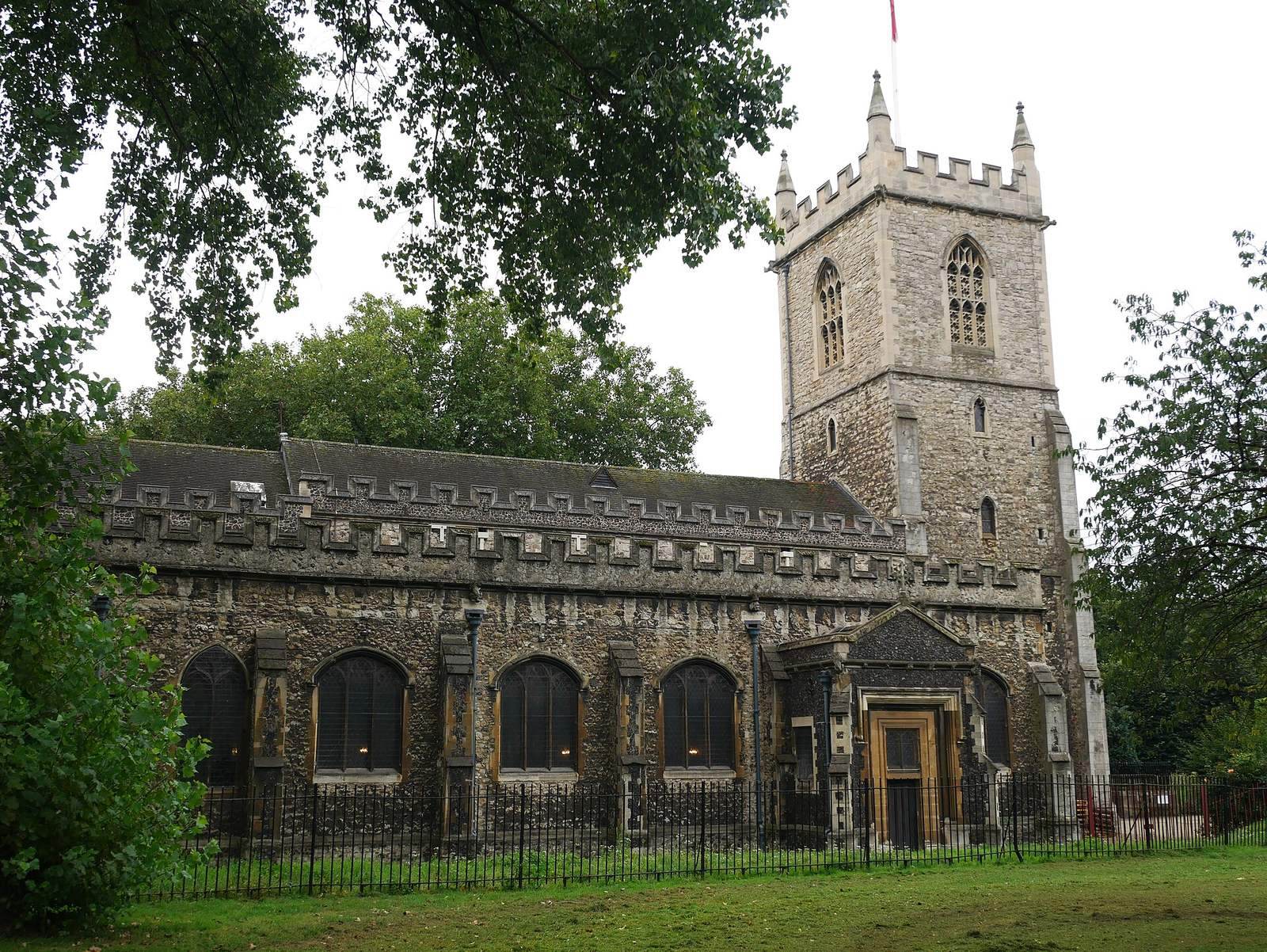
The church complex includes the main church, chancel, porch, and an octagonal parish room. The building is made chiefly of Kentish ragstone, a building stone quarried in Kent, and includes a belfry. The churchyard forms the surrounding grounds.
Church building and furnishings
The chancel contains a stone seat for three priests. Inside the church are a late Anglo-Saxon rood, a large cross traditionally displayed above the chancel entrance, and a Communion cup and bread plate dated 1559. A beadle’s staff and verger’s wand, ceremonial objects belonging to church officers, date from 1752.
Bells and organ
Bells
A ring of ten bells hangs in the belfry and is tuned to C-sharp. The seven oldest were cast in 1806, and the ring was rehung in 1899. Three bells were recast in 1952 during tower repairs. The heaviest weighs 28¾ British hundredweight, a unit of 112 pounds. The sixth bell’s inscription honors Prisca Coborn, and the ninth is dedicated to Sir Charles Wager.
Organ
The present organ was installed in 1971 by Noel Mander. Built in 1872 for St Augustine’s, Haggerston, it was rebuilt in 1926 by R. Spurden Rutt & Co. It replaced a 1903 Norman and Beard organ, now at St Edmund the King, Northwood Hills. That instrument had replaced a 1678 organ by Renatus Harris, rebuilt by Lewis & Co in 1900 and destroyed in the 1901 fire.
Churchyard
The churchyard covers nearly seven acres, about 28,000 square metres. Its grounds include London plane trees and a black mulberry, a type associated with the weaving trade once important in the area. The entrance has railings, piers, and gates, and a war memorial stands within the churchyard.