St. Bartholomäus: Evangelical Lutheran Church in Nuremberg
Site at a Glance
- Rating
- 4.6
- Popularity
- Very Low
- Country
- Germany
- Primary era
- Early Modern
- External website
- Open
- Eras represented
- Medieval, Early Modern, Modern
- Civilizations
- German, Holy Roman Empire
- Site type
- Religious
- Remains
- Church
On this page8 sections
History
Medieval origins and destruction
St. Bartholomäus is an Evangelical Lutheran church in Nuremberg, Germany, whose origins lie in a medieval church built between 1396 and 1418 by the burgraves Friedrich VI and Johann III. Burgraves were high-ranking territorial lords and administrators associated here with the burgraviate of Nuremberg. The church served the settlement of Wöhrd outside Nuremberg’s walls until both the settlement and the building were deliberately burned in 1552 during the Second Margrave War, a sixteenth-century conflict in the Holy Roman Empire. The destruction was intended to prevent enemy forces from using Wöhrd and its church as shelter.
Rebuilding in the sixteenth century
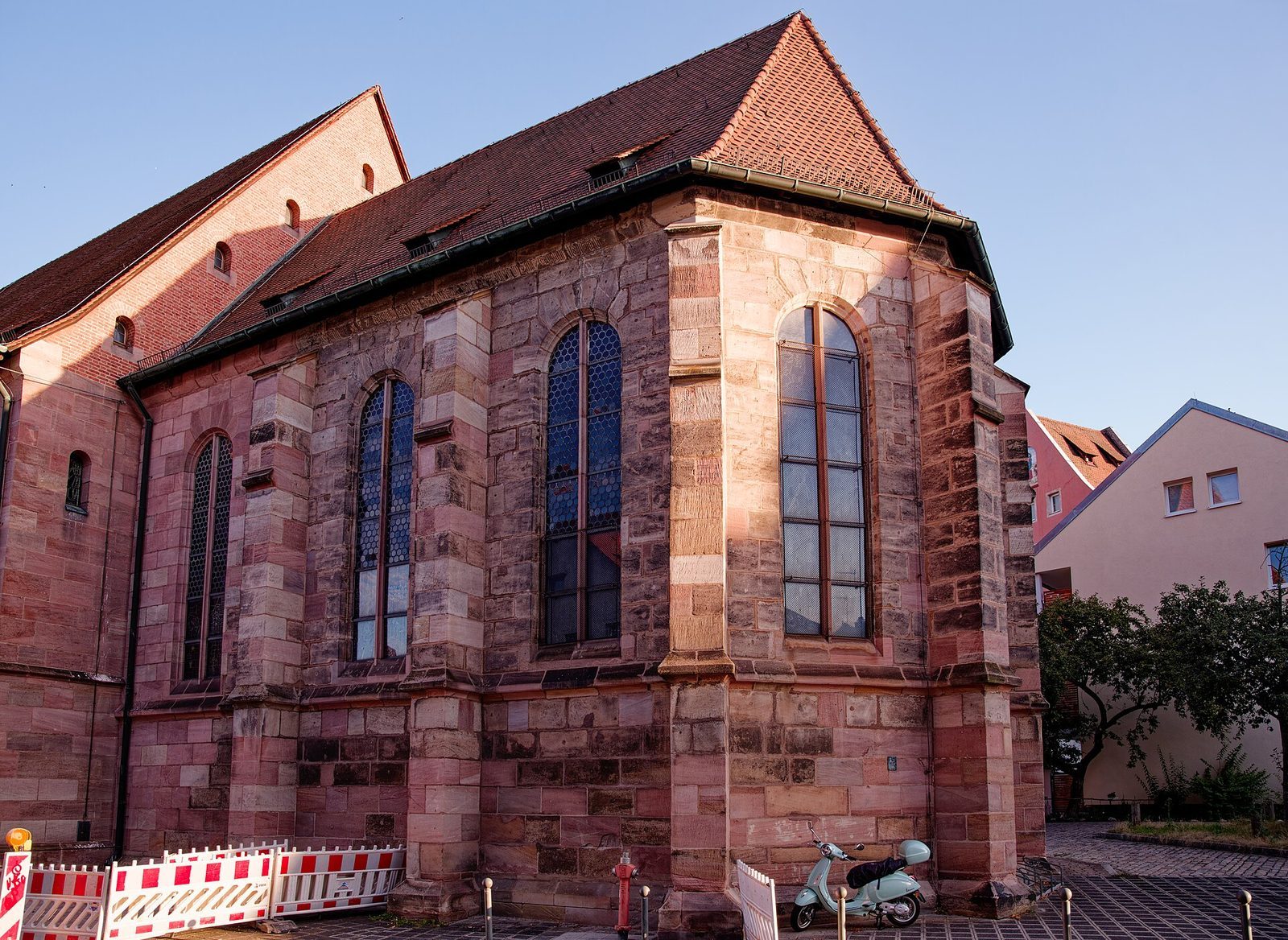
A replacement church was begun in 1557 on the initiative of Hieronymus Köler, the judge of Wöhrd. Michael Klingenbeck directed the construction of the choir on the foundations of the medieval predecessor, while Sixt Schürle built the nave and tower between 1560 and 1562. The church was dedicated in 1564, and a gallery was added five years later.
During the Thirty Years’ War, the major European conflict fought from 1618 to 1648, Wöhrd was protected by Swedish field fortifications, or defensive earthworks. The settlement was largely spared the effects of the war. A later alteration removed physical reminders of this period. In 1835, the architect and architectural restorer Karl Alexander Heideloff ordered the removal of floor grave slabs commemorating Swedish officers and exiles from the Habsburg lands and the Upper Palatinate.
Baroque, Neo-Gothic, and wartime change
Major renovations reshaped the church in 1679 in the Baroque style, an architectural and artistic tradition associated with elaborate forms and decoration. Further work in 1835 adopted the Neo-Gothic style, which revived forms associated with medieval Gothic architecture. Additional substantial alterations followed around 1886.
The church burned out completely during the Second World War and was destroyed in 1943, leaving only the enclosing walls of the choir and remnants of the nave walls. Gottlieb Schwemmer, a senior government building officer, directed the rebuilding in 1955 and 1956. The new three-aisled nave closely followed the form of its predecessor, although its interior arrangement was changed. St. Bartholomäus is now listed as a protected architectural monument in Nuremberg’s Wöhrd and Rennweg districts under file number D-5-64-000-2191.
Remains
Building and surviving historic fabric
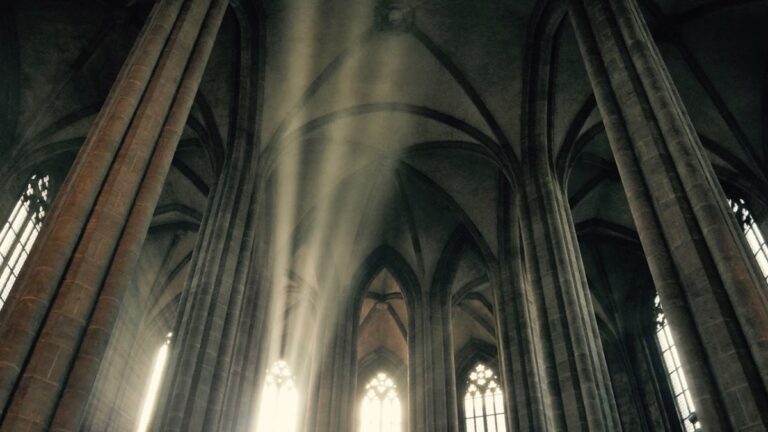
St. Bartholomäus is a flat-ceilinged hall church, a type in which the nave and aisles are approximately the same height. The building combines sandstone ashlar, made from regularly cut stone blocks, with brick masonry and has a gabled roof. Its foundations incorporate those of the church built between 1396 and 1418. The choir and the southwest tower are surviving parts of the church constructed between 1557 and 1564. They were retained during the postwar rebuilding, while the nave was replaced by a three-aisled structure closely based on the earlier form. The nave hall has a wooden flat ceiling.
Altarpiece and memorial
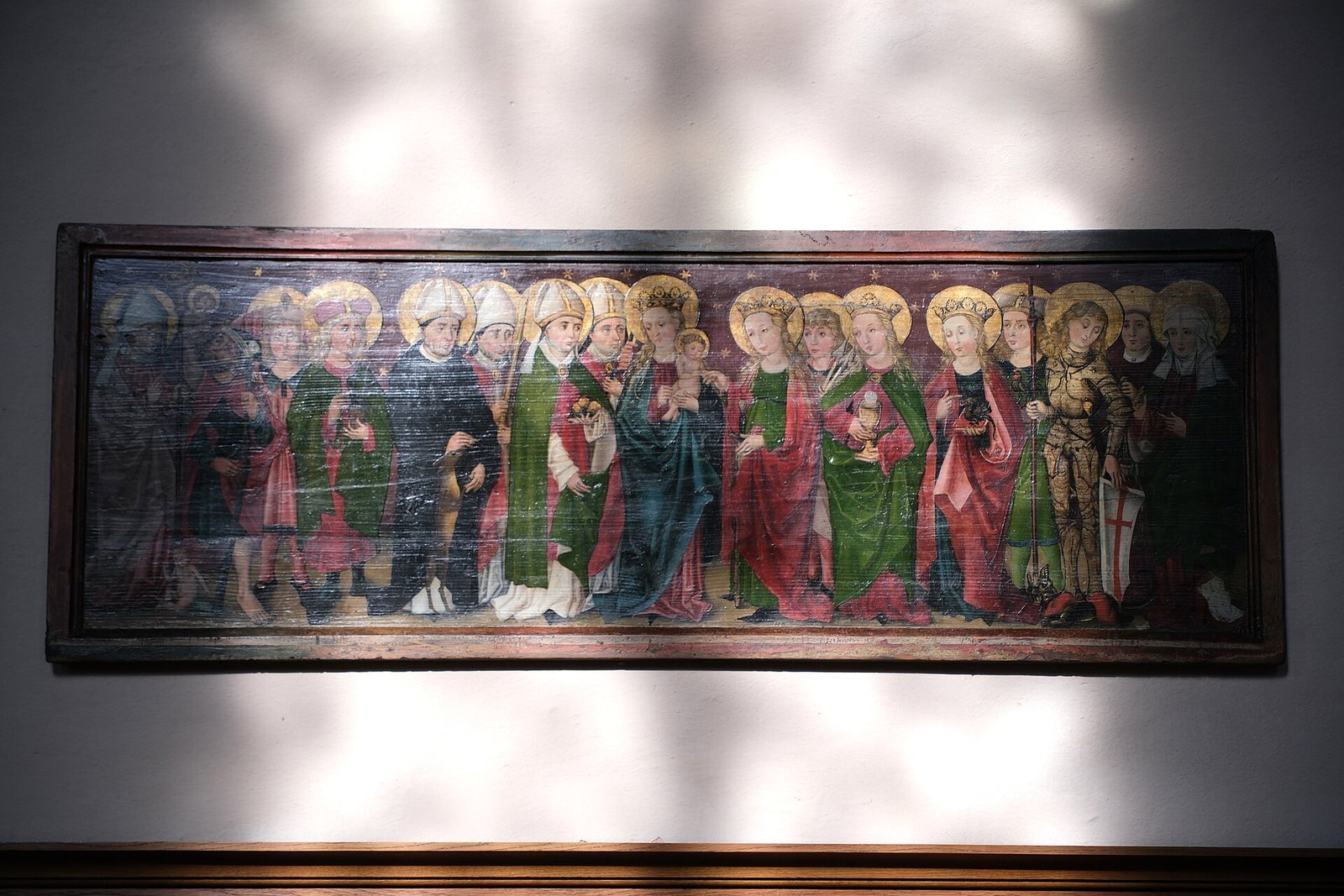
A late Gothic winged altarpiece, an altar ensemble with hinged painted or carved wings, forms part of the surviving furnishings. It was produced by the workshop of Wolf Traut between 1501 and 1503. Johann Löffelholz and his wife, Katharina Dintner, probably donated it for the former Augustinian church, and it was brought to Wöhrd in 1564. In 1701, the work was reshaped: the Church Fathers shown on the wings of the predella, the lower section of an altarpiece, were painted over with busts of the four Evangelists.
Beneath the Tucher box on the left side of the choir is a bronze epitaph for Philipp Jakob III Tucher. An epitaph is a commemorative monument or inscription for a deceased person. The Tucher box is a reserved church seating enclosure associated with the Tucher family, a prominent Nuremberg patrician family.
Organs
The original organ was made by Adam Ernst Reichard in 1702 and was destroyed during the church’s wartime destruction. Gerhard Schmid of Kaufbeuren built a replacement in 1961, donated by Hanns Porst, a Wöhrd photographic dealer. Benedikt Friedrich of Oberasbach enlarged and rebuilt it in 1999 and 2000. Its playing aids include two free combinations, a tutti setting, reed-stop cancellation, and a setter system.
The choir organ was built in 1957 by Georg Holländer of Feuchtwangen. Benedikt Friedrich enlarged and rebuilt it in 2011.