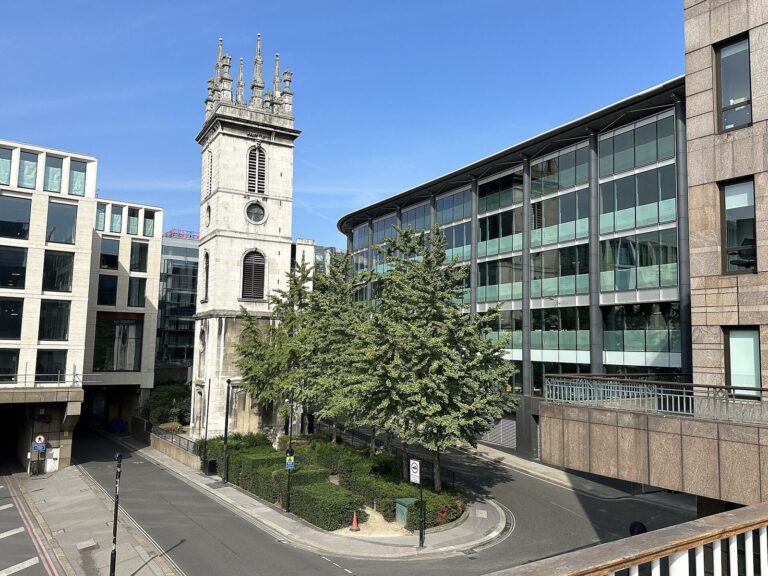
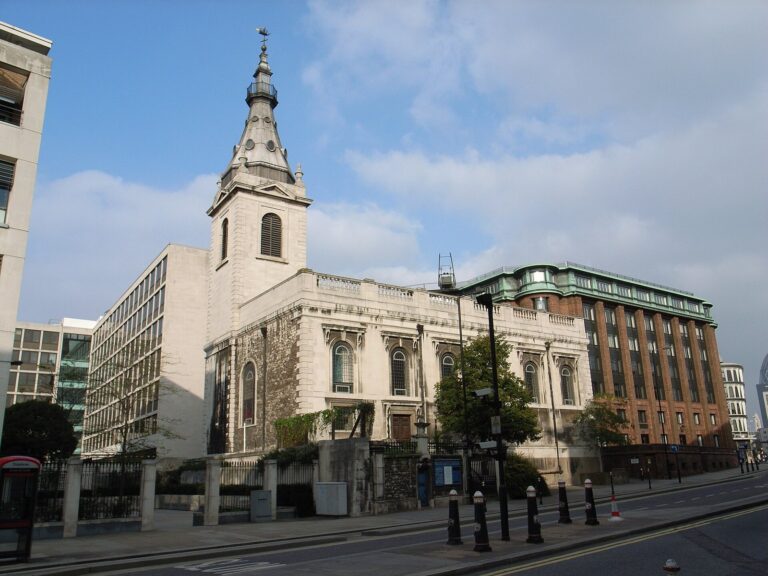
St Andrew-by-the-Wardrobe: A Historic Church in the City of London
Site at a Glance
- Rating
- 4.6
- Popularity
- Low
- Country
- United Kingdom
- Primary era
- Early Modern
- Eras represented
- Early Modern, Modern
- Civilizations
- British, English
- Site type
- Religious
- Remains
- Church
On this page7 sections
History
St Andrew-by-the-Wardrobe is a parish church in the City of London, United Kingdom, first recorded around 1170, although its foundation almost certainly predates that reference. Its post-Fire rebuilding, designed by Sir Christopher Wren, was built in 1695 in the English Baroque style, Britain’s expression of a European style associated with dramatic effects and movement.
Medieval origins and parish associations
Dedicated to Saint Andrew, one of the Twelve Apostles in Christian tradition, the church was formerly called St Andrew by Castle Baynard. In the 13th century it formed part of Baynard’s Castle, then a royal residence. The patron’s right to nominate a priest belonged to the FitzWalter family, probably through Robert FitzWalter’s tenure as constable of the castle. By 1417, the right was held by Thomas de Berkeley, 5th Baron Berkeley. A charter dated 24 June that year records his appointment of trustees for his estate.
In 1361, Edward III moved the Royal Wardrobe, a storehouse for royal clothing, arms, and other equipment, from the Tower of London to a building north of the church. This association gave the church its present name. William Shakespeare belonged to the parish for about fifteen years while working at the nearby Blackfriars Theatre, and later bought a house in Ireland Yard, within the parish.
Destruction, rebuilding, and shared use
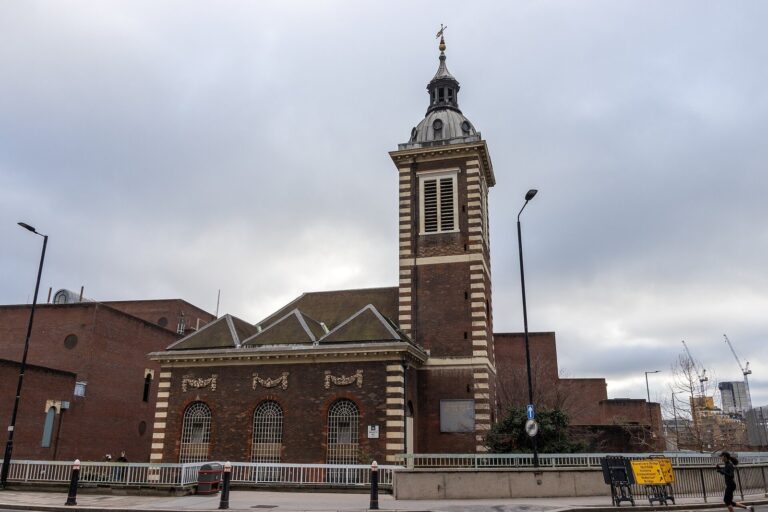
The Great Fire of London, which destroyed much of the City in 1666, consumed both the church and the Wardrobe. Wren, an English architect who designed many of London’s post-fire churches, created the replacement church, built in 1695.
German bombing during the Second World War, known in London as the Blitz, gutted the church. Its tower and walls survived, and the church was rebuilt and rededicated in 1961.
The church is a Church of England parish, following an earlier Roman Catholic denomination. The parish rejects the ordination of women and receives alternative episcopal oversight from the Bishop of Fulham, currently Jonathan Baker. The building also serves as the London headquarters of the Coptic Orthodox Church, part of the Oriental Orthodox tradition, and its Archbishop, Anba Angaelos. The St Gregorios congregation of the Indian Orthodox, or Malankara Orthodox, Church, a distinct church within that tradition, holds regular Sunday services there.
St Andrew’s is also a guild church of the Worshipful Society of Apothecaries, a London livery company associated with pharmacy. The building was designated Grade I listed on 4 January 1950, the highest category of listing for buildings of special architectural or historic interest in England.
Remains
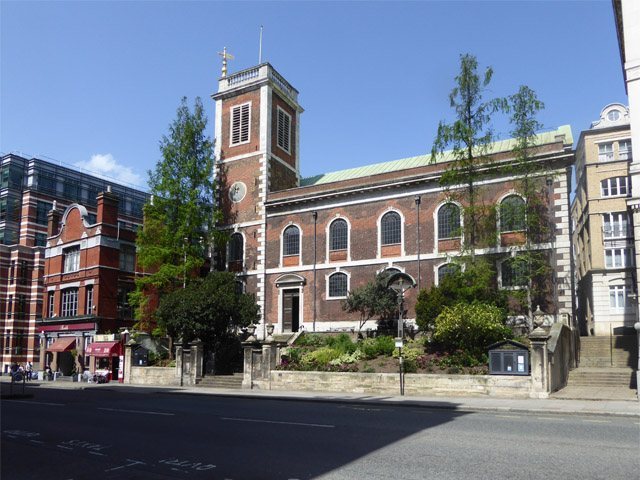
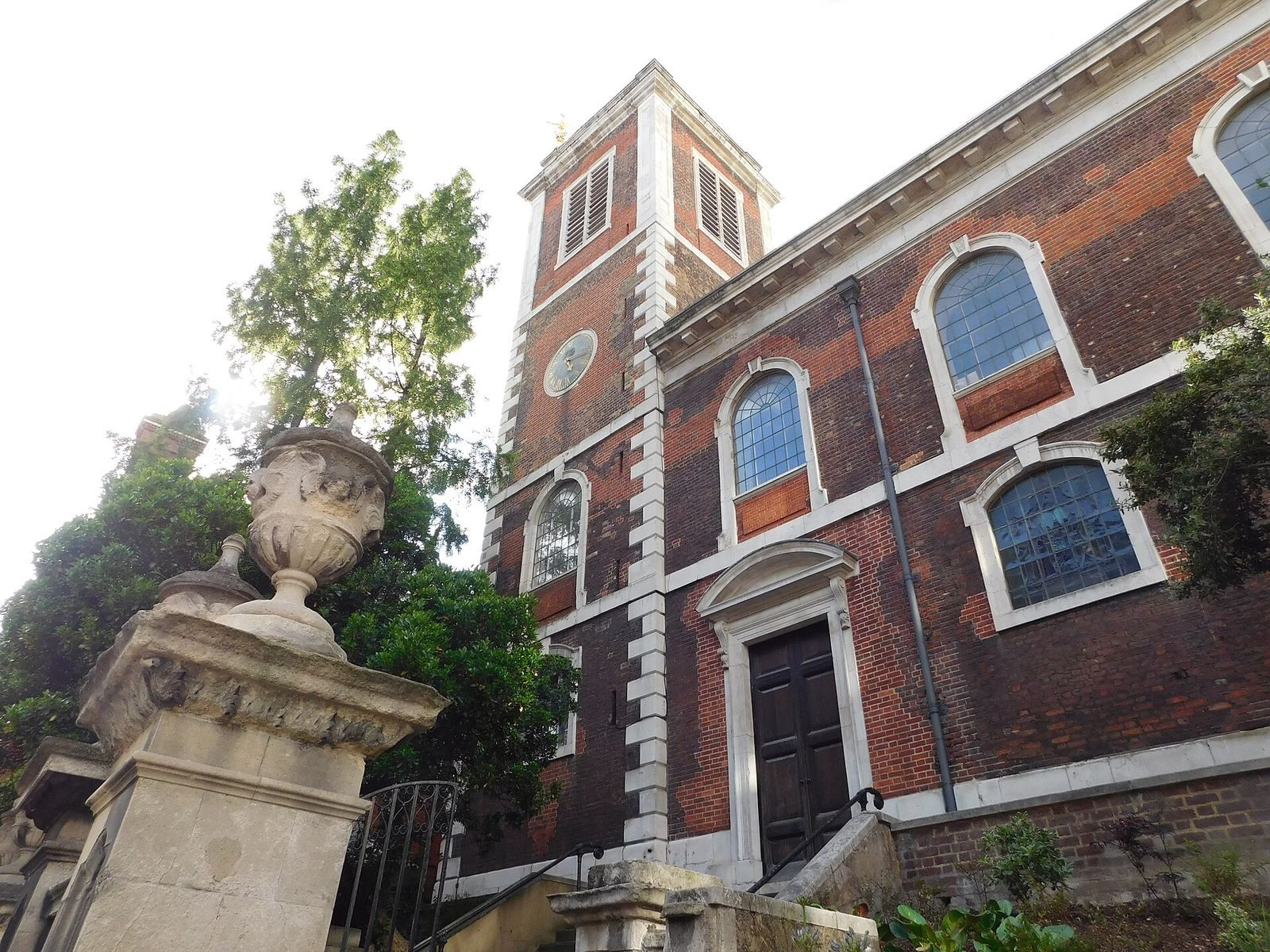
The church stands on a terrace above Queen Victoria Street. Its plain red-brick exterior contrasts with the stone buildings on either side, and its interior has an aisled plan. The design is among the simplest of the 51 churches Wren designed after the Great Fire.
Interior and surviving fittings
Arches and transferred furnishings
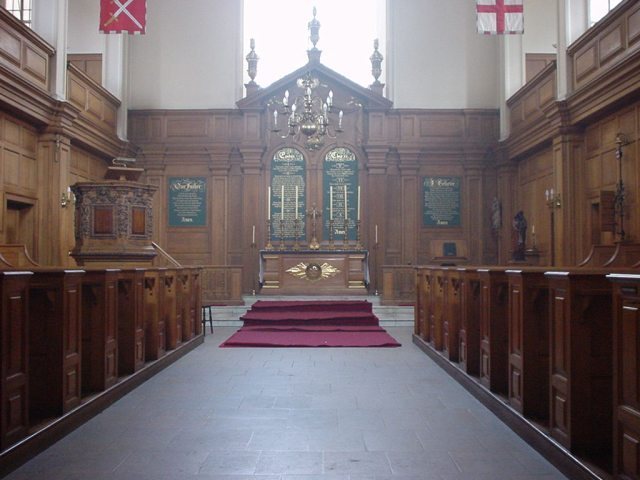
Inside, arcaded bays are supported by piers rather than columns. Most of the original fittings were lost during wartime destruction, and many of the replacements came from other churches designed by Wren that had also been destroyed. The steeple’s weathervane came from St Michael Bassishaw, demolished in 1900. The pulpit, font, and font cover came from St Matthew, Friday Street, while the Stuart royal arms, from the dynasty that ruled England and Scotland, were transferred from St Olave Old Jewry, demolished in 1887 except for its tower.
Sculptures and memorial plaque
A figure of Saint Andrew, dated to around 1600, stands on the north side of the sanctuary. Nearby, a figure probably made in northern Italy around 1500 shows Saint Anne, traditionally regarded as the mother of the Virgin Mary, holding Mary with the Christ child. The church also contains a memorial plaque to Shakespeare.