Sremski Karlovci Orthodox Cathedral: Principal Church of the Eparchy of Srem
Site at a Glance
- Popularity
- Medium
- Country
- Serbia
- Primary era
- Early Modern
- Eras represented
- Early Modern, Modern
- Civilizations
- Austria-Hungary, Austrian Empire, Habsburg, Habsburg Austria
- Site type
- Religious
- Remains
- Cathedral
On this page9 sections
History
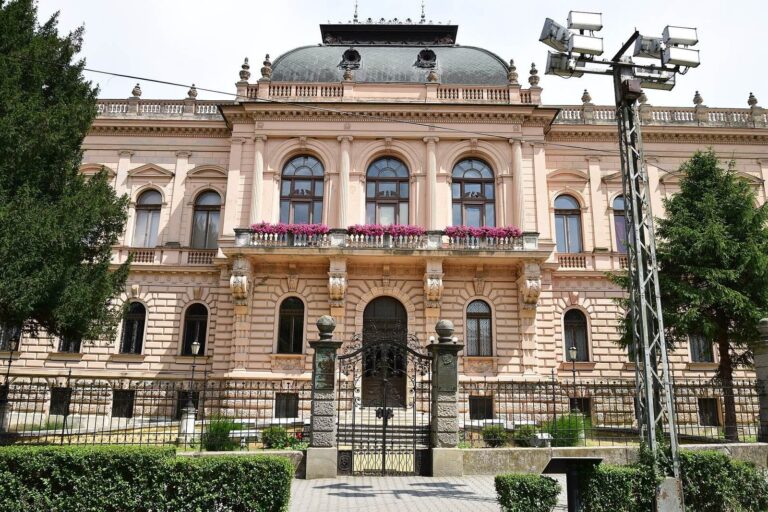
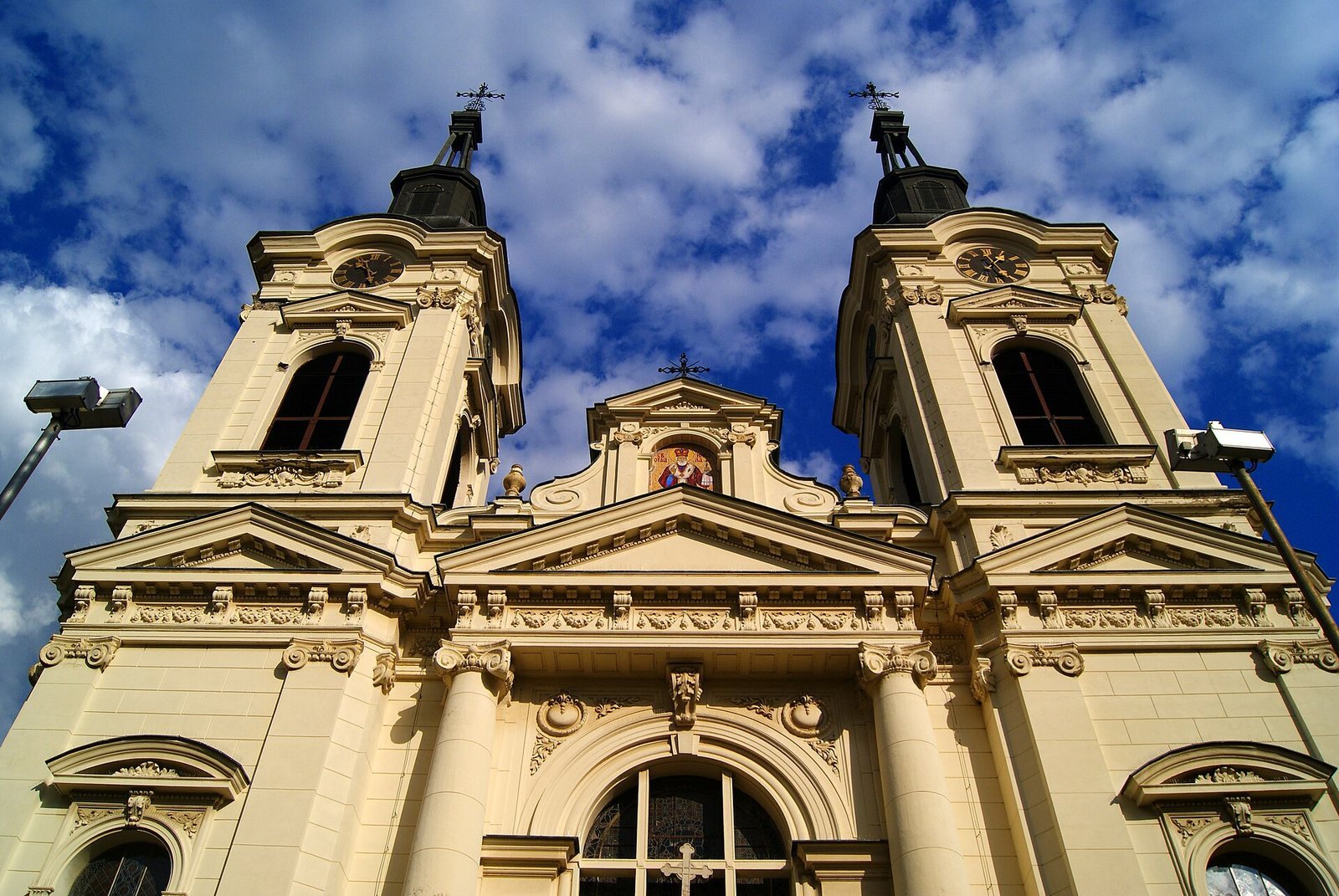
Sremski Karlovci Orthodox Cathedral, in Serbia, is a Serbian Orthodox church dedicated to Saint Nicholas and built between 1758 and 1762 in the Baroque style, an ornate European style that developed in the 17th and 18th centuries. It is the principal church of the Eparchy of Srem, an Eastern Orthodox diocese, and one of the Serbian Orthodox Church’s important religious centers. Together with the nearby Palace of the Patriarchate, it served as a seat of the Metropolitanate and Patriarchate of Karlovci, Serbian Orthodox institutions within the Habsburg Monarchy, the Central European monarchy that ruled the region during the cathedral’s construction.
Earlier church and Ottoman rule
A church dedicated to Saint Nicholas stood on the site during the Ottoman period. After Ottoman forces conquered Srem in 1521, they destroyed the church and built a mosque there. Following the liberation of Srem from Ottoman rule, a new church dedicated to the same saint was erected on the earlier church’s site.
Construction and religious art
Construction of the present cathedral began in 1758 at the initiative of Metropolitan Pavle Nenadović. Plans were prepared in Vienna, and the principal builders were Kosta Cincarin and the German builder Johannes. In 1760, towers and a dome were added to designs by Zaharije Orfelin. The church was completed and consecrated in 1762.
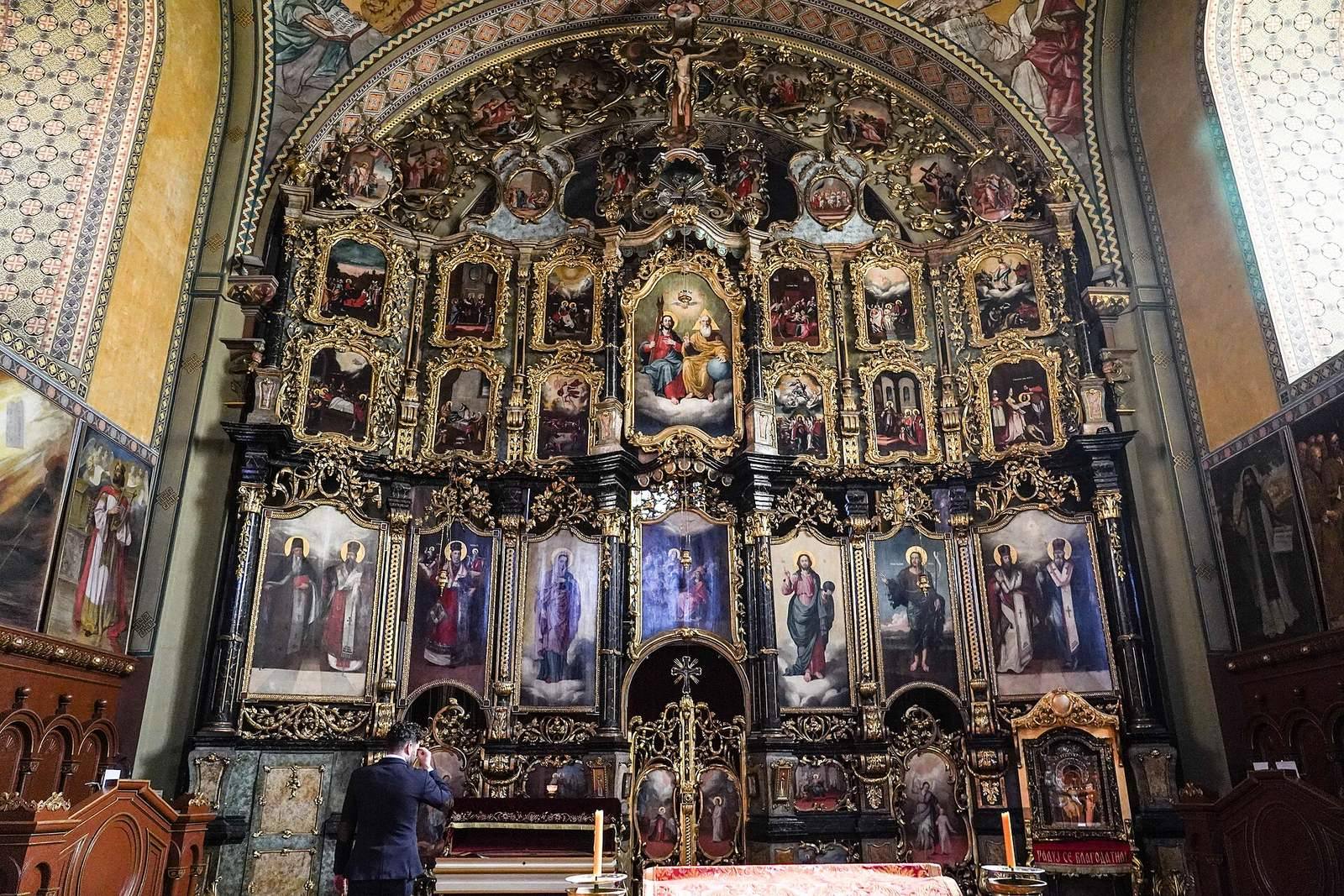
Work on the iconostasis, the screen of icons separating the altar from the main worship space, extended beyond the building’s completion. Woodcarver Arsenije Marković finished its carving in 1778. A contract signed in 1780 commissioned its painted icons from Teodor Kračun and Jakov Orfelin. Kračun died less than a year later, after completing the feast-day icons and the screen’s doors; Jakov painted the remaining icons.
Fire, redesign and conservation
A major fire in 1799 badly damaged the cathedral, and repairs were completed in 1805. Renovation in 1811 brought substantial changes, including neoclassical features drawing on Greek and Roman forms. Plans by architect Vladimir Nikolić guided major facade alterations in 1909. The renovation completed in 1911 replaced the facade’s Baroque character with a Renaissance-style design, reviving forms associated with Renaissance architecture; the cathedral retains the appearance created by that work.
The iconostasis was restored in 1972–1975, and repairs to the building followed in 1991–1994 and 2006. Further restoration took place in 2011, with a complete facade renovation in 2020. The cathedral is protected as a cultural monument of exceptional importance. Its nine large paintings by Paja Jovanović received protection as movable cultural property in 1949; they were later taken down from the church walls and restored in 2010.
Remains
Plan and interior
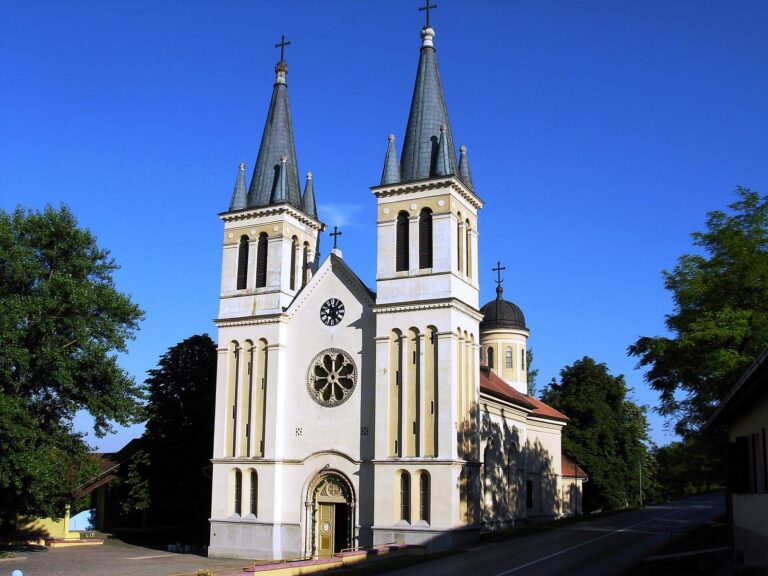
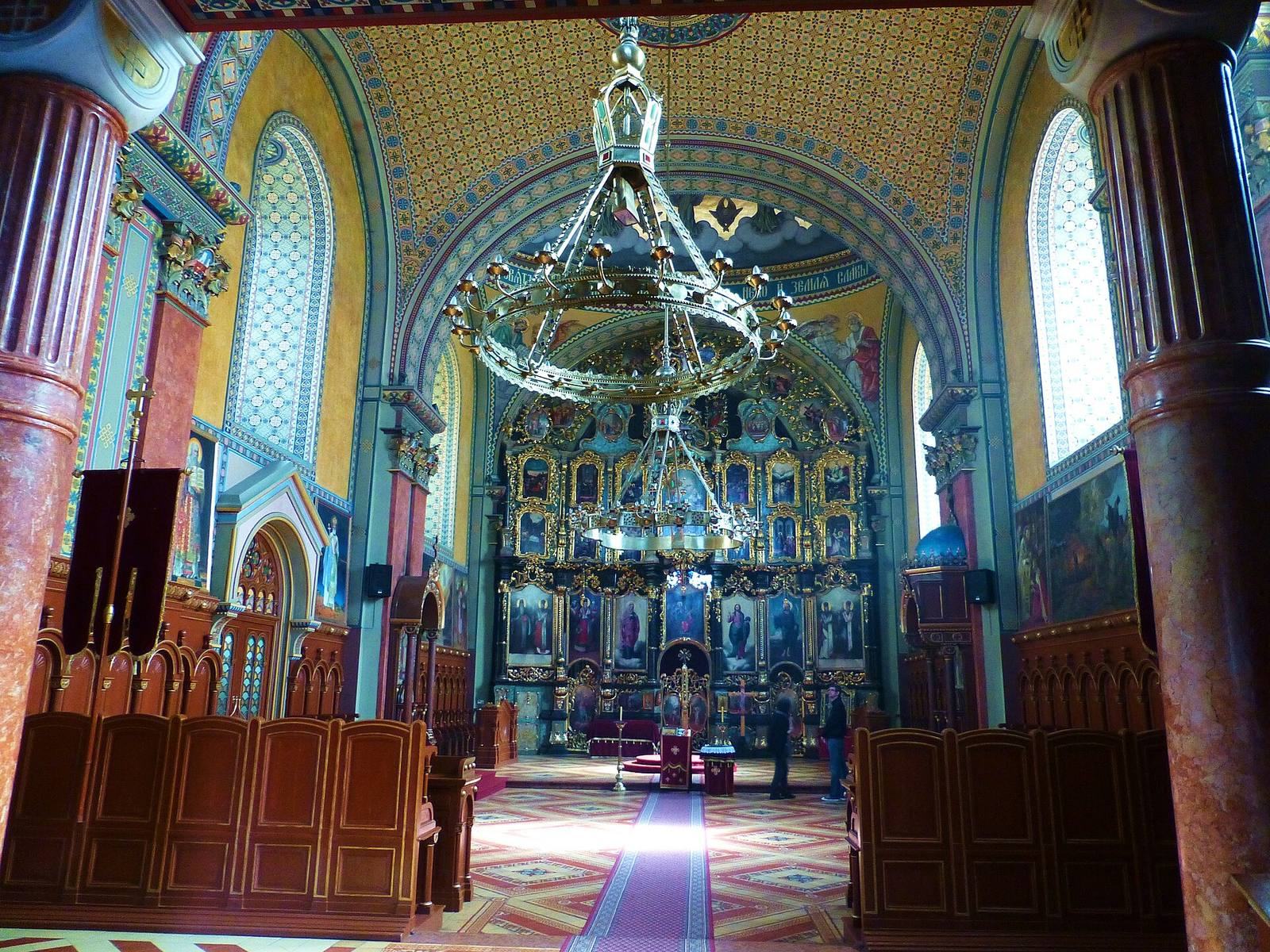
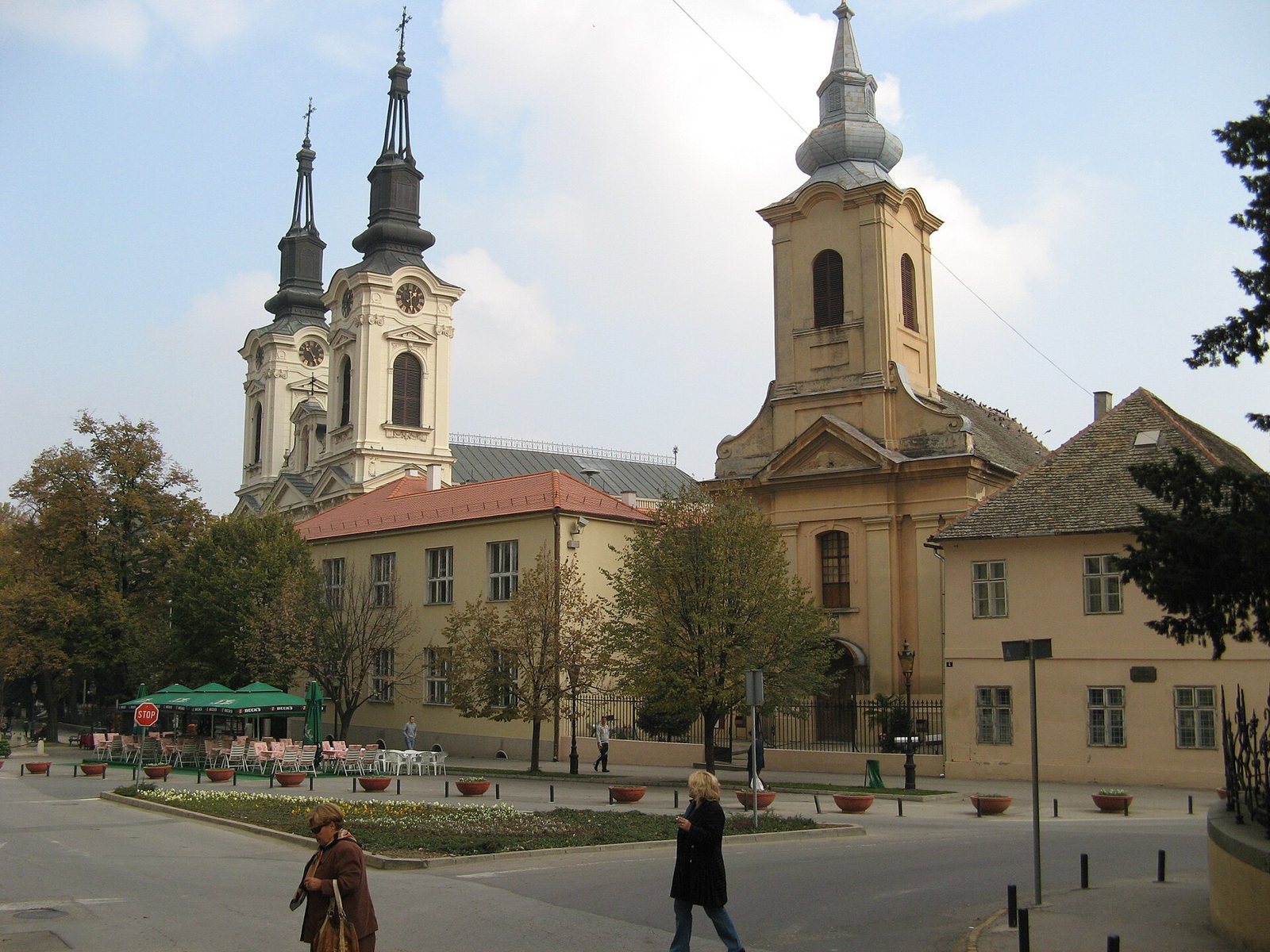
The cathedral is a single-nave building with five interior bays, a semicircular apse at the eastern end, and two tall Baroque bell towers at the western end. It stands beside the former Palace of the Patriarchate, now the Bishop’s Palace of the Eparchy of Srem. Inside, the high iconostasis separates the altar from the nave. Its Baroque painting is regarded as a major achievement in Serbian art, with refined forms, subtle colors, expressive figures, and decorative backgrounds. The prominent throne icons show a mature handling of the style, and the screen’s arrangement was later repeated in other churches.
Paintings, icons and sacred objects
Paintings and icons
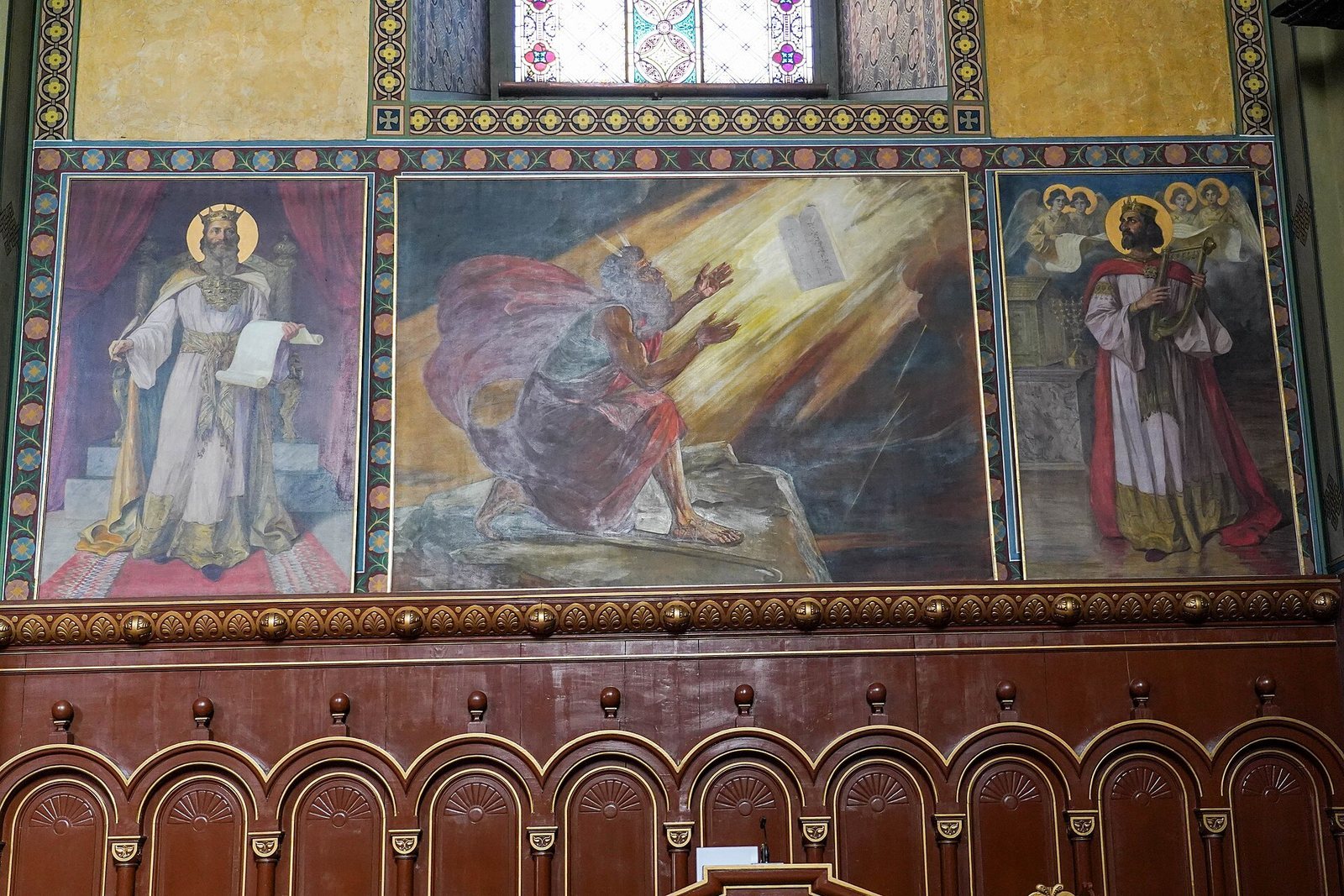
Frescoes and nine large oil paintings by Jovanović are among the cathedral’s interior works. The canvases depict the Sermon on the Mount of Olives; Moses Receiving the Tablets of the Law; the Burning of the Relics of Saint Sava at Vračar; Saint Sava Reconciling the Brothers; the Coronation of Stefan the First-Crowned; King Milutin; Solomon the Wise; Saint John of Damascus; and King David. The church also holds Jovanović’s icon of Saint George. A portrait of Patriarch Georgije Branković shown as Stefan Dečanski appears on the north throne.
The circumstances surrounding Jovanović’s canvases are uncertain. Art historian Nikola Kusovac considered them likely to date from 1906–1912 and proposed that their commission may have been arranged several years earlier, during Branković’s tenure as patriarch. Another story holds that Jovanović first made them for the Church of Saint George at Oplenac, founded by King Peter I Karađorđević, but gave them to Sremski Karlovci after the king rejected them. Art historian Dejan Medaković identified the influence of the Nazarene movement, a 19th-century Christian art movement inspired by early Renaissance religious painting, especially in the light coloring and instructive narrative of the work described as a Sermon on the Mount. He judged that the church paintings’ strengths lay in technical skill and formal treatment rather than a modern artistic outlook.
Relics and revered icon
The cathedral preserves parts of the relics of Saint Arsenije Sremac, the second Serbian archbishop, as well as the miraculous icon of the Virgin of Bezdin.