Trezzo sull’Adda Bridge: A Medieval Crossing over the Adda
Site at a Glance
- Popularity
- Medium
- Country
- Italy
- Primary era
- Medieval
- Eras represented
- Medieval
- Civilizations
- Holy Roman Empire
- Site type
- Military
- Remains
- Fortified Bridge
On this page5 sections
History
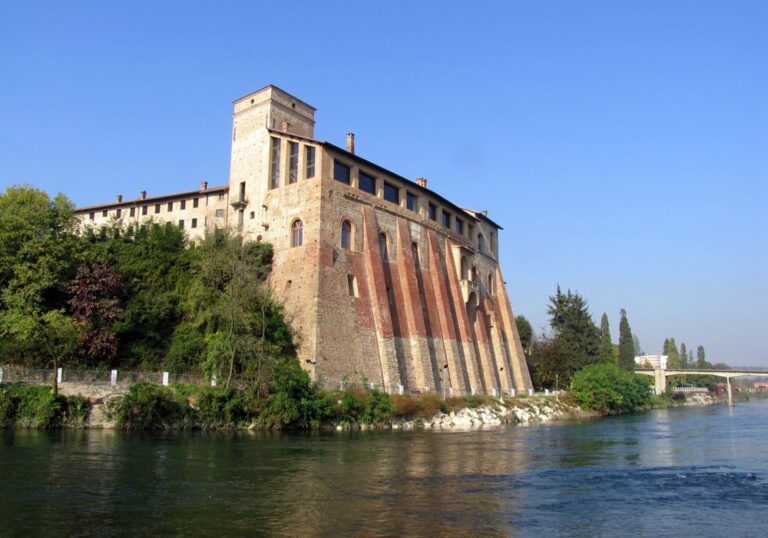
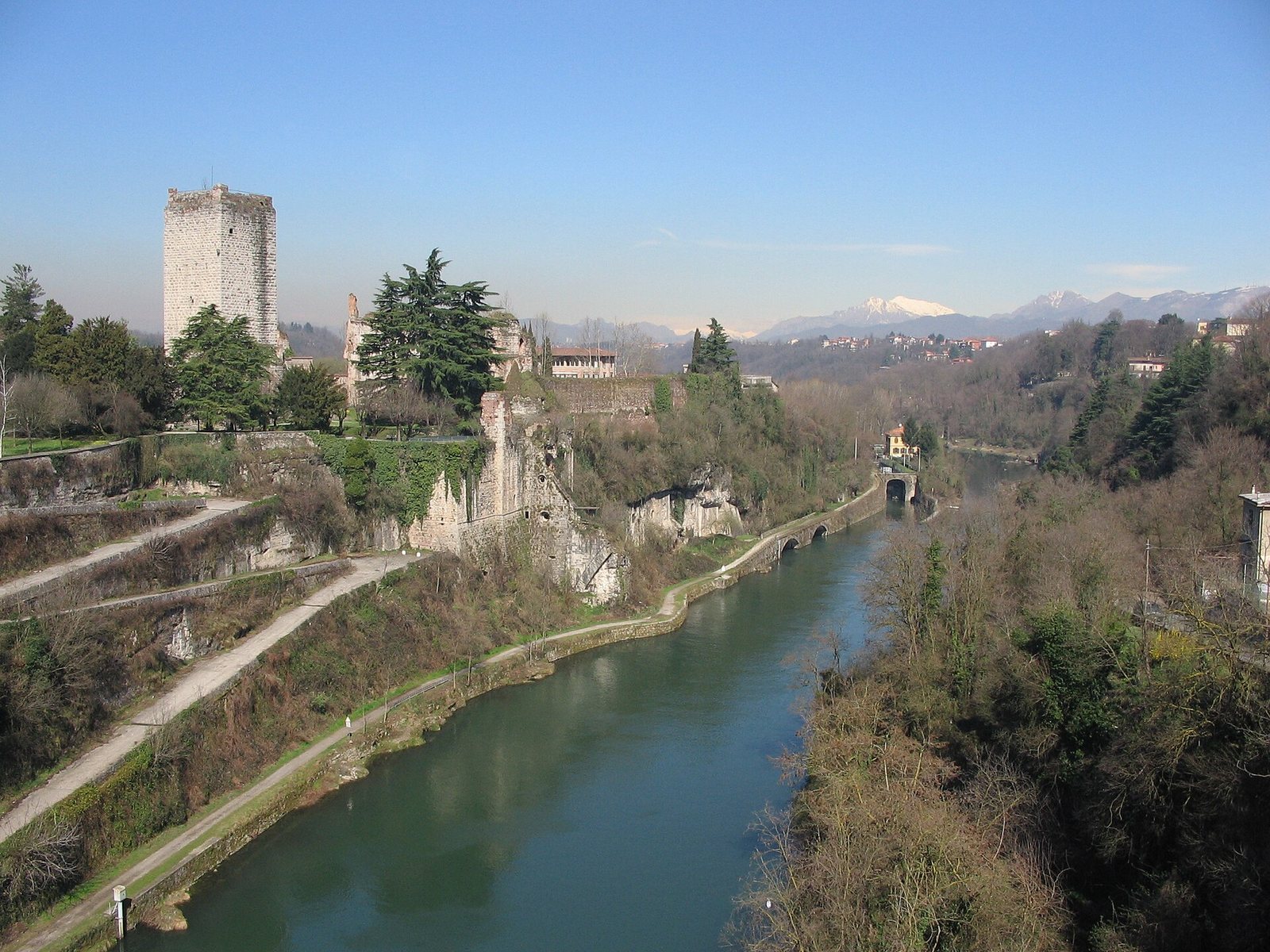
The Trezzo sull’Adda Bridge was a medieval crossing over the Adda River in Italy, connecting the area with Capriate San Gervasio. Built in sandstone between 1370 and 1377, it was commissioned by Bernabò Visconti, ruler of Milan, and completed in 1377. The bridge provided access to Visconti Castle, which stood high above the river.
During a siege in 1416, the military commander Carmagnola deliberately weakened one of the bridge’s end supports, bringing the structure down. Its arch held the record for the largest span for more than four centuries, until the metal Wearmouth Bridge in Sunderland matched it in 1796. A longer masonry arch span was not achieved until the Adolphe Bridge in Luxembourg in 1903.
Remains
Bridge structure and surviving fabric
Arch, towers, and passageways
The sandstone masonry bridge consisted of one shallow arch, shaped as part of a circle, and defensive towers. It measured 72.25 metres long and almost 9 metres wide, with a height of 20.7 metres beneath the arch. The span is generally estimated at about 72 metres, though some estimates reach 76 metres. The arch rose about 21 metres, with a span-to-rise ratio of roughly 3.3 to 1. At the ends, where it rose from its supports, the arch structure was 2.25 metres thick, about one thirty-second of the open span between the supports. Two lanes, one above the other, carried pedestrians, horses, carts, and wagons.
Riverbank remains
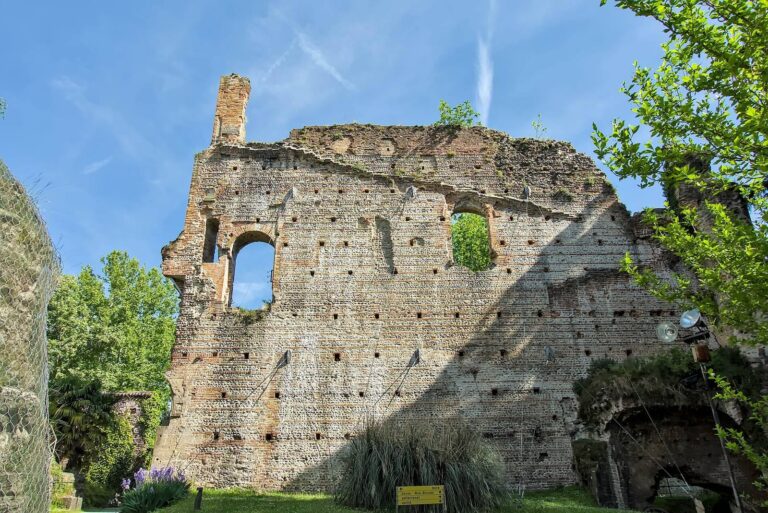
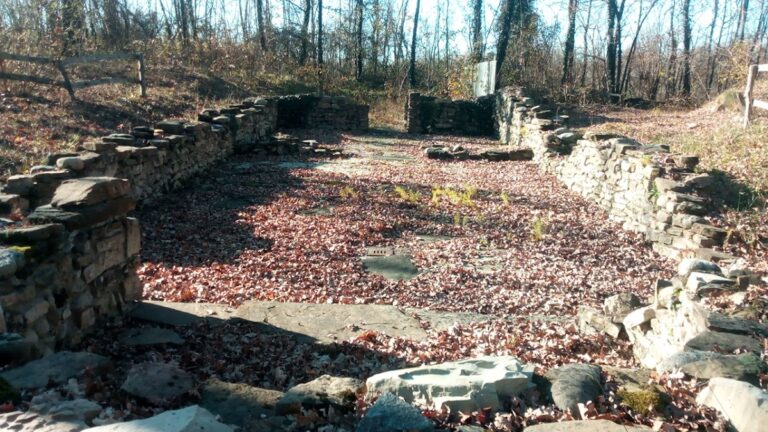
On the riverbanks, the surviving fabric consists of the two end supports, known as abutments, and projecting sections of the arch vault.