Kovilj Monastery: A Serbian Orthodox Monastic Complex in Serbia
Site at a Glance
- Popularity
- High
- Country
- Serbia
- Primary era
- Early Modern
- Eras represented
- Early Modern, Modern
- Civilizations
- Austria-Hungary, Austrian Empire, Habsburg, Hungarian, Serbian
- Site type
- Religious
- Remains
- Monastery
On this page14 sections
History
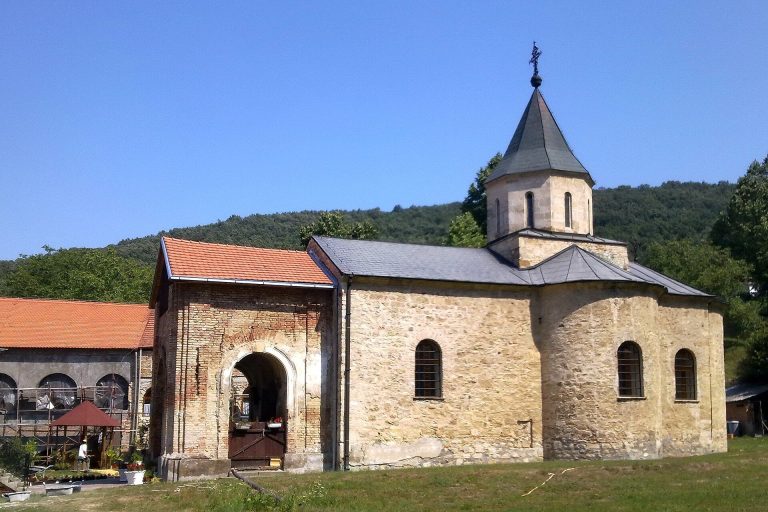
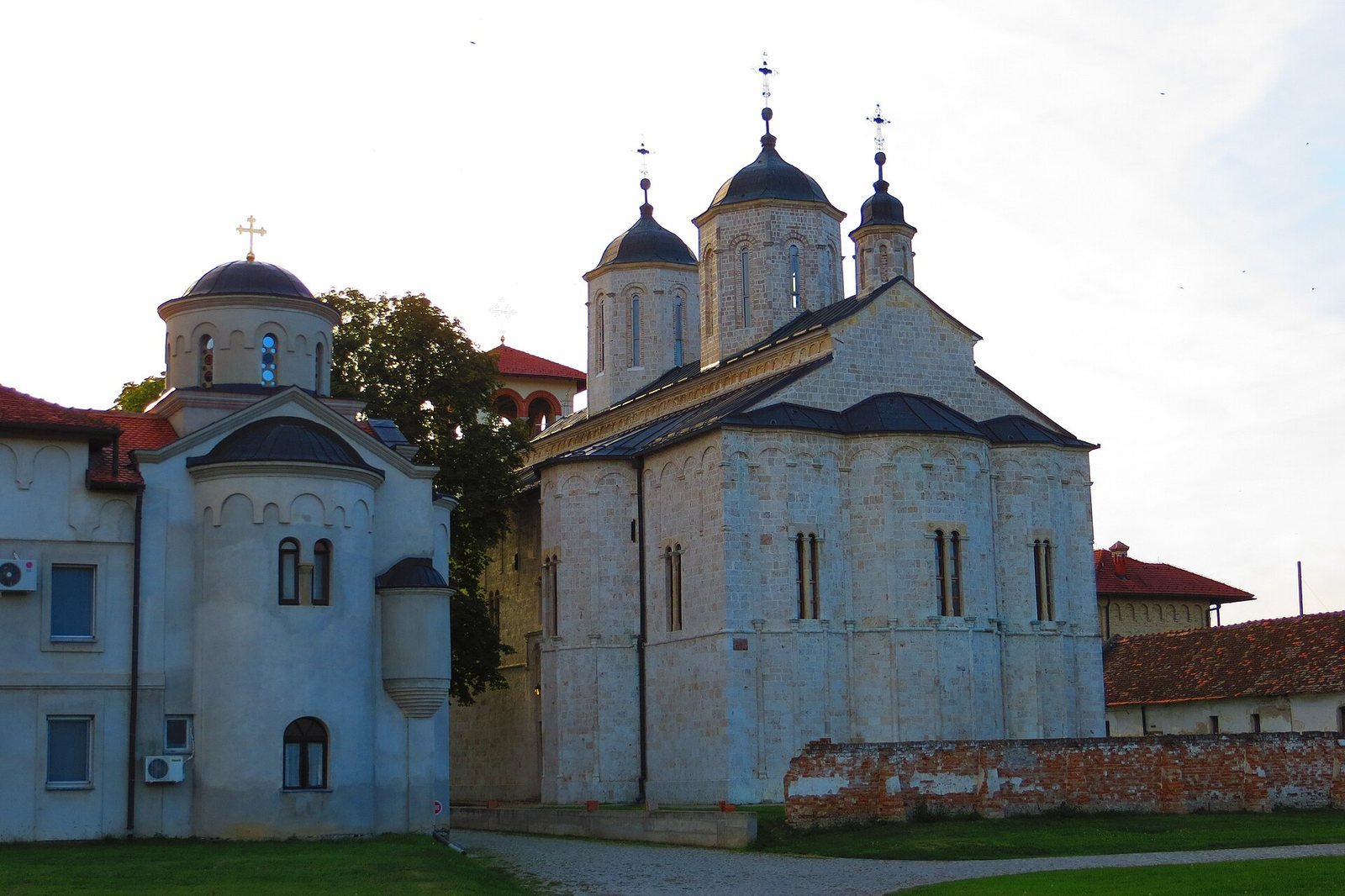
Kovilj Monastery is a Serbian Orthodox monastery in Serbia. Dedicated to the Archangels Michael and Gabriel, it belongs to the Eparchy of Bačka, a diocese of the Serbian Orthodox Church, and their feast is observed on 26 July. Its foundation date is uncertain, though traditions place it in the 13th century. The present church, built between 1741 and 1749, follows the Morava school, a medieval Serbian tradition within Serbo-Byzantine architecture, which adapts Byzantine forms to Serbian practice.
Origins and early evidence
One tradition connects the monastery’s foundation to 1220, when Saint Sava, the first Serbian archbishop, is said to have reconciled Stefan the First-Crowned, a Serbian king, and Andrew II, the King of Hungary. In this account, Kovilj commemorated their reconciliation. The foundation story is not confirmed by historical records. The 17th-century Ottoman traveler Evliya Çelebi instead attributed the monastery to a Serbian king who ruled Belgrade, identified as Stefan Dragutin. Another unverified theory proposes that it was built over a Franciscan monastery founded in 1421.
Kovilj appears in the 14th-century Munich Serbian Psalter in connection with property shared with Privina Glava Monastery, in Fruška Gora. This may indicate that Kovilj began as a metochion, a dependent monastic establishment or property attached to another monastery. Its existence is established by the late 16th or early 17th century.
Ottoman destruction and rebuilding
During the wars between the Ottoman Empire and Austria, Ottoman forces destroyed the monastery four times between 1686 and 1697 and burned its church. After the 1699 Treaty of Karlowitz, surviving monks and newcomers from elsewhere in Hungary restored the monastic brotherhood. The old church was repaired between 1705 and 1707.
Growth in the eighteenth and nineteenth centuries
In 1758, Empress Maria Theresa issued a privilege defining the monastery estate and its boundaries with the nearby settlement of Koviljski Šanac. The estate covered about 1,000 hectares. The Šajkaš Battalion, a military unit established in the region in 1763, helped preserve and repopulate nearby Serbian settlements, contributing to the monastery’s prosperity.
Bačka Bishop Mojsije Putnik appointed Jovan Rajić archimandrite in 1772. An archimandrite is a senior rank of Orthodox monastic clergy. Rajić, a historian and theological writer, died at Kovilj in 1801. The monastery also served as a spiritual and cultural centre. A book-subscription service operated during the first half of the 19th century, and in 1809 its abbot, Porfirije Petrović, and deputy, Simeon Sarajlić, acquired a popular book about the discovery of America.
During the Hungarian Revolution of 1848–1849, an uprising against Habsburg rule, rebels used the monastery as a base. The monks and their abbot were forced to withdraw to Syrmia, leaving most of their possessions behind. The monastery was looted and badly damaged, and much of its cultural property was lost. Restoration began in 1850 with support from the state, Russia, and public donations. The present church was repaired, and work was undertaken on its iconostasis and interior decoration.
War, confiscation, and decline
The monastery escaped damage during the First World War, but agrarian reform in the Kingdom of Yugoslavia reduced its land. It became a women’s monastery in 1933. Hungarian occupation forces looted it in 1941 and expelled the nuns, who first moved to Fenek Monastery. After Ustaše forces, members of a Croatian fascist movement, drove them from Fenek, they settled at the Monastery of Saint Petka near Paraćin.
After the Second World War, Communist authorities confiscated almost all the monastery’s estate. In 1946, it retained 10 hectares, a holding later reduced by half. Its community and congregation declined; from 1980 to 1990, no monks lived there and the monastery was virtually abandoned. It has been under state protection as a cultural monument since 4 August 1949.
Revival and contemporary role
In 1990, three hieromonks, monks who are also priests, Porfirije Perić, Fotije Sladojević, and Andrej Ćilerdžić, arrived to revive the monastery. It again became a men’s monastery, and the community began restoring and expanding the complex. Perić remained after receiving the title of bishop of Jegra in 1999, then left in 2014 to become Metropolitan Bishop of Zagreb and Ljubljana. He later became Patriarch of the Serbian Orthodox Church. After the confiscations, 300 hectares of arable land and 700 hectares of forest were returned to the monastery.
In 2004, a building was adapted for Land of the Living, a residential programme for young people with drug addiction. A community opened at a farmstead in Čenej in 2006, followed by houses in Vilovo and Brajkovac and a women’s community at the Monastery of the Dormition of the Mother of God in Bačko Petrovo Selo. Stays in the programme last from 12 to 36 months. Monastic work also includes farming, a small dairy, and the making of honey, fruit brandies and liqueurs, candles, icons, and herbal balms.
Remains
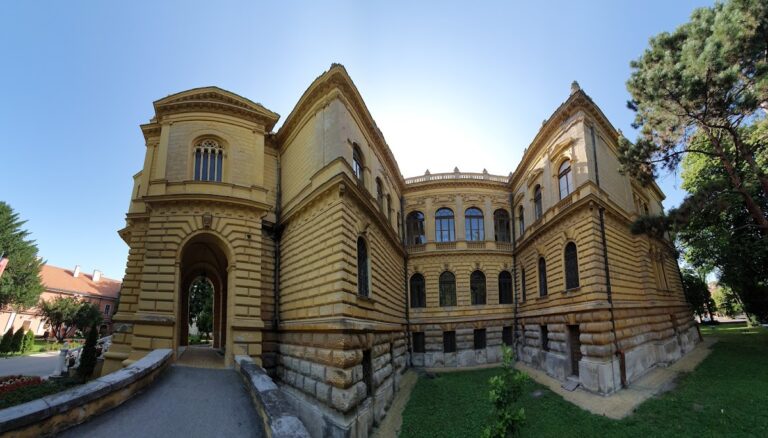
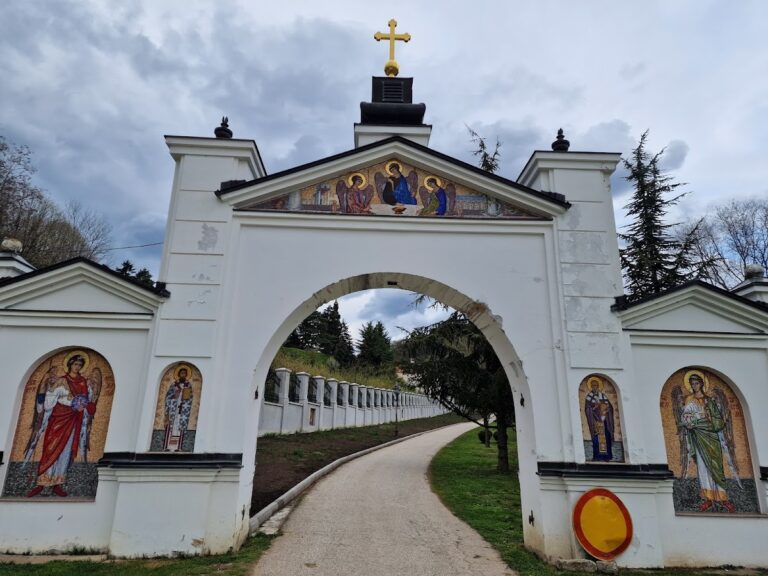
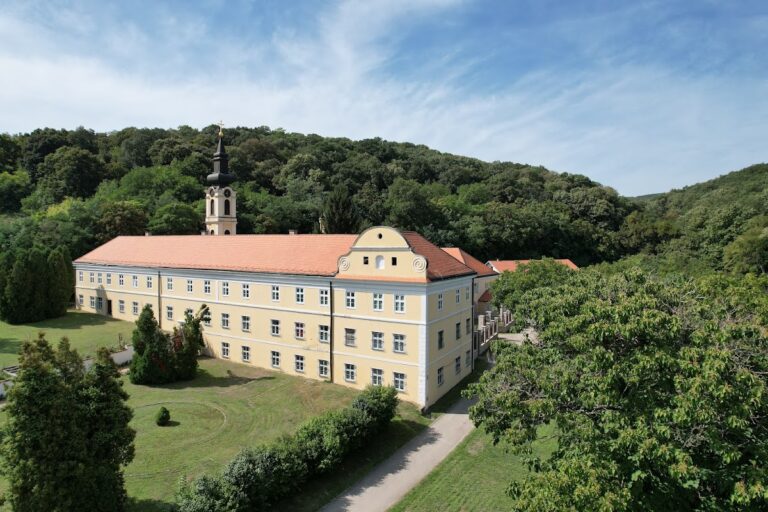
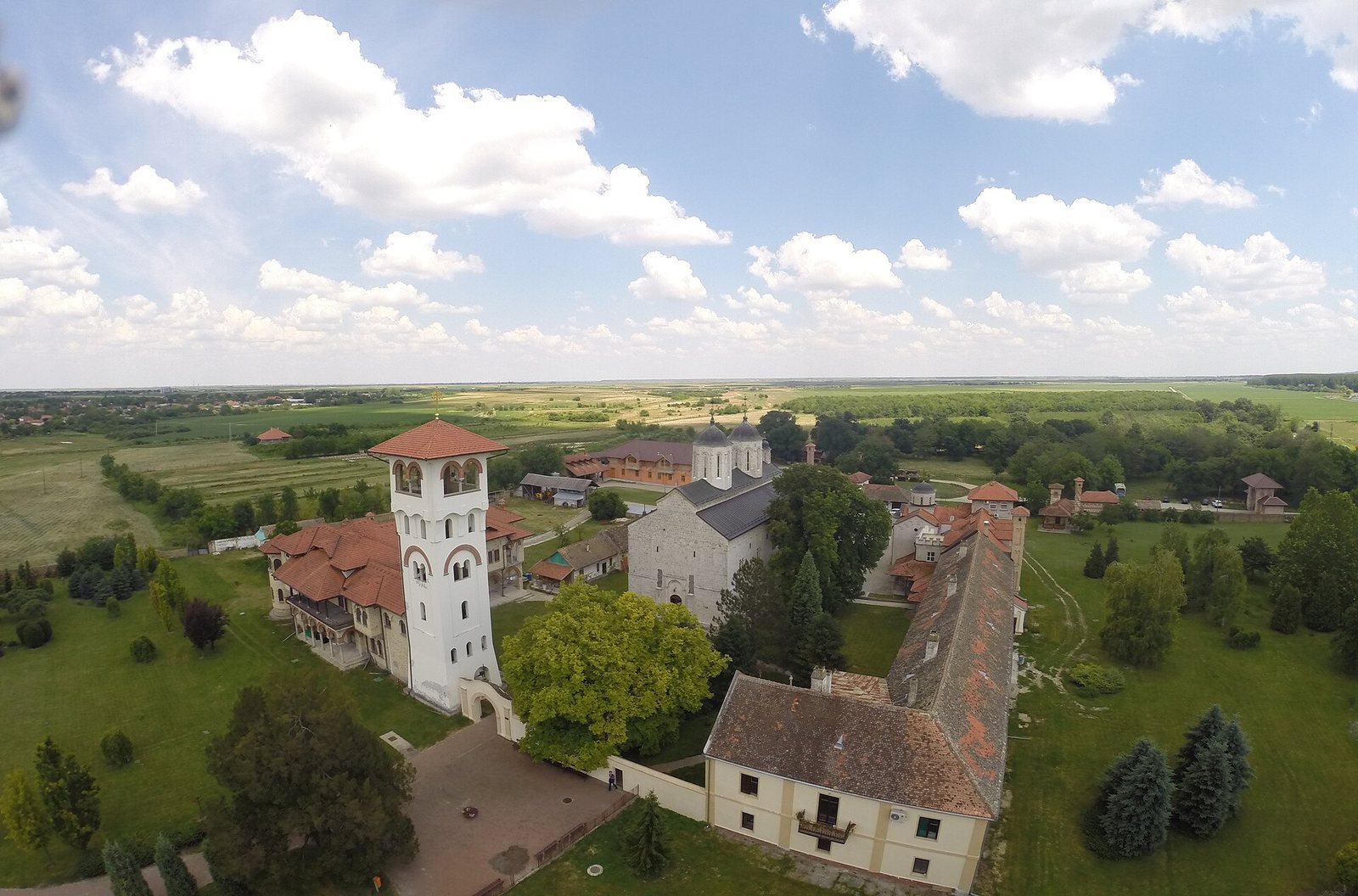
The monastery stands in the Danube valley on the river’s left bank, just south of the village of Kovilj, where the Kovilj-Petrovaradin Marsh nature reserve begins. Its complex includes the church and monastic buildings, while a small chapel stands outside the monastery walls. The church is built from regularly cut grey limestone blocks and takes Manasija as its main model, with Ravanica also cited as a precedent.
Church and furnishings
Iconostasis and paintings
The church’s carved wooden iconostasis, a screen bearing icons that separates the sanctuary from the main body of an Orthodox church, was made by Jovan Kisner. Aksentije Marodić painted it, with work continuing until 1891–1892. Ludwig Tauš gilded it in 1890 and also worked on its marble elements. Marodić’s imagery includes scenes from the life of Christ and copies of paintings held in galleries in Vienna, Munich, Paris, Rome, Venice, and Naples.
The iconostasis departs from the Baroque manner and is unusual in the region. Its Renaissance influence appears in a central Last Supper based on Leonardo da Vinci’s painting, saints shown without visible halos or names, and God represented in human form. Its images also include the Holy Trinity and the Coronation of the Virgin. Wall and column paintings follow church canons; Uroš Predić later worked on some of the church’s paintings and icons.
Memorials and collections
Jovan Rajić is buried in the church, and a memorial museum holds his original works. Major General Teodor von Stanisavljević, the first commander of the Šajkaš Battalion, is also buried there, as is Maria, wife of Đorđe Stratimirović, who fought in the defence of Titel and the surrounding area in 1848–1849. The monastery’s collections include paintings by Uroš Predić and Rafailo Momčilović, 18th- and 19th-century icons, rare books and manuscripts, a musical-literature collection assembled by Damaskin Davidović, and the monastery archive.
Earlier church and outer chapel
Old church site
The old church was wooden and had frescoes painted in 1651. It was demolished in 1850, and a stone marker identifies its former location.
Saint Petka Chapel
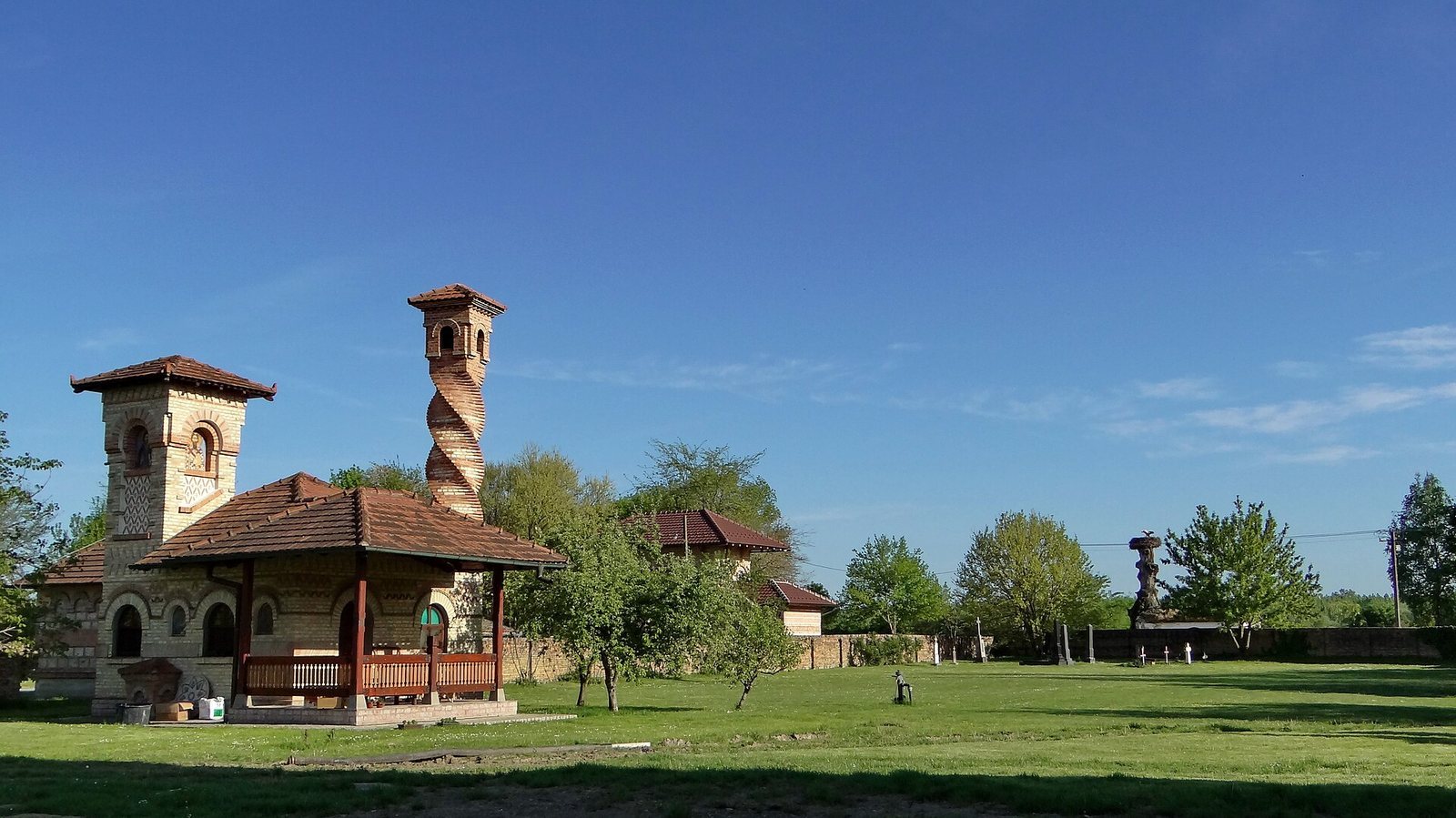
A small chapel dedicated to Saint Petka stands just outside the monastery walls. It leans against a hollow oak estimated to have been about 600 years old in 2010.
Monastic buildings and later additions
Construction of a new monastic residence began in 2003, when church renovation also started; the church was repainted during this work. The complex includes spacious rooms and salons furnished with antique furniture, chandeliers, and stoves, as well as a modern dining room and an ophthalmology cabinet. A winter chapel was completed in 2009.