Sophienberg: A Baroque Royal Summer Retreat in Denmark
Site at a Glance
- Popularity
- Medium
- Country
- Denmark
- Primary era
- Early Modern
- Eras represented
- Early Modern
- Civilizations
- Denmark–Norway
- Site type
- Domestic
- Remains
- Palace
On this page5 sections
History
A royal coastal retreat
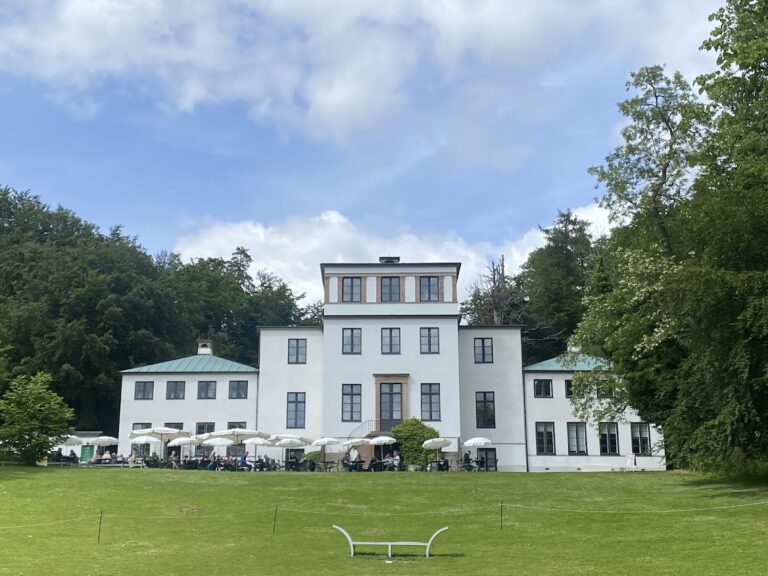
Sophienberg is a former royal summer retreat in Rungsted, Hørsholm Municipality, Denmark, built in the European Baroque architectural style. King Christian VI and Queen Sophie Magdalene wanted a smaller coastal hideaway near the much larger royal palace of Hirschholm, then nearing completion, where they could look out over the water and passing ships. Court architect Nicolai Eigtved began a small pavilion in 1742. It was enlarged soon after it was completed, and the expanded house was finished in 1746.
Christian VI held the property from 1729 to 1746, followed by Sophie Magdalene until 1770 and Christian VII until 1780. In 1777, Sophienberg was linked to events surrounding the affair between Struensee, a German-born physician and statesman influential at Christian VII’s court, and the queen. In 1780, Christian VII gave the estate to his half-brother Frederick, Hereditary Prince of Denmark, who enlarged it by acquiring additional land. After Frederick’s ownership ended in 1790, the government held the property until 1793, followed by Johan Thomas de Neergaard.
Alteration and private ownership
Danish colonel Arnoldus von Falkenskiold acquired Sophienberg in 1797. Finding the former royal residence too large for his needs, he had its upper floor and one third of its ground floor removed in 1808–1809. Builders working on Copenhagen’s reconstruction after the British bombardment of 1807 bought the surplus materials.
After Falkenskiold’s ownership, the estate passed through several private hands. Frederik H. Block purchased it in 1872. In 1897, his son-in-law, the Danish composer Peter Lange-Müller, inherited the property and lived there until his death in 1922. One of the couple’s three daughters then took over, and family members retained the property until 1986.
Later ownership and use
Sophienberg was listed in 1964, and a renovation was completed in 1990. From 1986, ownership passed to Niels Thygesen & Co., then to Byggeriets Realkreditfond and an association of upper-secondary-school teachers. Engineer Gunner Ruben purchased the property in 2006, and ELF Development acquired it in 2016. The former royal retreat is now used for meetings and smaller conferences.
Remains
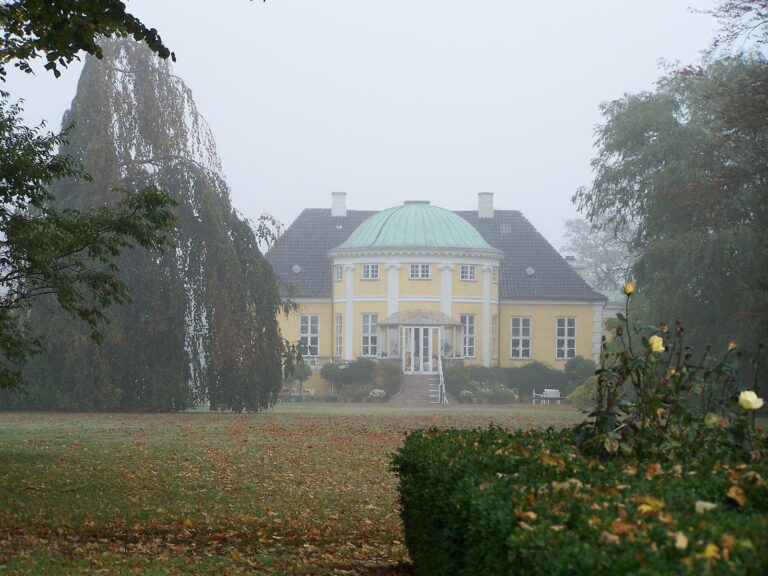
The house’s facade is organized around a central section that projects from the main wall and spans five regular divisions. A copper-clad dome crowns this section. At either end of the facade, a further projecting block spans four divisions.