Frydenlund: A Historic House and Former Hunting Lodge in Denmark
Site at a Glance
- Popularity
- Medium
- Country
- Denmark
- Primary era
- Early Modern
- Eras represented
- Early Modern
- Civilizations
- Danish
- Site type
- Domestic
- Remains
- Elite Residence
On this page5 sections
History
Frydenlund is a historic house in Vedbæk, Denmark, whose origins lie in a hunting lodge just north of Jægersborg Dyrehave, a royal deer park established in 1670. The house’s construction is dated to 1726 to 1729, and its architectural character is Neoclassical, a style drawing on ancient Greek and Roman forms. Frydenlund became connected to the royal household through the Reventlow family and its later use by Queen Caroline Matilda.
From hunting lodge to royal residence
The property’s recorded owners included H. Ehm, associated with a copper mill, through 1669, and M. Friis from 1670 to 1683. Danish statesman Conrad von Reventlow acquired it in the 1680s and named its pavilion Freudenlund. After his death, the estate passed to his daughter Anne Sophie Reventlow. She married King Frederick IV in 1712 in a morganatic marriage, a union between spouses of unequal rank in which the lower-ranking spouse and children generally did not receive the higher-ranking spouse’s dynastic status. They married again in 1721, after which Anne Sophie held the status of queen.
Court architect Johan Cornelius Krieger expanded the property from 1722 to 1726. In the first half of the 1740s, the house was made available to General Charles Christian Erdmann, Duke of Württemberg-Oels, a German prince and military officer, along with the Württemberg Mansion in Copenhagen, now known as Lerches Gård. King Frederick V refurbished Frydenlund and gave it to Crown Prince Christian, later King Christian VII, in 1760. In connection with Christian’s 1764 marriage to Caroline Matilda, a British-born queen of Denmark, Frederick V gave her the property under the name Frydendal. She and Johann Friedrich Struensee, a German-born physician and statesman at the Danish court, used it as a favored retreat.
Rebuilding in the late eighteenth century
Architect Caspar Frederik Harsdorff designed a wooden mansion at Lille Dyrehave, built in 1770 and destroyed by fire in 1793. That same year, the Crown sold the estate to Carl Adolf Boheman. He refurbished and enlarged Krieger’s earlier house with assistance from architect Jørgen Henrich Rawert.
Later ownership and use
Boheman owned the estate until 1803. It then belonged to W.B. Linstow from 1803 to 1813, Cecilie M. E. Schouw from 1813 to 1840, H. Outzen Bjørn from 1840 to 1843, J.L. Gottlieb from 1843 to 1846, Gertrudine Rieffestahl from 1846 to 1875, and L. Castenschiold from 1875 to 1907. Carl Brummer restored the house from 1907 to 1909. C.B. Thøgersen owned it from 1907 to 1929, followed by G.K. Schiørring from 1929 to 1957. The complex was listed in 1918.
Victor Borge bought Frydenlund in 1957 and sold it to Danish chemical engineer and industrialist Haldor Topsøe in 1960. Topsøe established a research center in the buildings.
Remains
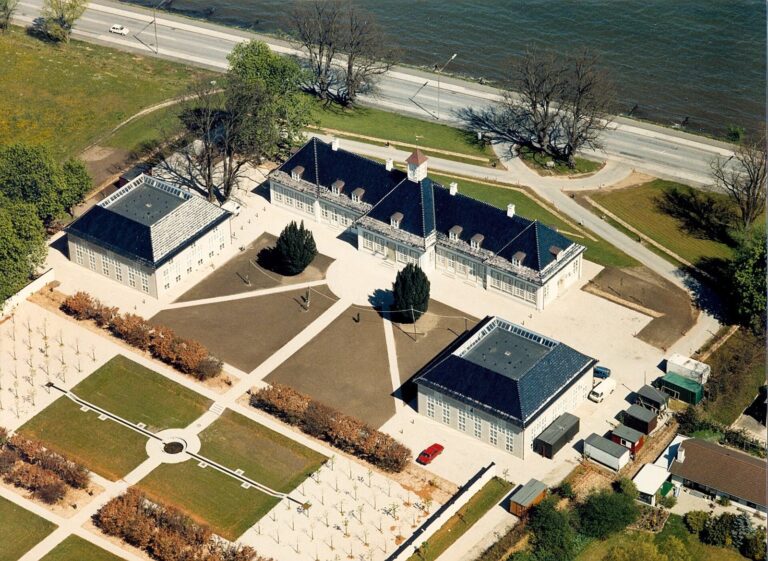
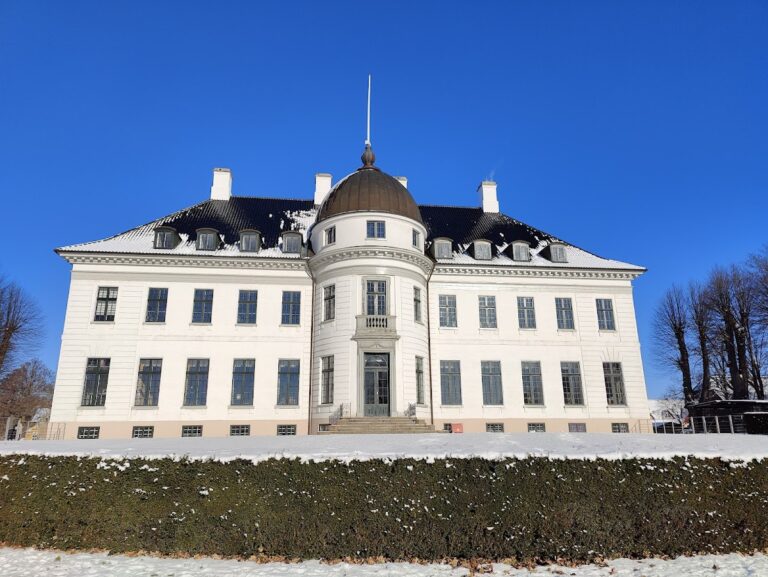
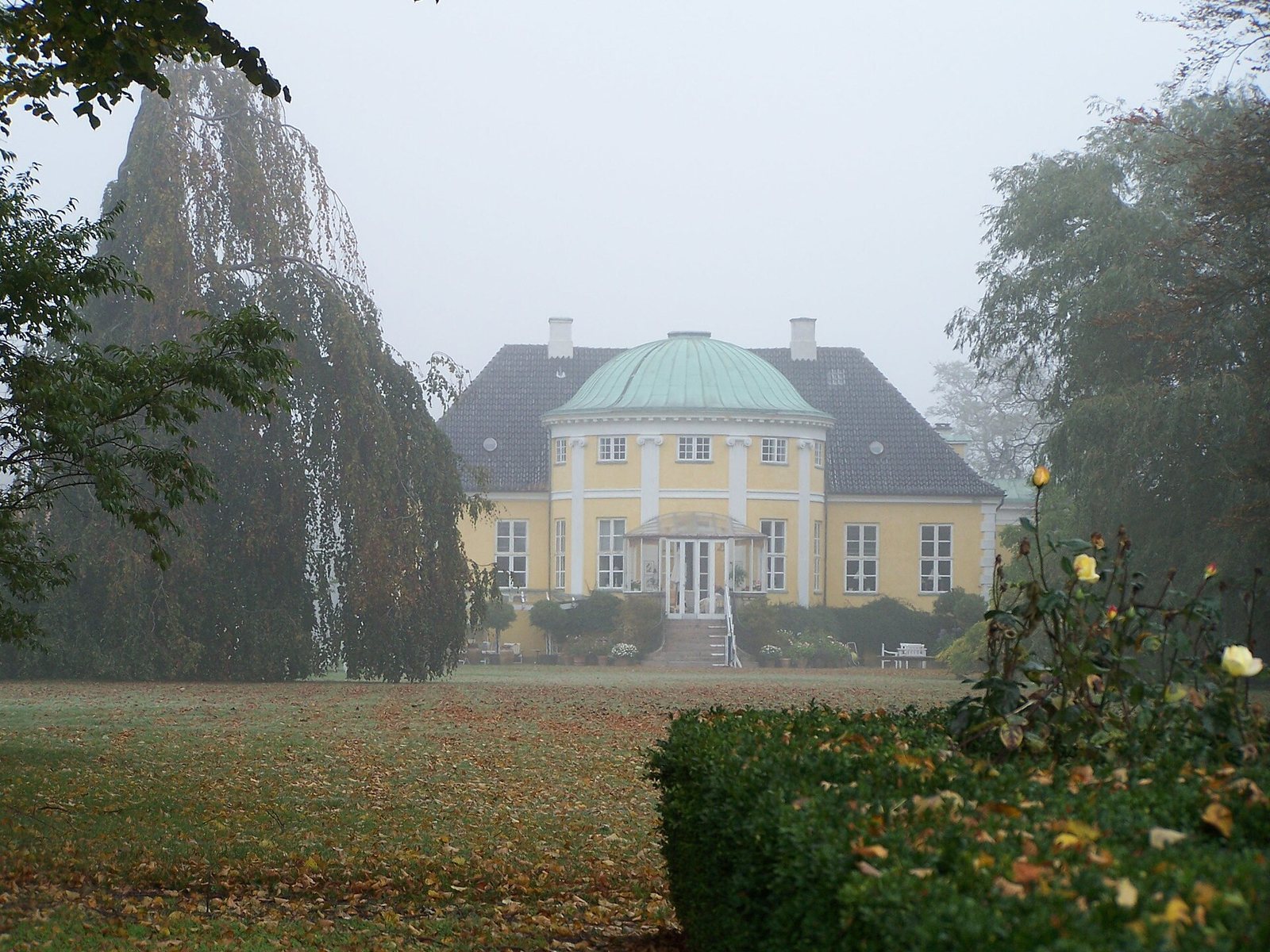
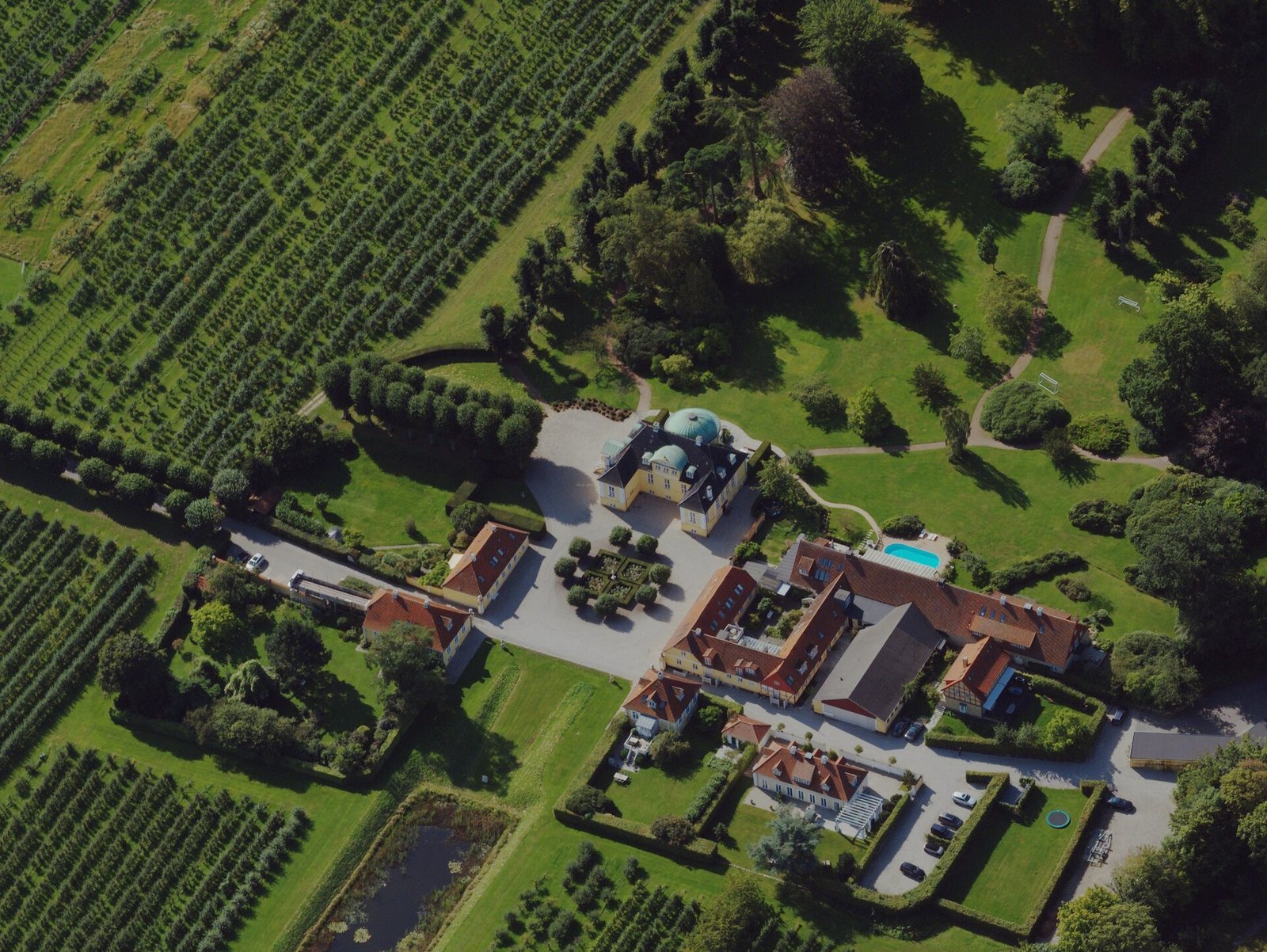
The present house is a three-winged Neoclassical building attributed to Jørgen Henrich Rawert. A rounded projection on the main wing preserves the form of Krieger’s earlier house, originally a tall, octagonal structure built with a timber frame.