Sooneck Castle: A Medieval Hillside Castle in Germany


Site at a Glance
- Rating
- 4.6
- Popularity
- Medium
- Country
- Germany
- Primary era
- Medieval
- External website
- Open
- Eras represented
- Medieval, Modern
- Civilizations
- Holy Roman Empire
- Site type
- Domestic
- Remains
- Castle
On this page8 sections
History
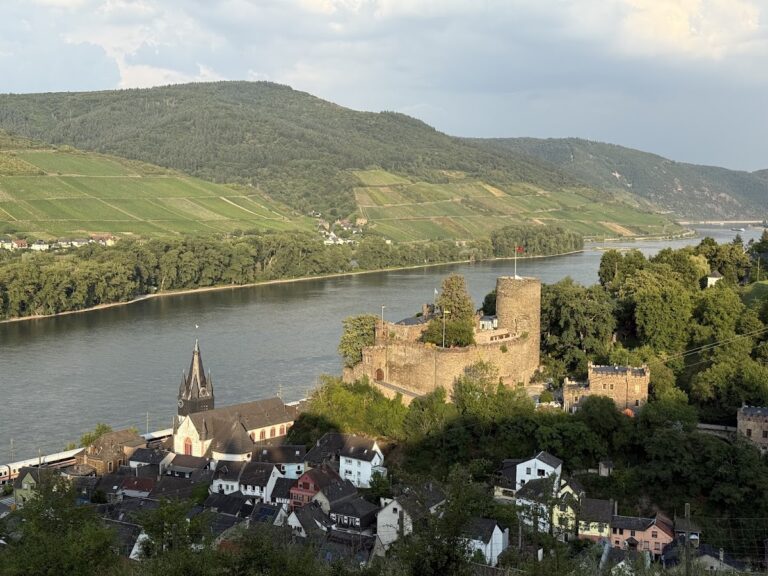
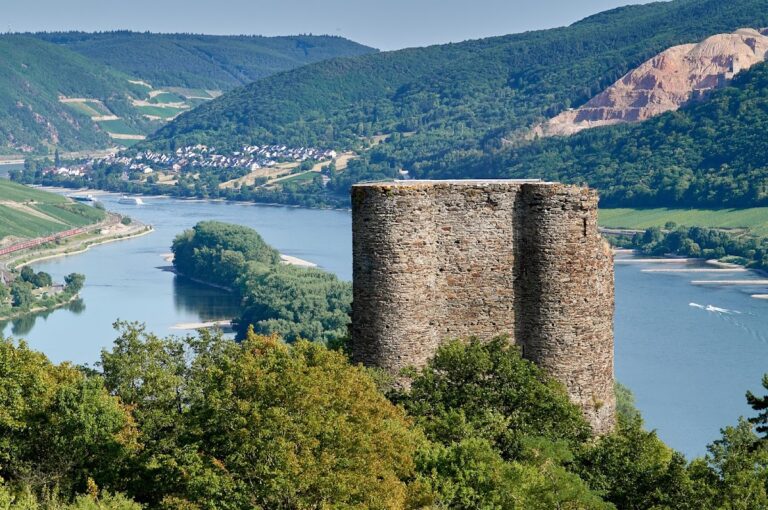
Sooneck Castle is a medieval hillside castle in Germany near Niederheimbach, in the Upper Middle Rhine Valley between Bingen and Bacharach. Its first recorded mention probably dates to 1271, and its later rebuilding reflects the changing political and architectural history of the Rhine region. Since 2002, the castle has formed part of the Upper Middle Rhine Valley UNESCO World Heritage Site.
Medieval origins and destruction
Sooneck, also known as Saneck or Sonneck and formerly as Schloss Sonneck, was administered with neighboring Reichenstein Castle by the Lords of Hohenfels. They served as bailiffs of Kornelimünster Abbey, an imperial religious foundation near Aachen. As lay officials, the bailiffs exercised administrative and protective authority for the abbey.
In 1282, Rudolf I, the German king, besieged Sooneck. His troops captured and destroyed the castle, after which he prohibited its reconstruction. The ban was expressly confirmed in 1290. King Charles IV lifted it in 1349, by which time ownership and the bailiwick had passed to the Electorate of Mainz.
The Waldeck inheritance
In April 1346, Archbishop Henry III of Mainz enfeoffed the knight Johann Marschall zu Waldeck with Sooneck. Johann then had a new castle built on the site. After his death, four heirs shared the property, turning it into a Ganerbenburg, a castle jointly held by several hereditary families or branches with shared rights and divided living quarters.
The resident branches repeatedly disputed their inheritances. Legally enforced truces among the inhabitants had to be established several times. When the Waldeck line ended with the death of Philipp Melchior in 1553, the Breidbach zu Bürresheim family, previously a co-tenant, became the sole holder. After that family died out, Sooneck fell into disrepair.
Destruction and royal reconstruction
French troops serving Louis XIV destroyed Sooneck in 1689 during the War of the Palatine Succession, a late-seventeenth-century European conflict involving France and several opposing powers. The destruction formed part of a wider campaign in which French forces ruined numerous castles along the Rhine.
In 1774, the Mainz Cathedral Chapter leased the ruins to four residents of Trechtingshausen, who planted vineyards on the site. Sooneck later passed to the municipality of Niederheimbach. In 1834, Crown Prince Frederick William IV of Prussia and his brothers, Princes William, Charles, and Albert, purchased the derelict castle. Between 1843 and 1861, they had it rebuilt as a hunting lodge. Disagreements within the royal family and the effects of the 1848 revolutions prevented the lodge from being used for that purpose, although reconstruction was completed in 1861.
State ownership and heritage protection
After the First World War, aristocratic property was nationalized and Sooneck became state property. Following the Second World War, ownership passed to the state of Rhineland-Palatinate and, in 1948, to its State Castles Administration, now the General Directorate for Cultural Heritage of Rhineland-Palatinate, Directorate of Castles, Palaces, and Antiquities. The castle is also protected cultural property under the Hague Convention, which provides international protection for cultural property during armed conflict.
Remains
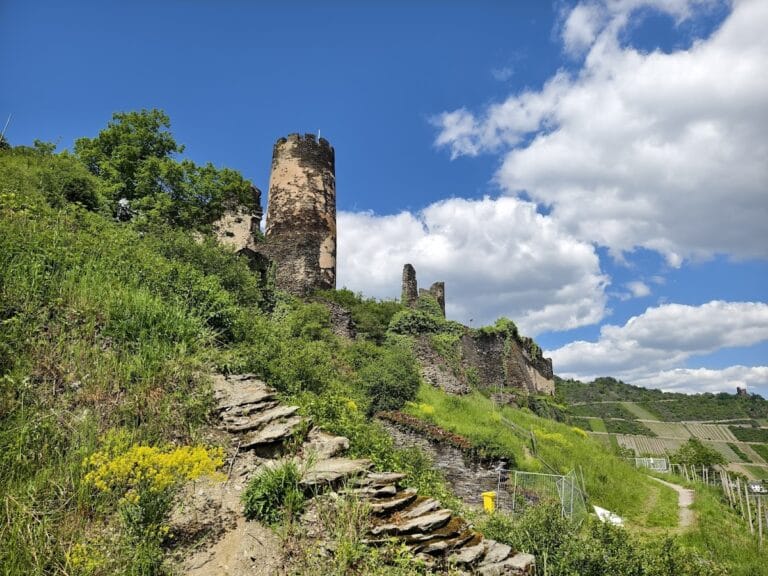
Sooneck stands on the steep northeastern slope of the Binger Forest near the Rhine and Niederheimbach. The nineteenth-century rebuilding retained much of the historical structure while adding buildings shaped by Romantic historicism, an approach that used picturesque references to the medieval past. The work was designed by the military architect Carl Schnitzler.
Gate and exterior reconstruction
The northern castle gate carries a Prussian royal coat of arms dating from the nineteenth-century rebuilding. The original entrance lay on the opposite side, preserving evidence of a change in the approach to the castle. The surviving complex therefore combines retained medieval structures with additions created during its transformation into a royal residence.
Residential rooms and collections
The residential rooms are furnished mainly in Neo-Gothic and Biedermeier styles. Neo-Gothic decoration revived medieval Gothic forms, while Biedermeier was a practical and restrained nineteenth-century Central European domestic style. Paintings from the Hohenzollern family holdings contribute to the interiors. Since 1991, the Köth-Wanscheid family foundation has added drawings and sketches, including works by Johann-Caspar Schneider and other artists.