Son Real Necropolis: A Talayotic Burial Ground on Mallorca
Site at a Glance
- Popularity
- Medium
- Country
- Spain
- Primary era
- Iron Age
- Eras represented
- Iron Age, Classical, Modern
- Civilizations
- Unclassified
- Site type
- Burial
- Remains
- Necropolis
On this page10 sections
History
The Son Real necropolis is a burial ground on Mallorca, Spain, used from the eighth or seventh century BC to the second century BC. It belongs to the Talayotic period, a prehistoric era in the Balearic Islands named for talayots, substantial tower-like structures. Its changing graves reflect shifts in burial customs and the people included in the cemetery.
Use during the Talayotic period
The earliest burials were principally those of mature men. Weapons placed in these graves have been interpreted as evidence that some belonged to an elite of warriors or hunters. In a later phase, burial extended to a broader population, although children and other non-adults remained underrepresented. Cremation appeared during the later Iron Age and was practiced alongside burial of the body.
The adoption of cremation has been linked either to islanders returning after serving as Carthaginian mercenaries or to people from beyond Mallorca, possibly of Punic origin, joining local communities through marriage. Punic refers to Carthaginian culture and its western Mediterranean sphere. Imported pottery and metal objects point to exchange by at least the sixth or fifth century BC; trade grew from the fourth century BC, with connections to Punic Ibiza. The people buried here may have lived in a settlement thought to have stood near the main buildings of the Son Real estate.
The tombs on Illot des Porros, an islet just under 500 metres east of the cemetery, may once have formed part of the same burial area before rising sea levels separated them. Construction of the Son Real dolmen, about 400 metres southeast, was probably abandoned in favor of the necropolis. A proposed Phoenician origin for the burials has been rejected, despite the area’s popular association with the “Point of the Phoenicians.” The necropolis became an Asset of Cultural Interest in 1964.
Rediscovery and archaeological work
Lluís Amorós brought the site to wider attention in the early 1950s. Excavation began in the late 1950s under Miquel Tarradell and continued intermittently until 1969. After a period of neglect, during which looting and motocross damaged tombs, protection, restoration, and renewed excavation began in 1998. A storm damaged graves at the eastern end in 2001, prompting emergency work the following year.
After a five-year pause, excavation resumed in 2007, initially concentrating on the vulnerable northeastern area and later extending across the cemetery. Damià Ramis and Jordi Hernández-Gasch directed investigations from 2007; from 2012, Hernández-Gasch continued with Margalida Munar and Bernat Burgaya. The work sought to establish the cemetery’s extent, investigate its development, and excavate newly identified graves.
Remains
Layout and tomb forms
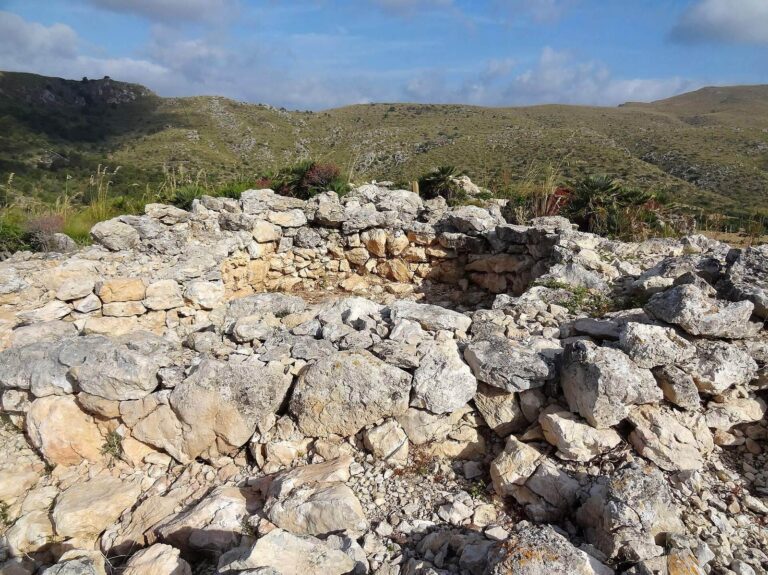
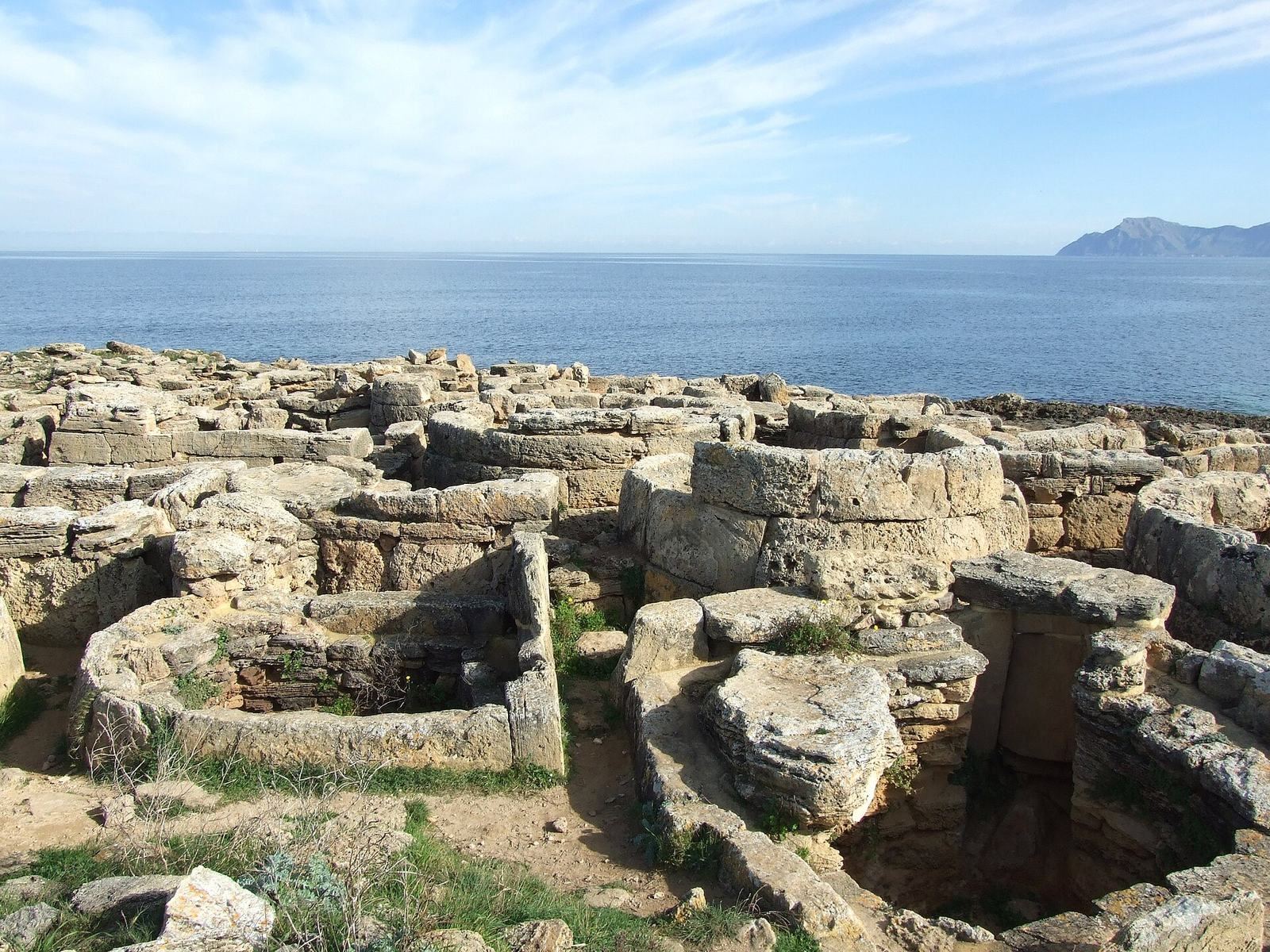
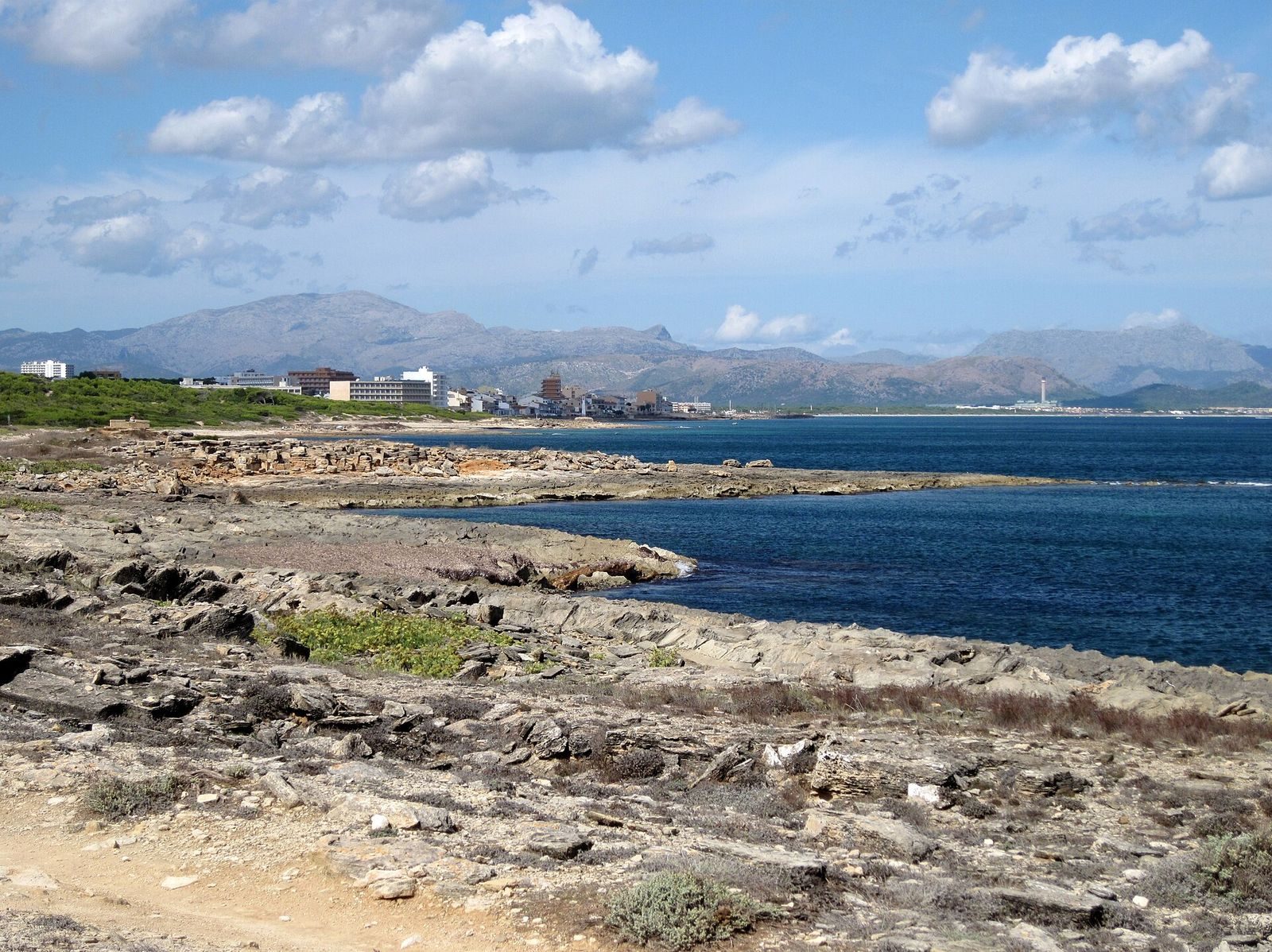
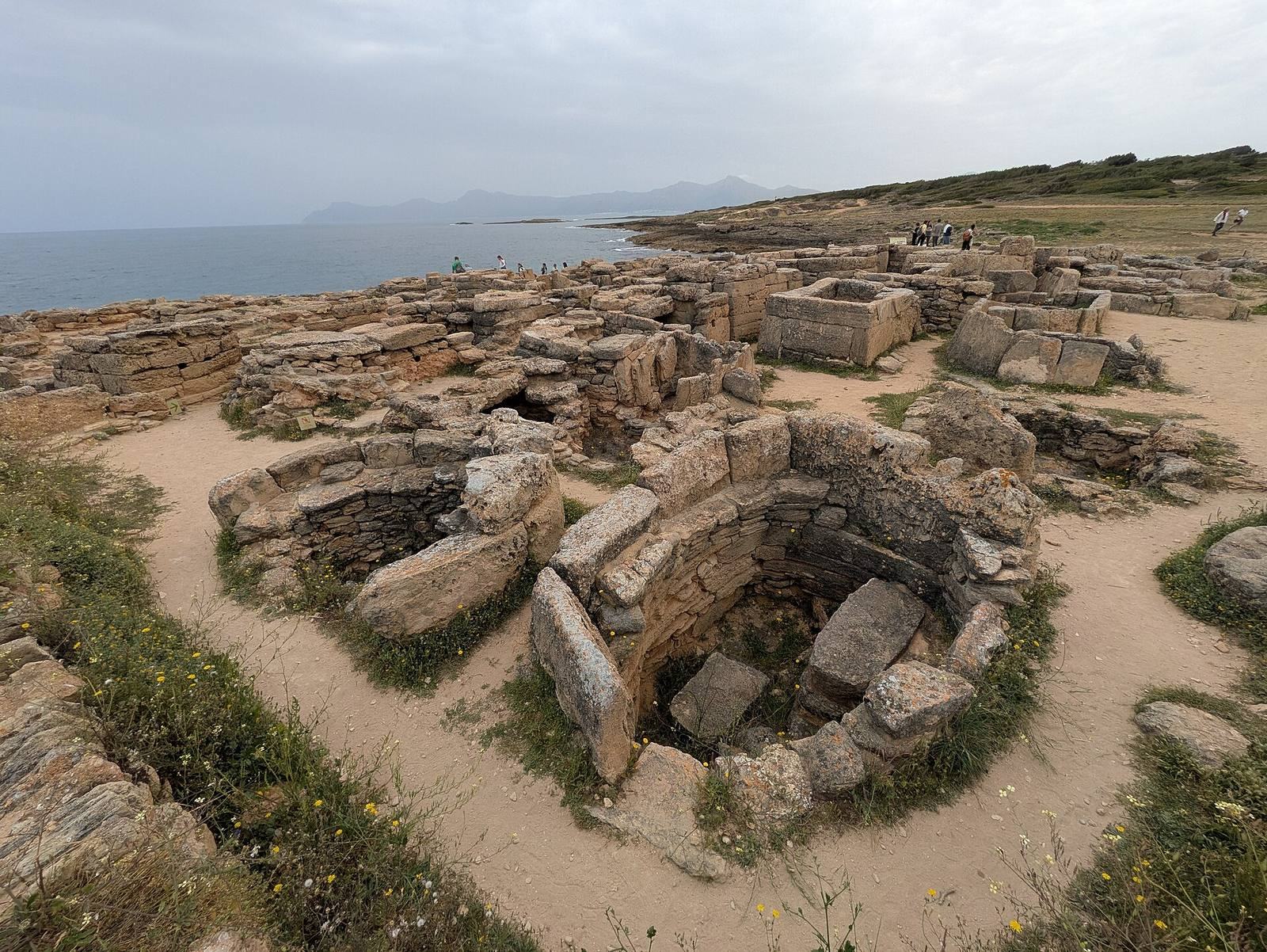
The cemetery occupies a small coastal headland at Punta des Fenicis, on the Bay of Alcúdia. Its present area is about 800 square metres, though it may once have extended farther north toward the promontory. The graves are generally above ground, and many face southeast. Excavations have identified more than 130 tombs; a separate count records 109 surviving graves. Together, the burials represent at least 300 people.
Early tombs
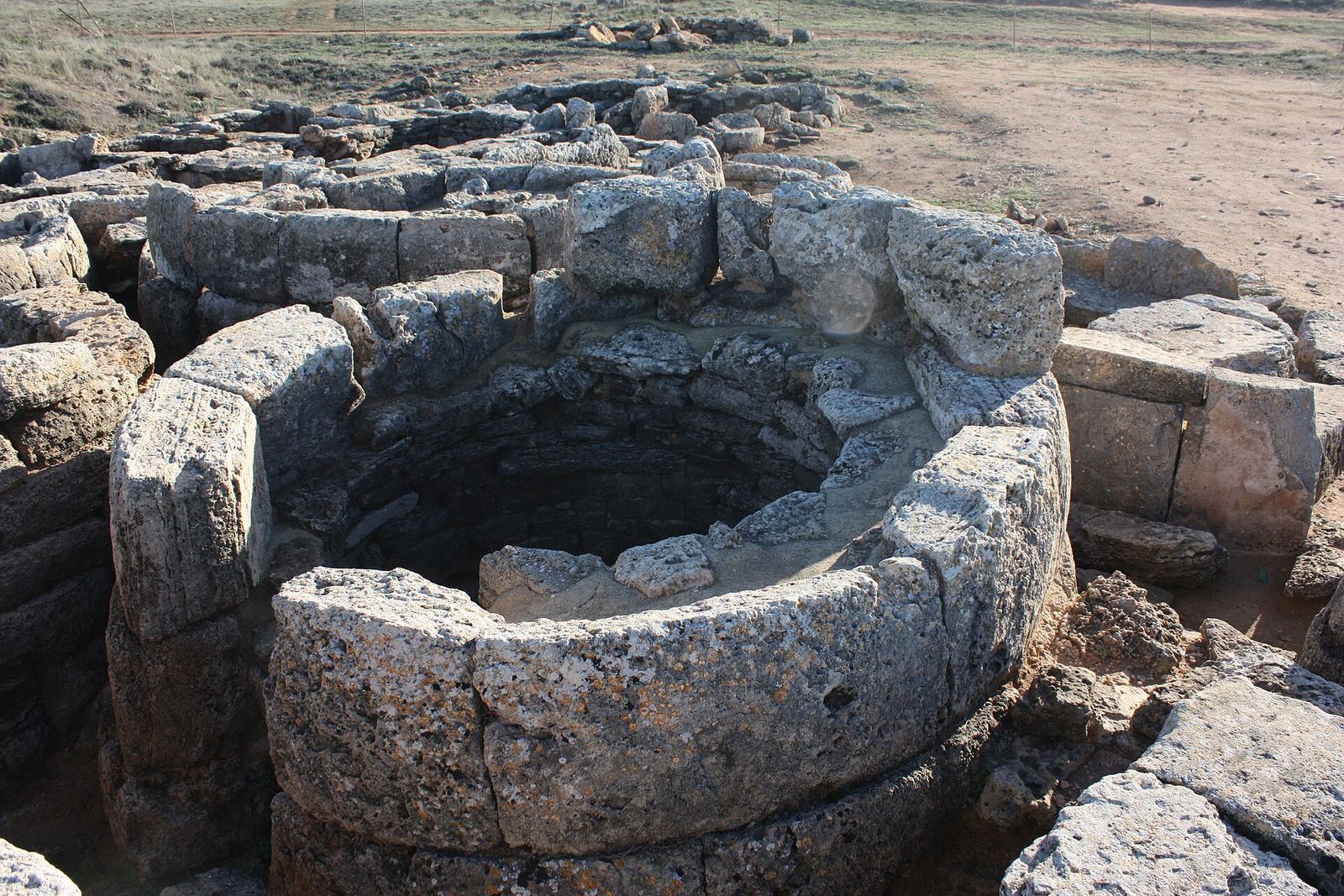
The earliest graves date to the eighth and seventh centuries BC. Some reproduce, on a smaller scale, the round or square forms of talayots. These include substantial constructions made from large stones.
Small naveta-shaped tombs
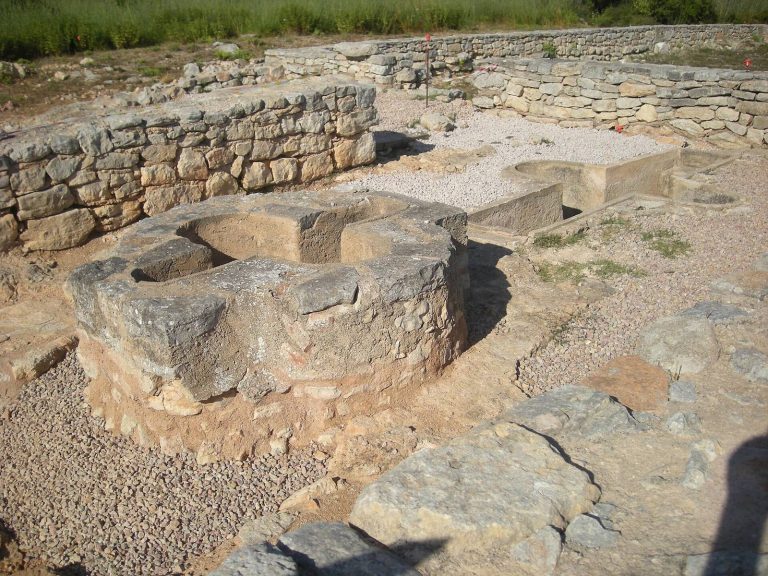
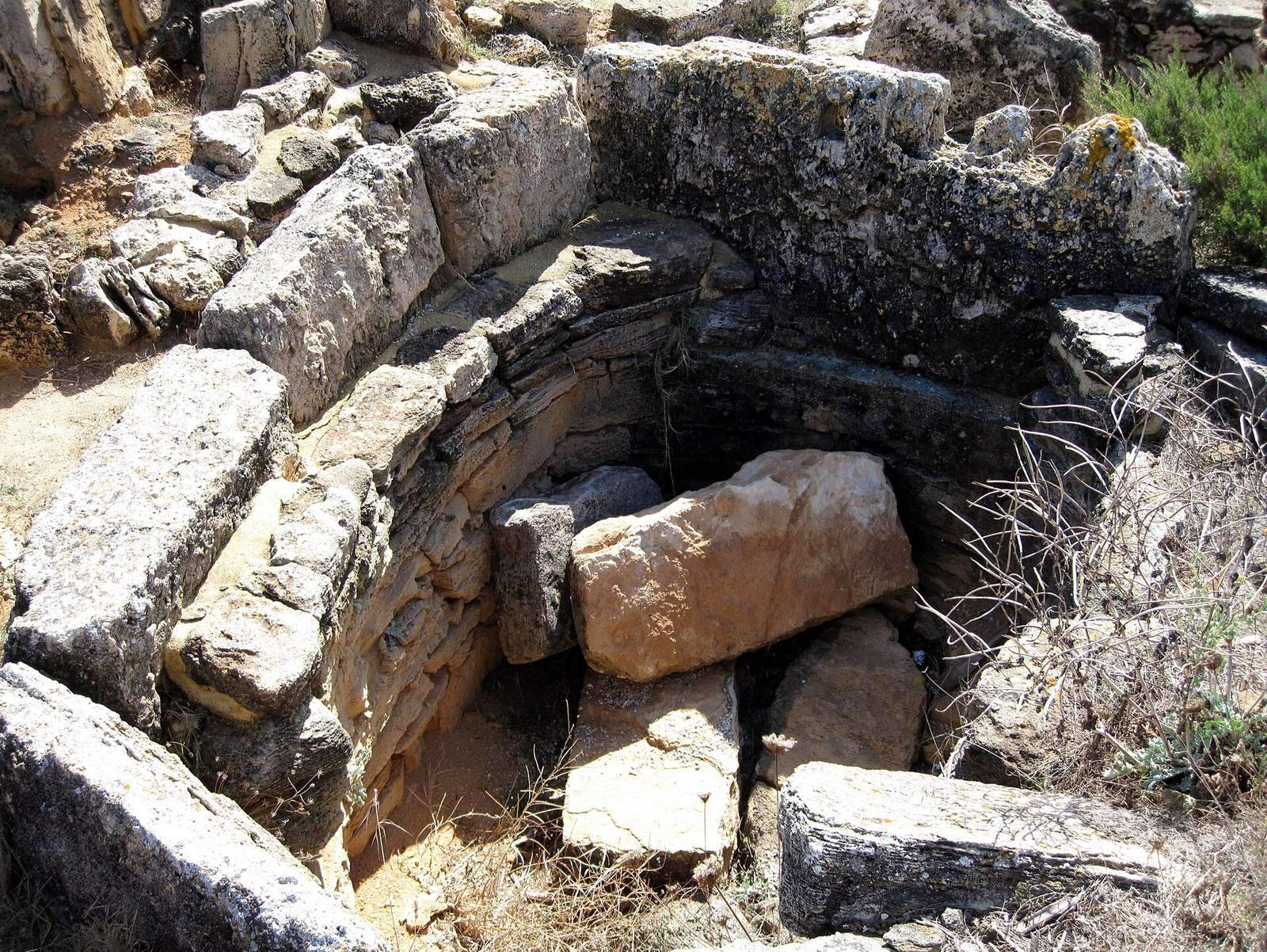
From about the sixth or fifth century BC, the cemetery included small tombs called micronavetas, shaped to recall the larger Menorcan funerary structures known as navetas. Their plans are rounded at one end or horseshoe-shaped. Some have wall openings described as windows, which may have served ritual or symbolic purposes. A number also contain two parallel pits cut into the bedrock floor; their function is uncertain.
Later graves
From the fourth century BC, tombs became less monumental and were made for individuals or families, often incorporating parts from earlier burials. Later examples are quadrangular and arranged in groups.
Burials and grave goods
Many bodies were placed in a fetal position, probably secured with cords or wrapped in shrouds. Tombs often contain two niches for the dead. Finds include weapons such as spearheads, arrowheads, and swords, as well as jewelry, everyday objects, animal bones, and shells. Some objects from the graves can be seen at the Monographic Museum of Pollentia in Alcúdia.
Conservation and excavation
Exposure to coastal weather and salt water has worn the cemetery’s structures. Conservation work has repaired or rebuilt damaged walls, sealed their upper surfaces, added foundations where needed, and reset fallen stones in their original or recovered positions. Removing spoil heaps left by earlier excavations and clearing sediment between graves exposed more of the ground, revealed additional structures, and brought further masonry into view. The site is described as about 98 percent excavated and 90 percent restored.