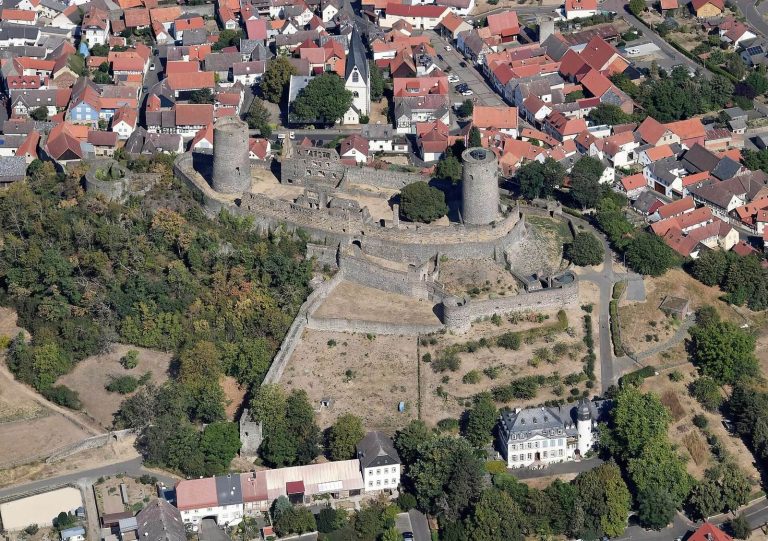
Solms Castle in Butzbach: A Renaissance Residence and Administrative Seat
Site at a Glance
- Popularity
- Medium
- Country
- Germany
- Primary era
- Early Modern
- Eras represented
- Medieval, Early Modern
- Civilizations
- Holy Roman Empire
- Site type
- Domestic
- Remains
- Castle
On this page7 sections
History
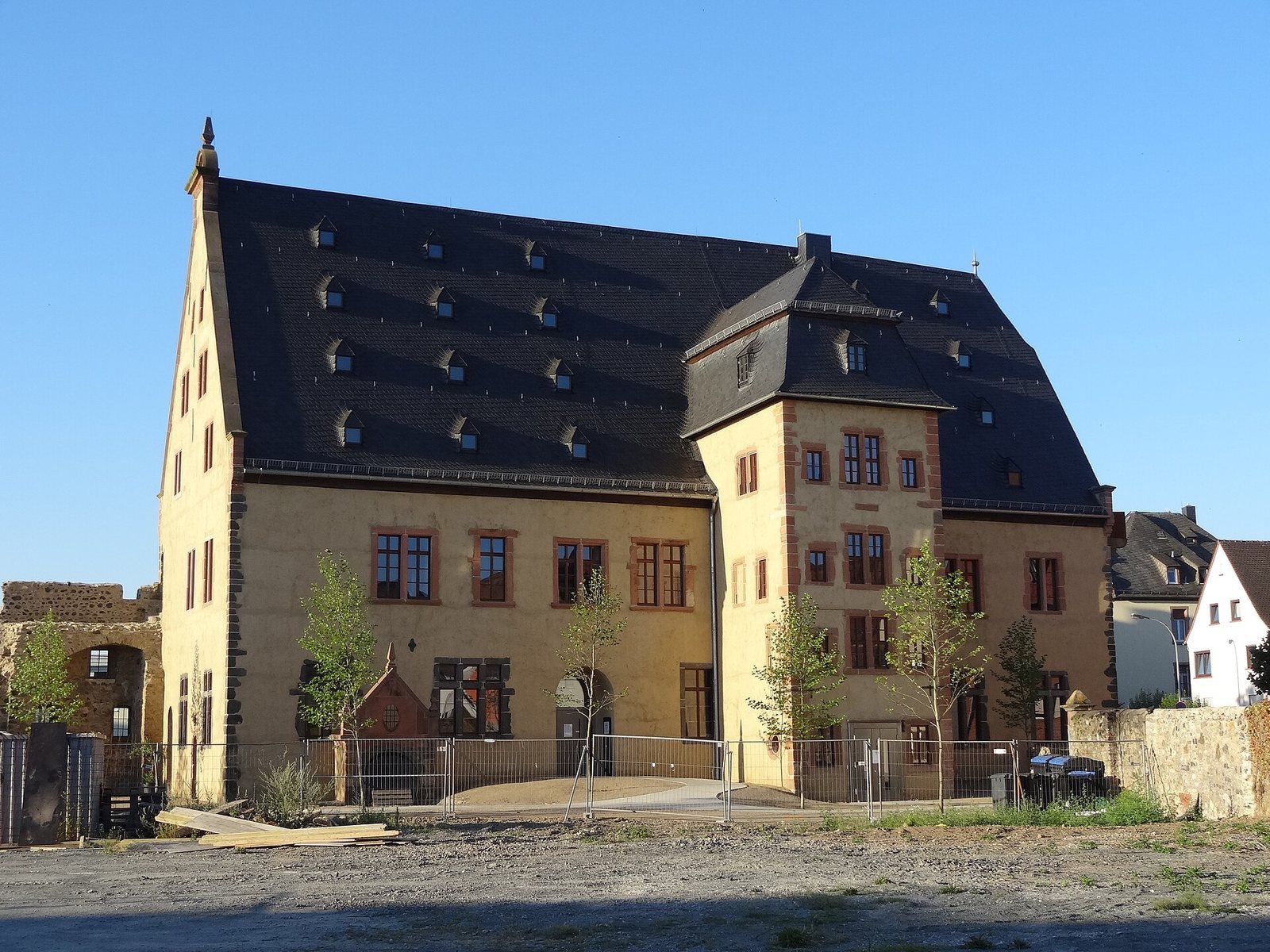
Solms Castle in Butzbach is a Renaissance castle in Germany, on the southeastern edge of the old town. Associated with the Counts of Solms-Lich, the complex grew from an earlier castle site and later served as a residence, an administrative seat and a granary.
The earlier castle and divided ownership
Butzbach was first mentioned in 773 and developed near the remains of a Roman fort, where several old roads met, including the Weinstraße and Lange Hessen. The origins of the earlier water castle, a castle situated on or defended by water, are uncertain. It may have belonged to the lesser nobles of Buetsbach, named in 1243 as followers of the Lords of Hagen-Münzenberg, or may have been established later by the Falkenstein family, which inherited the Münzenberg holdings.
In 1321, Philipp IV of Falkenstein secured town rights for Butzbach and ordered the construction of fortifications. After his family’s line ended in 1418, the town passed to the Lords of Eppstein, with half assigned to each of the Eppstein-Münzenberg and Eppstein-Königstein lines. During the fifteenth century, the Eppstein-Münzenberg branch sold one quarter to the County of Katzenelnbogen, which passed to Hesse in 1479, and another quarter to Count Otto of Solms-Braunfels. The Eppstein-Königstein branch sold a quarter to Solms-Lich in 1479 and its final quarter to Hesse-Marburg in 1595.
From granary to Solms residence
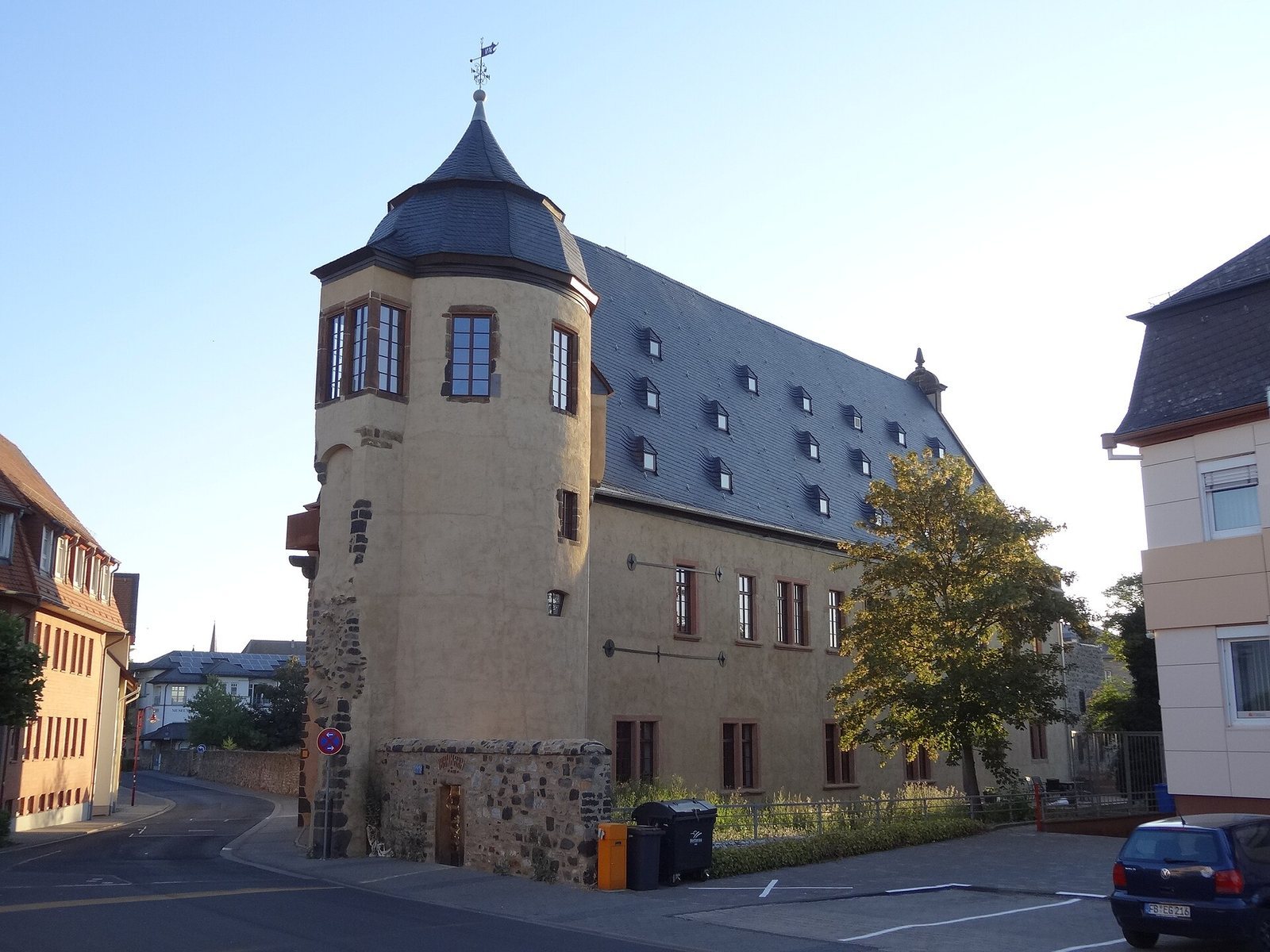
By this period, the medieval castle sections incorporated into the town wall were probably already largely decayed. Around 1462, Werner of Eppstein-Münzenberg built a large granary beside the southern town gate. The Counts of Solms acquired it in 1479, converted it into a more representative residence and added a defensive round tower. The castle served as an administrative seat and a residence for widows in 1524 and 1555.
Wartime changes and later use
During the Thirty Years’ War, the major European conflict fought from 1618 to 1648, the Counts of Solms-Lich and Solms-Braunfels temporarily lost their shares in Butzbach after falling out of favor with the emperor. The castle first passed to Philipp III of Hesse-Butzbach and, after his death, to the Landgraviate of Hesse-Darmstadt, a territory governed by a landgrave, a high-ranking prince in the German-speaking lands. From 1648 until the final sale to Hesse-Darmstadt in 1741, the Solms-Braunfels branch used the castle as an administrative seat and granary. Renovation in 1876–79 preceded the move of Butzbach’s Local Court into the building.
Remains
Building and town wall
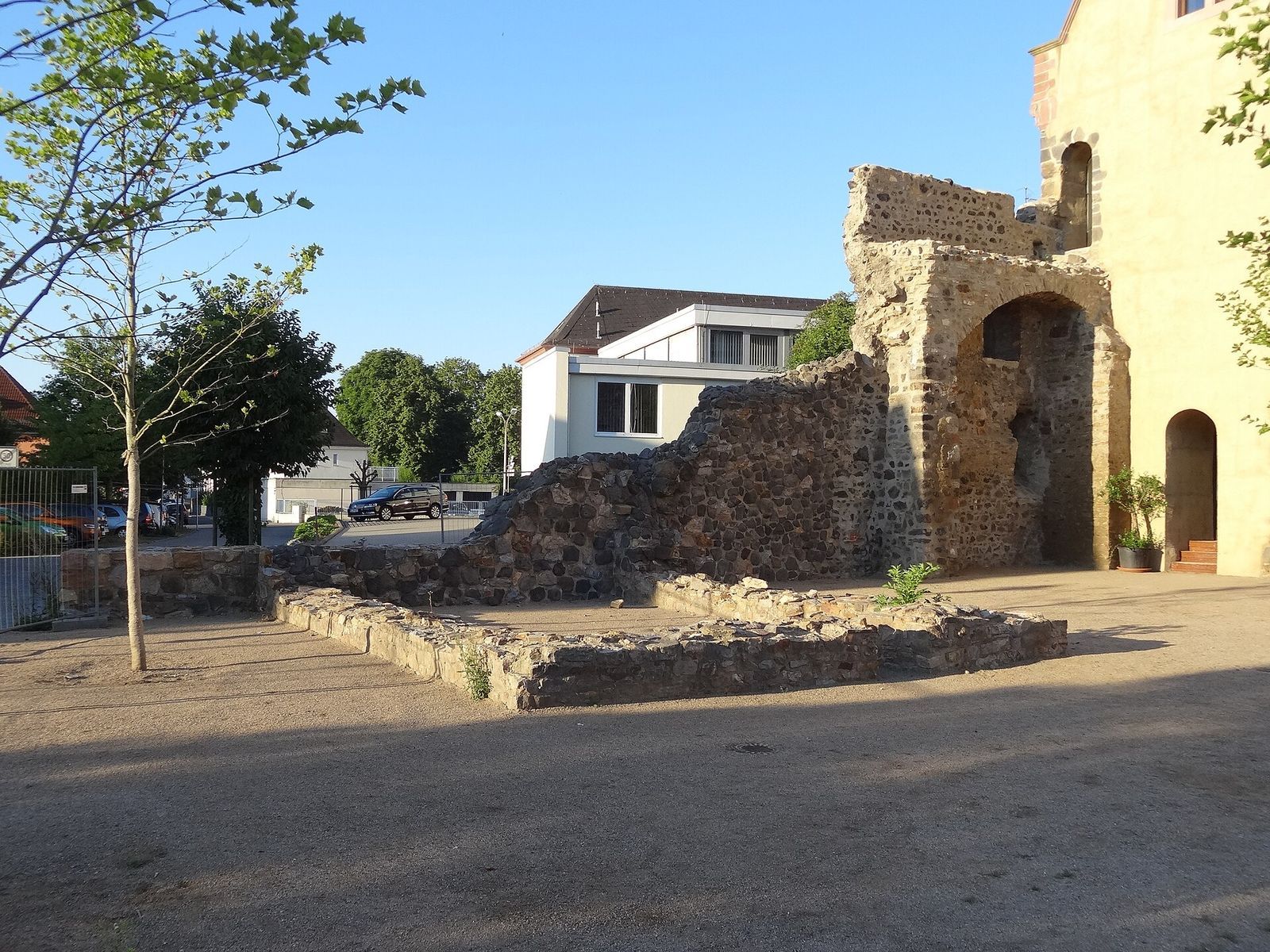
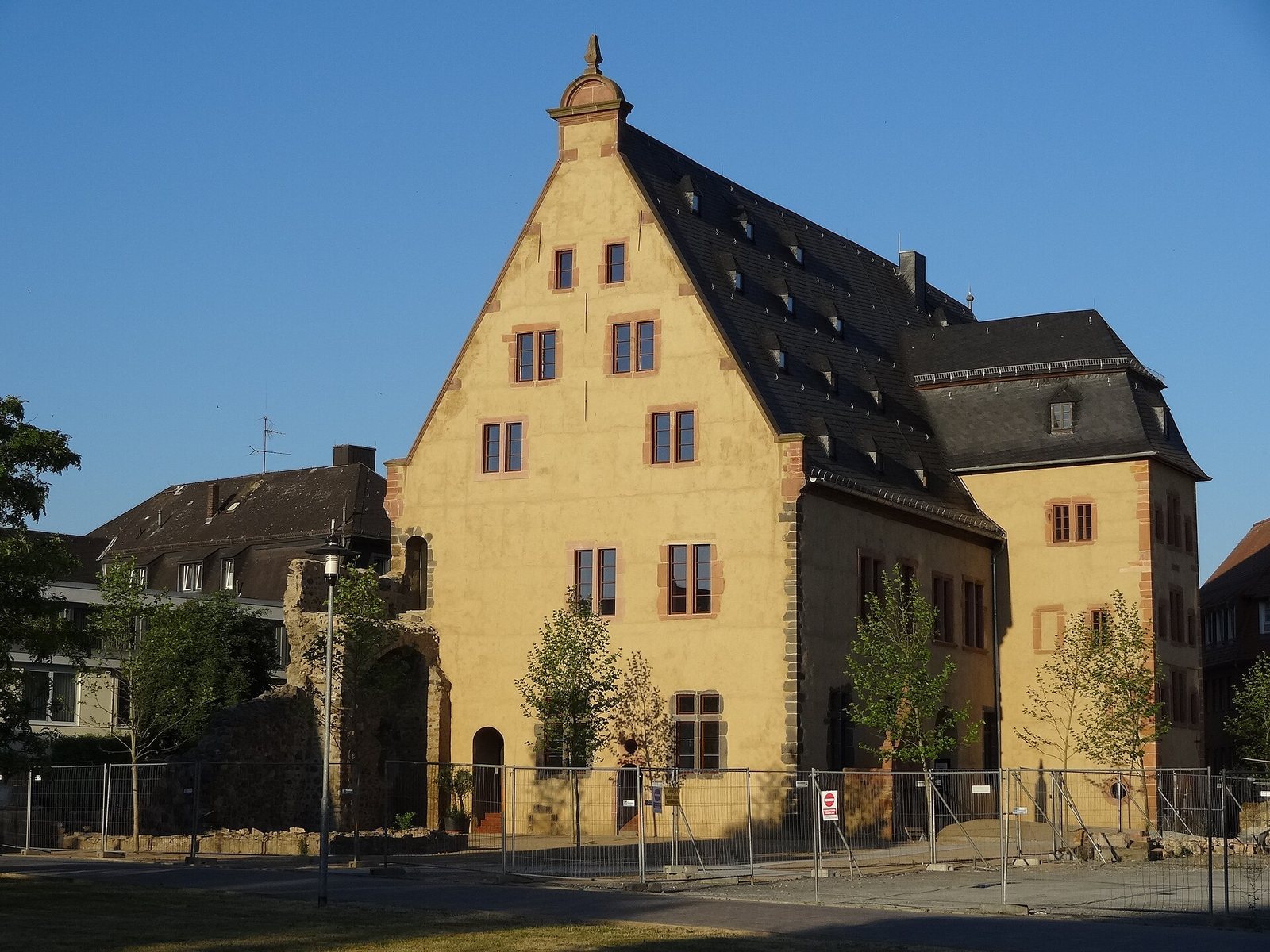
The castle is a two-storey rectangular building whose rear wall meets the town wall. A four-storey round tower belonging to the town wall forms part of the complex. The exterior is relatively plain and Renaissance in style, contrasting with the elaborate interior finish.
Interior and staircase
A Renaissance staircase occupies the entrance risalit, a section projecting from the façade. Inscriptions by a humanist, a Renaissance scholar, appear on the staircase but have not been fully deciphered. The arrangement of rooms on the floors remains uncertain. The pattern of exterior windows has prompted the suggestion that each floor held two large halls, but this is considered unlikely to represent the sixteenth-century plan; a different division of rooms probably existed. A thorough examination of the building’s construction will be possible only during a necessary renovation.