Șoimoș Citadel: A Medieval Fortress and Royal Residence in Romania
Site at a Glance
- Country
- Romania
- Primary era
- Medieval
- Eras represented
- Medieval, Early Modern
- Civilizations
- Hungarian, Ottoman, Principality of Transylvania
- Site type
- Military
- Remains
- Castle
On this page10 sections
History
Șoimoș Citadel is a medieval fortress on Cioaca Tăutului Hill in Romania, above the Mureș River. Built toward the end of the thirteenth century after the Tatar invasions, it is attributed to Pál, ban of Severin, a medieval frontier governor. Its first known record, from 1278, states that Pál gave the castle to his brother’s sons. In later centuries, it served as a royal domain and a residence for county officials, and became a contested stronghold under successive rulers.
Royal foundation and administration
Around 1300, the citadel came under the control of Ladislaus Kán, the regional ruler of Transylvania. Alexander, a count of Arad, held it for him in 1310, followed by another count, Dominic, in 1311. King Charles I of Hungary subsequently took the castle. After 1315, it formed part of the royal domain and housed the counts and vice-counts who administered Arad County.
Noble ownership and the 1514 revolt
The castle changed hands several times in the fifteenth century. King Władysław I granted it to the Ország family in 1440, and John Hunyadi acquired it in 1456. In 1462, King Matthias Corvinus gave it to Jan Giskra, a Czech military commander associated with the Hussite religious reform movement. After Giskra’s death, the castle passed in 1471 to Nicholas Bánffy, the newly appointed count of Arad. About a decade later, Matthias reclaimed both the castle and Bánffy’s office. Disloyalty was alleged, while the historian Bonfini claimed that the king coveted Bánffy’s wife, Margaret, princess of Sagan. Bonfini related that Bánffy fled with Margaret, was imprisoned for two years, and lost Șoimoș, Lipova, and his position.
John Corvinus held Șoimoș next. After his death, it passed to his widow, Beatrice Frankopan, and then to her second husband, George of Brandenburg, who took possession of the castle and estate in 1509. He managed them with specialists brought from abroad. His harsh exploitation preceded the 1514 Hungarian peasant revolt led by George Dózsa. Romanian and Hungarian rebels besieged the citadel. After a short resistance, the mercenary garrison revolted and joined them. The castle chaplain, Matthias Künisch, surrendered it despite opposition from the deputy castellan, George Prantner. The garrison was commanded by the voivode of Ciuci. Local tradition places the rebel camp on nearby Cioilor Hill. By the early sixteenth century, the nearby fortress of Lipova was also reducing Șoimoș’s importance.
Transylvanian and Ottoman rule
In 1541, Transylvania became an autonomous principality, a self-governing state ruled by a prince. Șoimoș then served as the residence of the young prince John Sigismund and his mother, Queen Isabella. The citadel was strengthened and embellished in Renaissance style, including the addition of projecting defensive bastions. Ottoman forces captured it in 1552. György Borbély, a captain serving Stephen Báthory, retook it in 1595, bringing it under the authority of Transylvania’s princes. A Transylvanian prince granted the castle to Chancellor István Jósika in 1597, but later confiscated it for disloyalty. Michael the Brave held it in 1599–1600.
After his defeat near Teiuș in 1602 by forces associated with the Austrian occupation and General George Basta, Moses Székely took refuge at Șoimoș. He held the castle as security for a loan to Sigismund Báthory, but judged it unsafe and exchanged it with Bektaș, pasha of Timișoara, for Kladovo Castle. The fortress was retaken from Ottoman control in the second half of the seventeenth century. The siege caused severe damage that was not repaired, and the defenses fell into decay.
Decline and abandonment
Advances in artillery reduced the castle’s military value during the eighteenth century. In 1784, Horia’s rebels clashed with imperial and noble forces near the citadel. It was abandoned permanently in 1788. Wall consolidation has taken place in recent times, and the citadel is listed as a Romanian historic monument.
Remains
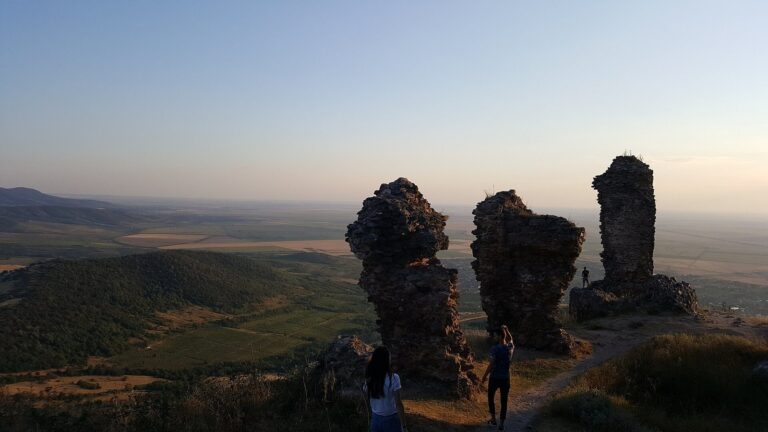
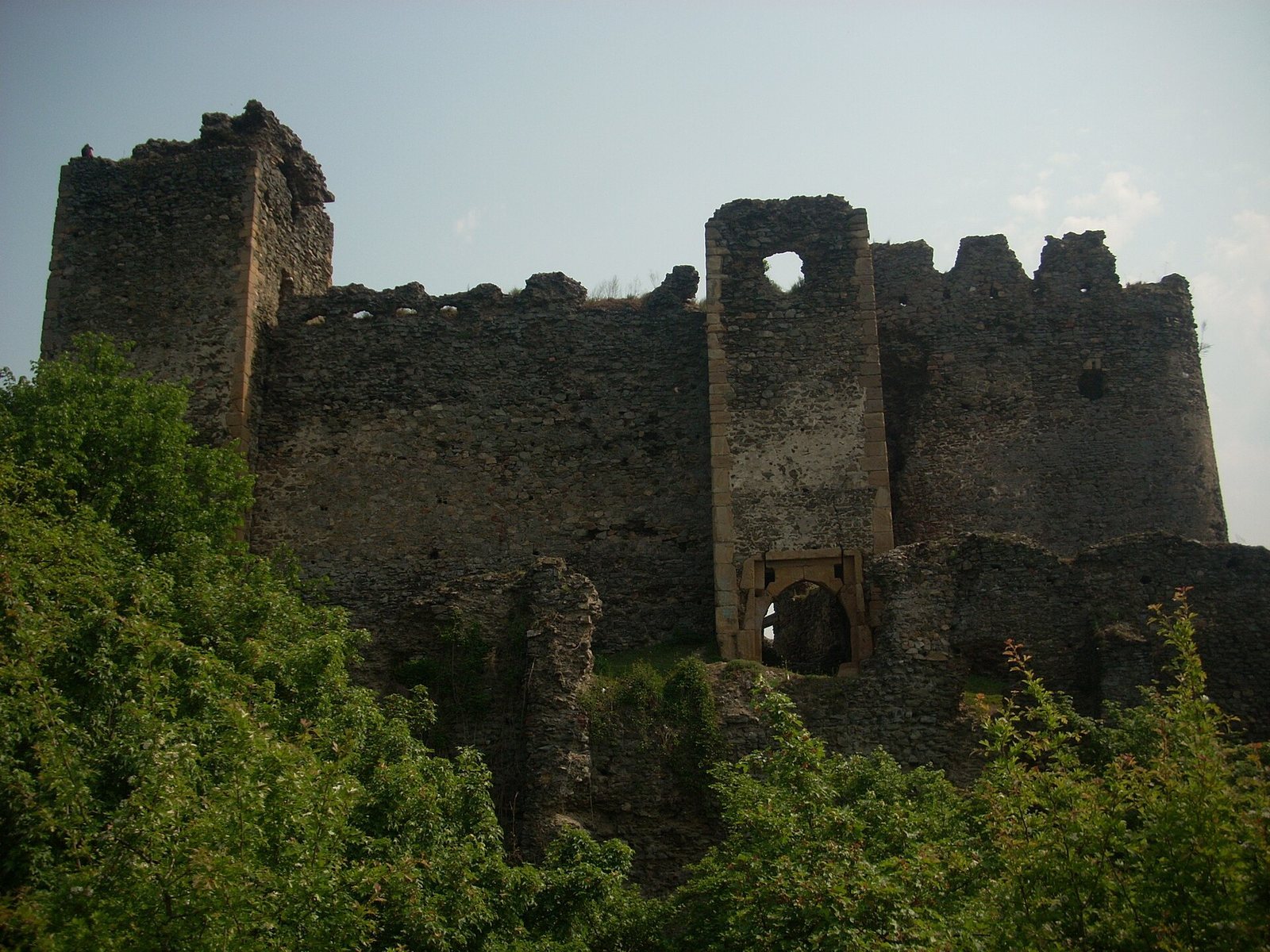
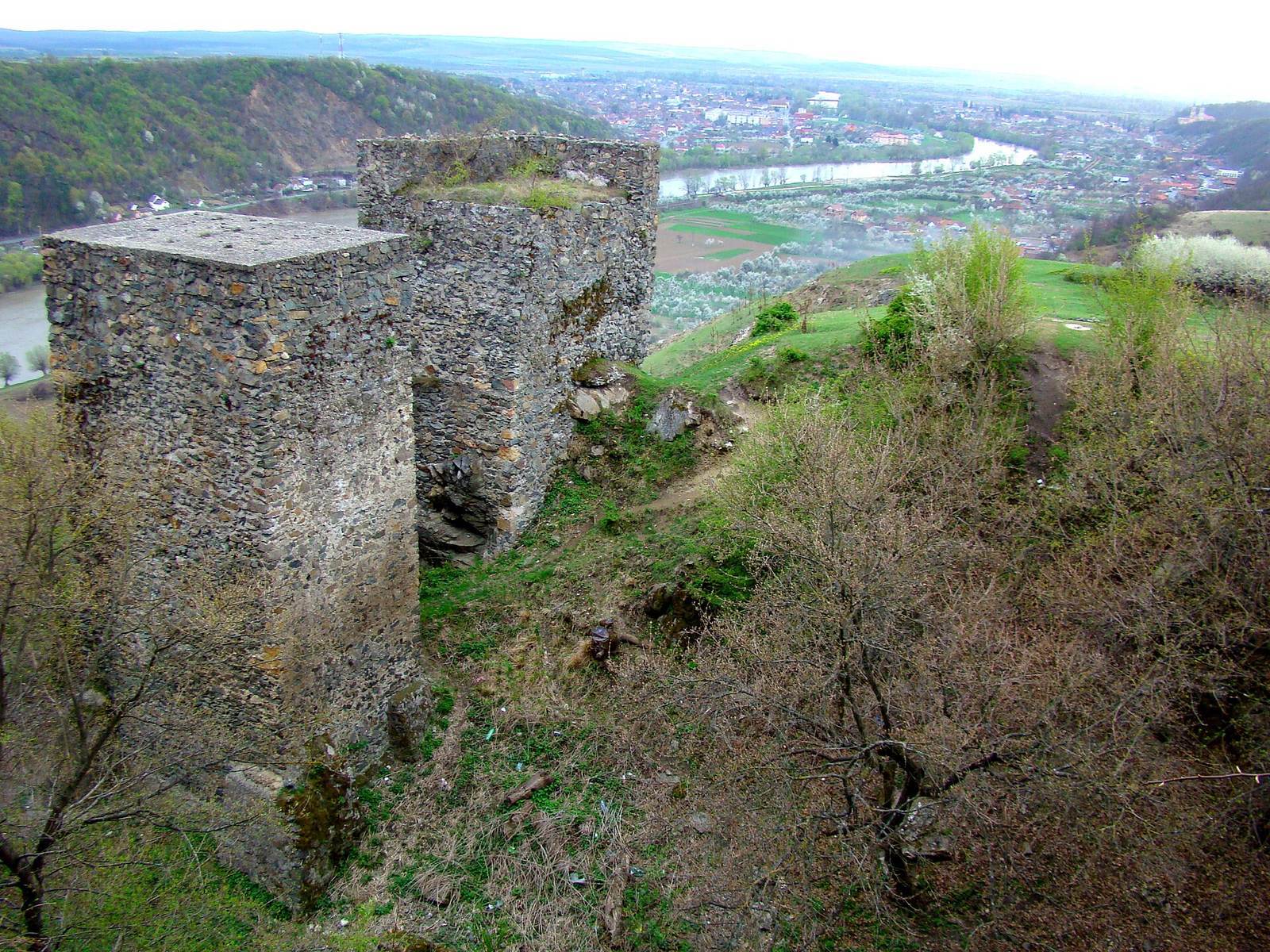
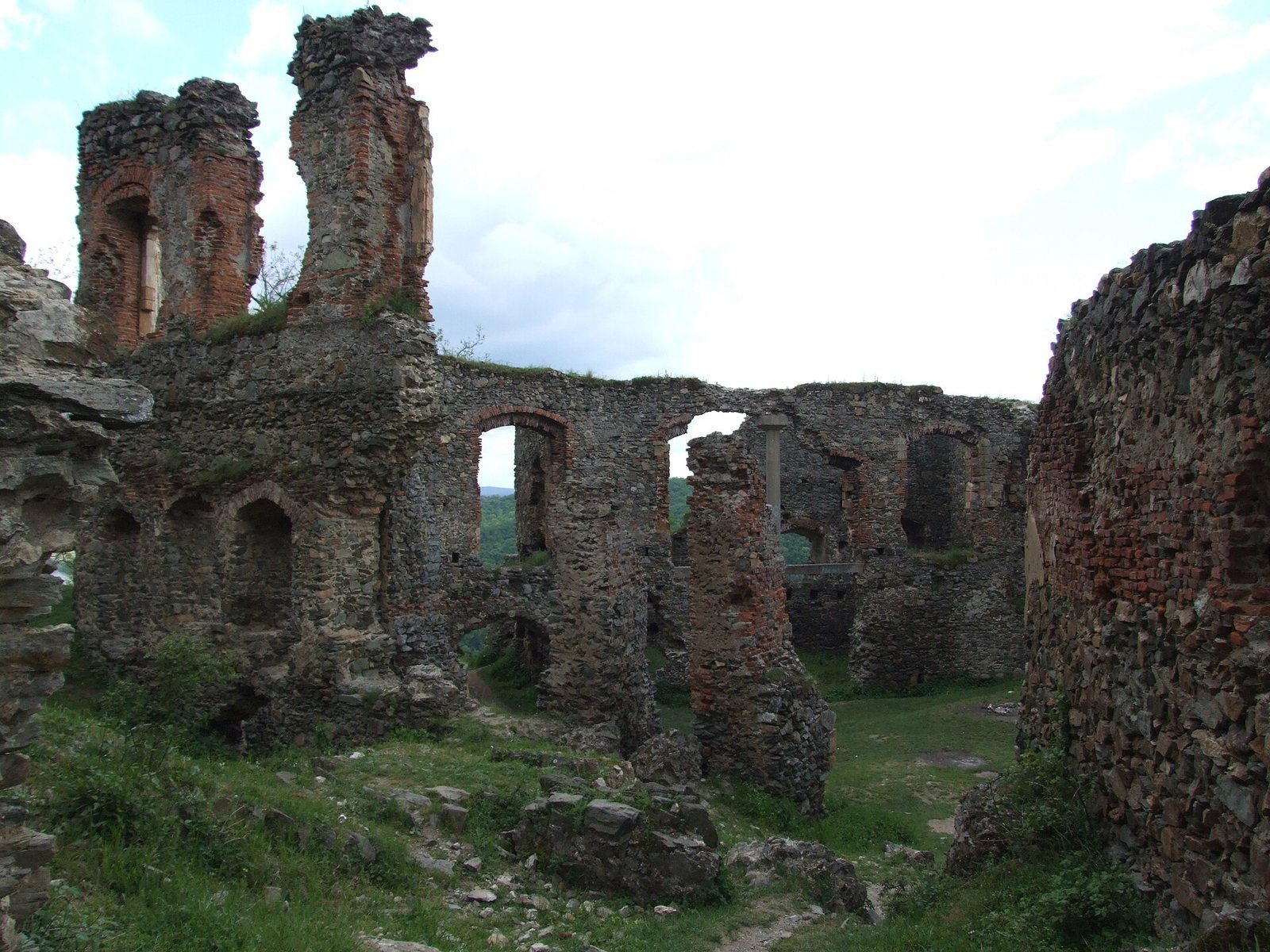
The citadel has a triangular plan enclosed by two circuits of walls, with a dry defensive ditch around most of the perimeter. On the south, a steep rock face made a ditch unnecessary. The interior towers are roughly triangular. Construction phases span the thirteenth to sixteenth centuries, and the building materials include slate, granite, sandstone, and brick. From the hill, the site looks toward the Mureș gorge and the Arad plain.
Defenses and western entrance
The gate tower and the older, several-storey tower stand on the western side. The historic approach crossed a broad, deep ditch on a suspended bridge carried by massive piers, then passed through an outer gate defended by a tower. The bridge is in poor condition. The substantial inner courtyard, dominated by the gate tower and old tower, measures 35 by 22 metres.
Courtyard buildings
Queen Isabella Palace
The palace occupies the north side of the courtyard and is richly decorated with Renaissance sculpture. Its balcony survives intact and bears Queen Isabella’s name.
Other buildings
Additional wings stand on the southeastern and northern sides of the courtyard. On its southern side are a knights’ hall and a chapel.