Sobieski Palace in Lublin: A Noble Manor, Mill, and School
Site at a Glance
- Rating
- 4
- Popularity
- Low
- Country
- Poland
- Primary era
- Early Modern
- Eras represented
- Early Modern, Modern
- Civilizations
- Polish–Lithuanian Commonwealth, Russian
- Site type
- Domestic
- Remains
- Elite Residence
On this page5 sections
History
Sobieski Palace in Lublin is a palace in Lublin, Poland, built in the second half of the sixteenth century by Marek Sobieski, a senior regional official, as an imposing manor. The building is described as Baroque, an elaborate architectural style associated with the seventeenth century. Its history later encompassed noble ownership, industrial use, education, and political and residential functions.
The Sobieski family and later owners
The palace was enlarged and rebuilt in the late seventeenth century and belonged to John III Sobieski, king of Poland from 1674 to 1696. After the king’s death in 1696, his two sons divided the property.
During the eighteenth century, the Radziwiłł family, a powerful noble house in the Polish-Lithuanian Commonwealth, used the palace. Whether they owned it or only occupied it is uncertain. The property subsequently declined, and Tomasz Trojecki bought it at auction in 1804.
Mill and residential uses
In 1811, Trojecki transferred the building to lawyer Dominik Boczarski, who converted it into a mill. Boczarski went bankrupt in 1852, and the following year the palace was auctioned to Witold and Konstanty Brzeziński.
In 1863, the Brzezińskis converted the mill to steam power. They soon went bankrupt, after which the building was used for housing. J. Strochociński bought it at auction in 1884 and adapted it for residential use. Bronisława Vetterowa acquired the property in 1888, and T. Karszo-Siedlewski bought it in 1927.
School and twentieth-century uses
Helena Czarniecka’s private girls’ secondary school began operating in the palace buildings in 1905 and remained there until the Second World War began. Some rooms also accommodated shops and service businesses.
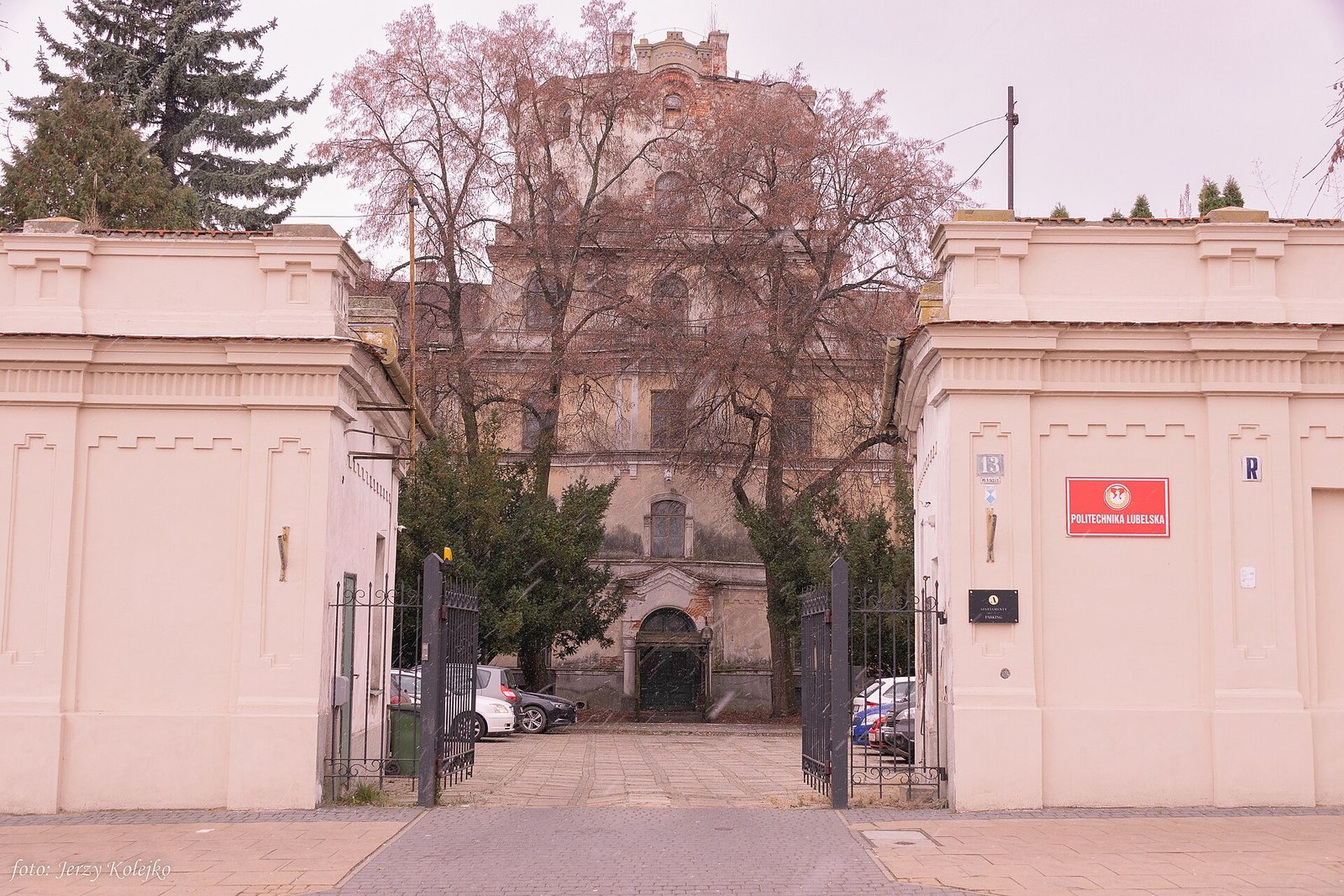
In 1941, the palace came under the General Government, the German occupation administration in part of occupied Poland, and served as a hospital for a time. After 1944, the buildings housed the Central Committee of the Polish Workers’ Party, a communist party whose committee was its leading governing body, as well as residential apartments. The palace is now owned by Lublin University of Technology.
Remains
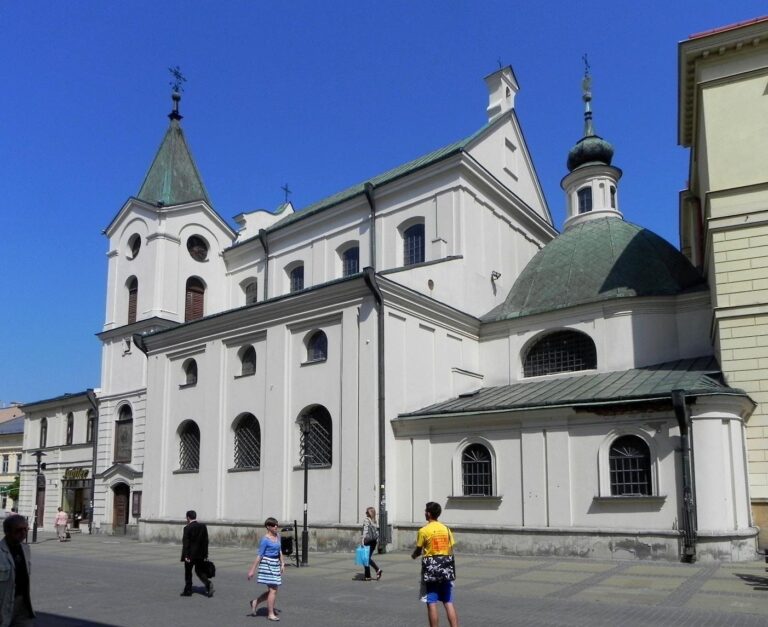
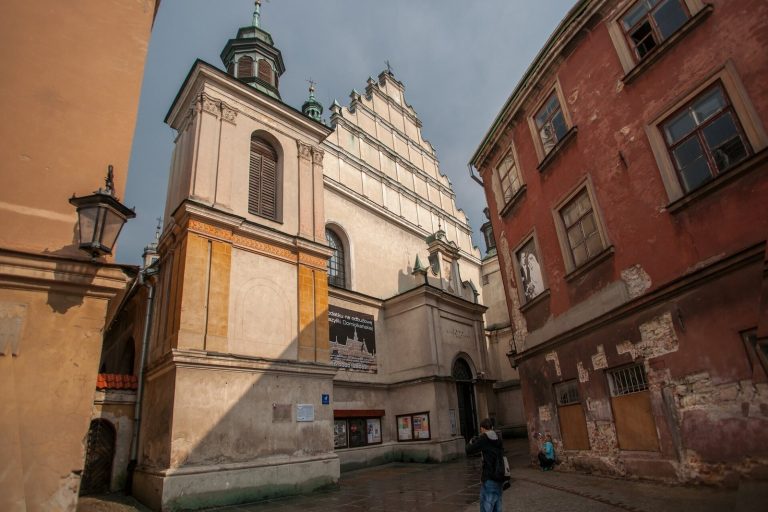
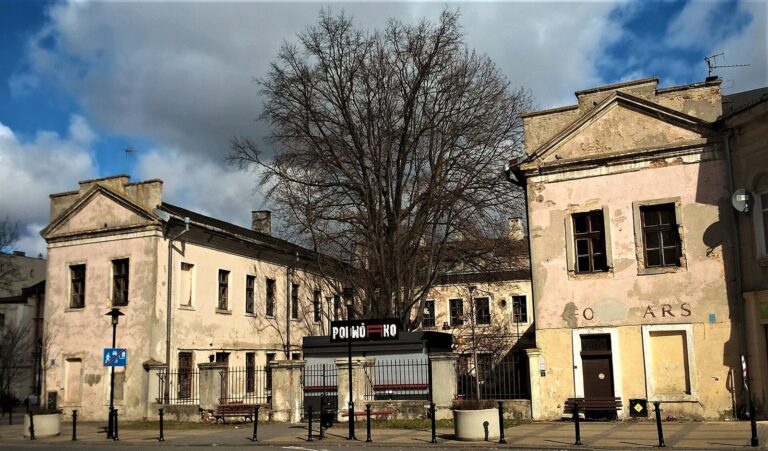
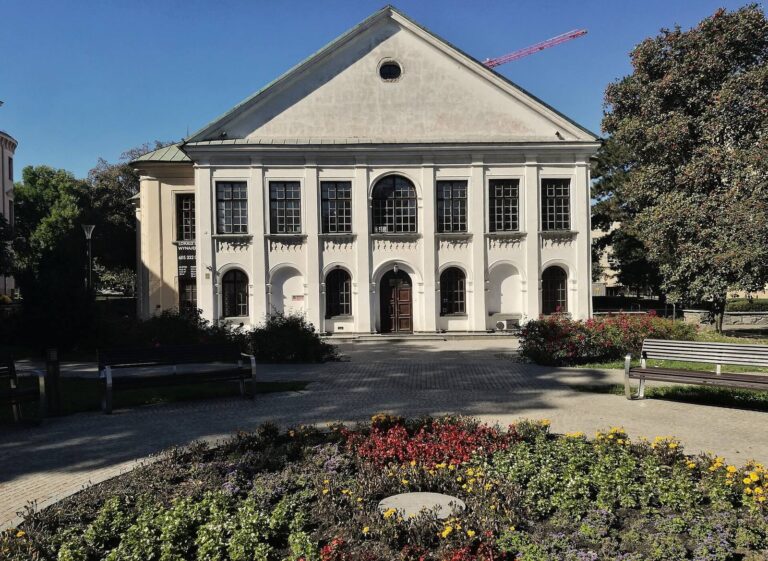
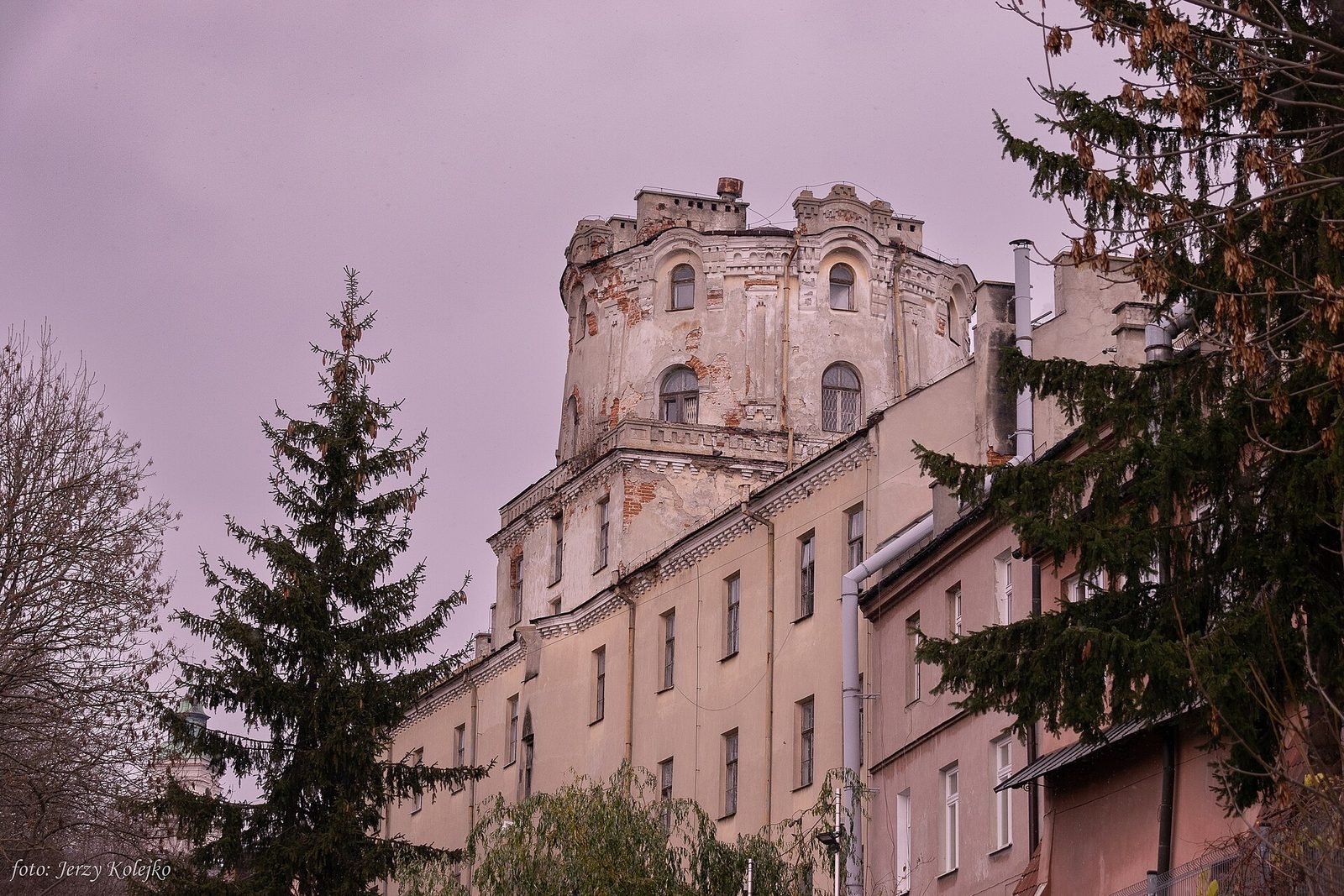
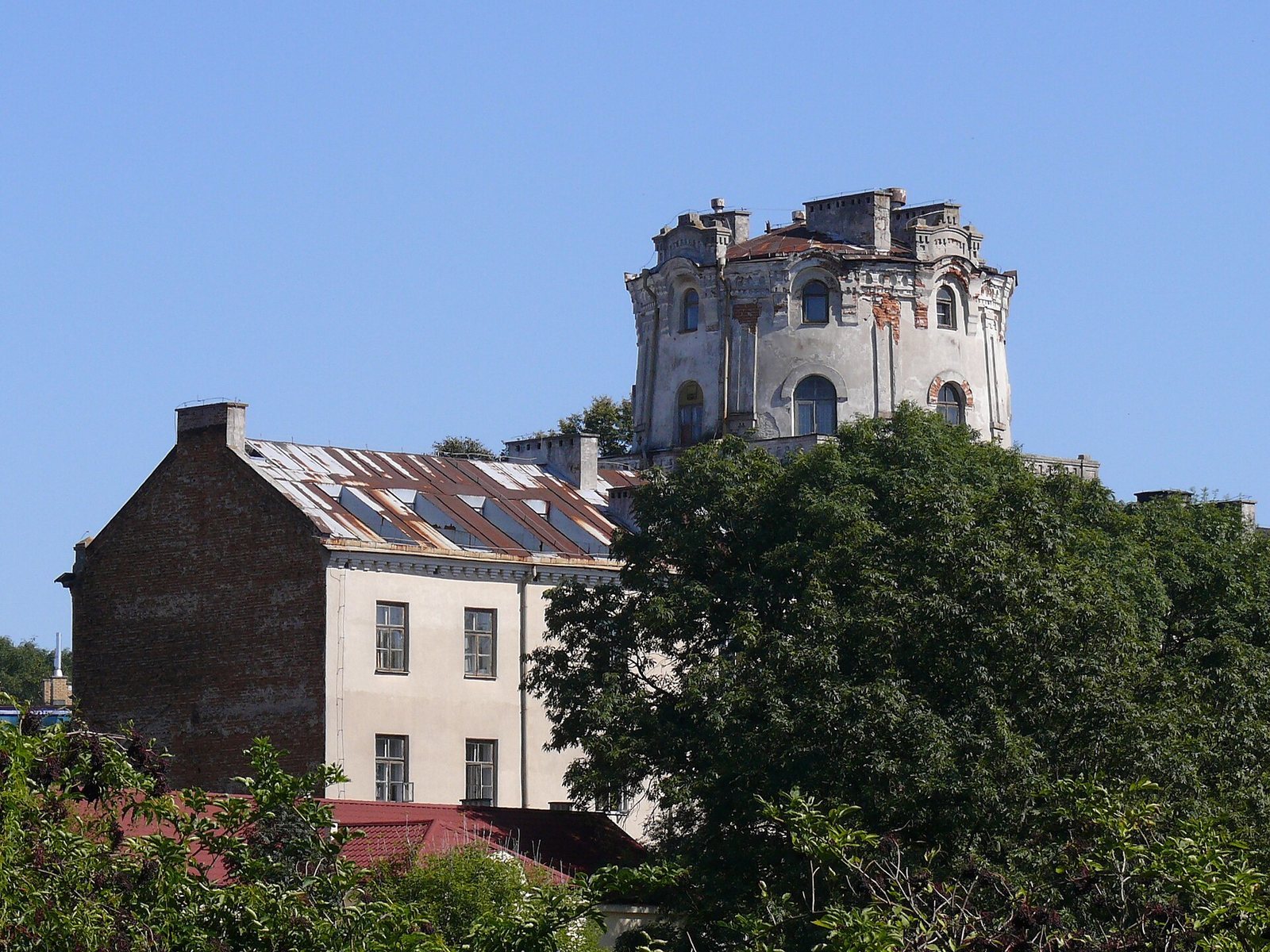
The palace is described as a Baroque building with a large dome at its center, decorated with numerous figures and recalling Rococo, a more ornamental style that developed from Baroque. The building was raised during its conversion into a mill, and a bakery was added in 1843–1844 in part of the left outbuilding. In 1884, two storeys were added to the main building, its interiors received stucco decoration, and its overall appearance became eclectic, combining elements from different periods. The outbuildings were raised in 1895.