Potocki Palace in Lublin: An Eighteenth-Century Residence
Site at a Glance
- Rating
- 2.6
- Popularity
- Low
- Country
- Poland
- Primary era
- Early Modern
- Eras represented
- Early Modern, Modern
- Civilizations
- Polish–Lithuanian Commonwealth
- Site type
- Domestic
- Remains
- Elite Residence
On this page5 sections
History
The Potocki Residence
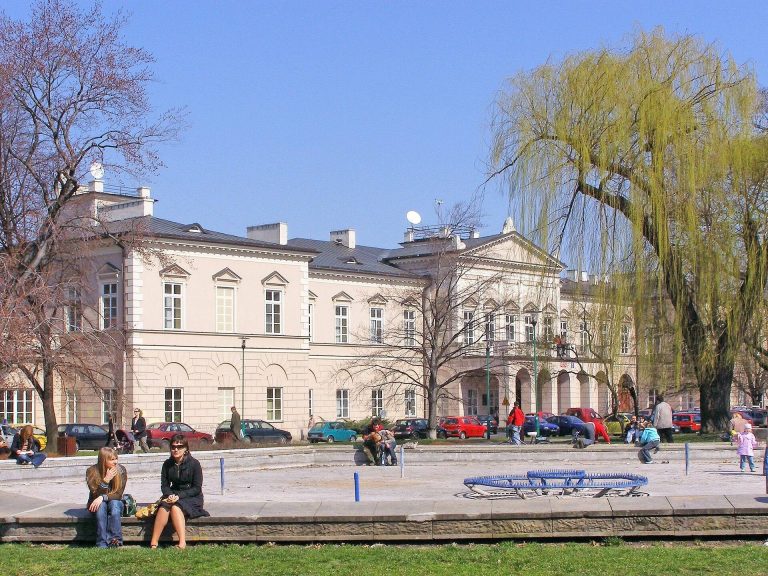
Potocki Palace in Lublin, Poland, was built for Jerzy Potocki between 1719 and 1734. Jerzy belonged to a prominent Polish noble family, and his son Eustachy later enlarged the residence. Around 1750, Eustachy began building a home for himself in Radzyn Podlaski, following plans by architect Jakub Fontana. By 1783, the Potockis no longer lived in Lublin.
Transfer to the Commonwealth and State Use
In the late 18th century, the Potockis gave the palace to the Polish-Lithuanian Commonwealth, a state formed by Poland and Lithuania. It passed to the state treasury in 1790 and was intended to house land courts, local courts within the Commonwealth’s justice system. The building first accommodated barracks for the National Cavalry, a military formation. After the Third Partition of Poland in 1795 divided the Commonwealth’s remaining territory among neighboring powers and ended the state, the palace became a prison. When the prison moved to Lublin Castle in 1826, police and Russian troops occupied the building.
Police Use and Later Ownership
In the interwar period, the State Police used the palace. The Citizens’ Militia, the police force of communist Poland, occupied it later, remaining there until 1981. The Catholic University of Lublin owned the property from 1984 to 2016, after which it became privately owned. Jan Nepomucen Potocki and the City of Lublin were also among its owners.
Remains
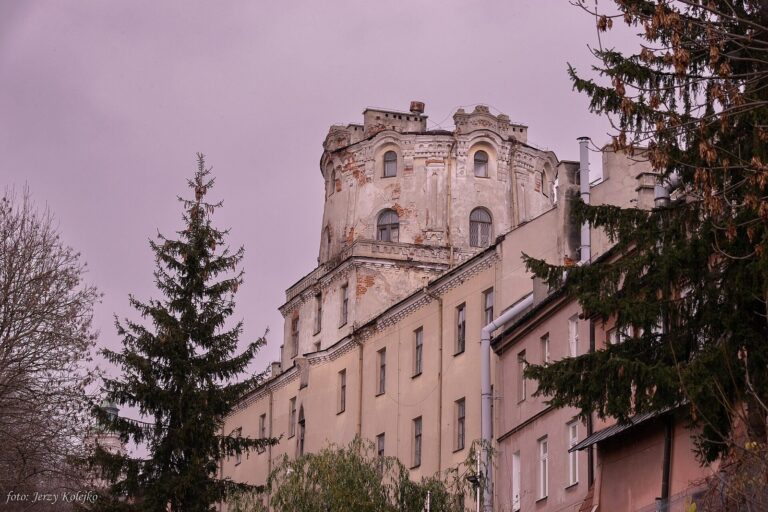
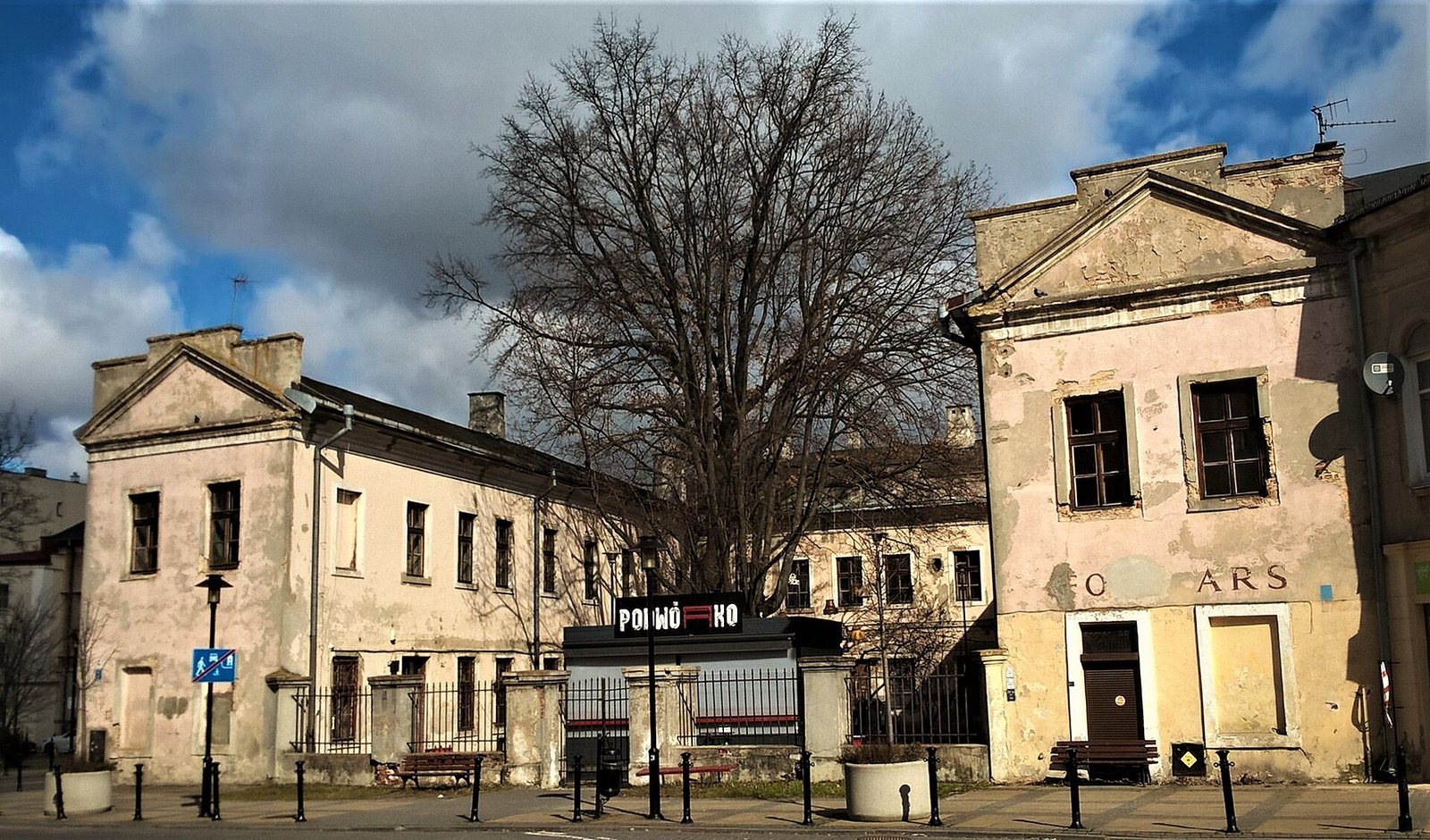
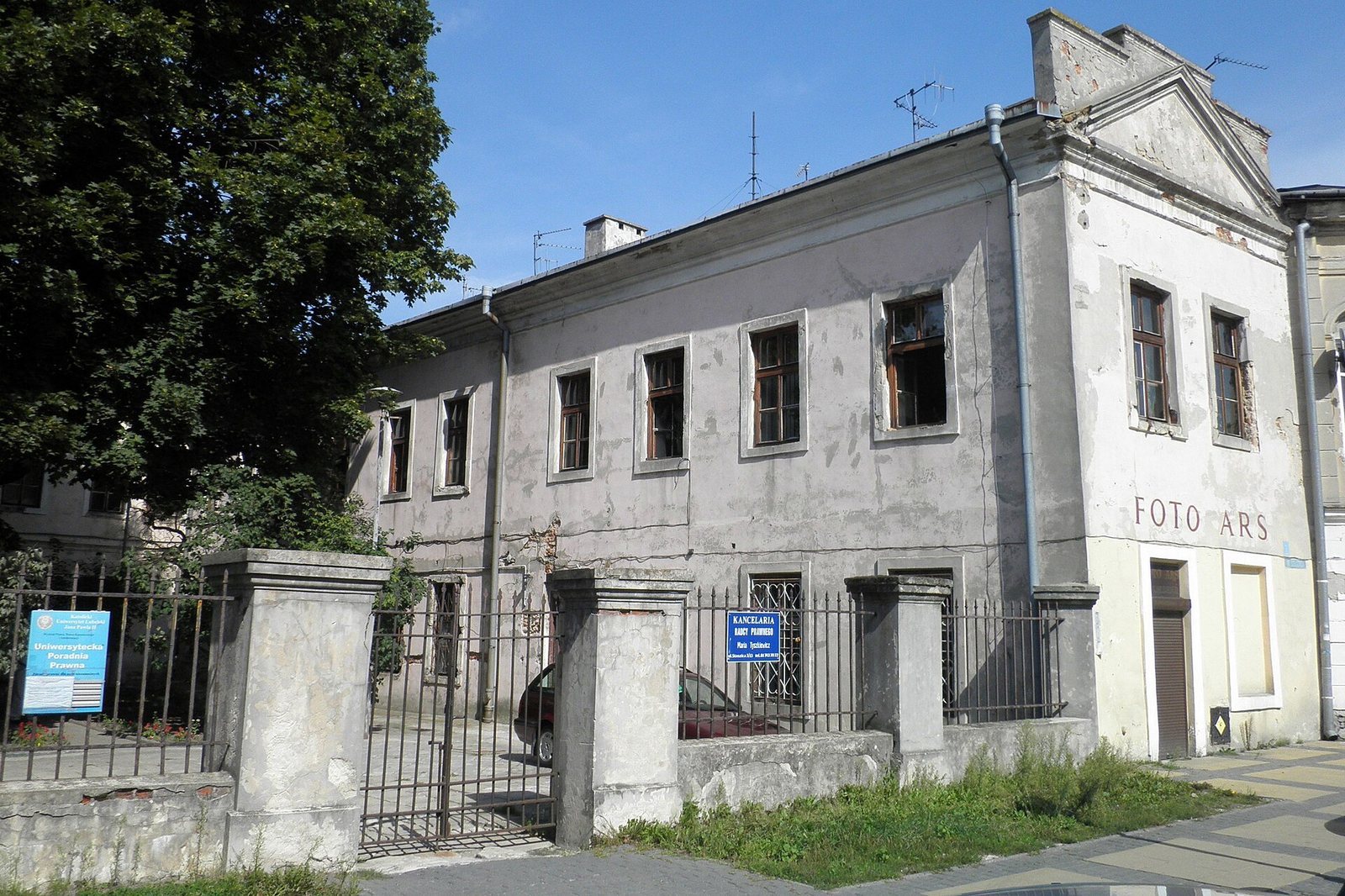
The palace’s plan combined a two-storey central block with two single-storey service wings, arranged in a horseshoe around an Italian-style garden. Major changes took place during the 19th century. After the building became a prison, its decorative features were removed and the side wings were raised by one storey. An inventory from 1783, now held at the Hieronim Łopaciński Library, records the palace’s furnishings in the late 18th century.