Skorba Temples: A Prehistoric Megalithic Complex in Malta
Site at a Glance
- Popularity
- High
- Country
- Malta
- Primary era
- Stone Age
- Eras represented
- Stone Age
- Civilizations
- Maltese Temple Culture
- Site type
- Religious
- Remains
- Temple
On this page15 sections
History
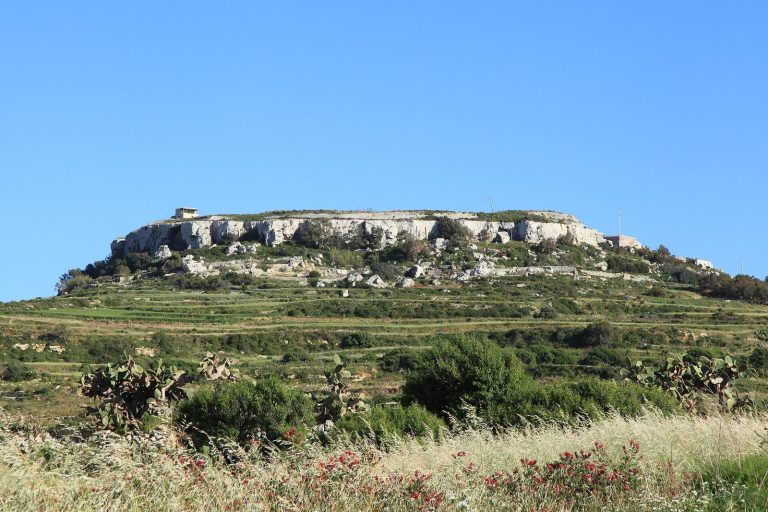
The Skorba Temples are a prehistoric limestone megalithic complex in Imġarr, Malta. The southern temple was built during the Ġgantija phase, around 3600–3000 BCE. The site is also important for its evidence of early settlement and pottery that gave its name to two phases of Maltese prehistory.
Settlement and prehistoric chronology
Occupation at Skorba spans a long prehistoric sequence, from the Għar Dalam phase around 5400 BCE to the end of the Tarxien phase around 2500 BCE. These names belong to Malta’s prehistoric chronology, with the Għar Dalam phase associated with the island’s earliest known human occupation. A village stood at Skorba roughly twelve centuries before the temples were built. Pottery from the site helped identify the Grey Skorba and Red Skorba phases and provides evidence of early Neolithic culture on Malta.
Temple use and later change
During the Tarxien phase, the temple complex was altered and a second temple was built east of the southern building. By the middle of the first millennium BCE, the temples no longer served a religious purpose. Later arrivals adapted them for habitation, making their original layouts harder to recognize. Archaeologist David H. Trump interpreted a group of female figurines as evidence for worship of a mother goddess, associated with motherhood and the generation of life, or a fertility goddess. He used the figurines to argue that the buildings had a religious function.
Excavation and heritage recognition
When Temi Żammit was excavating the nearby temples of Ta’ Ħaġrat, a single upright stone protruded from Skorba. Although the site appeared on Malta’s 1925 Antiquities List, excavation did not take place until Trump’s work between 1960 and 1963. This later investigation could use modern dating and analytical methods. Skorba forms part of the Megalithic Temples of Malta UNESCO World Heritage property, inscribed in 1980 and extended in 1992 and 2015. The property meets cultural criterion (iv), which recognizes an outstanding example of a building type or architectural ensemble illustrating a stage in human history.
Remains
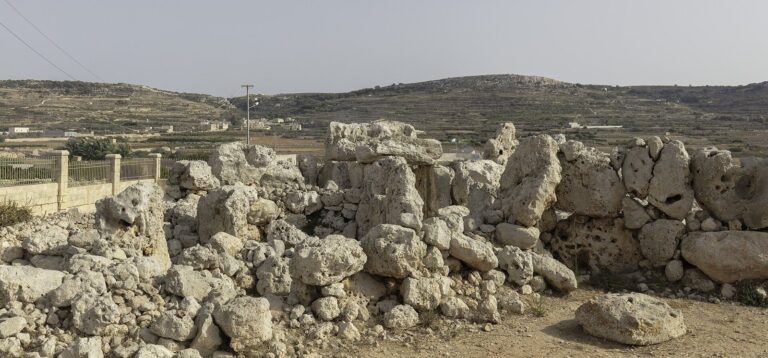
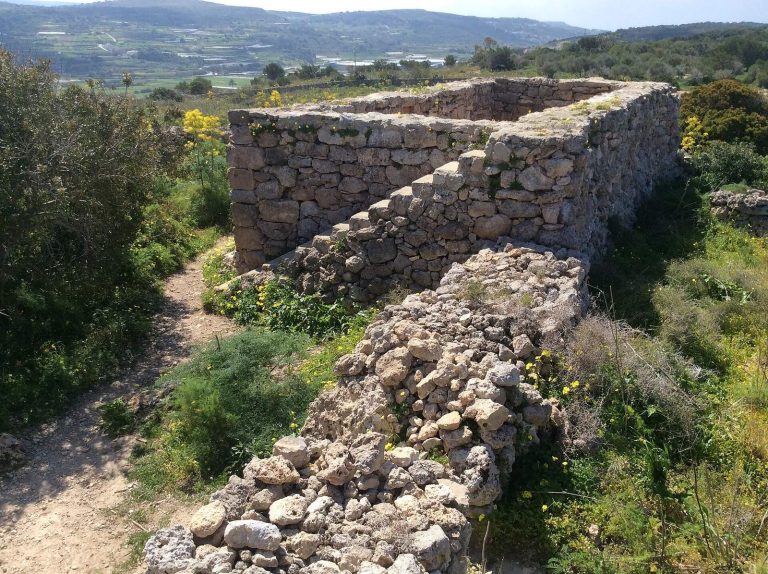
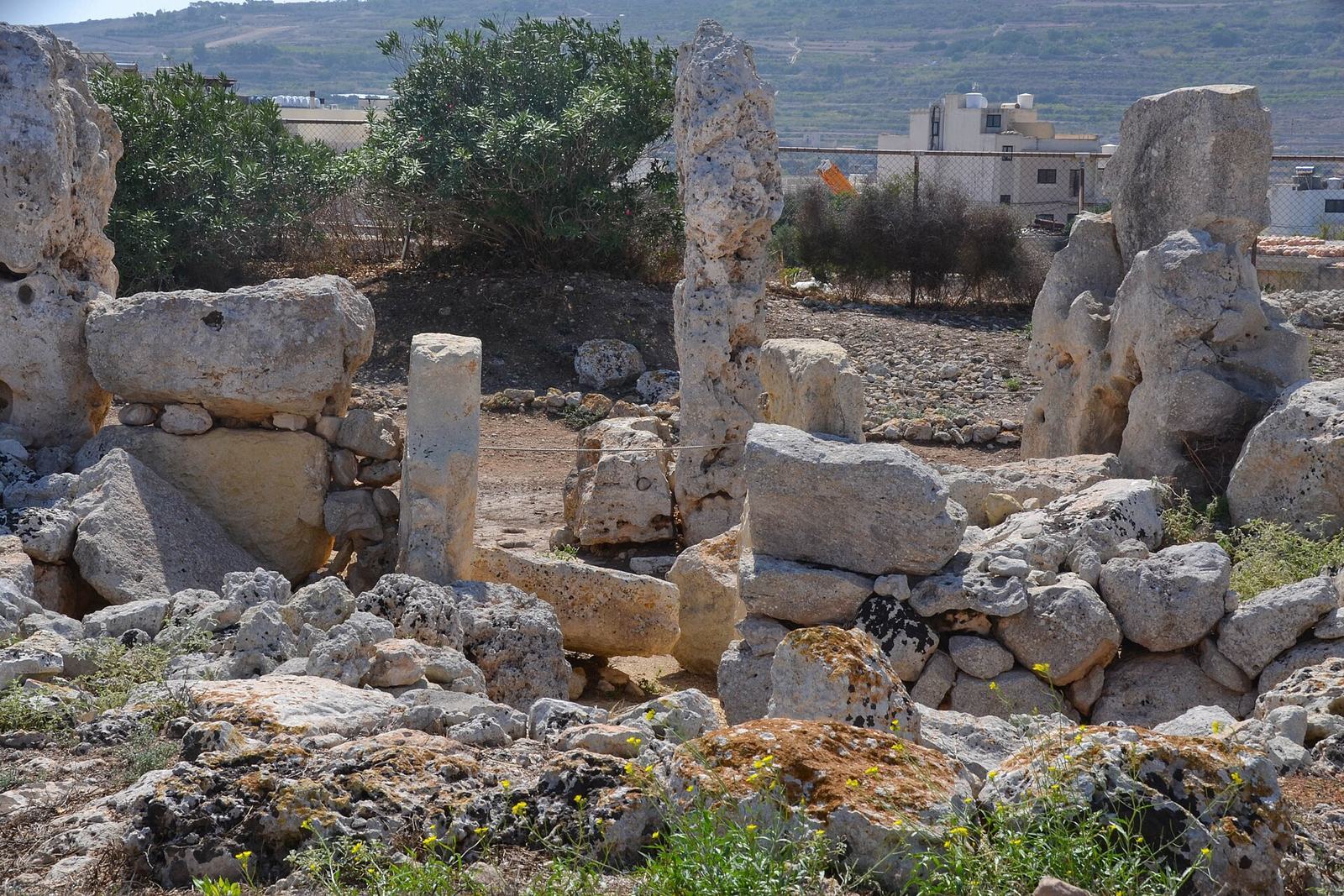
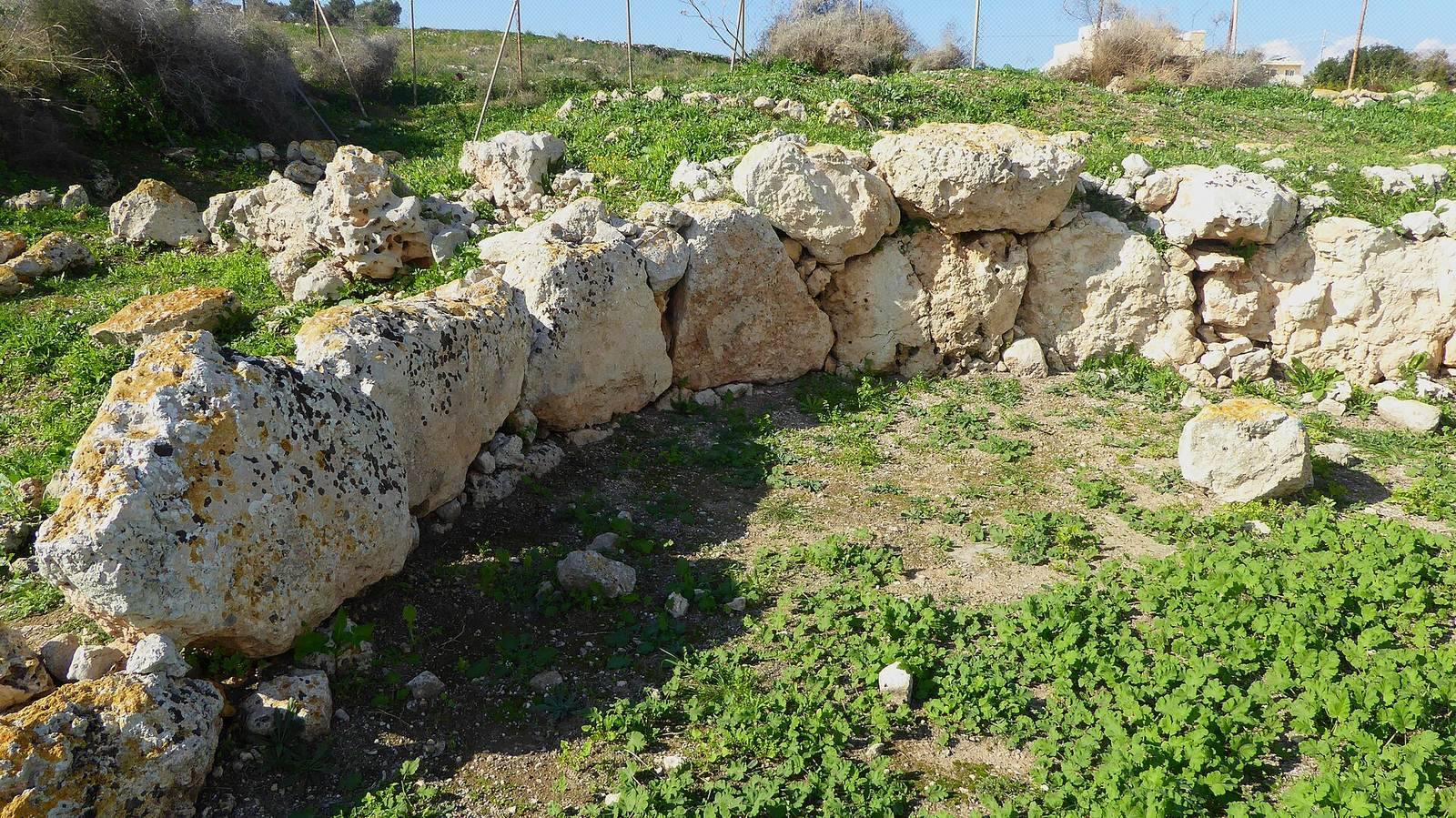
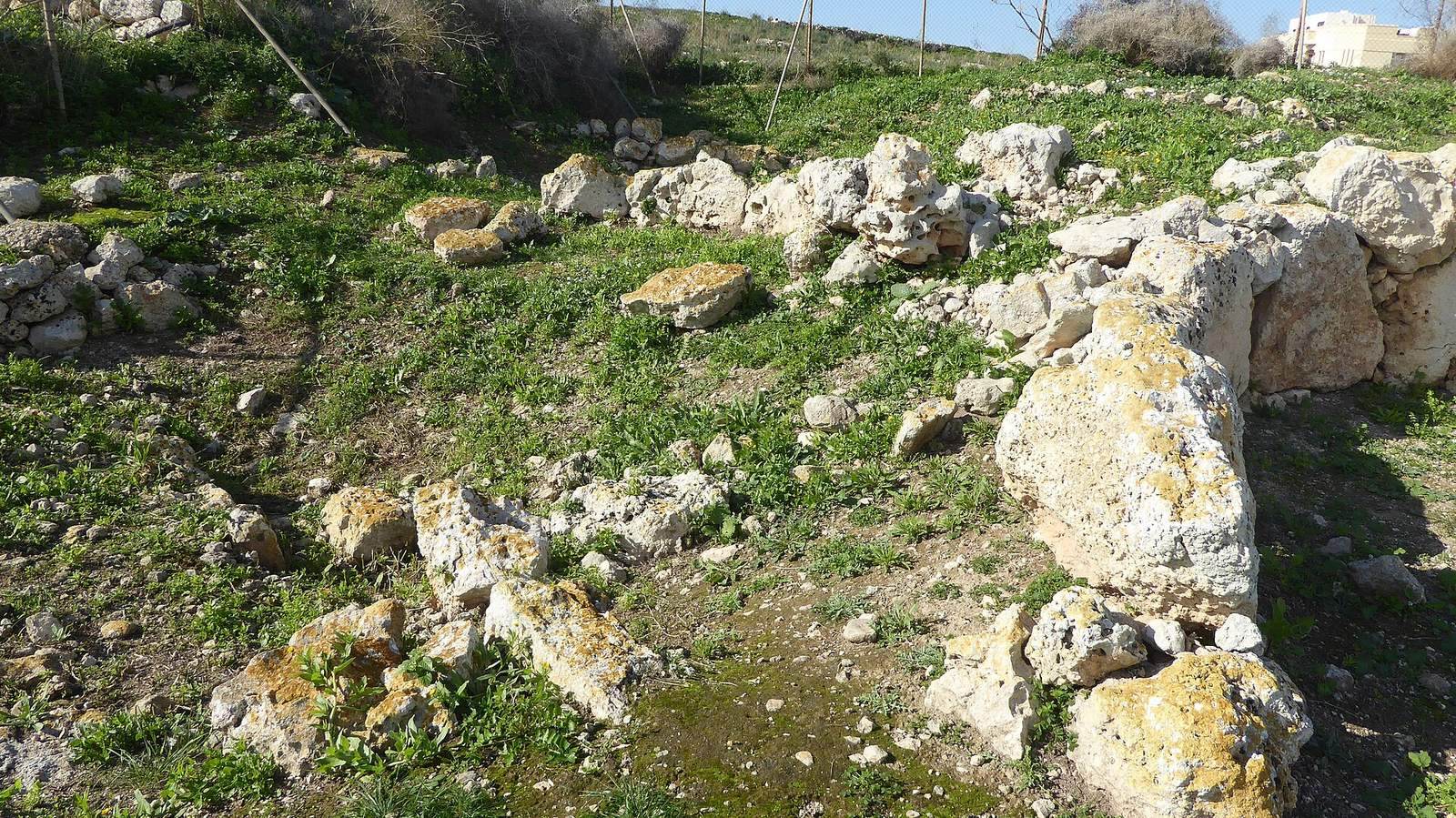
Skorba is a poorly preserved limestone complex. Upright stones, the lowest courses of temple foundations, and temple floors survive. The earlier village extended east and west of the temple buildings, giving the remains a wider settlement context.
Prehistoric village
Huts and floors
The village included oval huts about 7–10 m long and 2.5–3 m wide, as well as roughly rectangular huts with rounded corners. Their walls rested on stone bases about 0.7 m wide, built with two facing surfaces. Branches set above the stonework may have been covered with daub, a clay- or mud-based coating. Floors were made of clay or torba, a local cement-like material produced from crushed limestone.
Early wall
The oldest excavated village structure is a straight wall 11 m long, west of the first temple entrance. Deposits beneath it contained objects from the Għar Dalam phase and charcoal dated by carbon analysis to about 4850 BCE.
Temple remains
Southern temple plan
The southern temple has a three-lobed plan formed by three rounded recesses, or apses. It dates to the Ġgantija phase, around 3600–3000 BCE, and is oriented southeast–northwest. The building measures about 20 × 12 m within an enclosure measuring 25 × 15 m, and its floor included torba. Much of its first two apses and its entire façade have been reduced to ground level, while the north wall is better preserved.
Entrance and stonework
The entrance originally opened onto a court. In a later alteration, the doorway was blocked and altars were placed in the resulting corners. Six stone slabs pave the entrance area, three with five holes apiece. Trump proposed that the holes held libations, ritual offerings poured as liquid. One surviving upright stone reaches 3.4 m in height. A separate block about 3.9 m high served as an inner doorway jamb and appears to belong to a Tarxien-phase alteration. It is made of globigerina limestone, a rock formed largely from microscopic marine fossils, which does not occur in the nearby geology. The nearest quarry lies more than 1,500 m away, across rugged ground, and the block weighs several tonnes.
Northern temple
The second temple lies east of, and is attached to, the southern building. Built during the Tarxien phase, it is poorly preserved and measures about 15 × 15 m. Its four rounded recesses form a four-apsed plan around a central niche, and its axis runs south–north.
Excavated finds
Tools and figurines
Excavated objects include flint and bone tools, along with quern stones, hand-operated mills for grinding grain, made from local coral limestone or imported basalt. One building yielded small human-shaped figurines depicting female torsos. Made of terracotta or soft stone, they show breasts and a pubic triangle.
Skorba pottery
Grey Skorba pottery, dated to about 4500–4400 BCE, ranges from gray to nearly black. Its forms are generally simple and polished, with little decoration and distinctive trumpet-shaped handles. Red Skorba ware dates to about 4400–4100 BCE. It has similar forms, usually with a glossy red coating of liquid clay, called a slip, applied before firing; some examples are reddish-brown, and spoon-shaped forms are distinctive. Grey Skorba pottery is compared with Sicily’s Serra d’Alto ware, and Red Skorba with its Diana pottery.