Planche à Puare: A Neolithic Dolmen on Île d’Yeu
Site at a Glance
- Popularity
- Low
- Country
- France
- Primary era
- Stone Age
- Eras represented
- Stone Age
- Civilizations
- Unclassified
- Site type
- Burial
- Remains
- Tomb
On this page10 sections
History
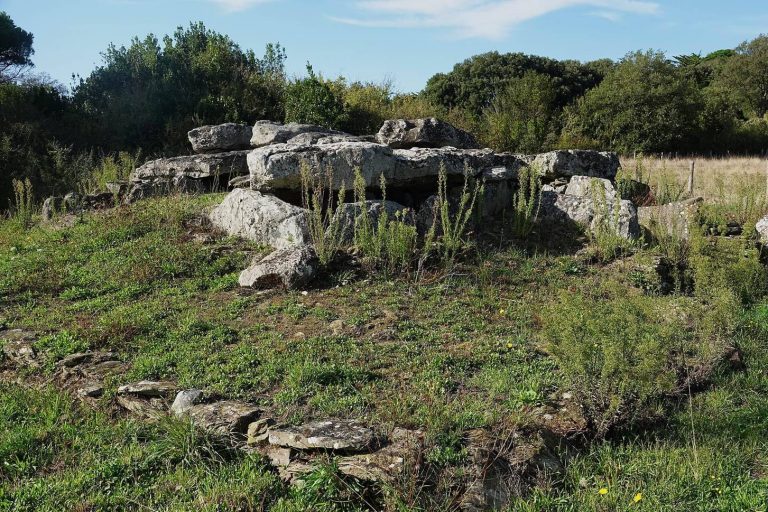
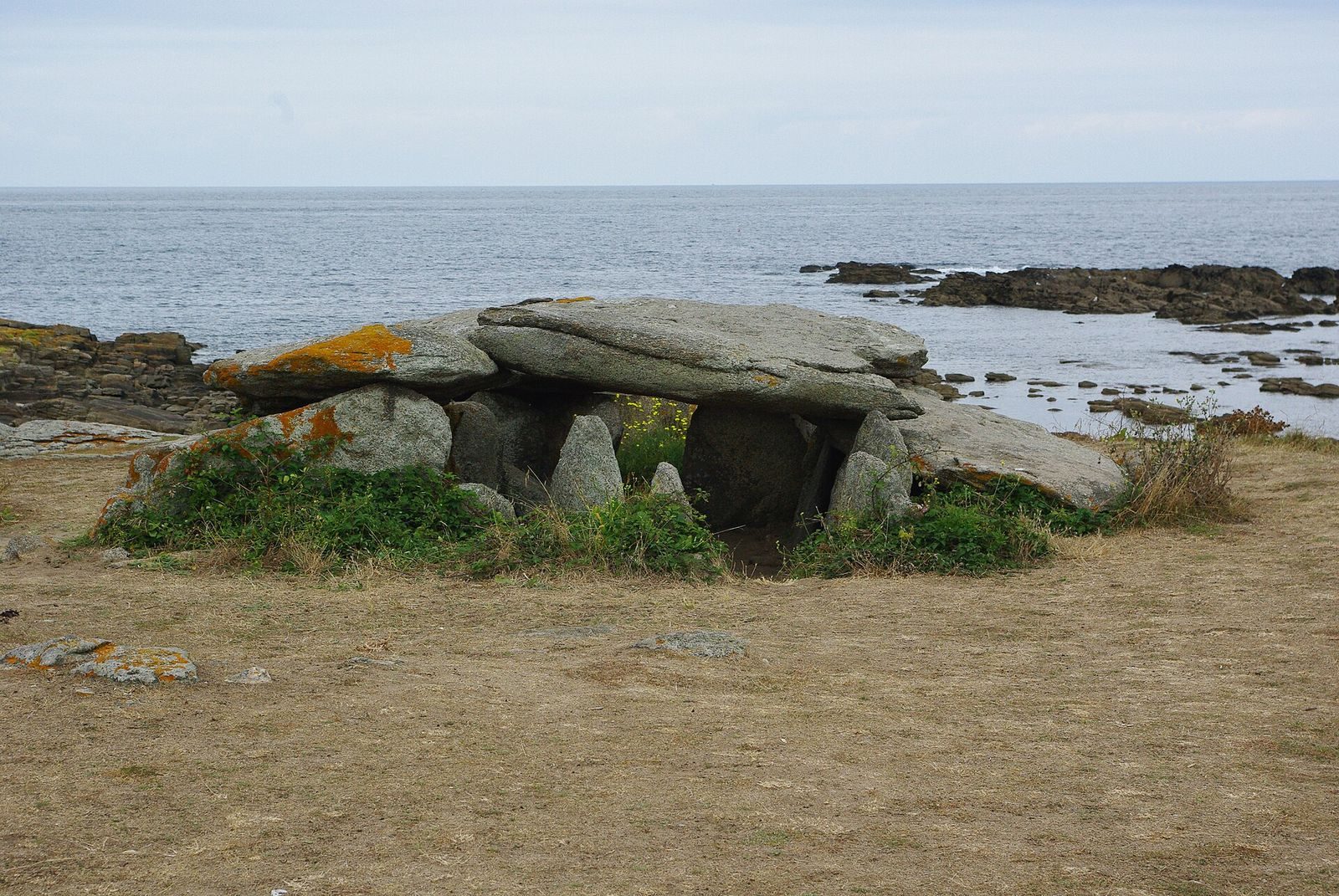
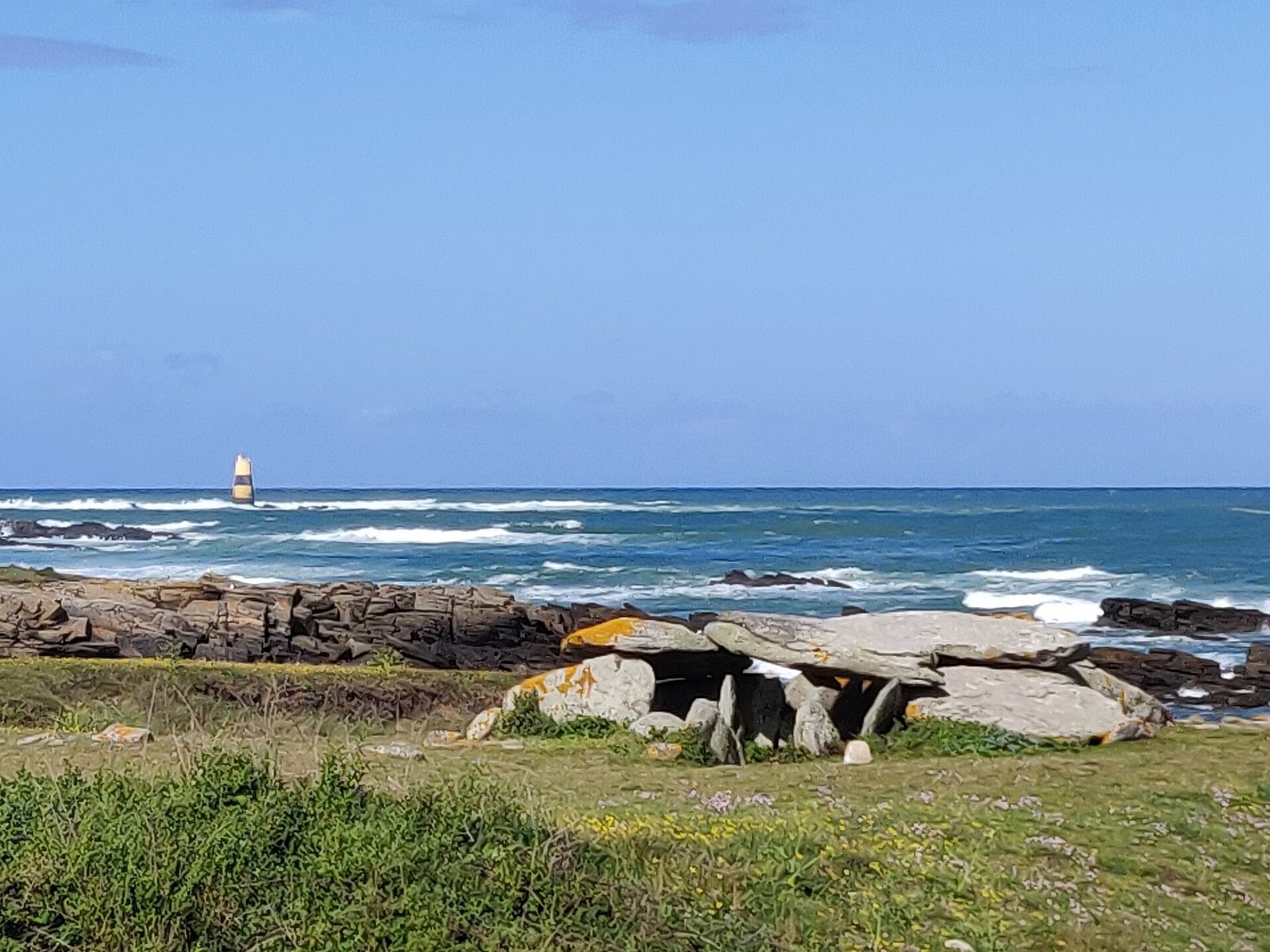
Planche à Puare is a Neolithic dolmen, a prehistoric burial monument built from large stones, at Anse des Broches on the northern coast of Île d’Yeu, France. The Neolithic was the later part of the Stone Age, associated in many regions with farming and megalithic monuments. The tomb was built around 3000 BC.
Augustin Auger, a local judicial official, excavated the monument in 1883. It was classified as a French historic monument in 1889, and excavated objects were placed at the Musée Dobrée in Nantes in 1899. Marcel Baudouin, a French physician and prehistorian, carried out another excavation in 1909. In 1914, he studied the finds and estimated that about twelve burials had taken place in the dolmen.
Remains
Layout and construction
Passage and chambers
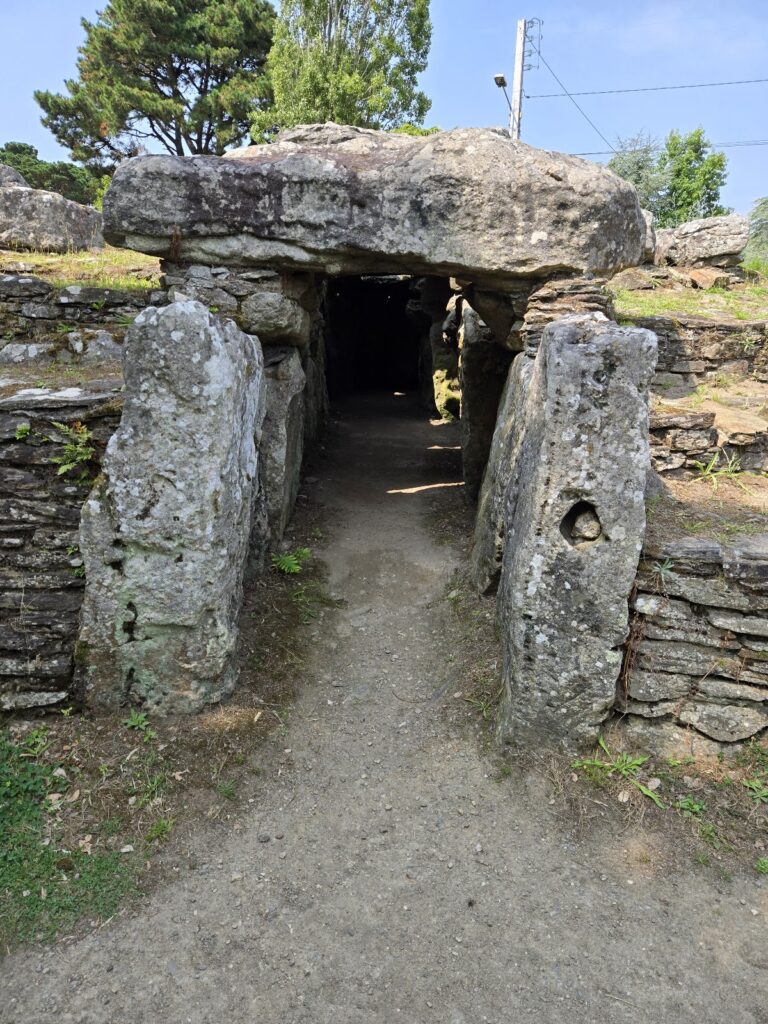
A passage opening to the southeast leads to three chambers: a main chamber at the end and one chamber on either side. The plan is exactly cross-shaped, and this is the only dolmen of its type with side chambers. The terminal chamber’s axis lies slightly north of the passage’s. Two upright stones across the tomb’s axis narrow its entrance to 0.56 m; a transverse slab closed the entrance when Auger excavated it. Dolmens at Pornic provide a comparison for the plan, while the entrance arrangement has a parallel at the Dolmen du Riholo. Lann-Mané Bras A also has a narrow passage, an enlarged cross-shaped chamber area and a shortened end recess.
Roofing and stonework
The main chamber had two large roof slabs, or capstones. One remains in place; Auger moved the much larger second slab during excavation, and it now rests on the chamber’s west side. Each side chamber has its own capstone. At the junction, a slab covering the passage rests on the capstones of the side chambers rather than on upright supports. The ceiling there is 1 m high, while the northwest chamber has a lower ceiling. All the supporting and covering slabs are orthogneiss, a metamorphic rock formed from igneous rock. Nearby veins of quartz and fine-grained igneous rock occur, and the choice of orthogneiss appears deliberate. Auger saw part of the stone mound during his excavation. A large slab west of the monument was identified by Baudouin as a standing stone, though that identification was considered arbitrary.
Burial deposits and finds
Junction of the chambers
Beneath the paved floor at the chamber junction, Auger found human bones, chiefly tibias, femurs and upper-arm bones. They had been carefully arranged lengthwise.
Northwest chamber
A flat stone 0.55 m high closed this chamber. Beneath 0.30 m of sand, Auger found a pebble floor and a skeleton lying on its right side, with its head to the north. Its recorded height was 1.63 m. Stones beneath the head, spine and pelvis appear to have held the body in position. A small bone ring, about 3 cm across at its widest point, lay near the neck, along with animal bones. Beneath the pavement were remains of two more people; their skulls had been placed in a hollow cut into the rock.
Other side chamber
This chamber contained human remains in four layers, separated by pavements of flat stones. Finds included small rounded pebbles, bevelled flints, shells and pottery sherds. Auger and Baudouin identified four notched pebbles as net weights. A complete, roughly made vessel measured 11 cm high and 10 cm wide. It was formed from coils of unfired brown-black clay mixed with mica and quartz flakes. Two impressions of cereal grains were preserved in the clay. The vessel was associated with the Bell Beaker culture, an archaeological culture named for its bell-shaped pottery.
Shell deposit south of the entrance
About 4 m south of the entrance, Auger found a shell midden, a deposit of discarded shells, measuring 0.30–0.50 m thick. It contained limpets, periwinkles, mussels, animal bones, a few unworked flints and undecorated pottery sherds.