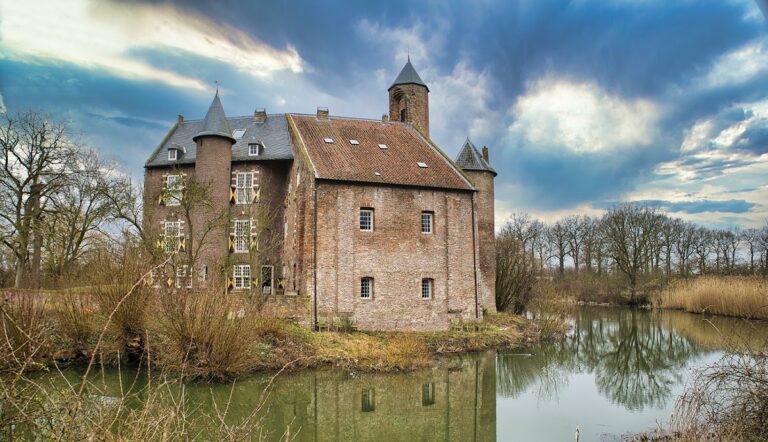
Kasteel Brakel: Medieval Castle Ruin in the Netherlands

Site at a Glance
- Rating
- 4.5
- Popularity
- Very Low
- Country
- Netherlands
- Primary era
- Medieval
- External website
- Open
- Eras represented
- Medieval
- Civilizations
- Holy Roman Empire
- Site type
- Military
- Remains
- Castle
On this page9 sections
History
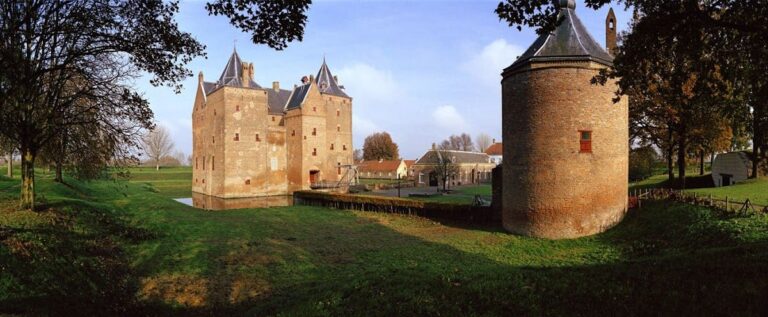
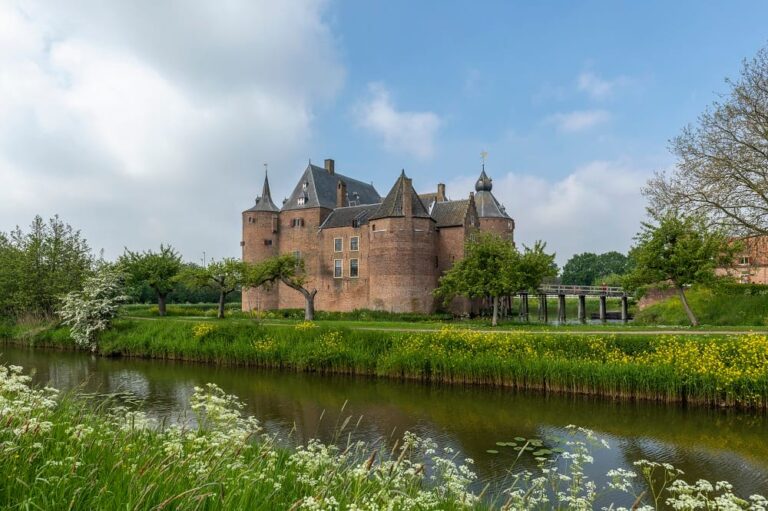
Kasteel Brakel is a medieval castle ruin in the Netherlands, located in Brakel in the municipality of Zaltbommel, Gelderland. Built before 1260, it was a fortified residence associated with local lords and later became part of the park surrounding Huis Brakel.
Medieval castle and feudal holding
Tradition places a fortified house at the site as early as 870, while remains beneath the visible ruin may relate to a fourteenth-century stronghold. The surviving fabric belongs to the fifteenth-century castle. In 1260 and 1265, the knight Eustachius van Brakel witnessed acts for the lord of Altena. In 1321, Eustachius and his son Steesekin transferred the castle to the count of Guelders as a feudal holding, meaning land held in return for service and loyalty.
The castle is said to have burned after a lightning strike in 1321. It was rebuilt, but troops of William VI, Count of Holland, destroyed it again in 1407. In 1439, Adriana van Brakel received the castle and its lordship as a feudal holding. Through her marriage to Johan van Broeckhuysen of Ammerzoden, lord of Waardenburg and Ammerzoden, the property entered his family.
Ownership and destruction
Inheritance carried the castle to the Van Aeswijn family in 1583, the Van Mathenesse family in 1669, and the Pieck family in 1670. The Piecks sold it to the minister Wilhelmus Wilhelmius, who commissioned the new Huis Brakel in 1768. Around 1800, ownership passed to the Van Dam family, later known as Van Dam van Brakel.
On 11 September 1672, during the Dutch Rampjaar, or Disaster Year, French troops blew up the castle after an imposed contribution had not been paid. The Rampjaar was the year when the Dutch Republic faced invasions and a major military and political crisis. Kasteel Brakel was never rebuilt.
Preservation as a ruin
When the park around Huis Brakel was created in the early nineteenth century, the ruin was deliberately retained as part of the landscape. Around 2010, Het Geldersch Landschap and the Stichting Vrienden der Geldersche Kasteelen arranged for the masonry at the waterline to be consolidated and repaired. The intervention followed an agreement with the municipality of Zaltbommel. Kasteel Brakel is now owned by these heritage organizations and is protected as a national monument in the Netherlands, registered as monument number 528829.
Remains
Castle enclosure
Kasteel Brakel was a square water castle, a fortified residence surrounded wholly or partly by water-filled moats. Its walls enclosed an inner courtyard, and three wall walks, or passages along the tops of defensive walls, allowed defenders to move and observe the surrounding area. Parts of the surrounding moats survive with the ruin.
Residential building and corner towers
The southern side contained a rectangular residential building. Two round corner towers stood along the enclosing walls. The residential building and the corner towers remain visible in the surviving ruin, while the masonry at the waterline was consolidated and repaired during conservation work around 2010.
Entrance and donjon
The entrance lay in the northern wall beside a donjon, the principal fortified tower of a castle. This tower could serve as a strong residence and defensive structure within the main enclosure.
Outer bailey and gatehouse
The northern part of the castle contained an outer bailey, an enclosed area outside the main defensive enclosure. It included a walled square and a gatehouse on the north side. A round tower occupied the northwest corner.