Convent of the Sisters of Charity in Chełmno: A Historic Catholic Religious Complex in Poland
Site at a Glance
- Rating
- 4.6
- Popularity
- Very Low
- Country
- Poland
- Primary era
- Medieval
- Eras represented
- Medieval, Early Modern, Modern
- Civilizations
- German, Polish–Lithuanian Commonwealth, Teutonic Order
- Site type
- Religious
- Remains
- Monastery
On this page13 sections
History
The Convent of the Sisters of Charity in Chełmno is a Roman Catholic women’s religious institution in Poland, also known as Kulm Monastery. Founded around 1266 as a Cistercian convent, it later became Benedictine and has belonged to the Sisters of Charity, a Catholic congregation devoted especially to charitable and care work, since 1821. The complex stands in the northwestern corner of Chełmno’s Old Town, at Dominikańska 40, and its church is dedicated to Saint John the Baptist and Saint John the Evangelist.
Cistercian foundation
Bertold of Czyste and his wife, Krystyna, privately endowed the convent around 1266. Its foundation also involved Friedrich von Hausen, Bishop of Kulm, and Ludwig von Baldensheim, a senior territorial official of the Teutonic Order in Prussia. Nuns from Himmelspforten established the new community.
In 1267, at the request of the bishop and Ludwig von Baldensheim, Chełmno’s mayor and municipal council granted the nuns four building plots and a city gate. Rural properties were also assigned to support the convent. The last document calling the community Cistercian dates from 1429, while a document from 1483 identifies the nuns as Benedictine.
Benedictine reform and crisis
The sixteenth-century Reformation brought a severe crisis to the convent. Its recovery began with the entry of Magdalena Mortęska in 1579. A Benedictine abbess and religious reformer, Mortęska led the community as it became the center of the Chełmno Congregation, which included most convents in Poland.
By the seventeenth century, the Benedictine convent owned 29 villages near Chełmno and Świecie. These estates were devastated during the Swedish invasion of 1626–1629, a military conflict that brought Swedish forces into the Polish-Lithuanian Commonwealth.
Transfer to the Sisters of Charity
Prussian authorities dissolved the Benedictine convent in 1821 and transferred its buildings to the Sisters of Charity, who had been associated with Chełmno since 1694. The sisters operated a school at the complex until 1875, when the Kulturkampf, a campaign by Prussian and German authorities to restrict Catholic influence and institutions, affected its activities. They also ran a hospital.
In 1863, the complex became the seat of the religious province and novitiate. Many parts of the buildings were adapted during the nineteenth century, and the sisters continue to operate a care home at the site.
Remains
Church and medieval construction
Gothic church
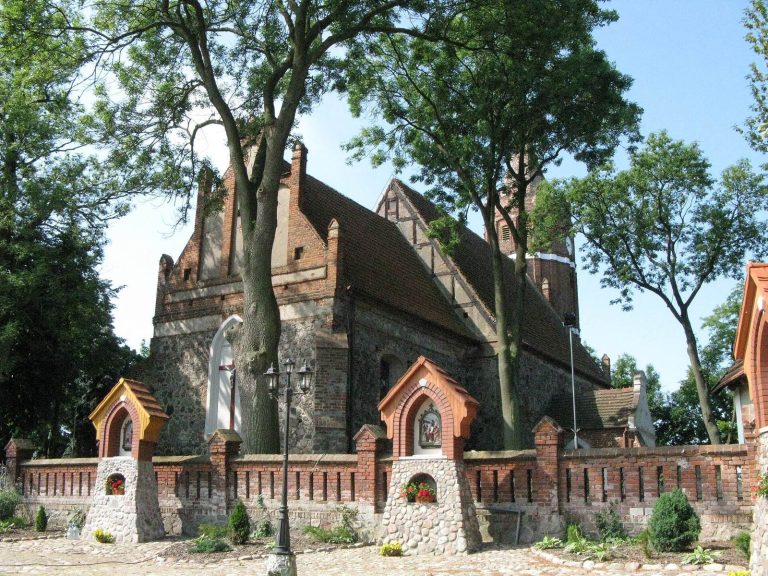
The convent church is a brick Gothic building, belonging to the northern European tradition in which brick replaces quarried stone as the principal material. It has a single nave with four bays and a five-sided closed presbytery, while buttresses reinforce its exterior. The lower part was probably completed around 1310–1320 and the upper part around 1330–1340. A workshop also employed on Chełmno’s parish church completed the construction.
A tall western gable is crowned by a small tower dating from the beginning of the seventeenth century. The interior has two levels because a large masonry nuns’ gallery was incorporated into the church. The main space has a star vault, whose intersecting ribs form a star-like pattern. Beneath the gallery, a lower space has a cross vault supported by two pillars.
Chapels and convent wings
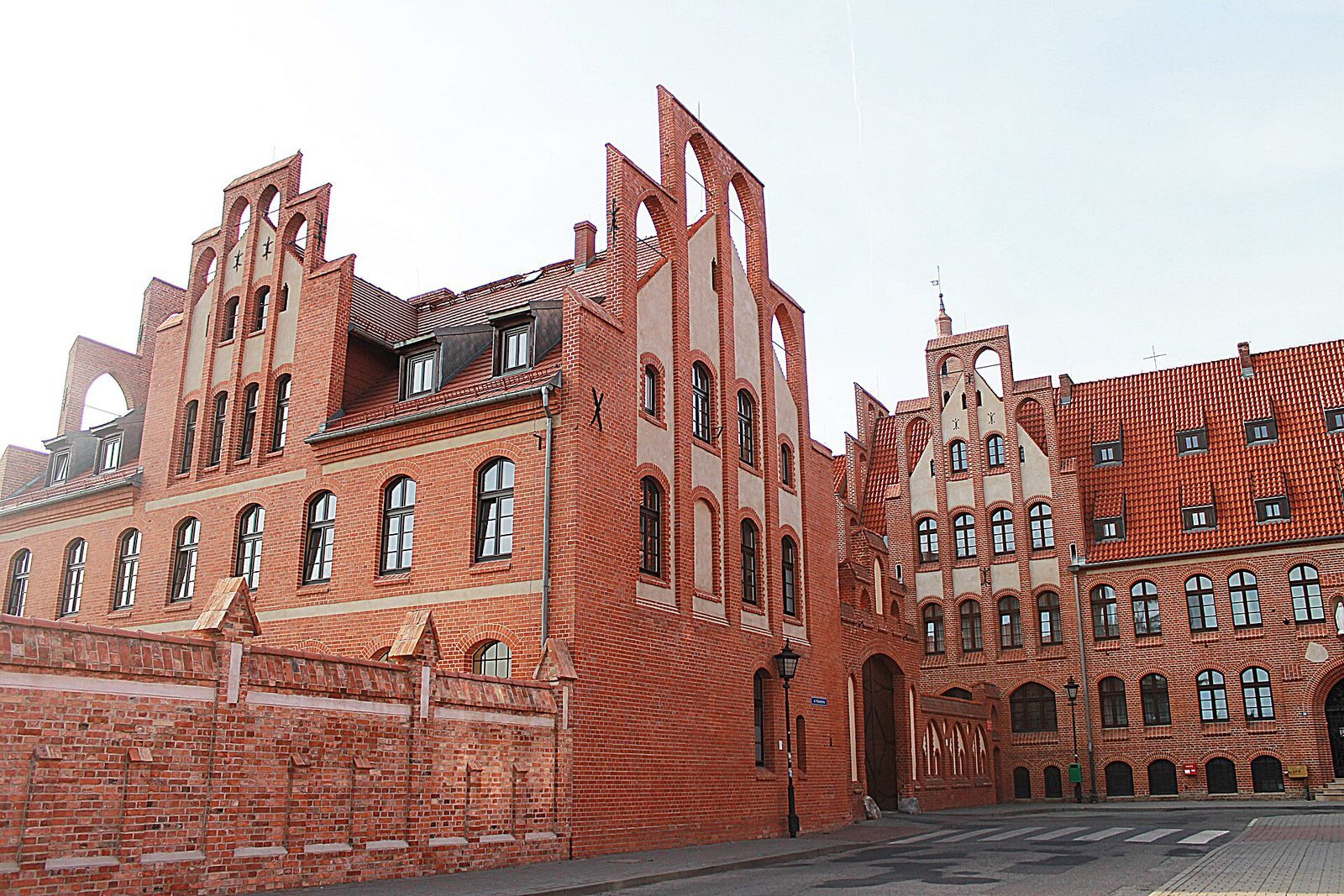
A burial chapel for the nuns was added to the north side of the presbytery in 1595, while Saint Michael’s Chapel was built on its south side. The preserved northern convent wing incorporates the so-called Mestwin Tower, which may be a remnant of an unfinished Teutonic residence from the third quarter of the thirteenth century. The eastern and western wings underwent more extensive alterations.
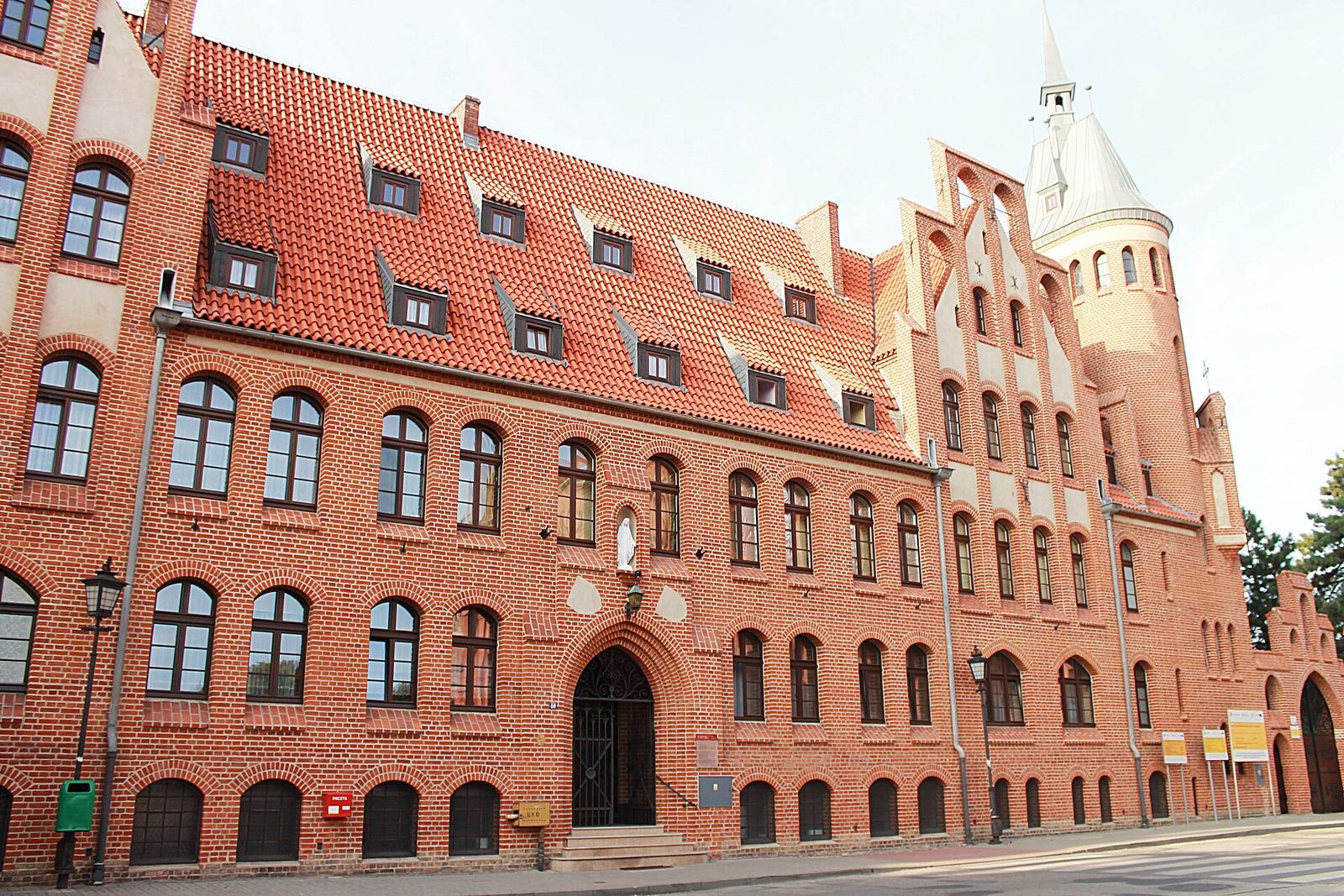
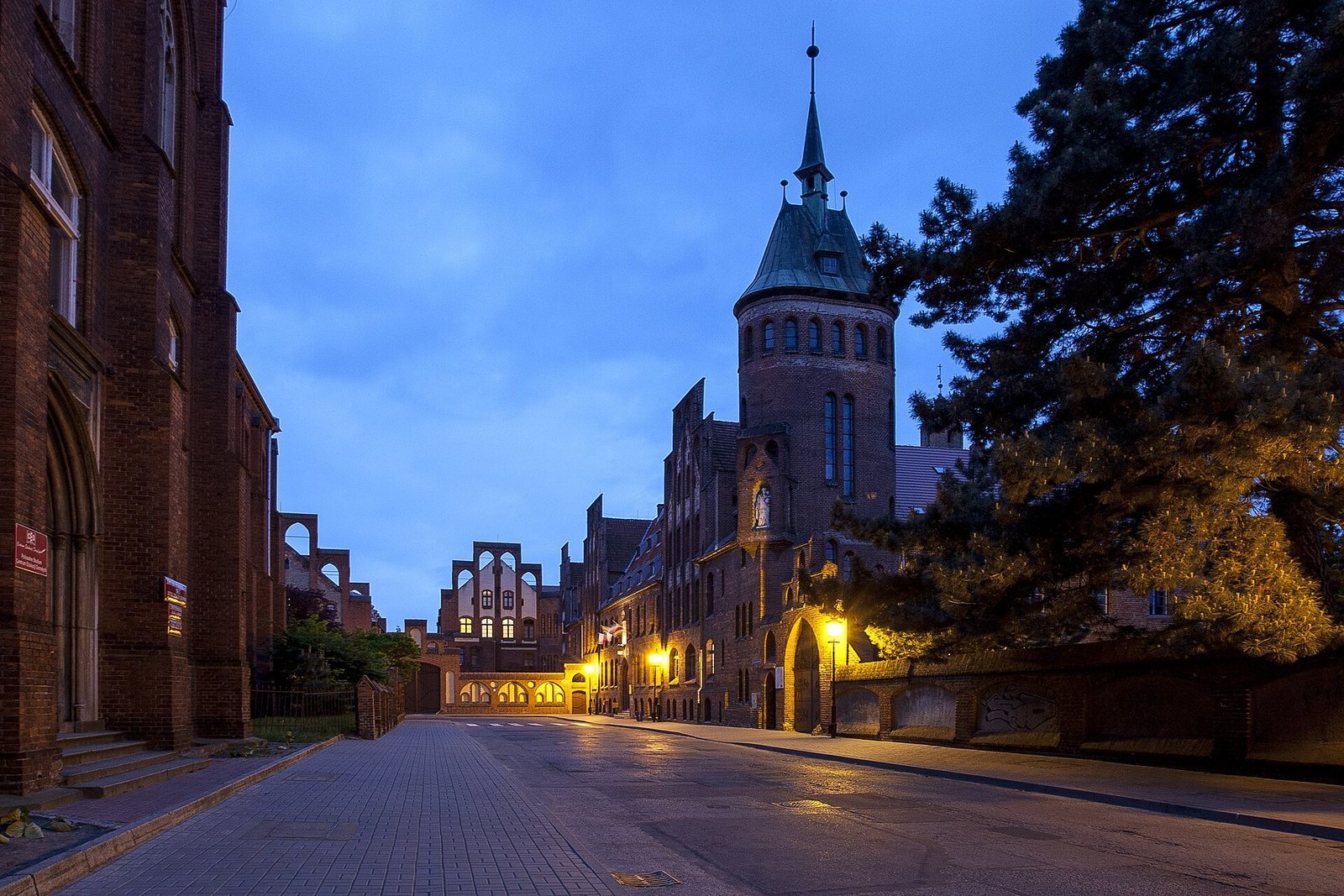
The convent was thoroughly rebuilt in the seventeenth century. During the nineteenth century, sections were adapted for the Sisters of Charity. A Neo-Gothic southern wing was erected along the street between 1897 and 1899 on the site of an older structure, and the wing includes a distinctive tall tower.
Artistic and commemorative features
Medieval sculpture and painting
A tomb slab for Arnold Lischoren, a townsman who died in 1275, was brought from Flanders. It is among the oldest surviving examples of sculpture in Pomerania. The church also preserves vault bosses made before the middle of the fourteenth century.
Around the middle of the fourteenth century, wall paintings showing a cycle from the Song of Songs were created on the nuns’ gallery. Their mystical imagery is described as exceptional on a European scale. A late-fourteenth-century articulated figure of Christ in the Tomb, showing the Crucified Christ with movable arms, was probably transferred from the Franciscan church.
Early modern furnishings
The organ dates from the period of Abbess Magdalena Mortęska, and its case front was painted by Jan Krüger in 1619. Krüger also painted portraits of the order’s benefactors. The church retains Mannerist choir stalls from 1595, an intarsia pulpit from 1596–1597, a stone convent epitaph from 1599, and the southern portal from 1619.
Works from the mid-seventeenth century include an image of Our Lady of Sorrows, a Madonna and Child painted on sheet metal, and an image of Mother Mortęska dated 1658. The main altar and two side altars in the presbytery reflect the flourishing of Chełmno woodcarving in the early eighteenth century, while two additional altars were made in the mid-eighteenth century.
Relics and transferred works
The altar of Saint Vincent contains relics of Blessed Jan Łobdowczyk, a title used in Catholic practice for a person formally recognized as worthy of veneration but not canonized as a saint. The relics were transferred from the Franciscan church. An image of Saint Anthony, formerly venerated, also came from that church.
Setting
The complex occupies the edge of the high escarpment of the Vistula proglacial valley. This position makes the convent a prominent element in Chełmno’s scenic panorama, while the surviving church, convent wings, tower, chapels, and interior furnishings preserve evidence of the institution’s development from the thirteenth century through the modern period.