Sillyon: An Ancient City and Fortress in Pamphylia
Site at a Glance
- Popularity
- Medium
- Country
- Turkey
- Primary era
- Classical
- Eras represented
- Classical, Medieval
- Civilizations
- Ancient Greek, Byzantine, Roman, Seleucid, Seljuk
- Site type
- City
On this page7 sections
History
Sillyon was an important city and fortress at Yanköy in Türkiye, near Attaleia (modern Antalya), with remains from the Hellenistic, Roman, Byzantine, and, in part, Seljuk periods. It first appears in written records around 500 BC. Its native Greco-Pamphylian name was Selywiys, possibly derived from the Hittite name Sallawassi; Byzantine usage included Syllaeum and Syllaion.
Early references and Hellenistic and Roman periods
Two traditions offered different accounts of Sillyon’s foundation. One described it as a colony from Argos, an ancient Greek city. The other placed its founding after the legendary Trojan War, alongside Side and Aspendos, and credited the seers Mopsos, Calchas, and Amphilochus. Around 500 BC, the writer Pseudo-Scylax mentioned the city as Sylleion. Sillyon joined the Delian League, the alliance led by Athens, in 469 BC and appears in Athenian tribute lists around 450 and 425 BC. It is not mentioned again until 333 BC.
That year, Alexander the Great, the Macedonian king, abandoned an unsuccessful siege. The historian Arrian describes Sillyon as strongly fortified, with a garrison of mercenaries and local defenders. After his first assault failed, Alexander withdrew, pressed for time. The city was extensively rebuilt under the Seleucid dynasty, established after Alexander’s conquests. Later, when much of western Asia Minor came under the Attalid kingdom, the Roman Senate, Rome’s governing council, kept Sillyon a free city.
Sillyon maintained its own coinage from the early third century BC until the reign of the Roman emperor Aurelian in the 270s. Silver coins of Alexandrian and Lysimachian types were issued between 281 and 190 BC, alongside local bronze issues.
Byzantine prominence
Sillyon rose in importance under the Byzantine Empire, the medieval eastern Roman state. In late 677 or 678, after an Arab siege of Constantinople failed, a storm destroyed an Arab fleet at Sillyon. The city became one of the region’s principal fortified centers and the seat of an imperial representative. This official served alongside the military governor of the Kibyrrhaiotai, the empire’s naval administrative district. A major public road began at Sillyon and connected the southern coast, by way of Amorium and Nicaea, with Bithynia and Constantinople.
Sillyon’s growing influence began to eclipse Perge, the traditional regional metropolis. Between 787 and 815, the local bishop’s seat was transferred to Sillyon. Saint Antony the Younger served there as imperial representative around 821–829. Constantine II, patriarch of Constantinople, the leading ecclesiastical office in the Byzantine capital, also served as bishop of Sillyon. Antony I, another patriarch of Constantinople, was born in the city.
Seljuk rule and decline
In 1207, the Turkic Seljuks brought Sillyon and the wider region of Pamphylia under their rule. The city became part of the Sultanate of Rum, the Seljuk state in Anatolia. As Sillyon declined, Side assumed its metropolitan position, the leading regional ecclesiastical seat, around 1315.
Remains
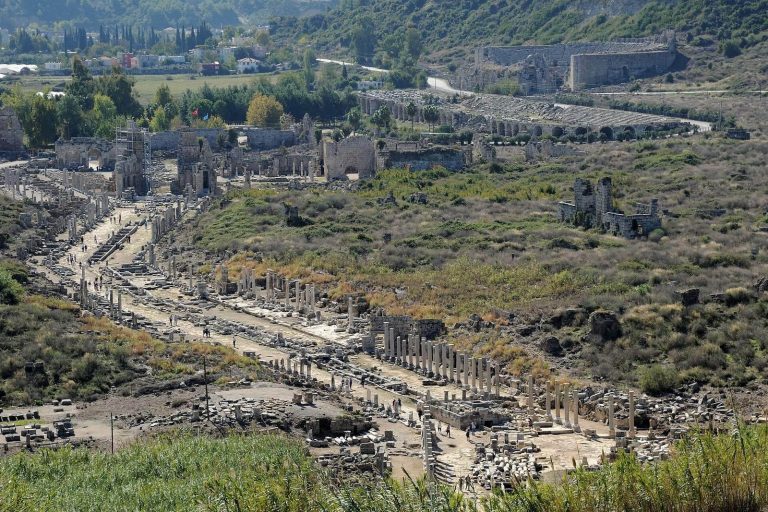
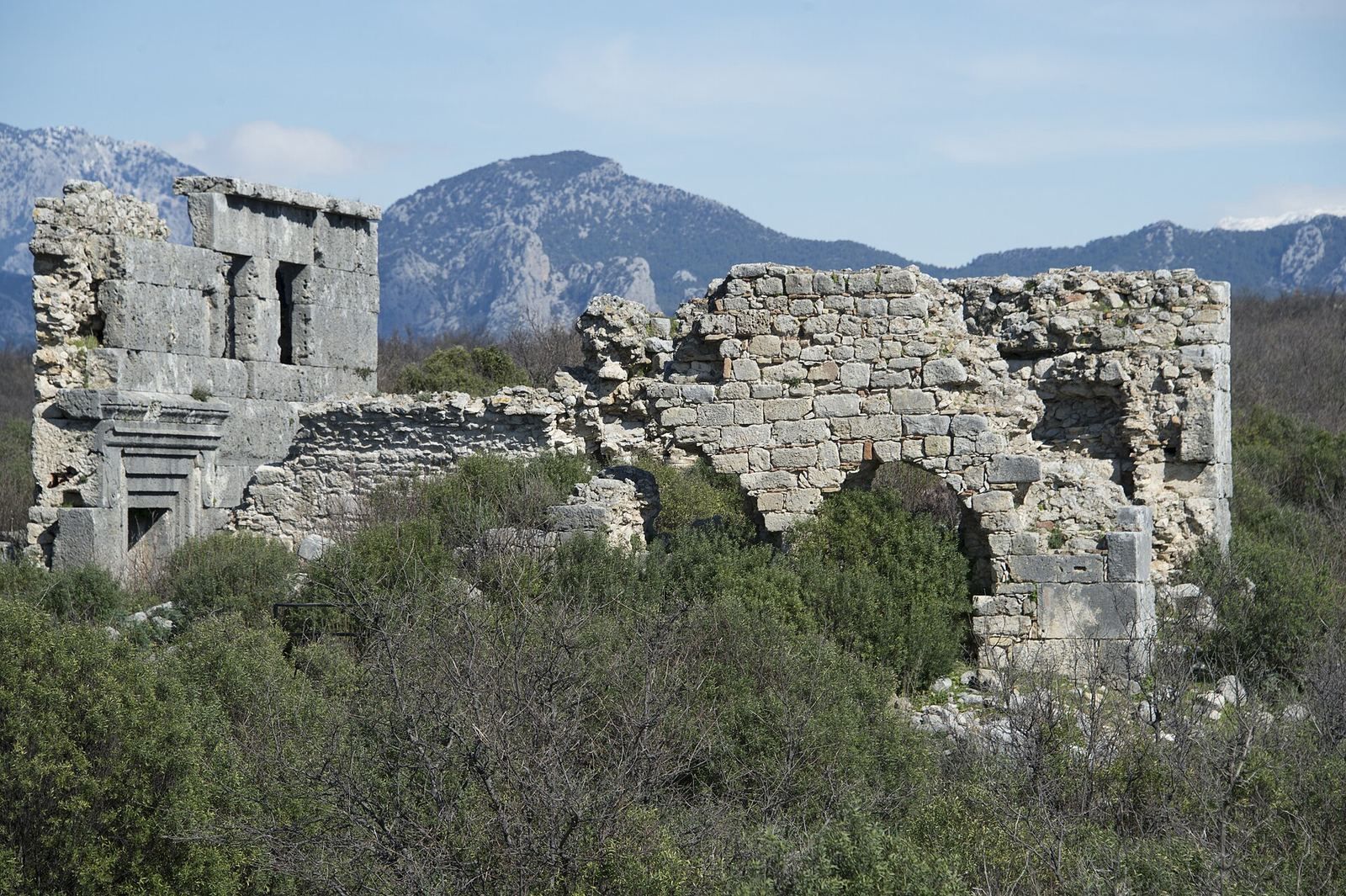
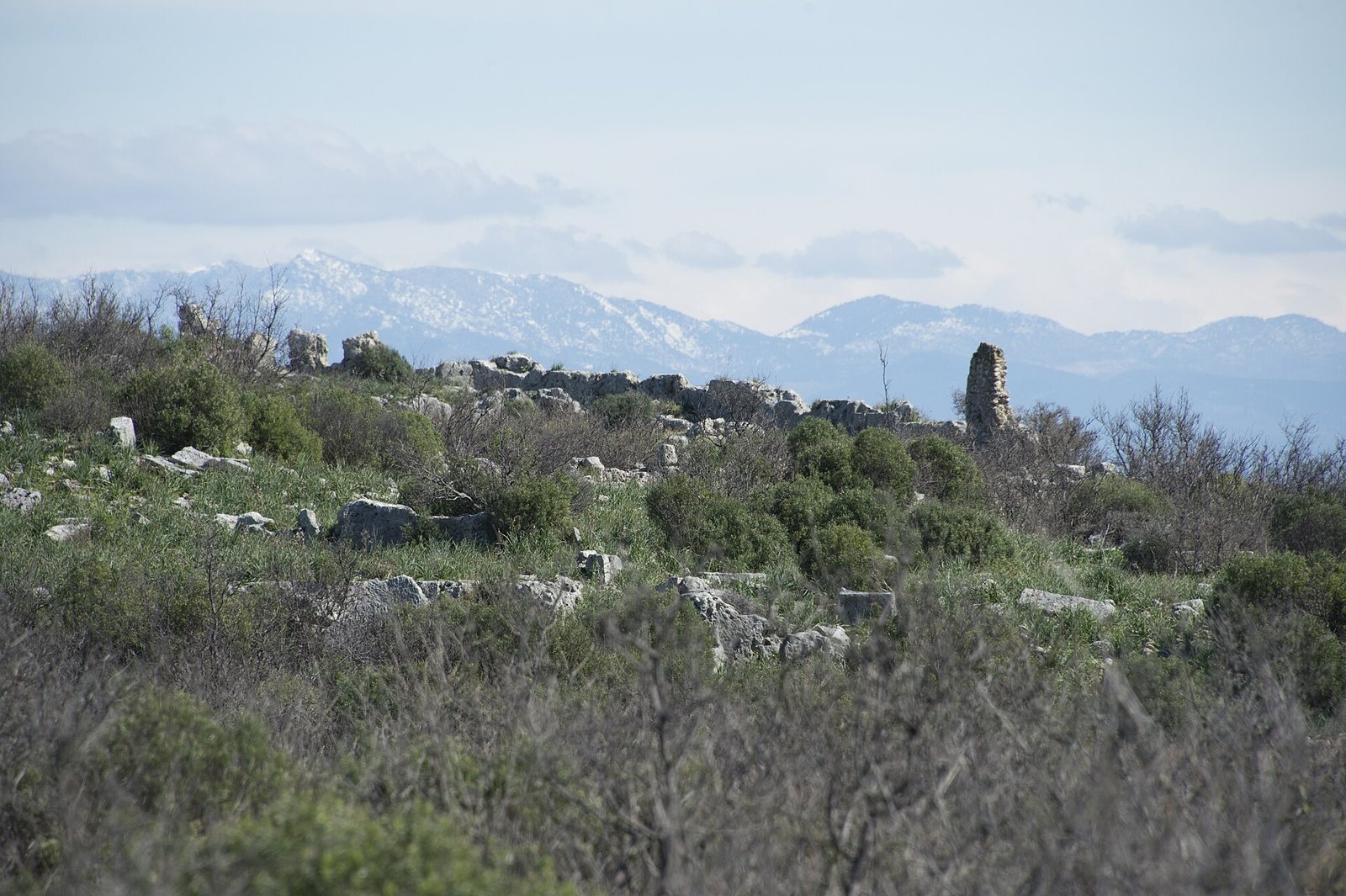
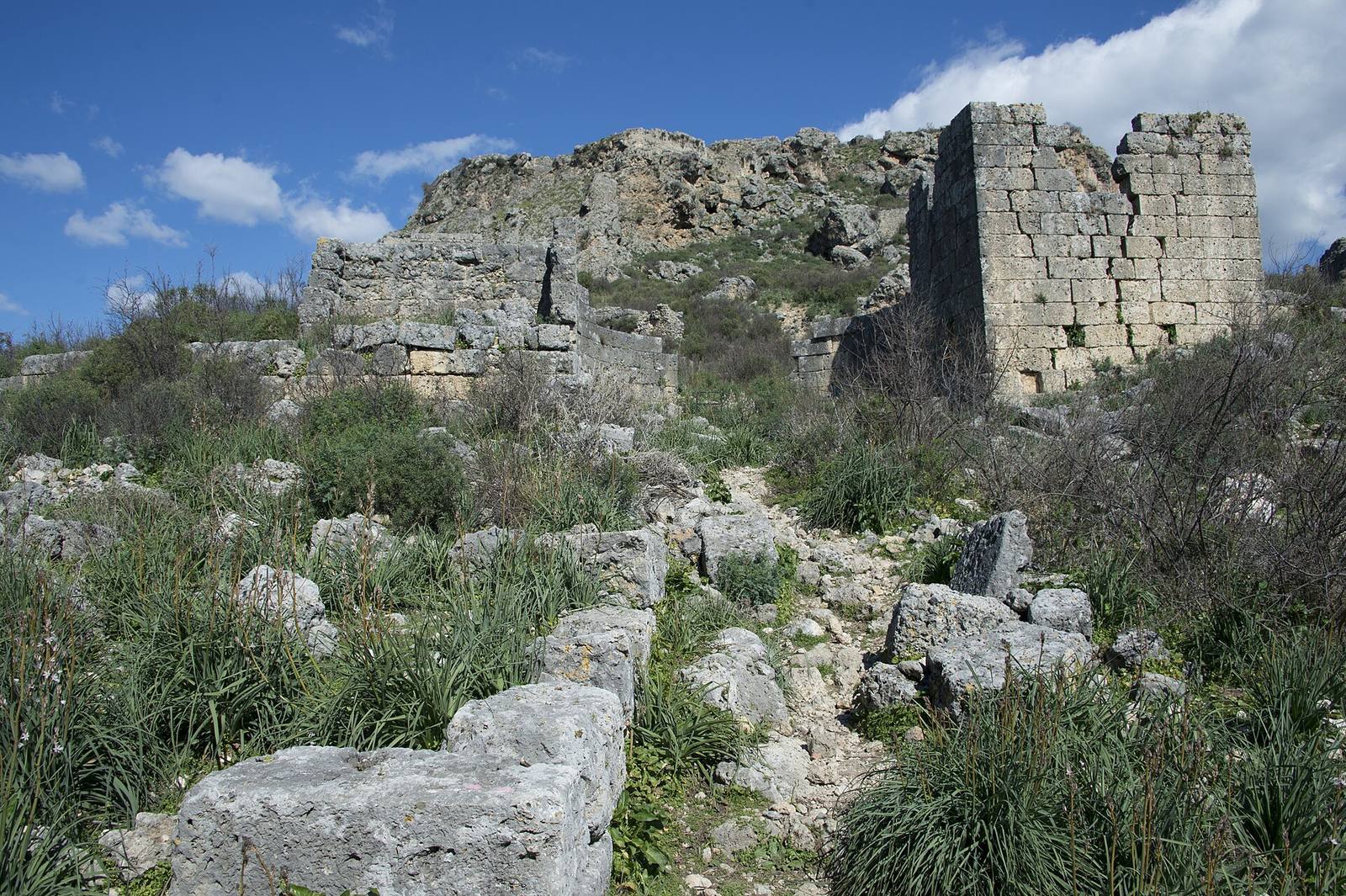
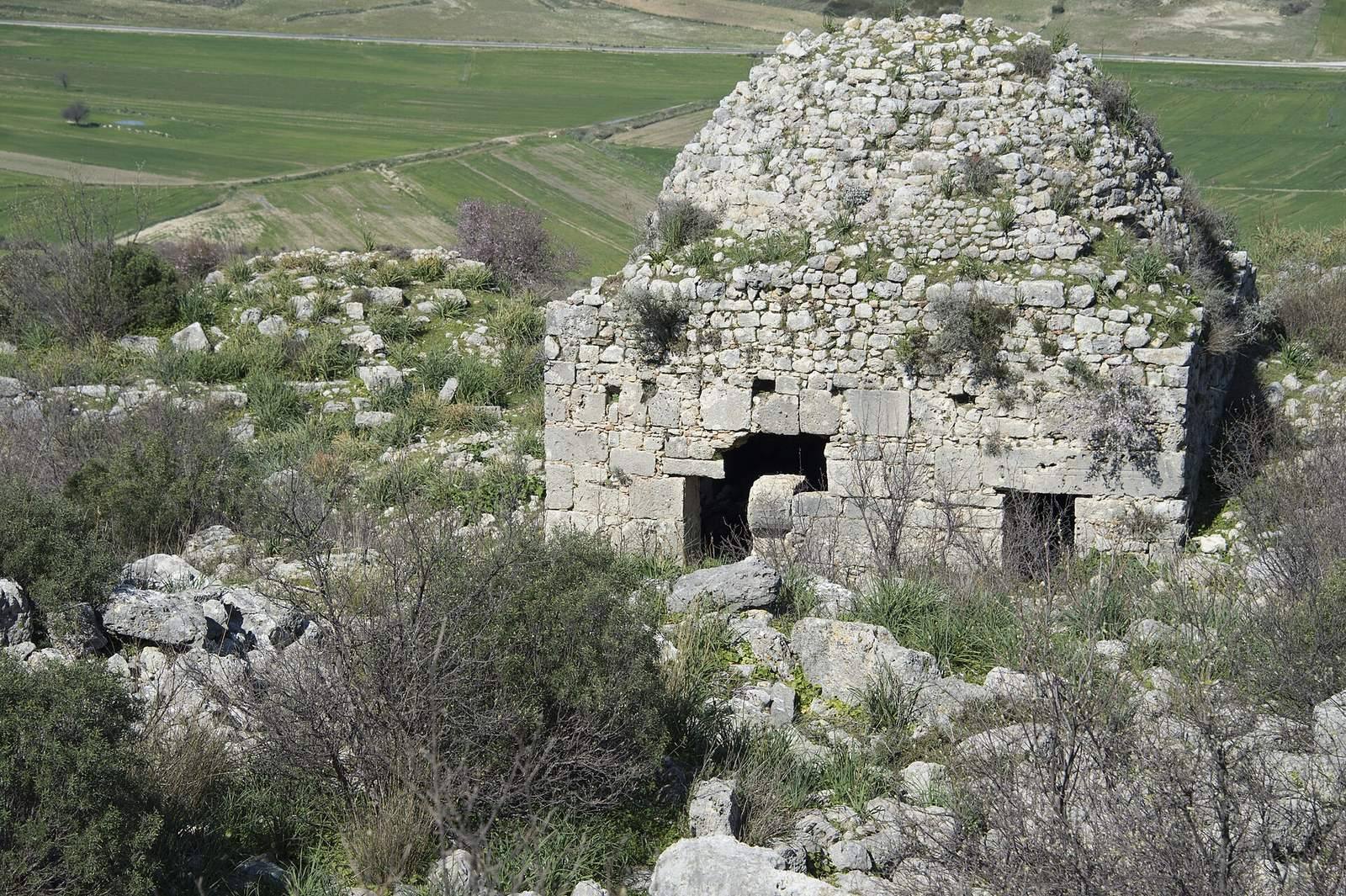
Sillyon’s ruins occupy a rocky plateau at an elevation of about 200 metres. They include remains from the Hellenistic, Roman, Byzantine, and, in part, Seljuk periods. Landslides have caused some collapses and threaten a large area of the site.
Buildings and infrastructure
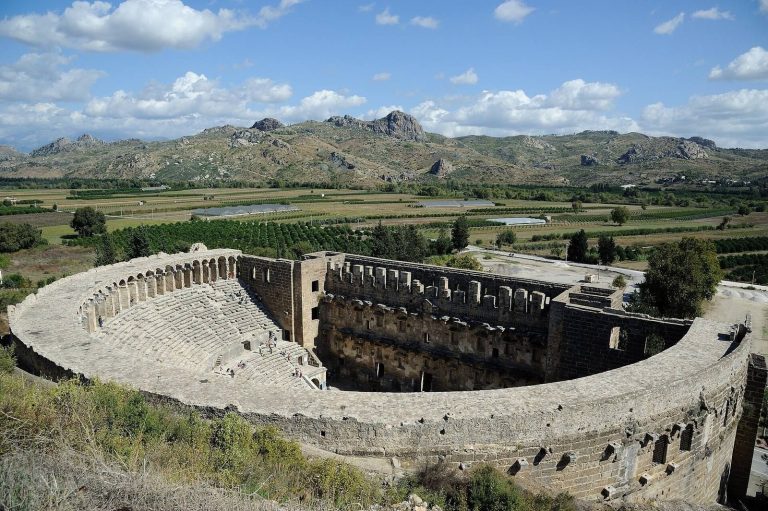
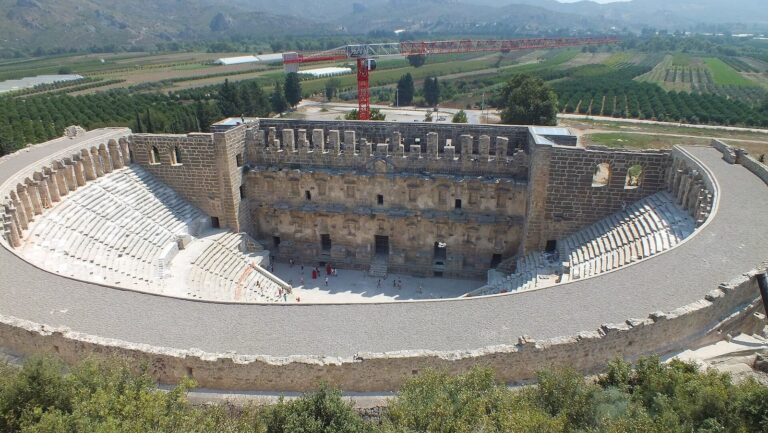
The remains include city gates, a theatre, a stadium, an amphitheatre, an odeon, a temple, a cistern, and a gymnasium, a public exercise complex. The theatre underwent extensive rebuilding under the Seleucids. The odeon was a small hall for performances, while the cistern stored water.
Coins
Third-century BC coins bear designs including a bearded head, a standing figure that may represent Apollo, and a thunderbolt. Earlier issues carry Sillyon’s native Pamphylian name. Under Roman suzerainty, the same designs appeared with a Greek inscription meaning “of the Sillyeans.”