Sieniawa Palace: A Baroque Residence in Poland
Site at a Glance
- Popularity
- High
- Country
- Poland
- Primary era
- Early Modern
- Eras represented
- Early Modern, Modern
- Civilizations
- Austria-Hungary, Habsburg, Polish–Lithuanian Commonwealth
- Site type
- Domestic
- Remains
- Elite Residence
On this page9 sections
History
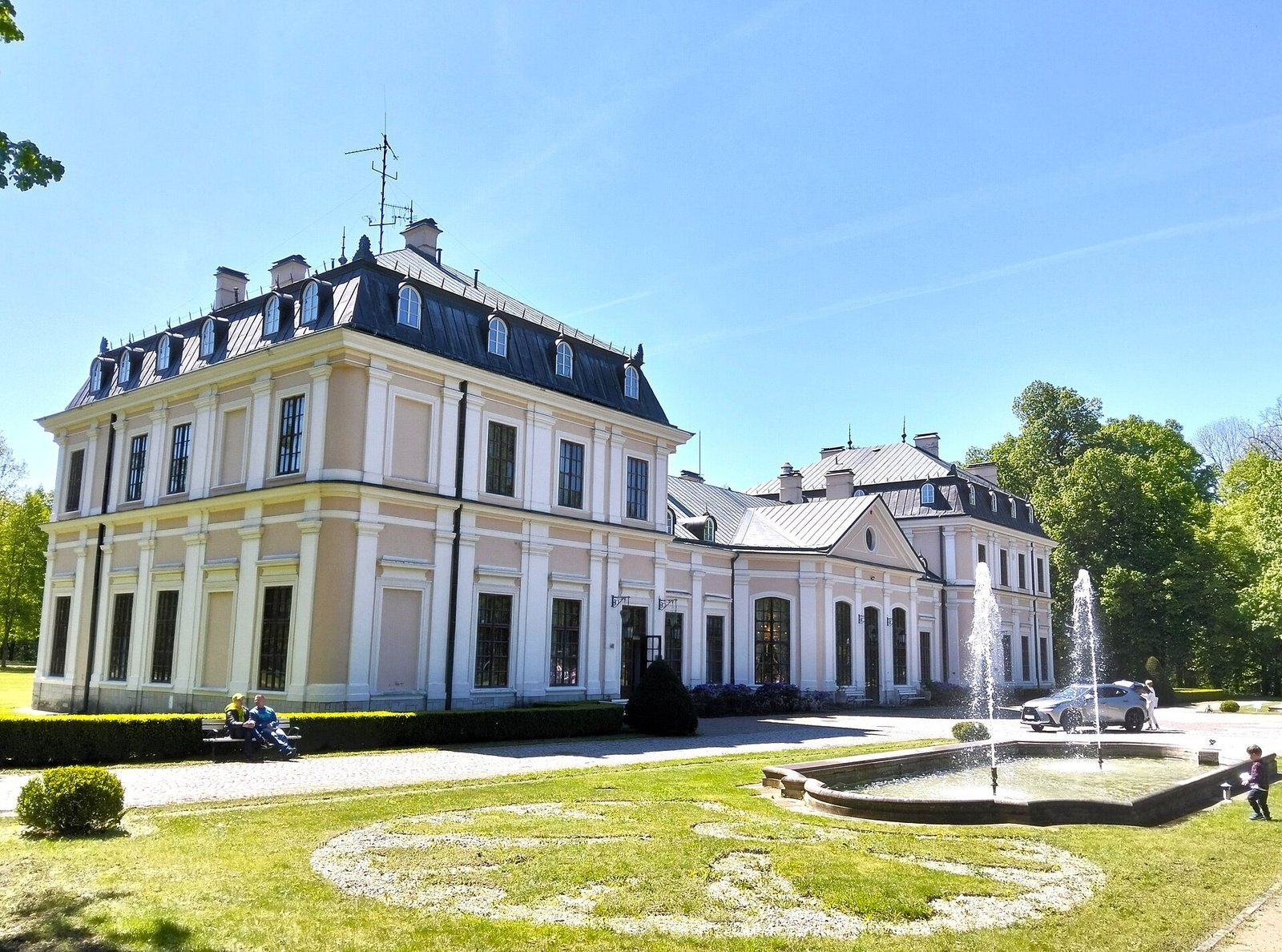
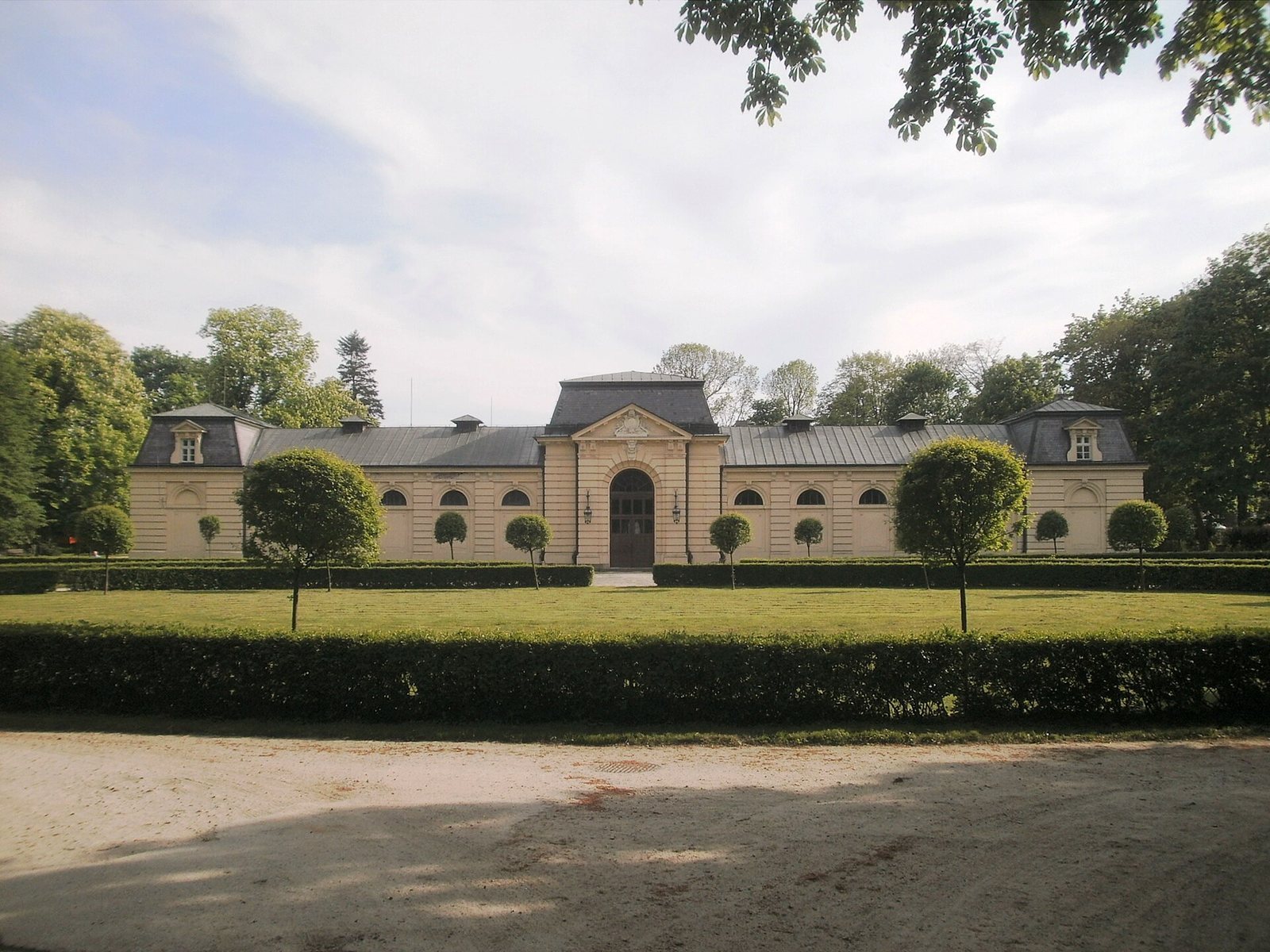
Sieniawa Palace is a Baroque residence in Sieniawa, Poland, built in the early eighteenth century by Adam Mikołaj Sieniawski within a defensive complex his father developed between 1664 and 1680. Baroque was a European architectural style that flourished in the seventeenth and early eighteenth centuries. By the nineteenth century, the palace had become one of the Czartoryski family’s principal residences and a centre of political, intellectual, and cultural life in Galicia, a Habsburg crown land spanning parts of present-day Poland and Ukraine.
Early development
Mikołaj Hieronim Sieniawski began forming the defensive complex in the area now occupied by the palace and park. His son Adam Mikołaj, who held the highest military office in the Polish-Lithuanian Commonwealth as Grand Hetman of the Crown, built the palace there in the early eighteenth century.
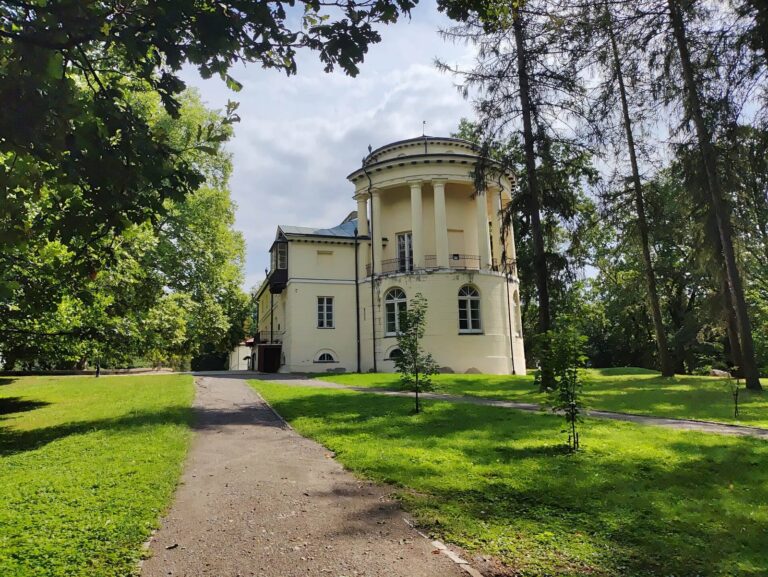
An orangery, a building for growing citrus and other tender plants, was added to the garden between 1718 and 1720. From 1726 it was called the summer palace, and it underwent at least three alterations before the end of the eighteenth century.
The Czartoryski residence
The Czartoryski family owned the palace by the early nineteenth century. Among its visitors were the writer and political figure Julian Ursyn Niemcewicz, military commander Tadeusz Kościuszko, and Alexander I, emperor of Russia. From 1817, the deaf and non-speaking Franciszek Ksawery Prek lived there for five years, beginning his career as a painter. Juliusz Kossak also left a painted image of the palace in connection with a visit.
After the November Uprising, the Polish revolt against Russian rule in 1830–1831, Izabela Czartoryska feared reprisals by the Russian authorities. She brought Leonardo da Vinci’s Lady with an Ermine from Puławy to Sieniawa, where it was hidden in a walled-up palace alcove from 1832 to 1840. In 1881–1883, the Czartoryskis remodeled the palace, giving it its present late-Baroque character.
War and reconstruction
During the First World War, Adam Ludwik Czartoryski made the palace available as a field hospital for Austrian soldiers with infectious diseases. The building suffered severe damage and received temporary protection. Czartoryski later lived in a nearby wooden manor house. August Czartoryski began repairs in the late 1930s, but the Second World War stopped the work.
On 25 August 1939, the Czartoryski collection arrived at Sieniawa. It included Lady with an Ermine, Raphael’s Portrait of a Young Man, and Rembrandt’s Landscape with the Good Samaritan. Augustyn Czartoryski concealed the paintings in the cellar of a palace outbuilding. German forces found the collection in mid-September, damaged some of it, and removed it.
Until the 1980s, the palace stood in ruins without a caretaker and was looted. Its new owner, the Igloopol enterprise, repaired and effectively rebuilt the structure during that decade. In the 1990s, the Agricultural Property Agency of the State Treasury restored the palace, park, and associated buildings to their present condition. After the Ministry of Culture and National Heritage purchased the Czartoryski collection in 2018, the property remained in State Treasury ownership and the complex continued under the administration of the National Support Centre for Agriculture, successor to the earlier agency. The palace is now used as a hotel.
Remains
Palace and grounds
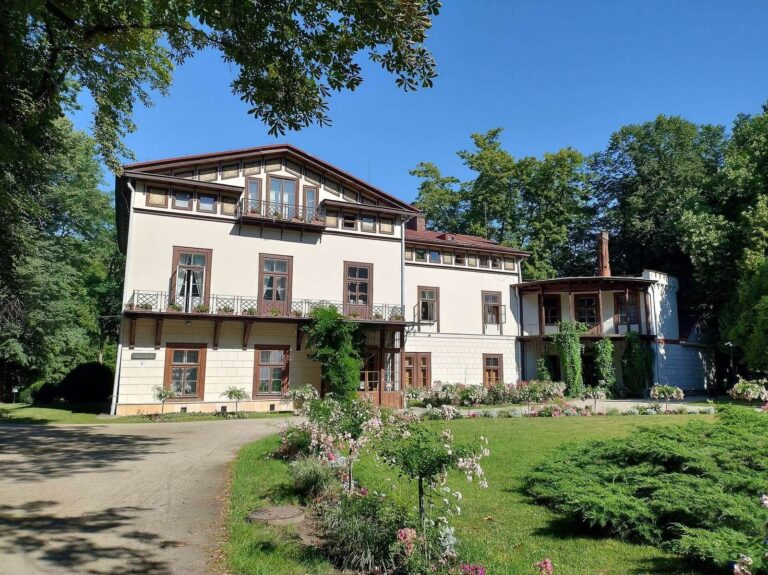
The palace stands in Sieniawa’s old town within an English garden, a landscaped garden with an informal, naturalistic design. The earlier defensive complex had a square plan, with four earthen defensive mounds at its corners. The palace began as a single-storey masonry building. The 1881–1883 remodeling added upper floors to both wings and established the building’s late-Baroque appearance. At that time, it contained 36 rooms and had a volume of 2,088 cubic metres.
Interior and furnishings
In the early nineteenth century, a very large entrance hall and a large salon formed the principal spaces, alongside rooms used by the princely couple. A large organ stood in the hall, where meals were often eaten; the salon held English caricatures and prints of Austrian military actions against the French, and a billiard table occupied one corner. Furnishings associated with the palace included portraits of the Sieniawski, Czartoryski, and Poniatowski families, as well as miniatures illustrating Ovid’s Metamorphoses, attributed to Jean-Pierre Norblin de la Gourdaine, a French-born artist who worked in Poland. A 1914 inventory lists two wardrobes and chests in the Gdańsk furniture tradition, six chairs upholstered in Cordovan leather, and 24 chairs inlaid with ivory.
Outbuilding and concealed spaces
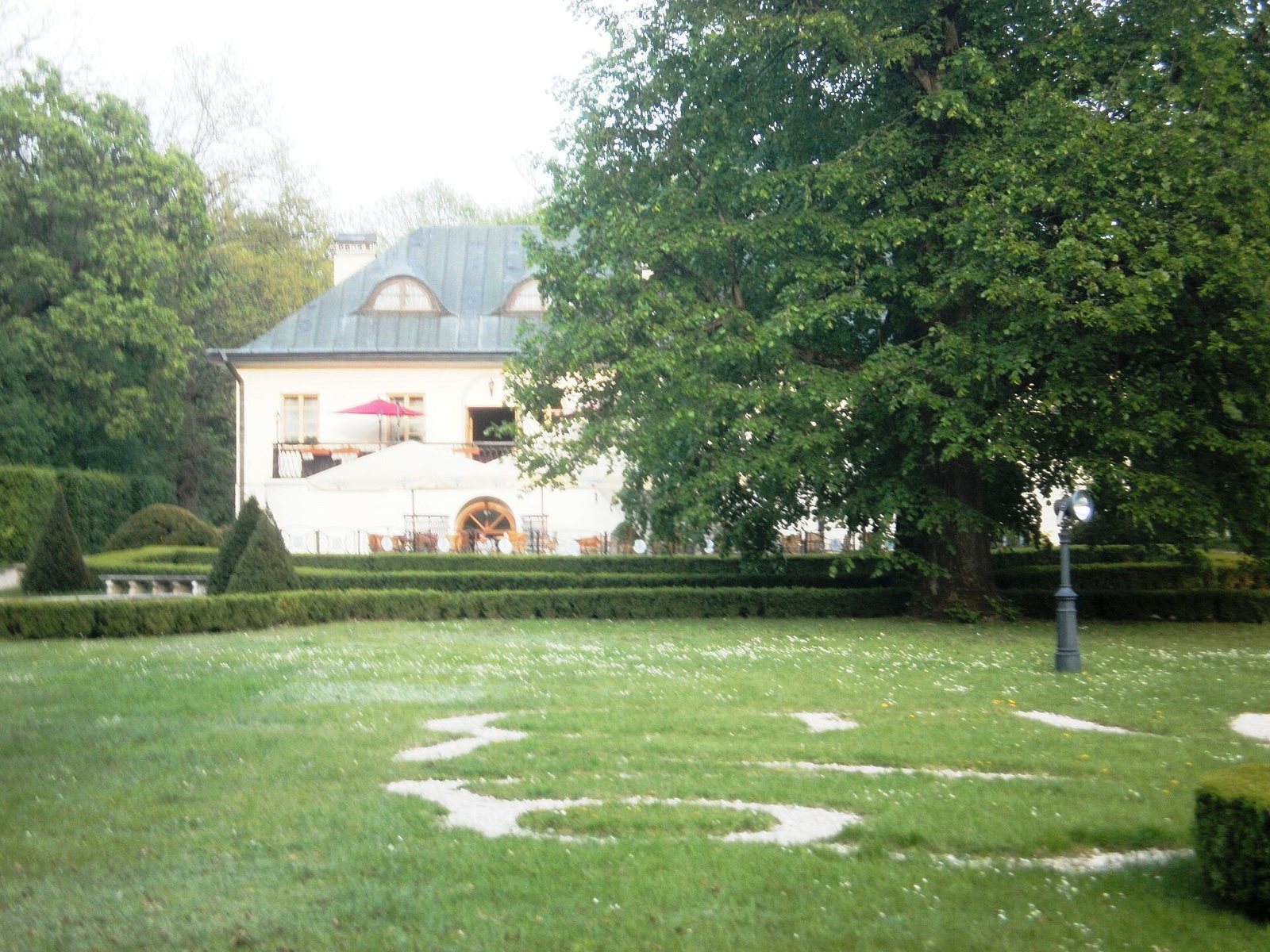
The palace complex includes a walled-up alcove within the palace and a cellar in its outbuilding. The outbuilding now houses a restaurant.
Silver hoard
Archaeologists and searchers found a buried silver hoard in the palace park in 2024. It comprises a sugar bowl, a decorative box, six tablespoons, and six teaspoons. Both containers are ornamented; one bears coats of arms, and the spoons carry monograms. Preliminary examination places the objects in the second half of the eighteenth century and suggests they may have been made in the Rococo style, a decorative style of the later eighteenth century, by Augsburg goldsmith Gottlieb Satzger. Their location, coats of arms, and monograms point to Czartoryski ownership, while the date and circumstances of their burial remain uncertain.