Plyos Fortress: A Medieval Volga Frontier Stronghold
Site at a Glance
- Popularity
- Medium
- Country
- Russia
- Primary era
- Medieval
- Eras represented
- Medieval
- Civilizations
- Golden Horde
- Site type
- Military
- Remains
- Fort
On this page10 sections
History
The first fortress
Plyos Fortress is a medieval fortified site on Cathedral Hill in Russia. A settlement stood there by the mid-12th century, and its first fortress was probably built in the late 12th century as a frontier outpost of the Vladimir-Suzdal principality, a medieval polity in northeastern Rus. In February 1238, during the Mongol invasion, the fortress and settlement were burned. A cemetery was later established within the former fortress.
The fortress of 1410
Plyos may have been attacked by Kazan Tatars, a Tatar group associated with the Kazan region, in 1409. The following year, Vasily I, Grand Prince of Moscow from 1389 to 1425, ordered a new fortress on the hill to help defend Kostroma and Moscow from the Horde, the Mongol-Tatar power. The fortress formed part of a wider customs and defense system along the Volga frontier. In 1429, Kazan Tatars defeated the garrison and burned the fortress and settlement. A hurried, partial rebuilding followed.
Decline and archaeological study
The rebuilt fortress had decayed by the 17th century. It may have survived in some form until 1609, when Polish-Lithuanian forces captured Plyos; if any defenses remained, they were destroyed. No further fortifications were built on the site.
P. A. Rappoport investigated the defenses in 1959, cutting through a rampart to examine its construction and finding evidence that supported chronicle accounts of the 1410 building work. K. I. Komarov surveyed the fortified settlement on Cathedral Hill in 1984, and the Shuya archaeological expedition excavated the fortress in 2023. The fortified settlement is an archaeological monument, and the fortress is designated a cultural heritage site of federal significance in Russia.
Remains
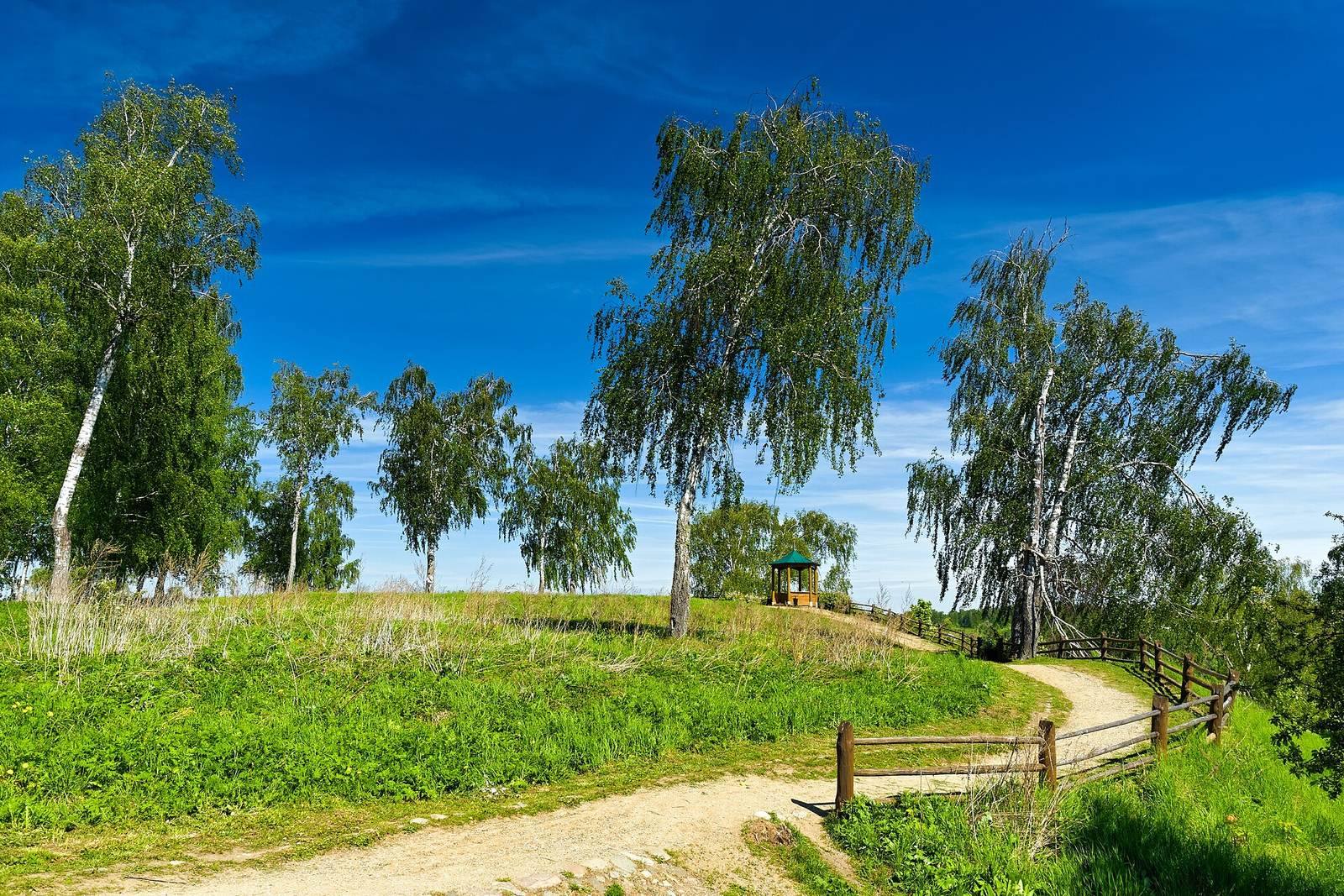
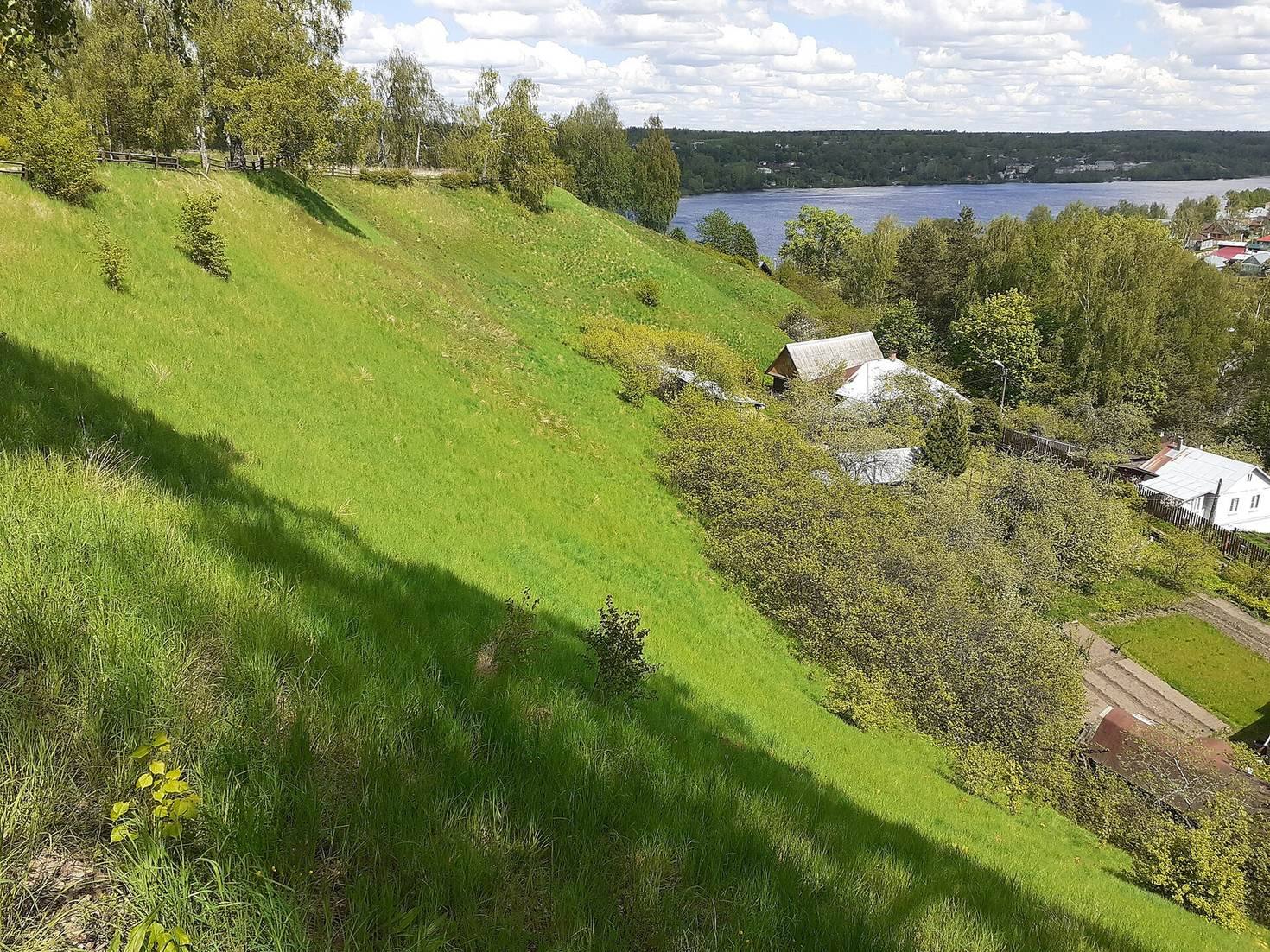
The fortress occupied Cathedral Hill on the Volga’s right bank and the Shokhonka’s left bank. Its position overlooked a bend in the Volga where vessels slowed and became vulnerable. The defenses developed from an early timber enclosure into a much larger complex of earthen ramparts and layered pine-log walls.
The first fortress
The earliest fortress had a single-row wall that incorporated residential compartments made from logs. The 1410 fortress occupied ten times the area of its predecessor, extending the defenses across a substantially larger part of the hill.
The southern earthworks
A rampart and ditch dating to 1410 survive on the southern side of the former fortress. The rampart measured 170 metres long, 6 metres high, and 29 metres across at its base, with an outer slope no steeper than 25 degrees. Its entrance stood at the eastern end. Sand was laid beneath the defenses, while clay strengthened the unoccupied outer edge of the platform.
Timber walls and the northern tower
Multilayered pine-log walls enclosed the fortress for about 800 metres, with several towers along the defenses. The northern tower had a base measuring 9 by 9 metres. Its walls consisted of two parallel timber faces, with unfired brick packed between them and stone above; they were at least 0.6 metres thick and designed to withstand artillery. Projecting log ends at the corners stiffened the tower, and the adjoining wall on its eastern side was built in a similar way.
Brick was used in the defensive complex but not as a foundation. It was laid without mortar over substantial timber supports, with brickwork set between logs on a platform of two or three rows. At the tower’s western corners, this brickwork reached 0.7 to 0.8 metres thick, or eight courses. Both of the tower’s outer sides may have had similar reinforcement.
The rebuilt tower and other features
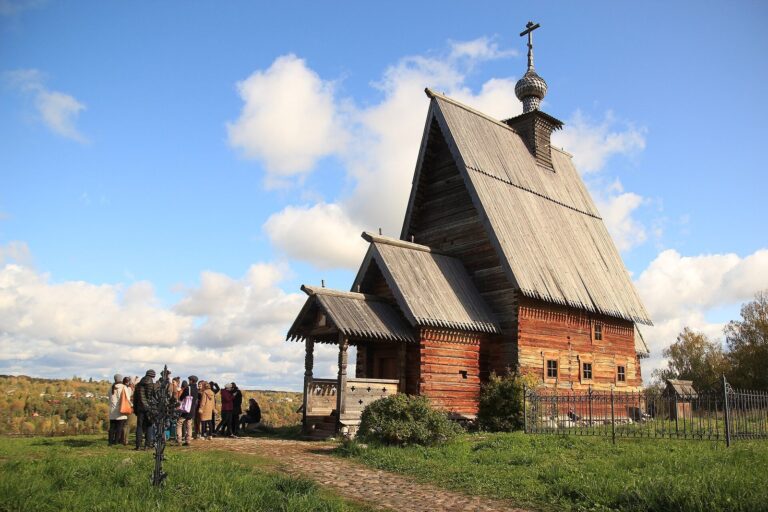
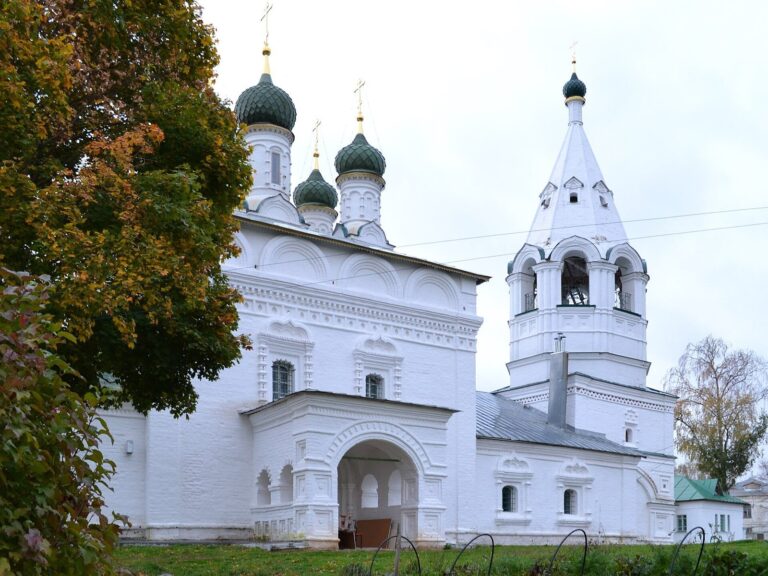
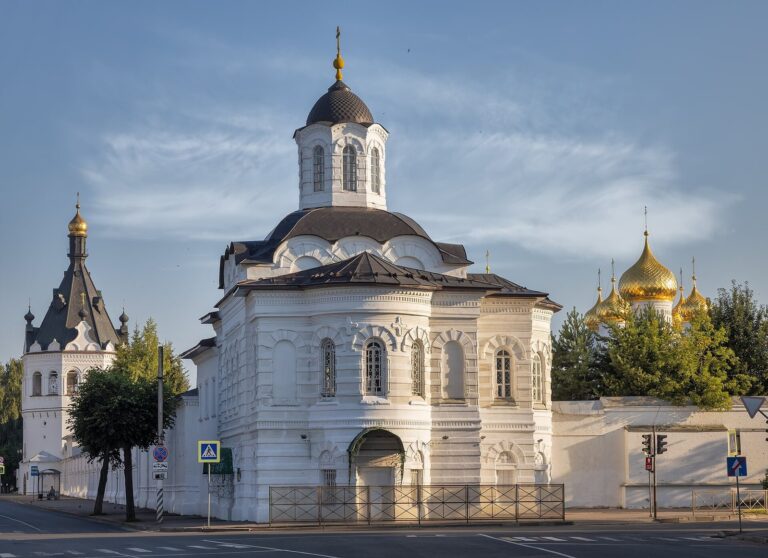
The tower erected on the old tower’s site during the partial rebuilding was lighter and had a base of 6 by 6 metres. The former fortress grounds also contain the Assumption Cathedral Church, a building for administrative offices, and a monument to Vasily I.
Excavated artifacts
The 2023 excavations recovered 250 artifacts dating from the 13th to the 16th centuries.