Shiv Niwas Palace: A Royal Guesthouse and Heritage Hotel
Site at a Glance
- Popularity
- High
- Country
- India
- Primary era
- Modern
- Eras represented
- Modern
- Civilizations
- British, Rajput
- Site type
- Domestic
- Remains
- Palace
On this page7 sections
History
Royal residence and guesthouse
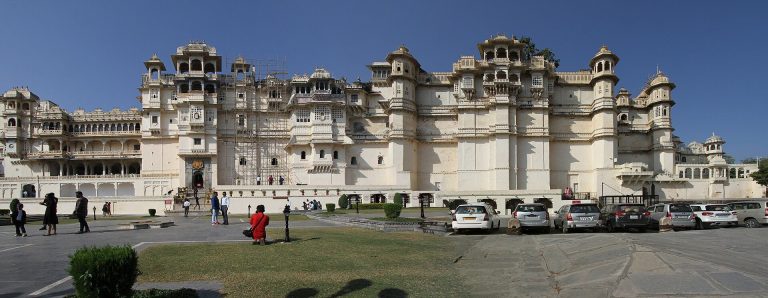
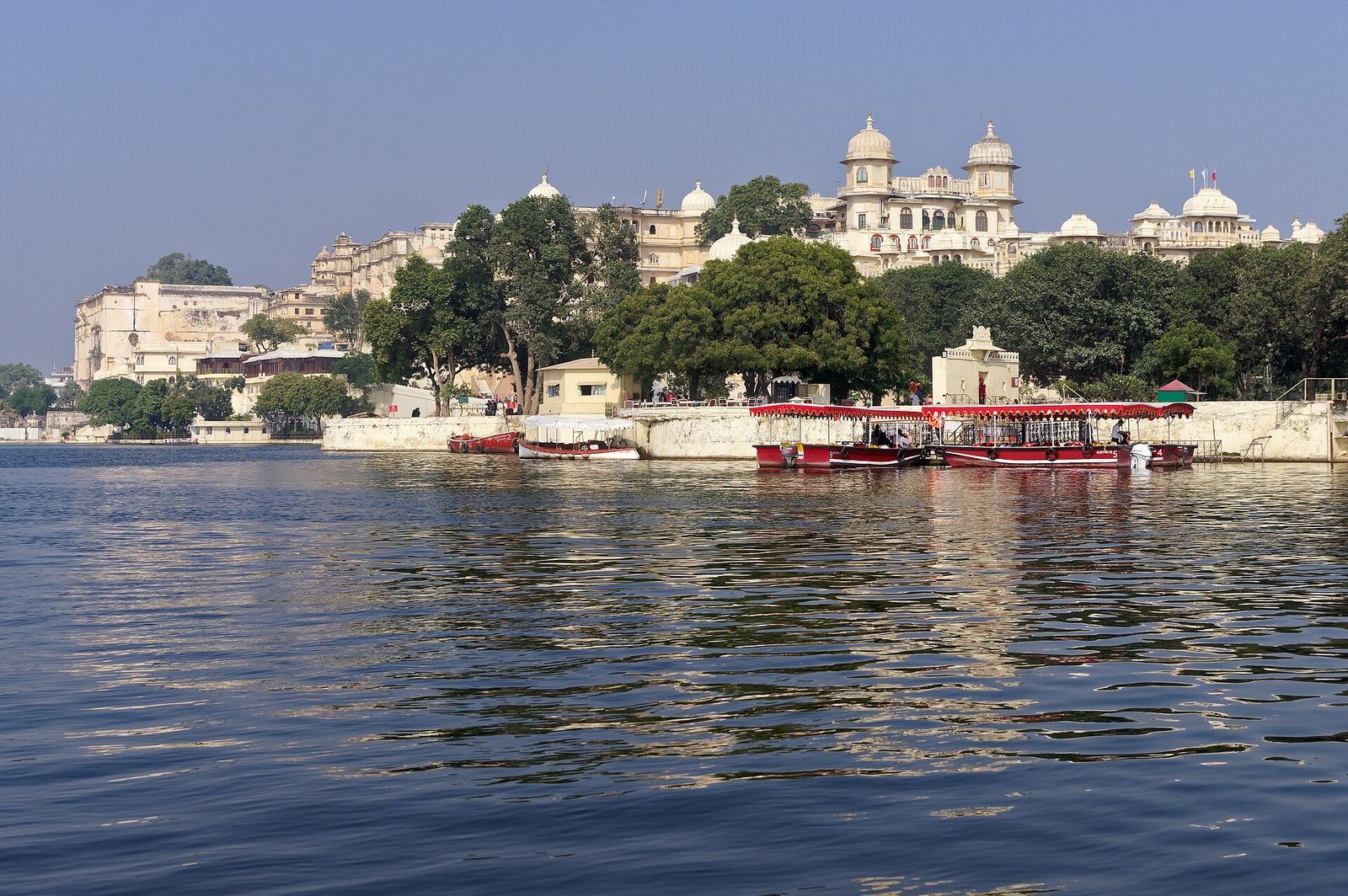
Shiv Niwas Palace is a Rajput-style royal residence and guesthouse on the bank of Lake Pichola, within the City Palace complex in India. It was built for the Maharana of Mewar, a historic kingdom in present-day Rajasthan. Work began under Sajjan Shambhu Singh, a Maharana, or ruler of Mewar, who reigned from 1874 to 1884. His successor, Fateh Singh, completed the palace in the early 20th century as a royal guesthouse.
The palace hosted royal gatherings and visiting dignitaries, including George V in 1905 and Edward, Prince of Wales.
Conversion to a hotel
After Bhagwat Singh succeeded to the throne of Mewar in 1955, maintaining the royal family’s many residences, especially City Palace, became increasingly difficult. Having turned Lake Palace into an income-generating hotel, he decided to convert Shiv Niwas and the smaller Fateh Prakash Palace into luxury heritage hotels.
Shiv Niwas opened as a hotel in 1982 after a four-year conversion.
Remains
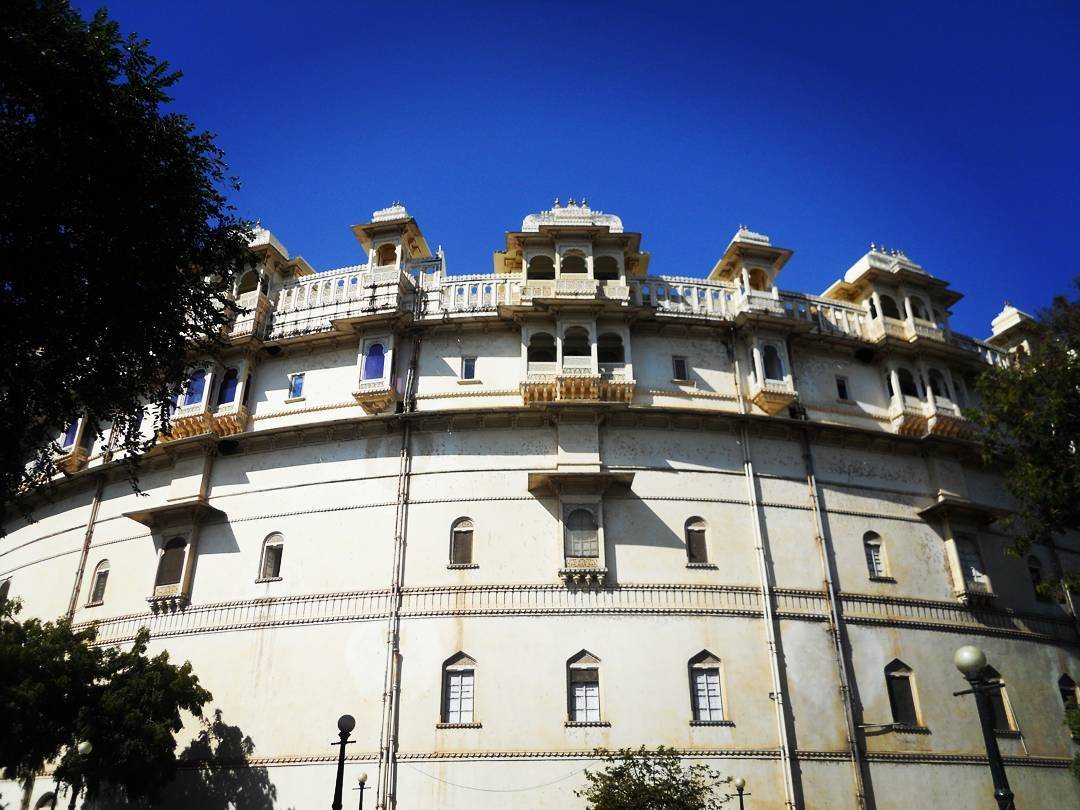
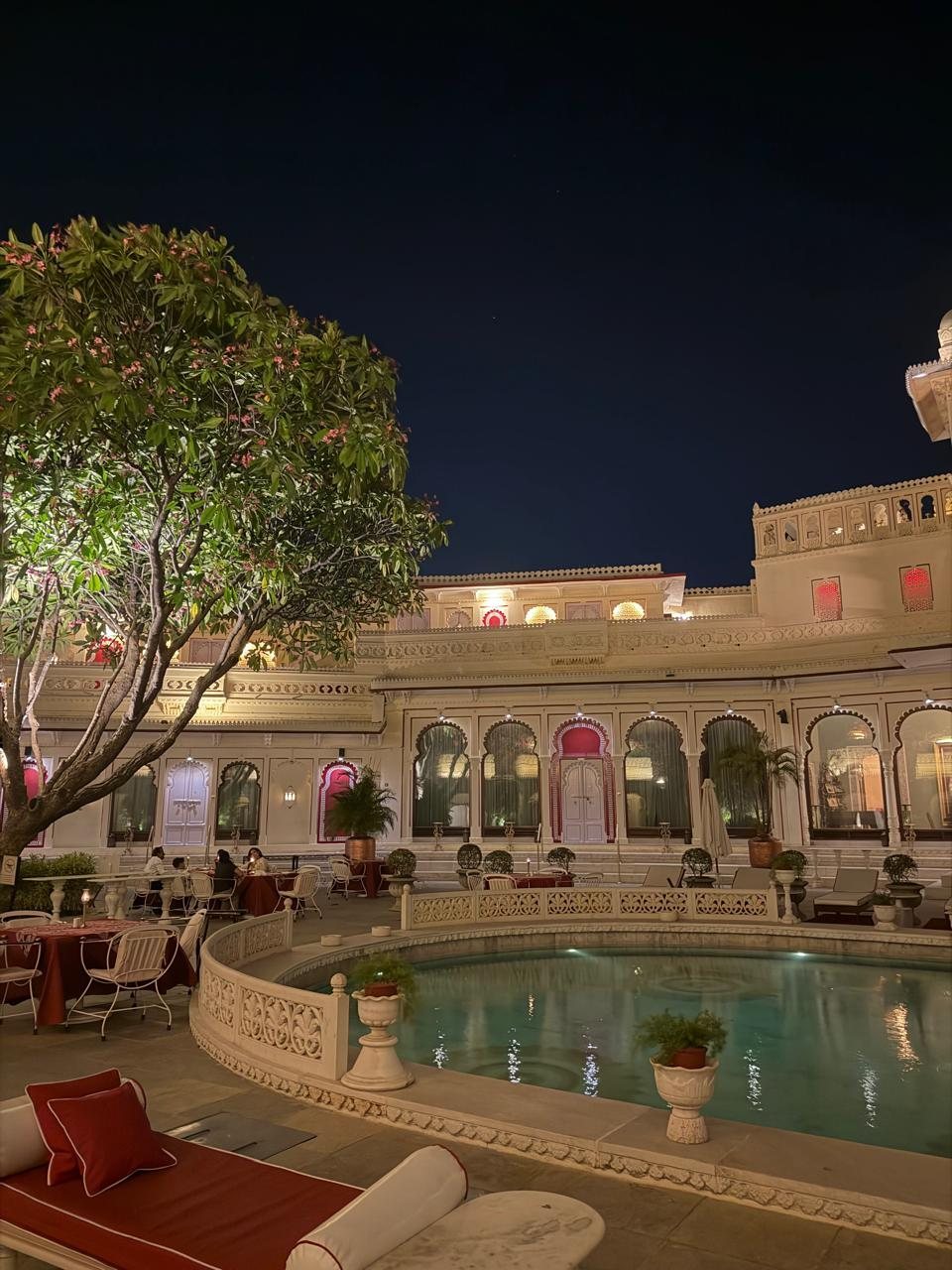
The palace rises over three levels, with its plan forming a semicircular arc around an inner courtyard.
Courtyard and outlook
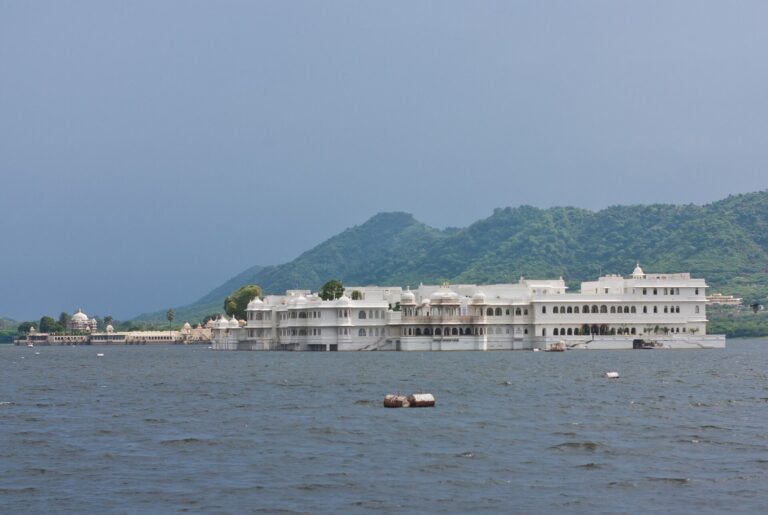
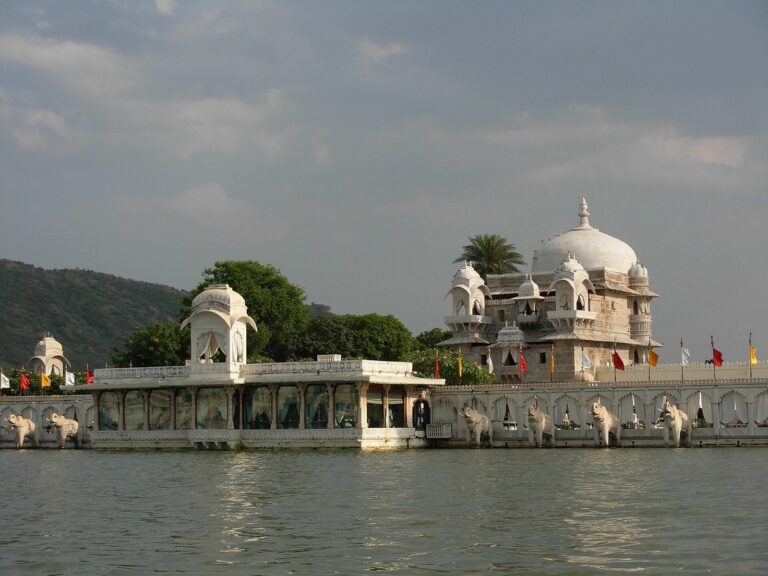
A marble pool stands at the center of the courtyard. Balconies and rooftop terraces opening from the rooms afford views south toward gardens below Lake Pichola’s dam wall and west toward the island resorts of Jag Mandir and the Lake Palace.
Guest rooms
The palace originally had nine suites, all on the ground floor. During its conversion to a hotel, eight apartments were added in a new second storey. The hotel now has 36 guest rooms.
Decorative interiors
The interiors include ivory and mother-of-pearl inlay, which sets iridescent shell into a surface, glass mosaics made from small pieces of glass, and frescoes painted on wet plaster. A Maharana sent the decorative artists Khaja Ustadh and Kundan Lal to England to learn glass-mosaic design and study fresco painting. They made many of the palace’s decorative works.