Shinsen-en: An Imperial Garden and Tō-ji Buddhist Temple in Kyoto


Site at a Glance
- Rating
- 4.3
- Popularity
- Medium
- Country
- Japan
- Primary era
- Early Modern
- External website
- Open
- Eras represented
- Medieval, Early Modern, Modern
- Civilizations
- Japanese, Tokugawa
- Site type
- Religious
- Remains
- Sanctuary
On this page12 sections
History
Shinsen-en is a Buddhist temple in Kyoto, Japan, belonging to the Tō-ji branch of Shingon Buddhism and dedicated to Shō-Kannon, a form of the Buddhist bodhisattva associated with compassion. It began as an imperial garden constructed beside the southern side of the Heian Palace when Heian-kyō, the imperial capital, was established in 794 during the Heian period. Created under Emperor Kanmu, the garden became a place of court ceremony, religious observance, and recreation before developing into a Tō-ji-affiliated temple.
The Imperial Garden
The original garden centered on a large pond formed from what is thought to have been a remnant of the ancient Yamashiro Lake. Its grounds extended from Nijō-dōri to Sanjō-dōri, measuring approximately 500 meters from north to south and 240 meters from east to west. The garden’s name is first associated with Emperor Kanmu’s visit on August 12, 800. An elegant banquet was held there in 802, after which the grounds served imperial and courtly gatherings as well as leisure activities.
Emperor Saga held a flower banquet at Shinsen-en in 812. This event is regarded as the earliest recorded instance of cherry-blossom viewing. By the middle of the Heian period, the garden’s water was also being used for irrigation. The grounds were periodically cleaned and maintained as grassland because this work was believed to preserve the reputedly unfailing power of the water.
A Buddhist and Rainmaking Center
The traditional foundation date of the temple is 824, while its completion is also placed around 826. Kūkai, the monk who founded Shingon Buddhism in Japan and established Tō-ji as one of its principal centers, is traditionally regarded as Shinsen-en’s founder. During this period, Kūkai of Tō-ji competed with Morotoshi of Sai-ji in a rainmaking ritual. Kūkai was said to have summoned Zennyo Ryūō, a dragon deity associated with rain and water, from Anavatapta Lake in India and won the contest. Shinsen-en then became a rainmaking center under Tō-ji’s authority.
Religious ceremonies at the garden also responded to crises in the capital. In 863, a ritual intended to appease angry spirits was held during an epidemic. In 869, 66 sword-pikes representing the provinces of Japan were erected at the southern end of the garden, and portable shrines from Gion Shrine, now Yasaka Shrine, were brought there for a ceremony. This observance is traditionally regarded as the origin of the Gion Festival.
Decline and Medieval Restoration
A severe storm caused the garden to fall into ruin in 1180. During the Kenkyū era, approximately 1190 to 1199, Minamoto no Yoritomo restored its halls at the command of Prince Shukaku. The site declined again after the Jōkyū War, a conflict that ended with the defeat of Emperor Go-Toba’s supporters and strengthened the authority of the Kamakura shogunate. Hōjō Yasutoki subsequently restored Shinsen-en.
In 1333, Emperor Go-Daigo appointed Chikyōbō Sonkyō, a monk of Saidai-ji and an imperial aide, to supervise the restoration of Shinsen-en. Sonkyō established Chōfuku-ji at Sanjō-Ōmiya for this purpose, and management of the garden was entrusted to that institution. The pond and grounds later deteriorated again. By about 1459, ritual activity had ceased, fields had spread across the property, and dwellings associated with performers, outcasts, beggars, itinerant priests, and merchants occupied parts of the area.
The Karahashi family attempted to appropriate land outside the pond, but Tō-ji’s jurisdiction was upheld. In 1498, a priest of Chōfuku-ji was punished for cultivating the garden, and Tō-ji assumed direct management. Agricultural use nevertheless continued, as Tō-ji leased fields to townspeople for maintenance income.
Reduction and Temple Restoration
When Tokugawa Ieyasu constructed Nijō Castle in 1602, most of Shinsen-en’s northern land was incorporated into the castle. This greatly reduced the garden’s size. The Sacred Spring, the site’s water source, was also absorbed into the castle grounds and probably became part of the inner moat.
From 1607 through the Genna era, approximately 1615 to 1624, officials including Itakura Katsushige and Katagiri Katsumoto, together with a monk from Tsukushi, sought imperial permission to restore Shinsen-en as a Shingon temple. The temple was rebuilt under Tō-ji’s jurisdiction and received a land grant of 40 koku, a historical measure of agricultural yield, for its maintenance.
The restoration-era Tahōtō pagoda and other buildings were destroyed in the Tenmei Fire of 1788. Temple buildings were rebuilt over the following decades. The present Main Hall, known as Rishō-den, was transferred from Tō-ji in 1847 and installed on the site of a former fire-ritual hall. It houses the Shō-Kannon image made for the posthumous commemoration of Emperor Go-Kōmyō. The image’s halo and pedestal were made by Go-Kōmyō’s mother, Sono Kōshi.
Modern Recognition and Change
Shinsen-en was designated a National Historic Site in 1935, a Japanese heritage status for places of historical, archaeological, or cultural value. Its grounds also contain nationally protected cultural assets, including a wooden seated statue of Fudō Myōō, an esoteric Buddhist protector traditionally shown with a sword and rope. Shinsen-en Kyogen, a form of Buddhist comic theater, has municipal intangible folk-cultural-property status.
In 2014, commemorations of the 1,200th anniversary of the summoning of Zennyo Ryūō led to the first draining of Hōjōjō Pond in 55 years. This made it possible to dismantle and repair the main sanctuary of the Zennyo Ryūō Shrine and related elements. Tradition also identifies Shinsen-en as the place where Minamoto no Yoshitsune met Shizuka Gozen. The belief that Hōjōjō Pond gave its name to Oike-dōri remains uncertain, since no evidence has confirmed that the pond was historically called Oike.
The location of the present Kyogen Hall contained a temple kindergarten until the middle of the twentieth century. The kindergarten later closed as the number of children in central Kyoto declined. A restaurant that had occupied the area of the former Heian Hall left in 2022 after litigation, and its building was demolished, leaving the plot vacant.
Remains
The Pond and Garden
Shinsen-en originally consisted of a large garden with a pond, springs, streams, hills, and woodland. Hōjōjō Pond is the surviving central pond, and the pond and garden are described as the last surviving remnant of the original Heian Palace grounds and as Kyoto’s oldest existing garden. The surviving complex combines the pond and associated garden spaces with shrines, halls, gates, and worship structures that reflect the site’s transformation from an imperial garden into a temple under Tō-ji.
Former Imperial Structures
The northern part of the original garden contained an extensive palace complex. Its principal hall was Kenrin-kaku, accompanied by right and left pavilions, eastern and western fishing platforms, a waterfall hall, and a rear hall. The northern gate, called the Miyuki Gate or Imperial Visit Gate, adjoined the Heian Palace and was used by emperors.
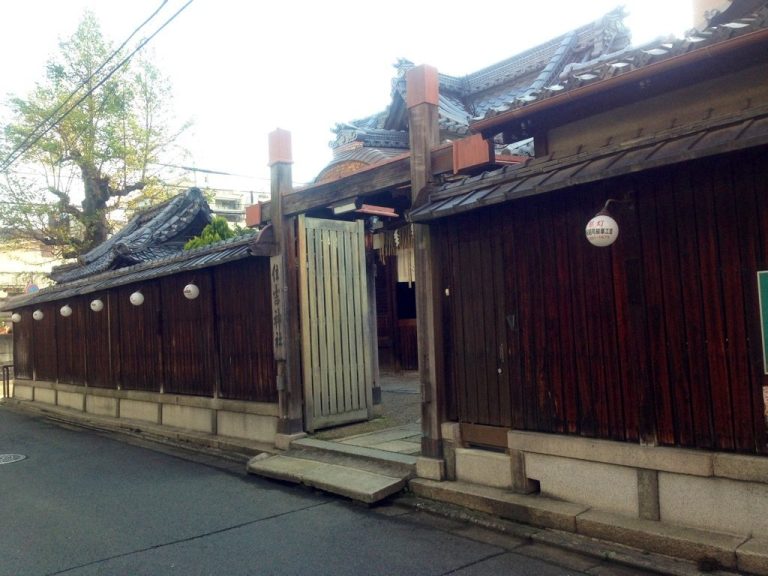
At the site of the former main gate, a torii erected in April 1908 now stands. Its tablet bears calligraphy by Prince Yamashina Akira. Shinkyō Pond and the remains of the former Heian Hall are also part of the complex. The area occupied by the former restaurant building became a vacant plot after the building was demolished in 2022.
Temple Halls and Abbot’s Quarters
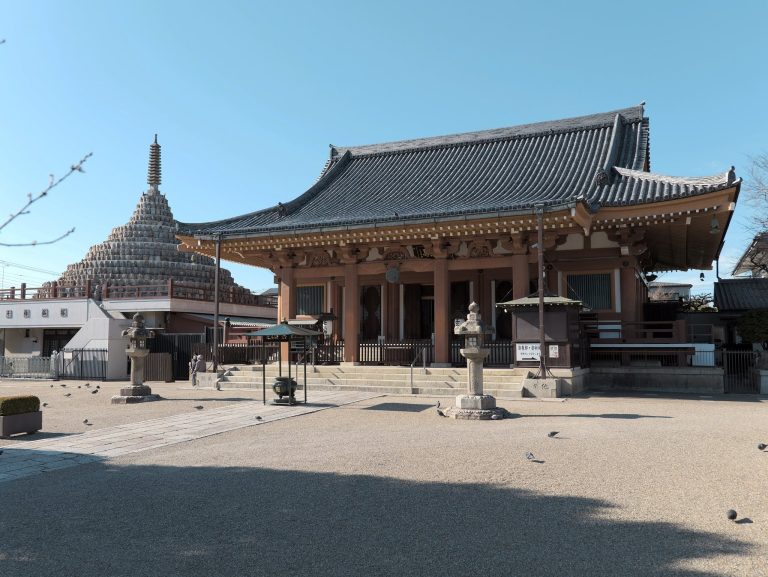
The Main Hall, or Rishō-den, was transferred from Tō-ji in 1847. It occupies the site of a former fire-ritual hall and contains the Shō-Kannon image associated with Emperor Go-Kōmyō’s posthumous commemoration. The abbot’s quarters, Rinsen-kaku, also serve as the temple kitchen. They were transferred from Shuchi-in University.
Shrines and Religious Features
The main sanctuary of the Zennyo Ryūō Shrine was rebuilt in 1813 and repaired in 2013. Its worship hall, middle gate, and prayer structure were also remodeled in 1813. Eho Shrine enshrines Toshitoku-jin. Its small shrine is turned each New Year’s Eve to face the auspicious direction for the coming year, an arrangement described as unique in Japan.
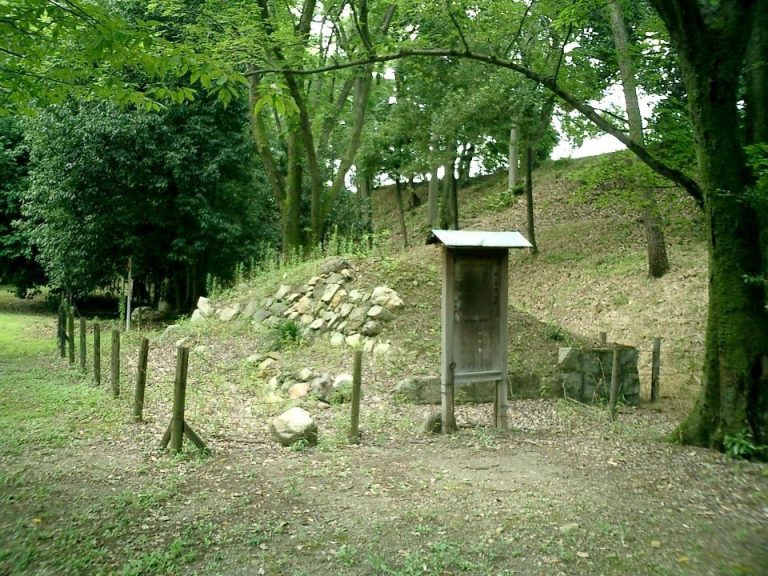
The grounds also include Tenmangū and Yaken Daimyōjin Shrine, which enshrines Yaken Daimyōjin and an Inari deity. Bentendō houses Masu-un Benzaiten, a deity associated especially with water, music, eloquence, and prosperity. A stone marker south of Nijō Castle indicates the former eastern boundary of Shinsen-en. That boundary was identified during construction work connected with the Kyoto Municipal Subway Tōzai Line.
Performance and Bell Structures
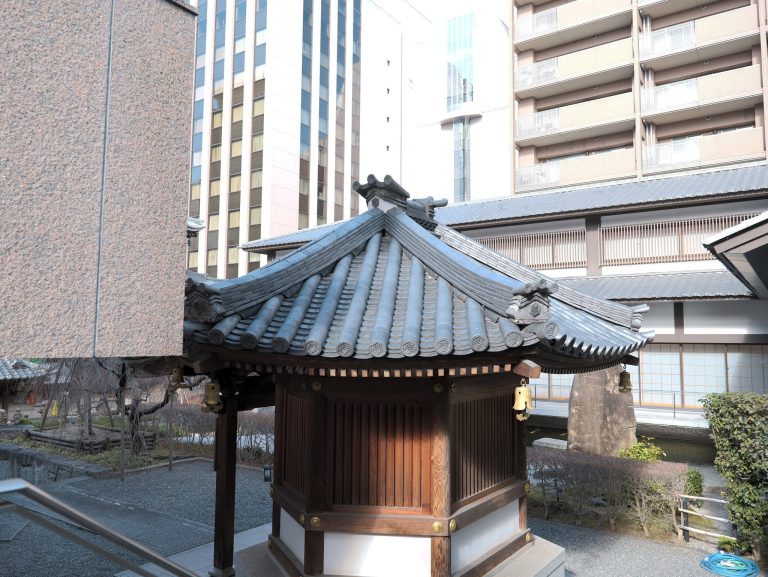
The Kyogen Hall was built in the late Meiji period. It is used for Shinsen-en Kyogen, also known as ōnenbutsu kyogen, a form of Buddhist comic theater. The Bell Tower was built in the early Edo period, and its roof was repaired in March 2012. Its bronze bell was cast in 1646 by a bell founder of Kamaza.
The southern end of the garden preserves the historical location associated with the 66 sword-pikes erected in 869. Together with the central pond, surviving halls, shrine buildings, gates, and garden spaces, these features express the changing physical organization of Shinsen-en from imperial grounds to a Buddhist temple.