Sherwana Castle: A 19th-Century Kurdish Fortress in Kalar, Iraq
Visitor Information
Google Rating: 4.4
Popularity: Low
Official Website: garmiyan.com
Country: Iraq
Civilization: Ottoman
Site type: Military
Remains: Castle
History
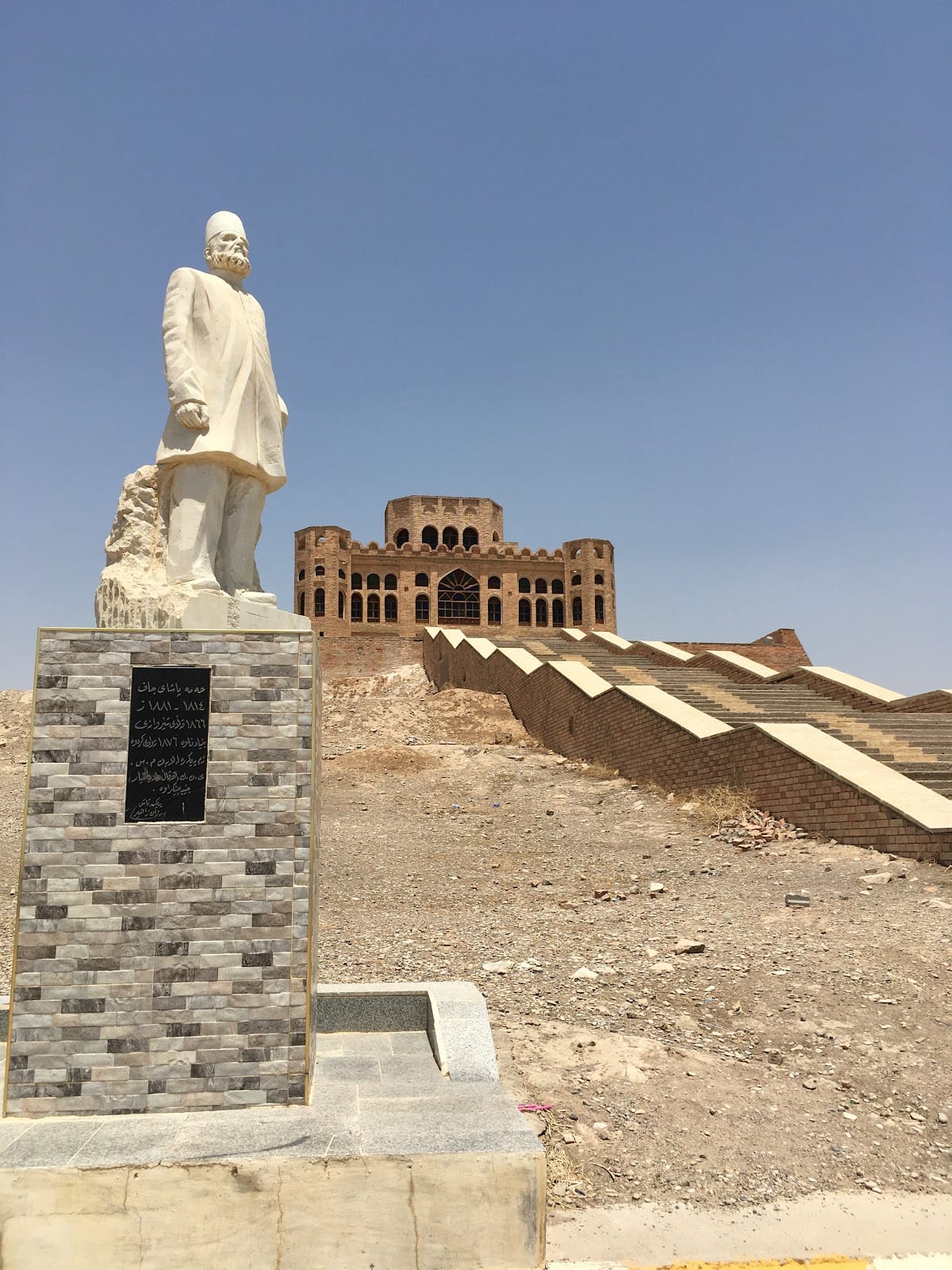
Sherwana Castle is located in the municipality of Kalar in modern-day Iraq. It was built in the 19th century by the Kurdish Jaff tribe under the leadership of Mohamed Pasha Jaff, who was appointed as a pasha by the Ottoman Empire. Constructed in 1866 on the banks of the Shirwan River, the fortress was established primarily to defend the Jaff tribe against rival groups, with notable opposition from the anti-Ottoman Hemevand tribe.
The castle’s political importance grew during the mid-1800s as the Jaff tribe expanded its influence. In 1868, Mohamed Pasha Jaff received official recognition from Suleiman Pasha, the Mamluk governor (Vali) of Baghdad, which underscored the castle’s role as a center of power and administration for the Jaff leadership under Ottoman rule. During World War I, while the region witnessed numerous conflicts, Sherwana Castle was notably spared destruction by British forces due to their favorable relations with the Jaff tribe, unlike many other Kurdish fortifications.
In the late 20th century and early 21st century, the castle experienced damage through various events: military clashes in the 1990s, heavy rains in 2014, and a significant earthquake in 2017 that caused partial collapse of its cupola and damaged around 35% of the structure. Recognized as a historic monument during Saddam Hussein’s regime, Sherwana Castle has remained under the custodianship of the Jaff family. Restoration initiatives began in 2018 and proceeded through 2022, with support from international preservation efforts intended to repair the extensive cracks and structural weaknesses caused by natural disasters.
Remains
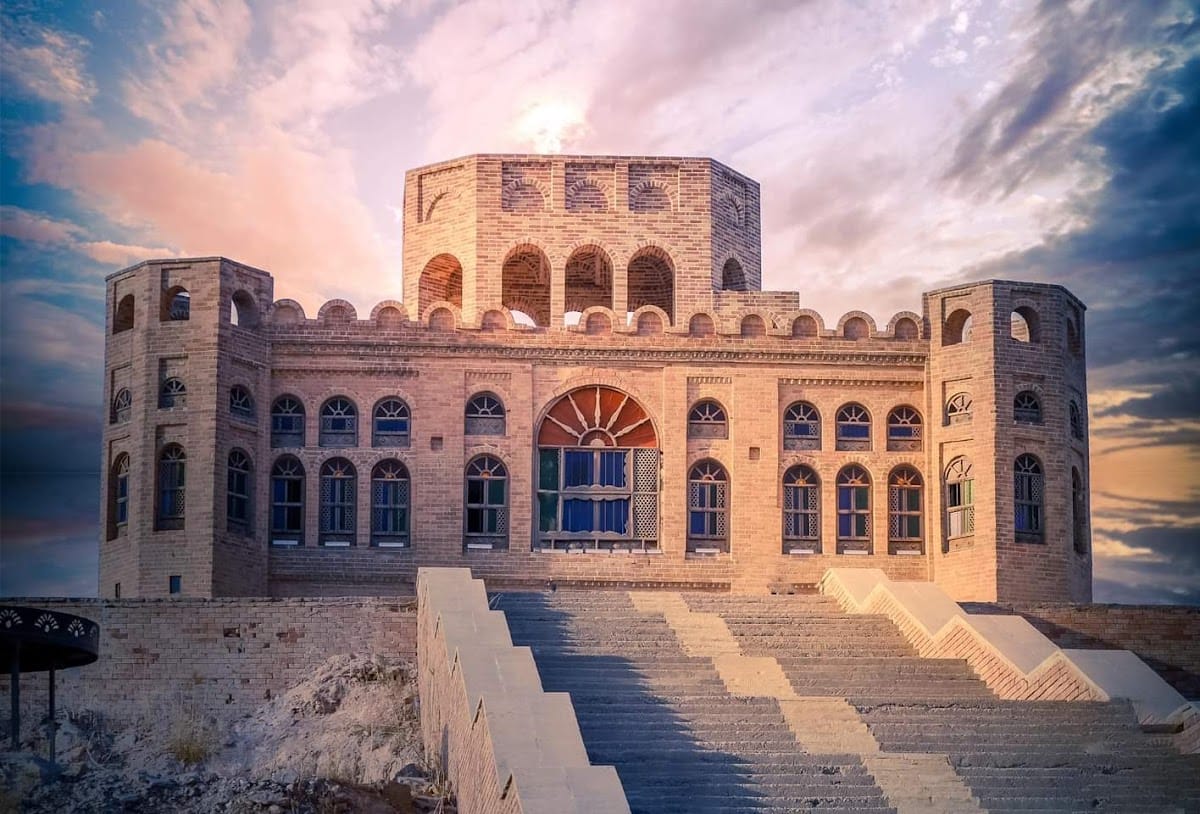
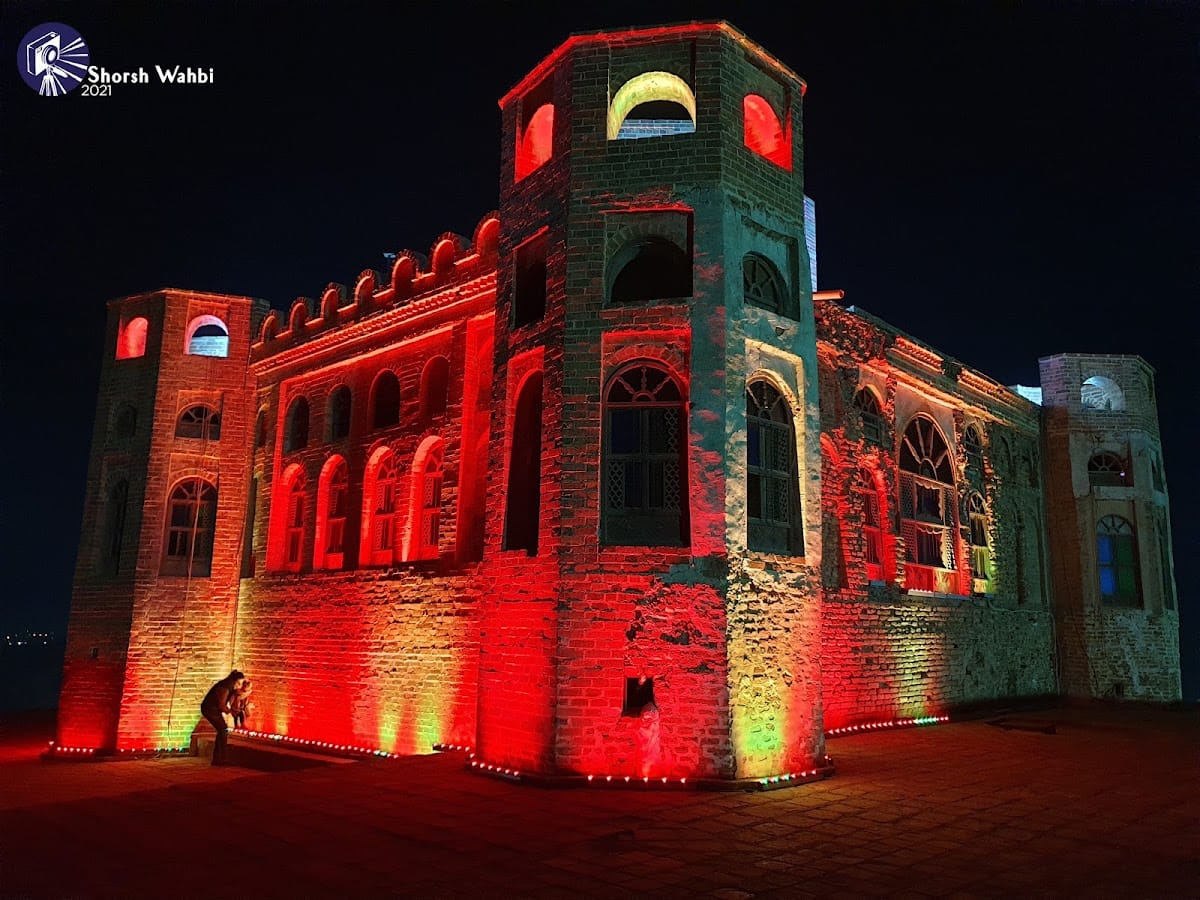
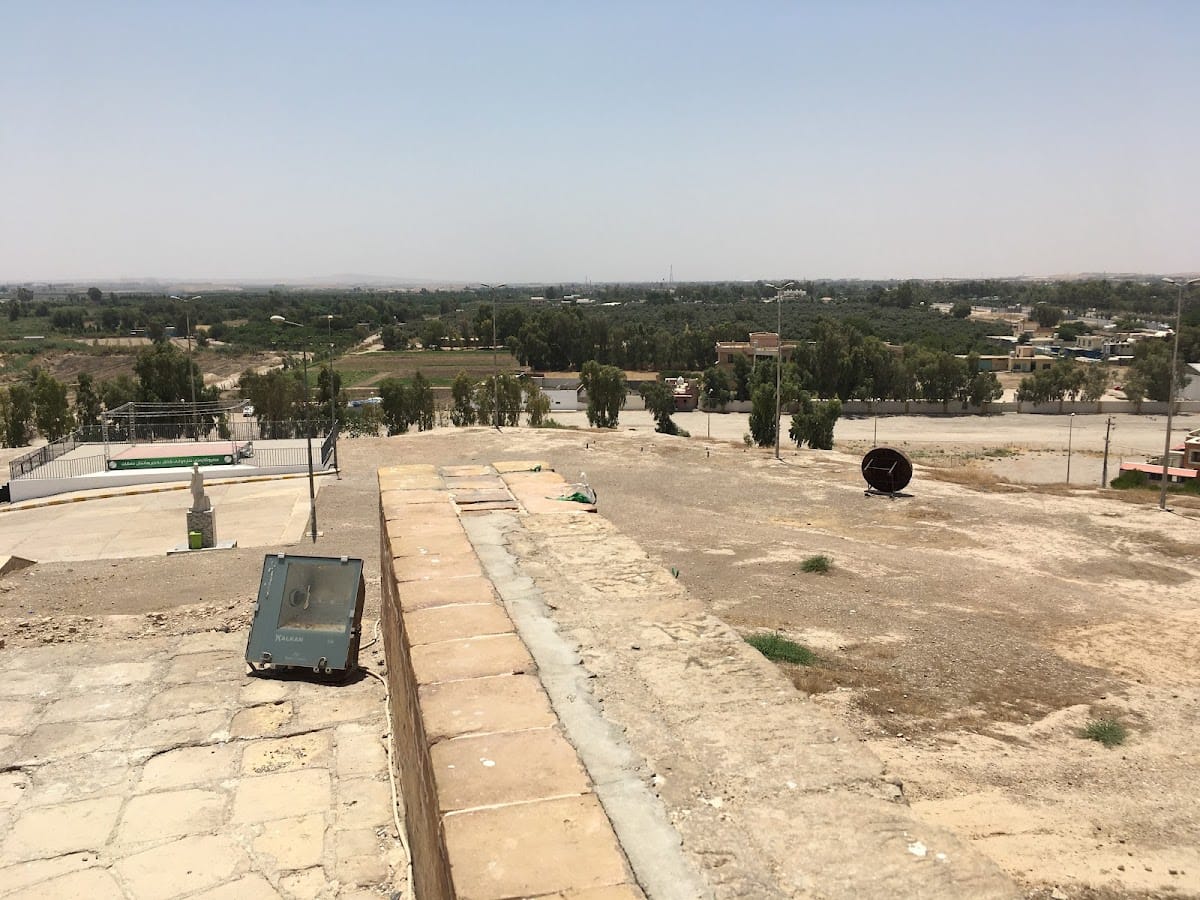
Sherwana Castle is positioned on a small hill northeast of Kalar, occupying close to 400 square meters. The structure is two stories tall and constructed mainly from sun-dried bricks, stone, gypsum, plaster, and wood for doors and window frames. Its layout centers on an octagonal main hall and includes a museum that preserves parts of the castle’s heritage. The castle is fortified with four corner towers, each featuring three windows; the highest windows in these towers remain without glass intentionally, allowing rifle placement for defensive purposes.
The castle’s single main gate is situated on the front facade beneath a large arched window that is flanked by two additional arched windows. This entrance is reached by a set of eight staircases, each staircase containing nine steps, highlighting a designed symmetry. Surrounding the entrance are three narrow, elongated arched windows on each side, with an extra three windows positioned higher up on the front wall. The rear entrance mirrors this design, incorporating four narrow windows per side and four smaller windows near the top.
The roof exhibits a four-sided design with six windows on each side and two hexagonally protruding windows at each corner. The roofing style reflects Persian architectural influence, visible in the distinctive wavy finishes along the edges. Inside, the castle is predominantly white and features multiple rooms with series of arches that were originally intended to hold decorative vases and tea sets. There are three main halls within the building; the second hall includes a resting space adjacent to large windows overlooking the city of Kalar. The upper floor primarily serves as storage, maintaining the building’s practical function alongside its residential and defensive roles.
Overall, the walls measure approximately 19.35 meters along the front, 15.40 meters on the right side, 15.20 meters on the left, and taper to 5.18 meters at the rear, with notable variation in height from about 7.95 meters at the front to 7 meters at the back. The castle has undergone multiple restorations, including three extensive renovations before 2017 and an ongoing fourth restoration spearheaded by Dutch conservation groups as of late 2022, following damage from the earthquake and environmental wear. These efforts aim to preserve Sherwana Castle as a significant historical site, retaining its original materials and architectural features as much as possible.