Shahshahan Mausoleum: A Timurid Mausoleum and Religious Gathering Place in Isfahan
Site at a Glance
- Popularity
- Medium
- Country
- Iran
- Primary era
- Medieval
- Eras represented
- Medieval, Early Modern, Modern
- Civilizations
- Safavid, Timurid
- Site type
- Religious
- Remains
- Tomb
On this page9 sections
History
The Shahshahan Mausoleum is an Islamic mausoleum and hussainiya, a gathering place for observances honoring Husayn, the grandson of Muhammad, in Isfahan, Iran. Sultan Muhammad ibn Baysunghur commissioned it over the grave of Shah Alaeddin Muhammad, and construction was completed around 1448–49 during the Timurid period. The Timurids, a dynasty founded by Timur, ruled much of Iran and Central Asia. The mausoleum gave its name to Shahshahan quarter in northern Isfahan and continues to function as a place of burial.
Foundation under the Timurids
Shah Alaeddin was a Sufi religious guide and a prominent Sayyid, a person regarded as descended from Muhammad’s family. His father, Shah Qutb al-Din Muhammad, headed the Shahshahani and Shah Alai families. Shah Alaeddin’s lineage was traced through 24 intermediaries to Ali ibn Abi Talib. He held the office of naqib al-nuqaba, a senior position overseeing Sayyids and their representatives, as well as serving as a religious guide. He was also known as Shahshahan.
After Shah Rukh’s forces captured Isfahan, Shah Alaeddin was arrested and sent into exile in Saveh. Shah Rukh ordered his execution by hanging on 11 December 1446, accusing him of supporting Sultan Muhammad’s rebellion. Shah Rukh’s wife, Goharshad, is said to have urged the execution. Shah Rukh died about 80 days later. Sultan Muhammad returned to Isfahan, brought Shah Alaeddin’s body from Saveh to the old Hosseiniyeh neighborhood, where his Sufi lodge had stood, and ordered the mausoleum built over the grave.
Endowments and dynastic records
After the mausoleum was completed, Sultan Muhammad endowed the villages of Esfehanak and Darzian in the Kararag district and Valasan in Fereydan for its upkeep. The properties consisted mainly of farmland and orchards. Their income was intended to pay for maintenance and repairs and to help poor people. Prominent scholars, including Jalal al-Din Dawani, approved the endowment deed; Sheikh Baha al-Din Muhammad al-Amili and other Safavid-era figures later endorsed it.
The properties became the subject of disputes and renewed confirmations under successive rulers. An order by Yaqub Beg Aq Qoyunlu assigned Valasan to the mausoleum’s trustee, and a later confirmation upheld the endowments of all three villages. Rustam Beg Aq Qoyunlu gave Esfehanak to his tutor, but a religious-court proceeding and a subsequent decree by Rustam Beg returned the property to the trustee. Under Safavid rulers Shah Ismail I, Shah Tahmasp, and Shah Abbas I, decrees addressed appointments held by members of Shah Alaeddin’s family, including the offices of naqib al-nuqaba, chief judge of Isfahan, and sadr, a senior religious-administrative official.
Documents about the mausoleum and Shah Alaeddin’s family remained in the collection of his descendant Hossein Shahshahani. French scholar of Iran Jean Aubin examined them and introduced them in publications issued in 1955.
Safavid and modern repairs
During Shah Abbas I’s reign, a benefactor named Khanum Sultan repaired the mausoleum. She had planned to be buried there but was instead transferred to Mashhad.
In the mid-twentieth century, Hossein Shahshahani and his brother Morteza supervised further repairs and restoration. Hossein recovered income from endowed properties that had been misused and arranged for Esfehanak’s revenue to fund major work. A religious school and a health centre were established beside the mausoleum; the clinic supplied free medicine to more than 60 poor people a day. Hossein was later buried in the mausoleum. The complex was added to Iran’s National Heritage List in 1949.
Remains
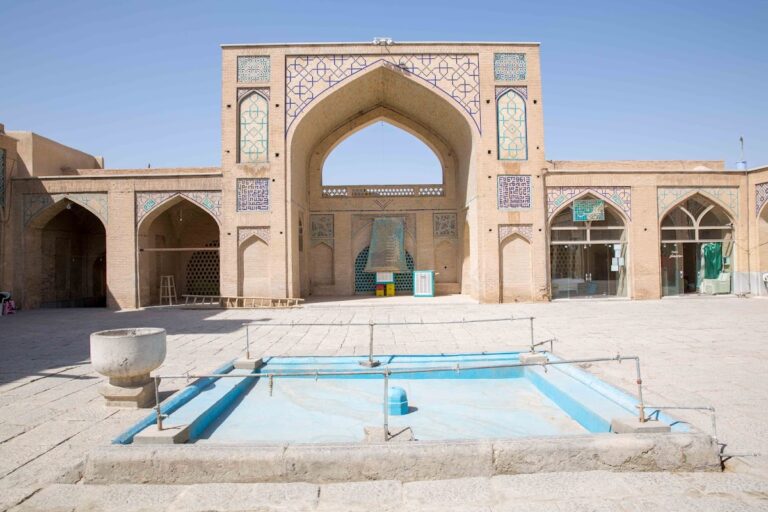
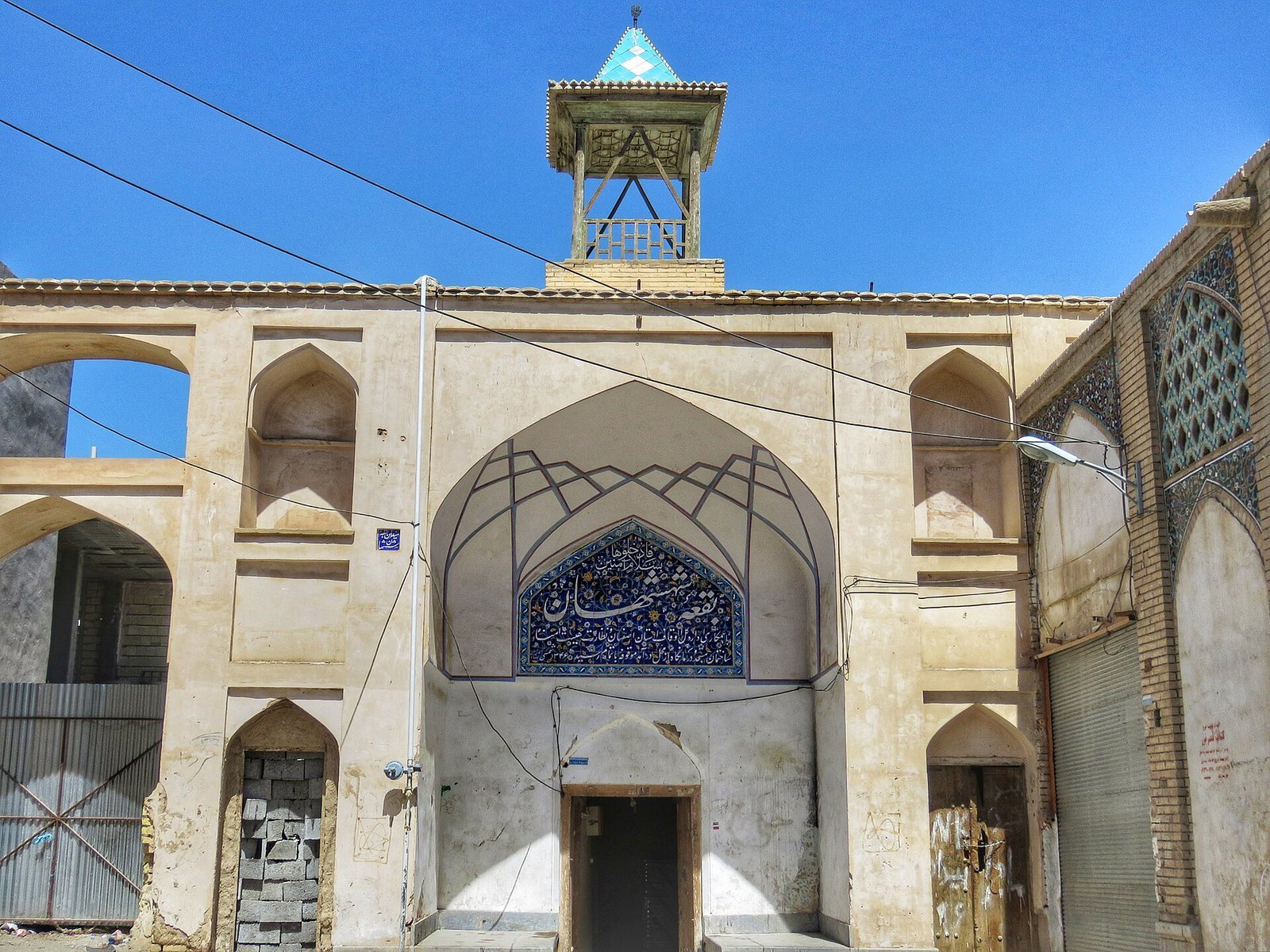
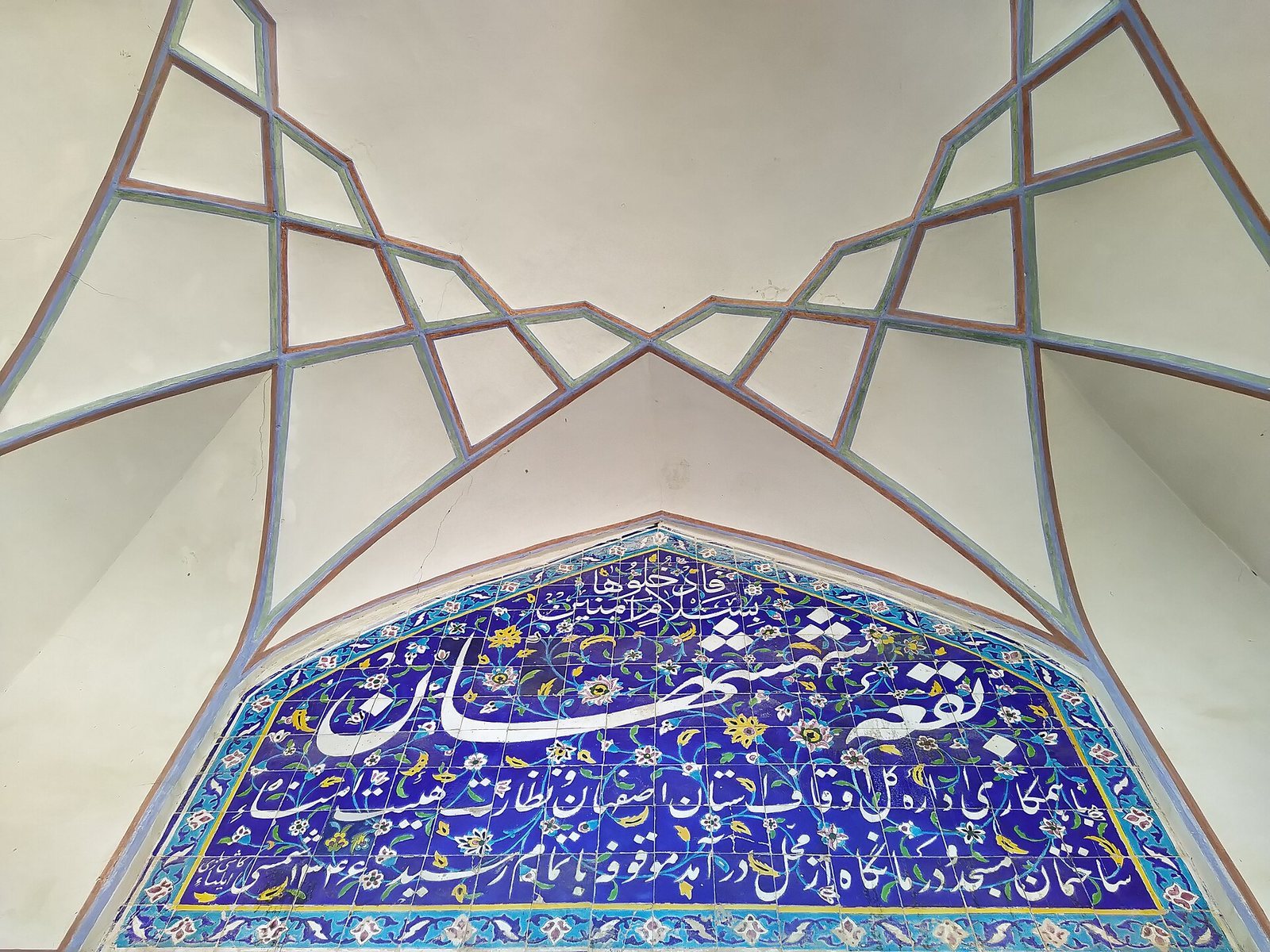
The complex combines a burial building with a hussainiya. Its surviving features include a single dome, decorated wall surfaces, inscriptions, and a western porch with mosaic tilework. The mausoleum also contains the graves of Shah Alaeddin’s children.
Building and surface decoration
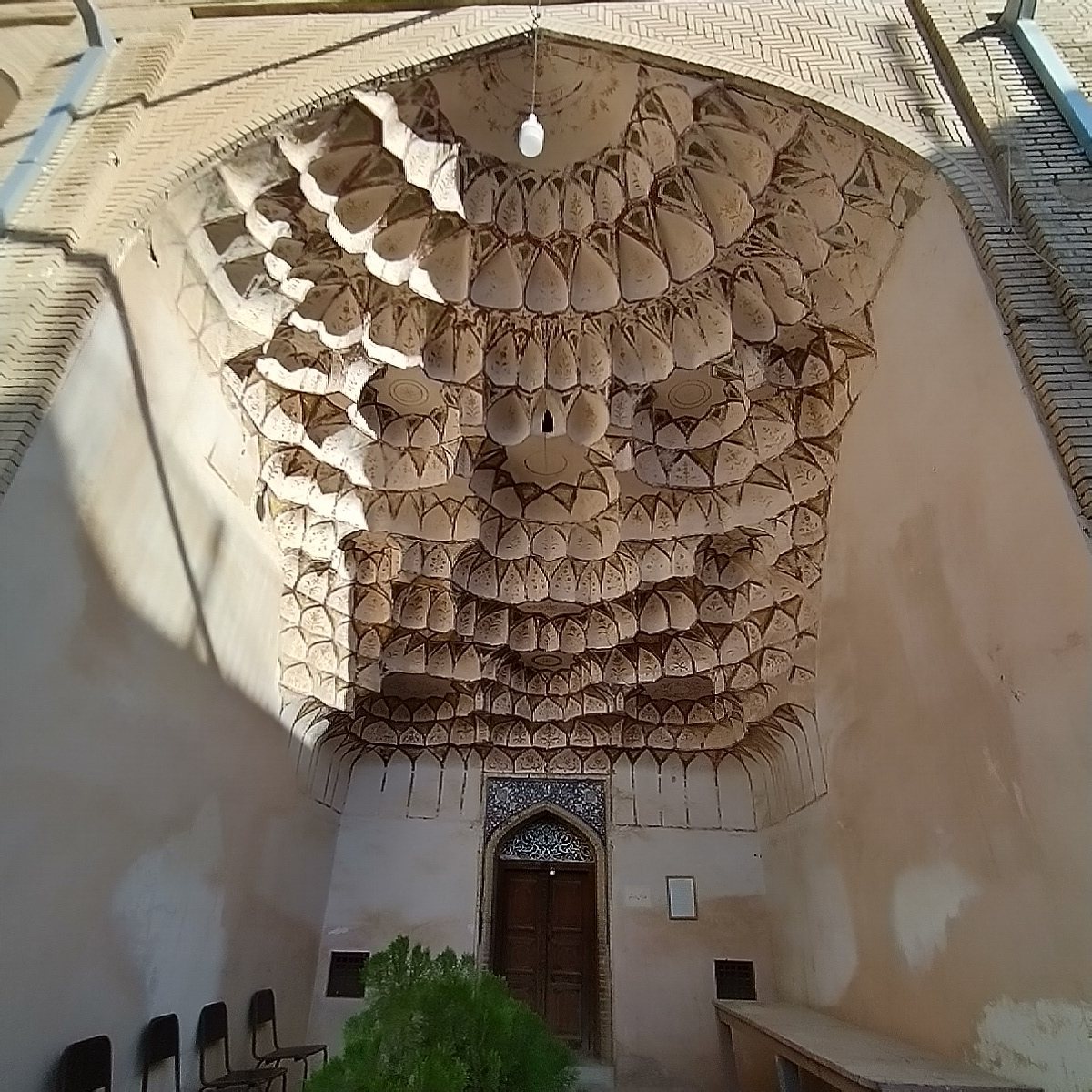
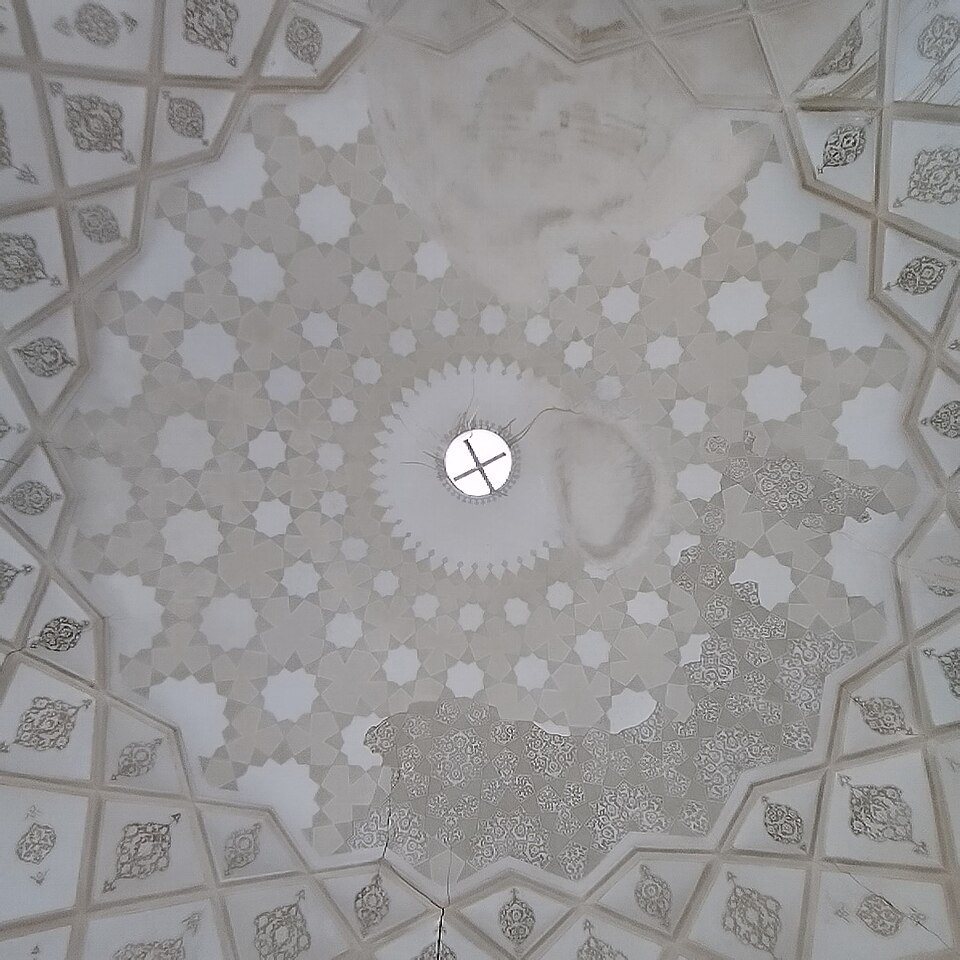
The mausoleum’s single dome had deteriorated severely and was described as nearly half destroyed before it was rebuilt during modern restoration. It remains without its tile covering. Plasterwork and tilework decorate the building’s interior and exterior, while hexagonal tiles form a pattern along the lower wall sections.
Exterior inscriptions
An inscription in Kufic, an angular style of Arabic calligraphy, runs around the mausoleum and repeats the words “Peace upon the family of Ya-Sin.” Another inscription, in thuluth, a broad, flowing style of Arabic calligraphy, comprises fourteen verses about Shah Alaeddin’s family line and execution. It bears the signature of Seyyed Mahmood Naghash, a calligrapher associated with Isfahan in the fifteenth century.
Interior decoration and inscriptions
A five-line plaster inscription on the north wall records repair work by Khanum Sultan. A separate mosaic-tile inscription inside the building, dated to the early eleventh century of the Islamic calendar, also concerns repairs. On the east wall, verses by the thirteenth-century Persian poet Saadi are written in white nasta’liq, a flowing style of Arabic-script calligraphy. The lettering outlines a vase against pale green plaster.
Porch and entrance
The western porch retains fine mosaic tilework attributed to the fifteenth century. The tile artisan’s name appears in white nasta’liq lettering against a lapis-blue ground. Above the entrance on the east side, three lines of Saadi’s poetry are now barely legible. A pair of carved wooden doors made in Isfahan and modeled on older doors was installed at the entrance in the mid-twentieth century. The doors carry raised black thuluth lettering, and another set of carved doors stands behind them.