Senez Cathedral: A Provençal Romanesque Cathedral in France


Site at a Glance
- Rating
- 4.1
- Popularity
- Very Low
- Country
- France
- Primary era
- Medieval
- Eras represented
- Medieval, Early Modern, Modern
- Civilizations
- County of Provence, French, Holy Roman Empire
- Site type
- Religious
- Remains
- Cathedral
On this page14 sections
History
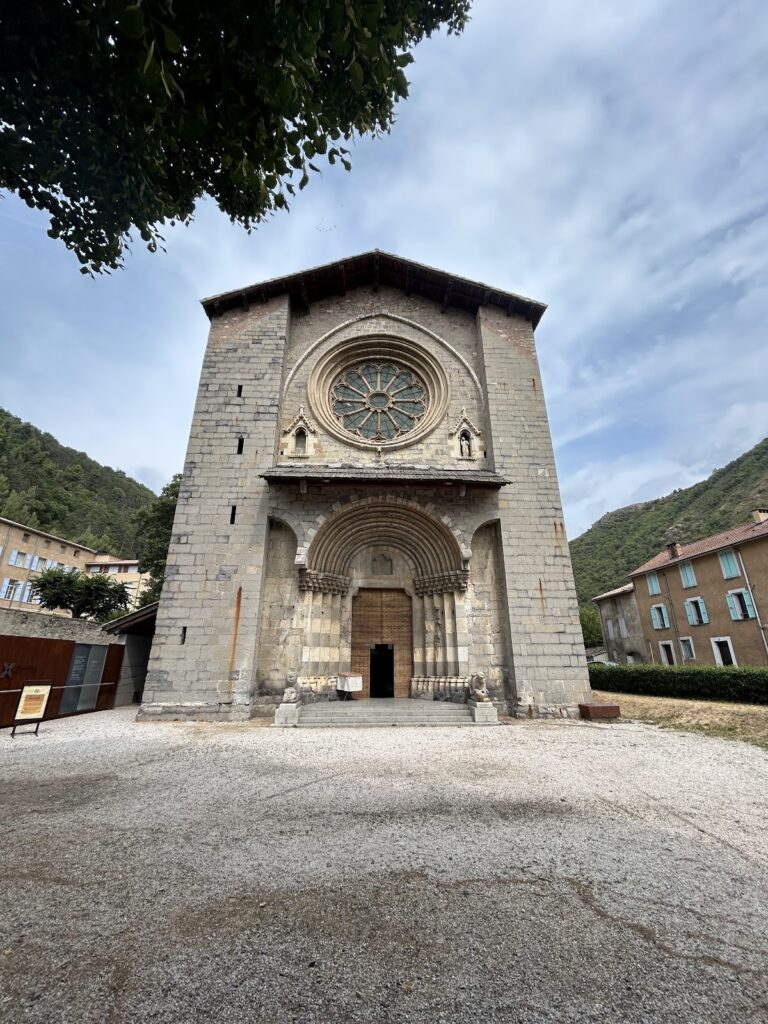
Senez Cathedral is a Provençal Romanesque church in Senez, France, whose construction began in May 1176 and continued through the thirteenth century. Romanesque architecture was a medieval tradition marked by substantial masonry, rounded arches, and heavy structural forms. Built on the site of several earlier churches, the cathedral reflects Senez’s long role as an episcopal center.
Early episcopal history
Senez was the ancient Sanitium, the chief town of the Civitas Sanitiensium, and had been the seat of a bishopric since the sixth century. The earliest known bishop was Marcel, who took part in the Council of Arles in 506. This major early Christian council met at Arles in southern Gaul. Wars involving the Lombards, Saracens, and Franks repeatedly interrupted the recorded succession of bishops, which resumes with Bishop Peter I in 993. A cathedral was probably rebuilt at that time.
Construction and consecration
The present church was erected over the remains of earlier places of worship. Work began with the apse, the curved or polygonal end of the sanctuary, and later proceeded toward the nave during the thirteenth century. The cathedral was consecrated on 22 October 1246 by Bishop Guillaume III.
Destruction and restoration
The cathedral suffered severe damage during the French Wars of Religion, the conflicts between Catholics and Protestants that divided France in the sixteenth century. In 1569, Protestant forces led by Antoine de Mauvans destroyed the bell tower and the small columns of the portal. A fire in the middle of the nave consumed the church’s ceremonial ornaments, furnishings, and treasury. The cloister and the canons’ building were also destroyed during the occupation.
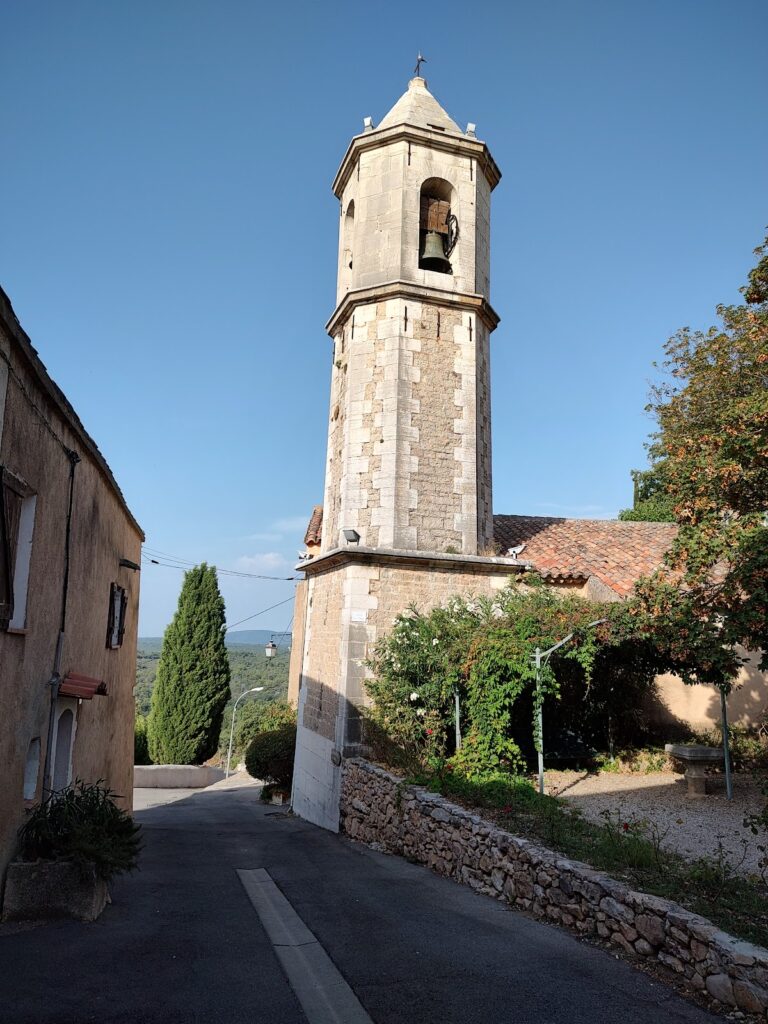
Bishop Jean III de Clausse de Monchy began restoration in 1572, including the installation of a roof structure over the vaults to prevent water from entering the building. Further major repairs were carried out in 1684 by the Senez masons Jean-Baptiste and François Isnard. A new bell tower was built in 1713. Bishop D’Amat de Volx later developed an embellishment plan, but his death prevented its implementation.
From cathedral to parish church
The church lost its cathedral status in 1790 and became a parish church. The Concordat of 1801, an agreement that reorganized relations between the French state and the Catholic Church after the Revolution, formally suppressed the Diocese of Senez and incorporated its territory into the Diocese of Digne.
The tapestries commissioned or produced at the request of Bishop de Ruffo Bonneval in 1783 and 1784 marked the completion of restoration work. Napoleon I admired them during his visit to Senez on 3 March 1815. Four of the five original Flemish tapestries were stolen in August 1982.
Nineteenth-century repairs and modern research
On 1 May 1835, the church-fabric council, the parish body responsible for administering and maintaining church property, reported the cathedral’s deteriorating condition to the Ministry of the Interior. The vaults collapsed on 4 July. The vaults over the first two bays of the nave were reconstructed between 1837 and August 1839 under the architect Rossi and the contractor Honoré Dufresne. The buttresses and corners of the building were also reworked. Henri Revoil criticized the results in a report dated 29 January 1882, while a small arcade belfry was added in 1847.
Senez Cathedral has been protected as a classified historic monument since 26 October 1910. Archaeological research led by Mathias Dupuis and his team began in 2012, producing new documentation about occupation of the site from the fourth century onward and about the church’s architectural and liturgical development. Since 2009, the church has also been the seat of the titular Bishop of Senez. A titular bishop holds the title of a former or non-governing diocese without ordinary territorial jurisdiction, preserving the identity of the suppressed diocese.
Remains
Senez Cathedral is a cruciform Provençal Romanesque church whose construction is organized from the apse toward the nave. Its facade is framed by lightly projecting buttresses, a feature associated with the first Romanesque style in Provence, where architectural forms were influenced by ancient art. The building also preserves furnishings, liturgical objects, tapestries, bells, and a dated sundial that record successive periods of use and repair.
Exterior and architectural form
The church’s cruciform plan provides its principal surviving spatial structure. The apse forms the eastern end of the sanctuary, while the nave represents the later direction of construction. On the west exterior wall, a sundial bears the date 1673 or 1674. It was repainted in 1784 and restored in 1999. Its design includes a bear, a reference to the name of Senez’s first bishop, Ours.
Interior furnishings and liturgical objects
Choir stalls
The choir stalls date from the sixteenth century and form part of the cathedral’s surviving interior furnishings.
Lectern and altar
The elaborately worked lectern and altar date from the seventeenth and eighteenth centuries, preserving furnishings associated with the cathedral’s later liturgical use.
Altarpieces and antiphonary
Two wooden altarpieces from the seventeenth century remain in the church, together with an eighteenth-century antiphonary. An antiphonary is a liturgical book containing antiphons and other sung texts used in Christian worship.
Tapestries
The cathedral contains one Flemish tapestry by Audemar of Enghien, dating from the late sixteenth century, and seven Aubusson tapestries from the late seventeenth century. Aubusson tapestries are woven wall hangings associated with the French town of Aubusson, a major center of tapestry production. The Audemar work belongs to the Flemish tradition of late-medieval and early-modern woven art.
Bells
The bells date from 1643, 1888, and 1894, representing different stages in the history of the cathedral’s bell installation and use.