Citadelle d’Entrevaux: A Frontier Fortress in France


Site at a Glance
- Rating
- 4.5
- Popularity
- Low
- Country
- France
- Primary era
- Early Modern
- External website
- Open
- Eras represented
- Medieval, Early Modern
- Civilizations
- County of Provence, French
- Site type
- Military
- Remains
- Citadel
On this page8 sections
History
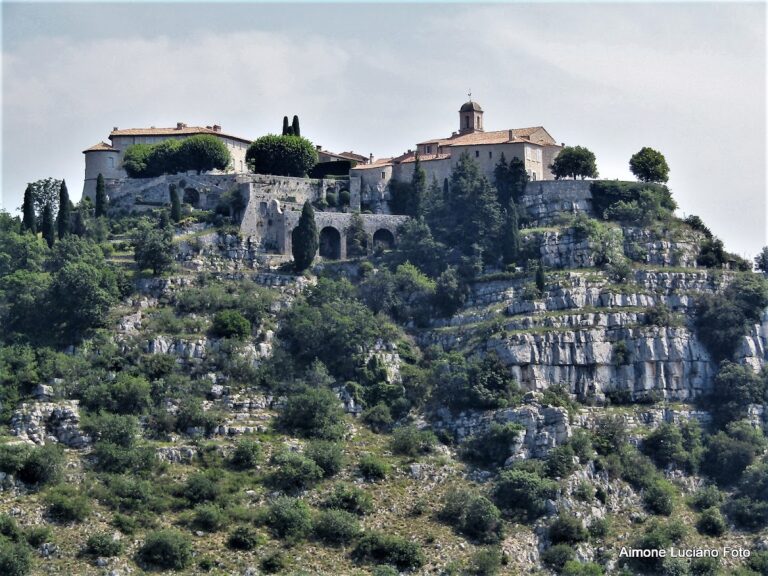
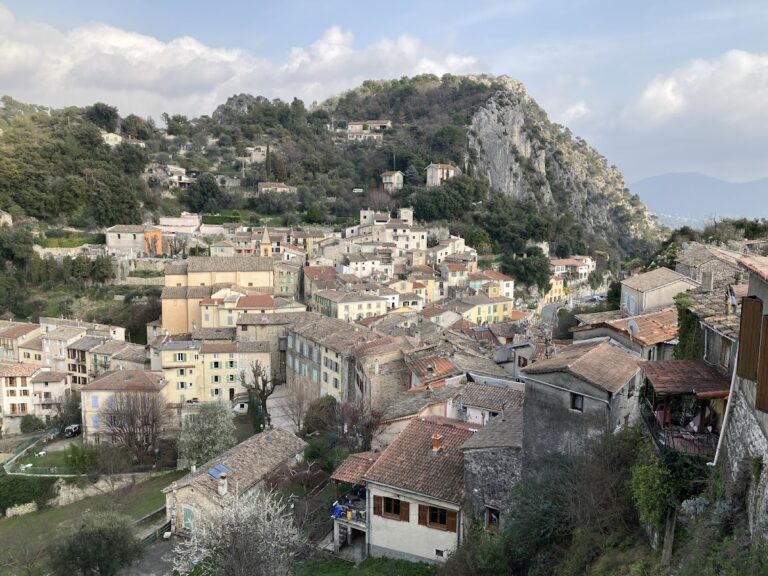
Citadelle d’Entrevaux is a fortified castle and citadel in France, overlooking the village of Entrevaux from a rocky spur. The settlement grew into a frontier stronghold between the County of Provence and Savoy, retaining a military role for roughly five centuries until the County of Nice became part of France in 1860.
From Glanate to a Defensible Settlement
A few years before the beginning of the Christian era, the city of Glanate was founded a short distance downstream from the present village. During the insecure medieval period, its population moved to the current citadel site, where the elevated position offered greater protection and could be fortified more effectively.
The Provençal barons of Glandevès became closely connected with the settlement and its fortunes became tied to the County of Provence. Entrevaux later stood on the frontier between Provence and Savoy, while the town and its citadel guarded the route toward the Var valley.
Revolt and Royal Privileges
In August 1536, during Charles V’s invasion of Provence, a Spanish army of 50,000 men captured Entrevaux. Charles V was a Habsburg ruler who was king of Spain and Holy Roman Emperor, and his conflict with Francis I of France included this campaign in Provence.
About a month after the occupation, the town rebelled. A local barber killed the Spanish governor while shaving him, and the raised drawbridges signalled a general revolt. The remaining inhabitants then killed the occupying troops inside the town and liberated Entrevaux.
After the territory was recovered in September 1536, the dauphin and later the king declared Entrevaux a royal town. A dauphin was the traditional title of the heir to the French throne. The settlement was also exempted from specified taxes, loans, services, and other obligations.
Strengthening the Fortress
In 1624, the citadel’s ramparts, or defensive walls and embankments, were strengthened under Richelieu, a leading French cardinal and statesman during the reign of Louis XIII. Between 1683 and 1702, Sébastien Le Prestre de Vauban reinforced the bastion and other parts of the fortifications. A bastion is a projecting defense that allows fire along the faces of adjoining walls.
During the War of the Spanish Succession, an early-eighteenth-century European conflict over the Spanish throne, the fortress resisted attacks by troops of the Duke of Savoy in 1704. Savoy was allied with the Austrian emperor during the conflict. Until 1860, the town, and especially the citadel, continued to guard the frontier toward the Var valley and gained a reputation as an impregnable stronghold.
End of Military Use and Protection
During the First World War, the fort housed German officers held as prisoners of war. This was its last military mission. The citadel was classified as a French historic monument in 1921 and 1937 and listed in 1927, recognizing the importance of its military history and architecture.
Remains
Fortifications
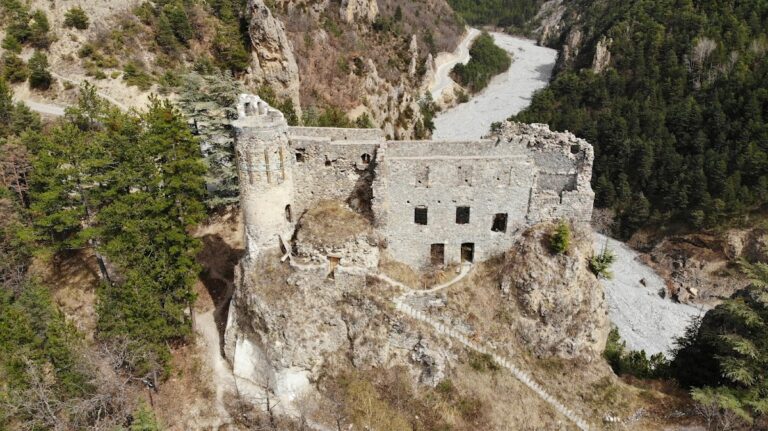
The citadel occupies the slopes of a rocky spur above Entrevaux, whose village lies within a meander of the Var River. Its surviving defensive system includes ramparts, a bastion, and drawbridges. The Pont de la Porte Royale, a royal gate bridge, forms an explicitly associated component of the citadel and helped control access to the fortified settlement.
Ascending Route
The only pedestrian route rising from the village extends for 800 metres. It is arranged in nine ramps and climbs 156 metres in elevation, linking the lower settlement with the citadel on the rocky heights.
Nearby sites