Seitenstetten Abbey: A Benedictine Monastery in Austria


Site at a Glance
- Rating
- 4.6
- Popularity
- Low
- Country
- Austria
- Primary era
- Early Modern
- External website
- Open
- Eras represented
- Medieval, Early Modern
- Civilizations
- Duchy of Austria, Habsburg, Holy Roman Empire
- Site type
- Religious
- Remains
- Monastery
On this page14 sections
History
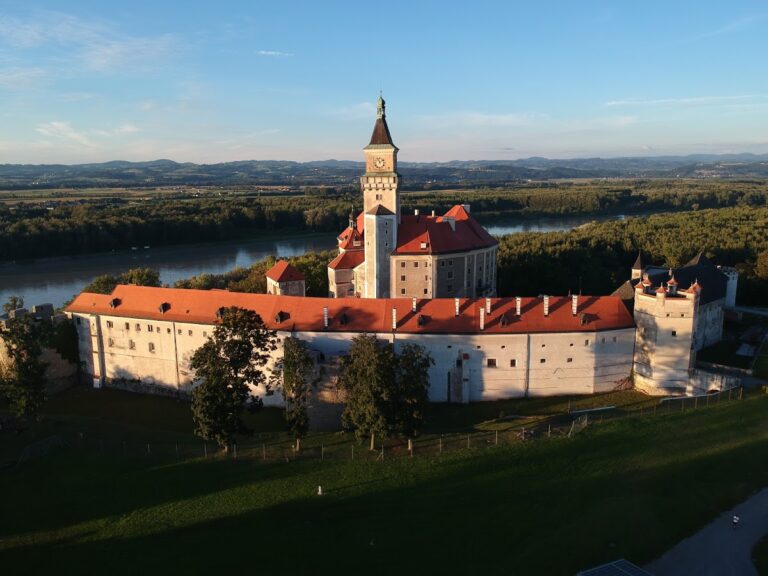
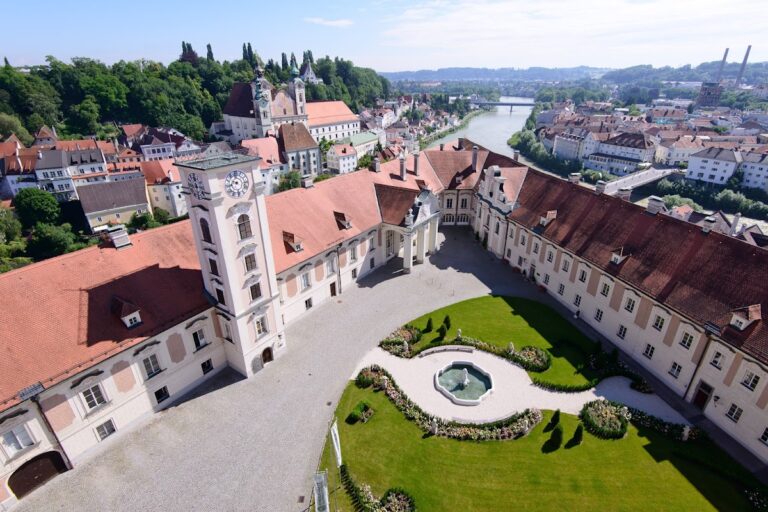
Seitenstetten Abbey is a Benedictine abbey in Austria, founded in 1112 by the nobleman Udalschalk of Stille and Heft. Its early development began in the medieval period, while its present appearance combines an early Gothic abbey church with Baroque conventual buildings constructed between 1718 and 1747. The monks follow the Rule of Saint Benedict, a sixth-century guide to communal prayer, disciplined monastic life, and work. The abbey belongs to the Austrian Benedictine Congregation, an association of Austrian Benedictine monasteries within the wider Benedictine Confederation, and its church is dedicated to the Assumption of the Virgin Mary.
Foundation and medieval growth
Udalschalk endowed the new monastery with his entire hereditary estate, including revenues from dependent lands in Upper and Lower Austria. Monks from Göttweig Abbey assumed administration of the new lordship in 1114. Bishop Ulrich I of Passau consecrated the abbey church in 1116 and granted the large parish of Aschbach to the community. The large parish of Wolfsbach followed in 1142. These two foundations later developed into the fourteen parishes for which Seitenstetten Abbey remains responsible.
Around 1180, Archbishop Wichmann of Magdeburg granted the abbey extensive woodland along the Ybbs on the condition that it establish a monastic cell there and maintain perpetual divine service. Seitenstetten subsequently held estates around the monastery, woodland in the middle and upper Ybbs valley, and interests connected with iron mines and salt works near present-day Göstling an der Ybbs. The first indication of a monastic school, which later became the Seitenstetten Abbey Grammar School, also dates from the abbey’s first century.
Two major fires, in 1261 and 1290, together with later property disputes, hindered the abbey’s development. Abbot Konrad responded by commissioning the monastery’s first land register. The community numbered twenty-two members by 1347 and then began a gradual recovery.
Reform, pilgrimage, and crisis
Abbot Rudolf I combined strict monastic discipline with the manner of an aristocratic court. He is recorded as having confined members of the conventual community for months in dungeon-like cells. After a prolonged decline, Abbot Benedikt I, formerly prior of the Schottenstift in Vienna, introduced the Melk Reform at Seitenstetten. This fifteenth-century Benedictine movement promoted stricter observance, improved discipline, and renewed religious and intellectual life.
In 1440, Benedikt I had a chapel built and consecrated on Sonntagberg. This act established the Sonntagberg pilgrimage under Seitenstetten’s protection and administration. The abbey’s pastoral network later expanded through the incorporation or supervision of parishes and pilgrimage churches, including Ybbsitz from 1292, Krenstetten from 1380, Allhartsberg from 1411, Aschbach from 1517, Windhag from 1527, Sonntagberg from 1783, Öhling from 1784, Engstetten from 1808, and Kematen an der Ybbs from 1932. Biberbach was connected with the abbey during 1312 to 1529 and again from 1757, while St. Michael am Bruckbach was under its authority around 1300 and again from 1746.
Seitenstetten was severely affected by disturbances connected with the Hungarian campaigns of King Matthias Corvinus, the fifteenth-century ruler of Hungary, and by payments imposed during the Ottoman threat to Central Europe. The Reformation also brought serious disruption. The number of monks fell sharply, and Abbot Michael Bruckfelder publicly adopted Protestantism, married in 1572, and removed his marriage goods and other monastic property before taking refuge with a Protestant protector when arrest threatened.
Renewal and the Baroque transformation
Abbot Christoph Held, who governed from 1572 to 1602 with strong support from the Imperial Council, an Austrian state body that supervised monasteries during the Habsburg period, initiated a spiritual renewal. Under later abbots, Bavarian and Swabian monks joined the community, and Baroque art became influential at Seitenstetten. Abbot Caspar Plautz is credited with writing down the earliest recorded potato recipe in 1621.
After the Thirty Years’ War and the re-Catholicization, Abbot Gabriel Sauer, who served from 1648 to 1674, stabilized the abbey’s finances and brought its religious life to a high point. This recovery made extensive construction possible. Abbot Benedikt II Abelzhauser commissioned the Austrian Baroque architect Jakob Prandtauer to build the pilgrimage church of the Holy Trinity at Sonntagberg, and Prandtauer’s nephew Josef Munggenast continued the work. The principal financing for this major program came from the copper mine at Radmer in Styria and the brass works at Reichraming in Upper Austria.
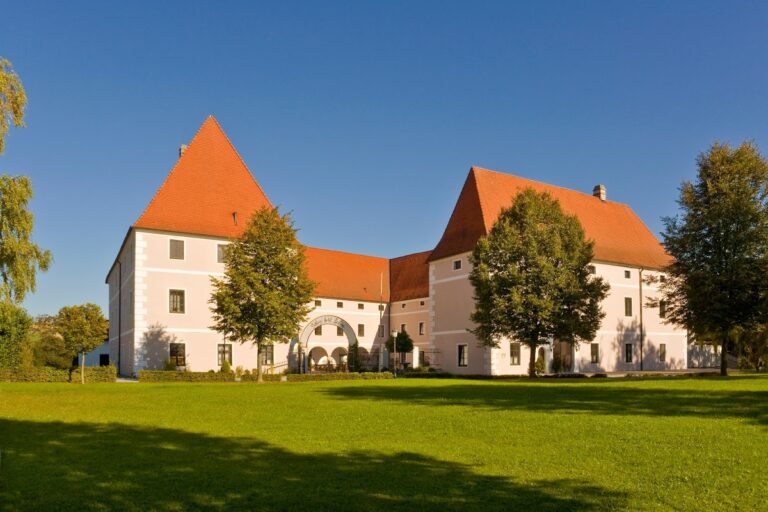
Johann Gotthard Hayberger directed the construction of the present Baroque conventual buildings between 1718 and 1747. The abbey church was extensively refurbished during the same broad period, while the monastery’s halls, library, refectory, gallery, and garden acquired much of their present character. Seitenstetten’s affiliation with the Austrian Congregation is recorded since 1625.
Modern challenges and preservation
The anti-monastic reforms of Emperor Joseph II, known as Josephinism, restricted contemplative orders and suppressed or reorganized monasteries considered non-useful to the state. The Napoleonic Wars caused further difficulties, although the abbey gradually regained strength during the nineteenth century.
Abbot Theodor Springer, who served from 1920 to 1958, guided Seitenstetten through the economic crisis after the First World War and preserved it from dissolution during the National Socialist period and the Second World War. In 1938, the National Socialist authorities closed the Seitenstetten Abbey Grammar School and replaced it with a residential school. During the war, large parts of the complex were requisitioned for refugees from Bukovina, Dobruja, and Bessarabia, as well as for Wehrmacht troops.
Under Abbot Albert Kurzwernhart, who served from 1962 to 1984, extensive renovation took place at the Sonntagberg pilgrimage church, the abbey’s other parish churches, and especially the abbey church. From 1985 to 1991, the monastery building was restored externally from cellar to roof under Abbot Berthold Heigl. He also oversaw the revival of the Baroque monastery garden in the mid-1990s and its restoration in 1996 according to historical models. The garden is protected as a historic monument under Austria’s monument-protection law.
The abbey marked its nine-hundredth anniversary in 2012, when a modern sports hall was built for the grammar school as part of the commemoration. The convent elected Petrus Pilsinger as abbot on 8 February 2013. He entered office on 21 March and was consecrated on Easter Monday of that year. The community numbered twenty-five monks in 2021.
Remains
The surviving complex brings together an early Gothic abbey church, medieval elements, Baroque-refurbished interiors, and conventual buildings erected between 1718 and 1747. A Romanesque chapel stands beside the church, while the halls, library, refectory, gallery, and monastery garden form part of the wider architectural ensemble.
Churches and medieval structures
Abbey church
The abbey church is dedicated to the Assumption of the Virgin Mary. Its early Gothic structure was extensively refurbished in the Baroque period, with the interior associated with the work of Franz Joseph Feichtmayr. The church forms the principal sacred building of the complex and retains the layered character created by the meeting of its medieval fabric with later Baroque decoration.
Knights’ Chapel
The Romanesque Knights’ Chapel stands beside the abbey church. It has unusual proportions and was later covered with Baroque stucco. A tomb tablet on the rear wall commemorates Abbot Benedikt I, whose reforming activity renewed Seitenstetten’s religious and intellectual life in the fifteenth century.
Sonntagberg pilgrimage church
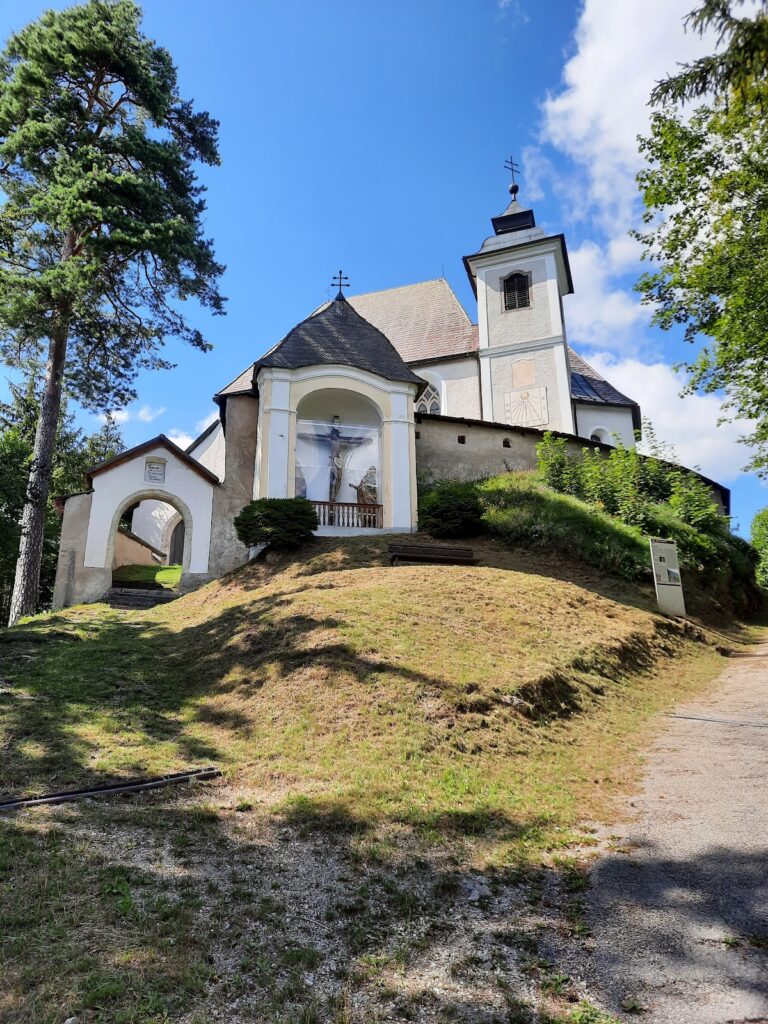
The pilgrimage church of the Holy Trinity on Sonntagberg, also known as the Basilica of Sonntagberg, developed from the chapel built and consecrated there in 1440. Abbot Benedikt II Abelzhauser commissioned Jakob Prandtauer to construct the church, and Josef Munggenast continued the work. The church was built under the protection and administration of Seitenstetten Abbey.
Baroque interiors and collections
Marble Hall and library
The Marble Hall has a ceiling fresco painted by Paul Troger in 1735. Troger also created the ceiling fresco in the library, dated 1740. These rooms belong to the Baroque interior program associated with the rebuilding of the conventual complex.
Grand staircase and summer refectory
The grand abbey staircase has a ceiling fresco by Bartolomeo Altomonte. The summer refectory contains nineteen paintings by Kremser Schmidt. The abbey’s gallery and museum include works by Altomonte, Daniel Gran, and other artists, adding a collection of paintings to the complex’s architectural interiors.
Monastery garden
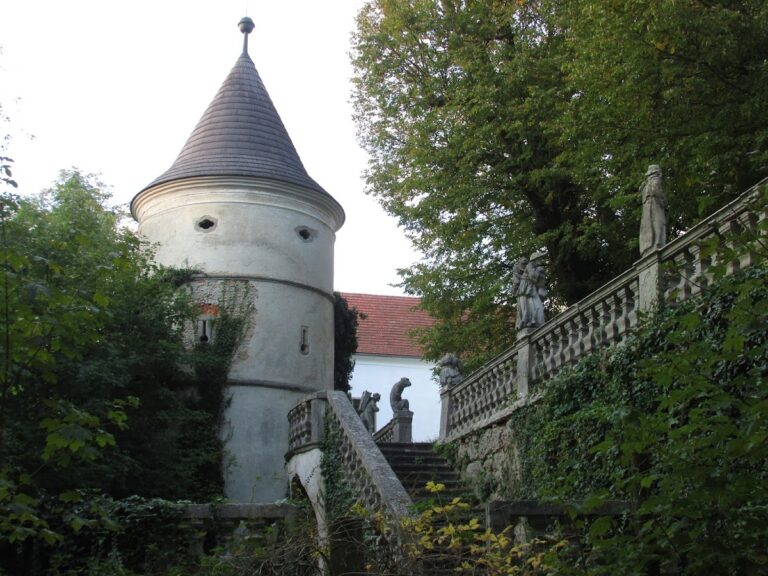
West of the abbey, the monastery garden is a Baroque ornamental garden developed between the construction of the conventual complex and the 1780s. It contains about 110 rose varieties, most of them historical. The garden’s principal physical character is that of a historically restored Baroque garden, revived in the mid-1990s and restored in 1996 according to historical models.
Nearby sites