Schrattenbach Palace: A Baroque Palace in Brno
Site at a Glance
- Rating
- 4
- Popularity
- Very Low
- Country
- Czechia
- Primary era
- Early Modern
- External website
- Open
- Eras represented
- Early Modern, Modern
- Civilizations
- Austrian Empire, Habsburg, Holy Roman Empire, Margraviate of Moravia
- Site type
- Domestic
- Remains
- Elite Residence
On this page9 sections
History
Construction and Mozart’s visit
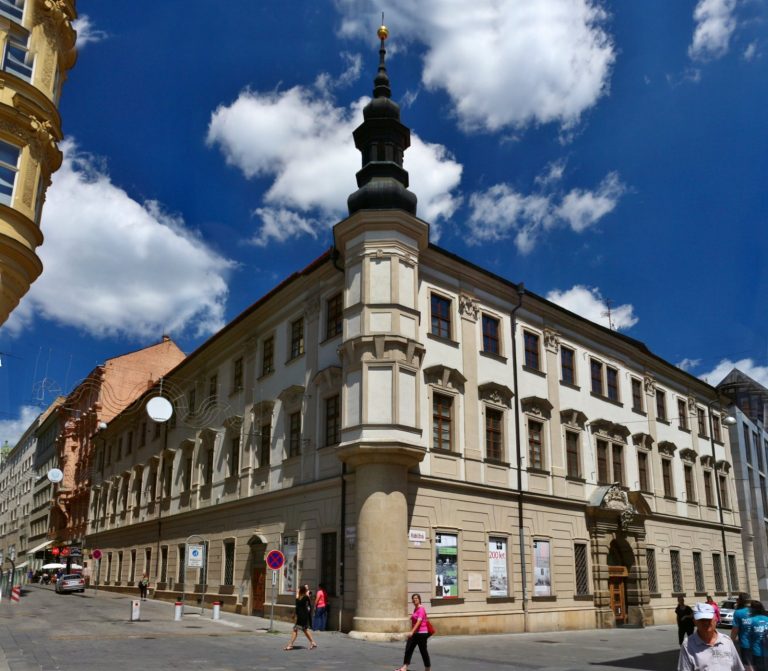
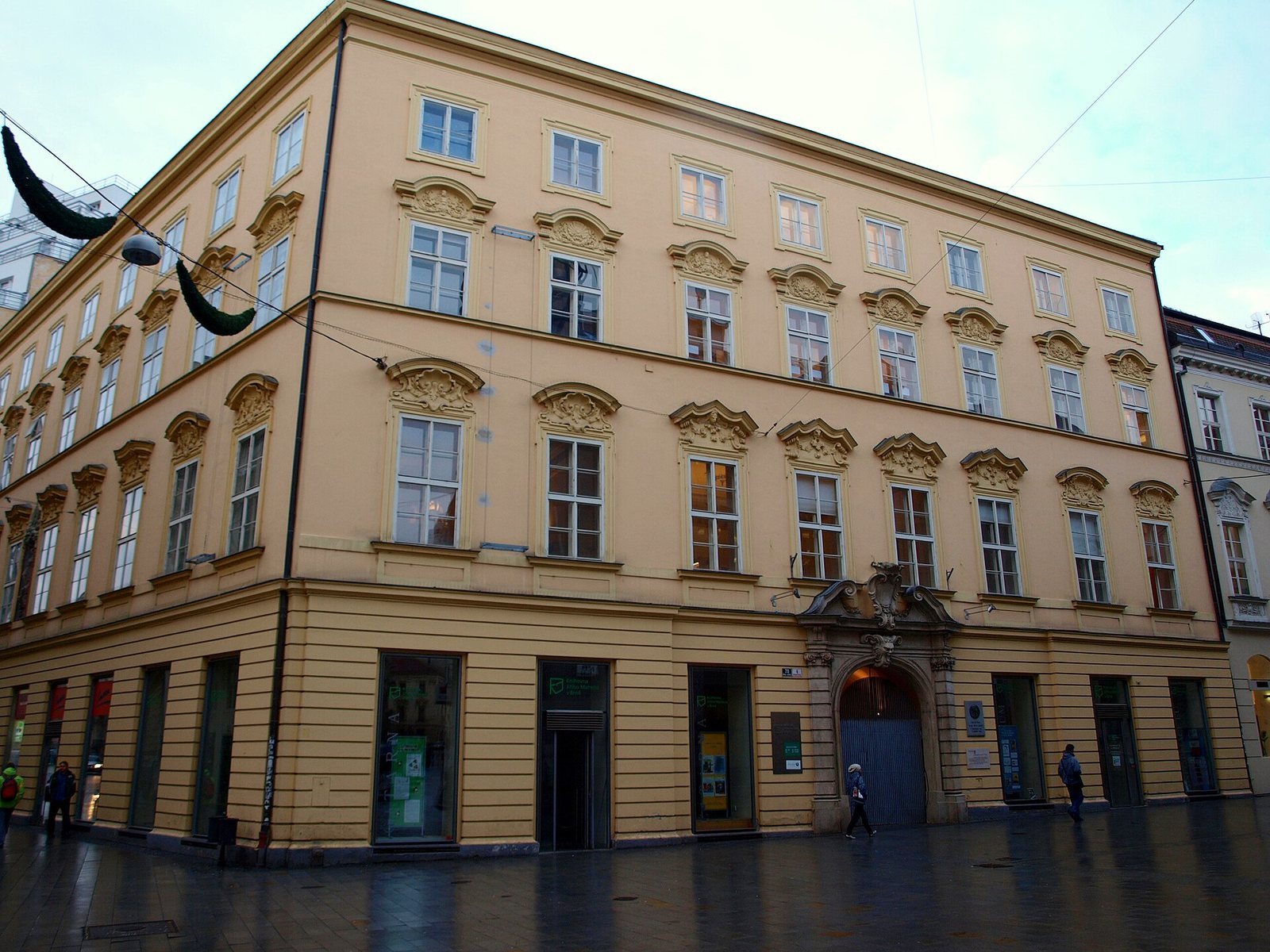
Schrattenbach Palace is an early eighteenth-century Baroque palace in central Brno, Czechia, built for Countess Marie Elisabeth von Breunner. Baroque architecture is an early modern European style associated with the seventeenth and eighteenth centuries. In 1703, Breunner acquired two houses on the site and commissioned a design from Viennese architect Alexander Christian Oedtl.
The palace passed in 1725 to Cardinal Wolfgang Hannibal von Schrattenbach, a senior Catholic cleric who was bishop of Olomouc, the leader of its diocese. At his initiative, Moritz Grimm rebuilt the palace from 1735 to 1738 and added a second storey.
During the Christmas holidays of 1767–1768, the Mozart family stayed at the palace with Franz Anton von Schrattenbach’s family. They had left Vienna to escape a smallpox epidemic. Wolfgang Amadeus Mozart, then 11 years old, would later become a major Austrian composer and pianist.
Commercial and institutional use
An additional upper storey was constructed in 1847. The businessman Theodor Bauer owned the palace from 1851, and intensive commercial use contributed to its deterioration. Around the turn of the twentieth century, its offices housed several organizations, including the Moravia and Silesia Accident Insurance Society. After 1918, the building served as a regional military headquarters.
War damage and library
Bombing during the Second World War damaged the palace, and its demolition was considered. It has been protected as a cultural monument since 1958. Since 1959, it has served as the main building of the Jiří Mahen Library. A major reconstruction took place from 1998 to 2001.
Remains
Palace and interior
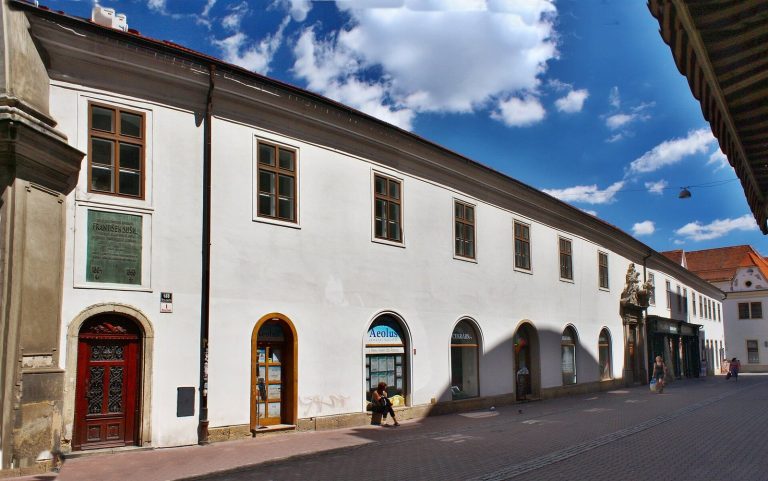
The Baroque palace stands near Freedom Square on Kobližná Street. Its central courtyard has been converted into an atrium, where a modern steel structure incorporates galleries and a glass pyramid.
Courtyard atrium
The atrium occupies the palace’s former central courtyard. Its steel structure, galleries and glass pyramid form the modern arrangement within the historic building.
Façade plaques
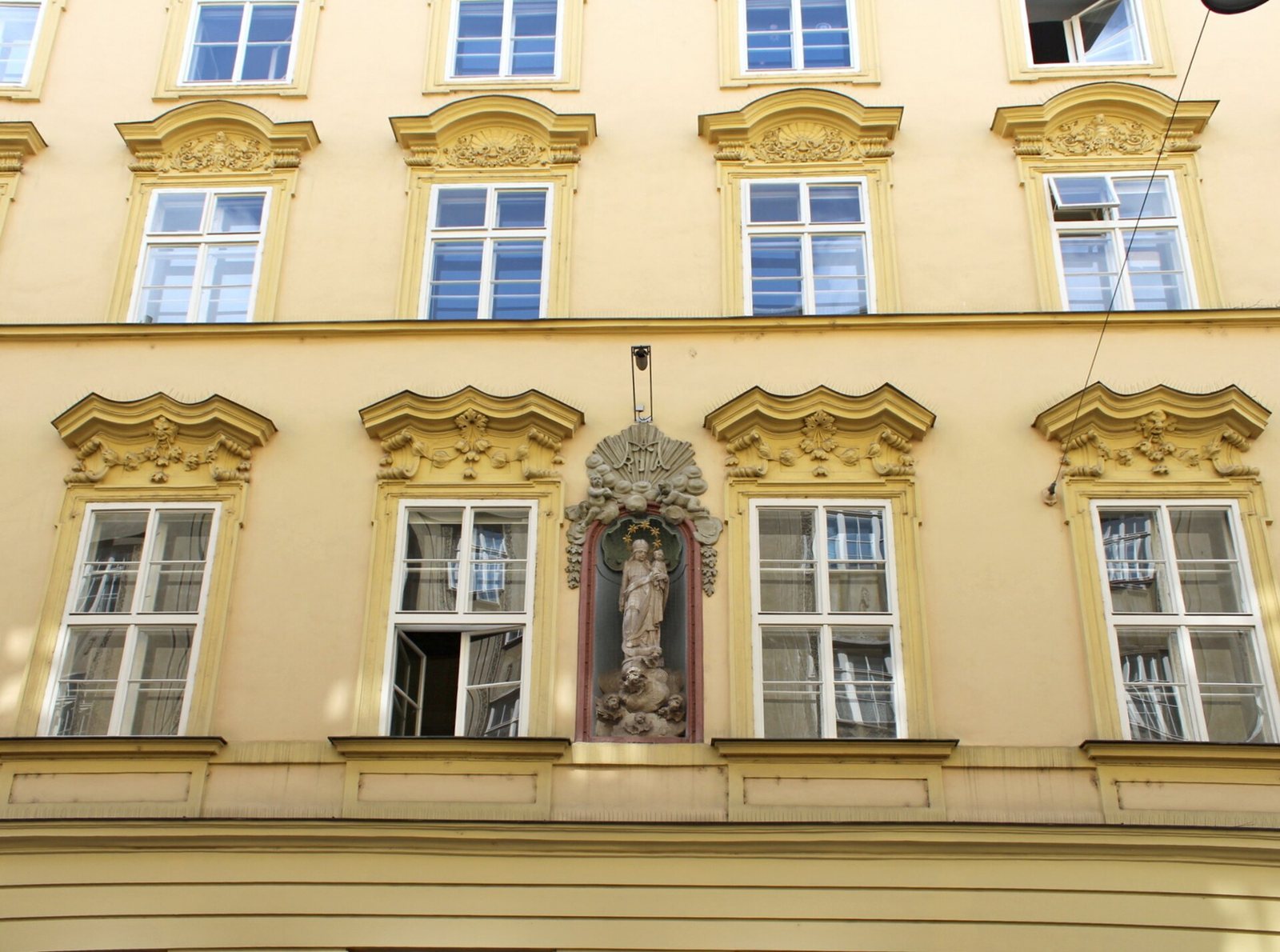
A plaque made by Czech sculptor Jan Fischer commemorates the Mozart family’s stay and was installed on the façade in 1956. A separate plaque marks the palace’s designation as a National Cultural Monument.
Fresco
The palace interior contains a fresco by Baroque painter Franz Eckstein.