Abuyama Kofun: A Seventh-Century Tomb in Osaka, Japan
Site at a Glance
- Rating
- 4.1
- Popularity
- Medium
- Country
- Japan
- Primary era
- Medieval
- External website
- Open
- Eras represented
- Medieval
- Civilizations
- Yamato
- Site type
- Burial
- Remains
- Tomb
On this page8 sections
History
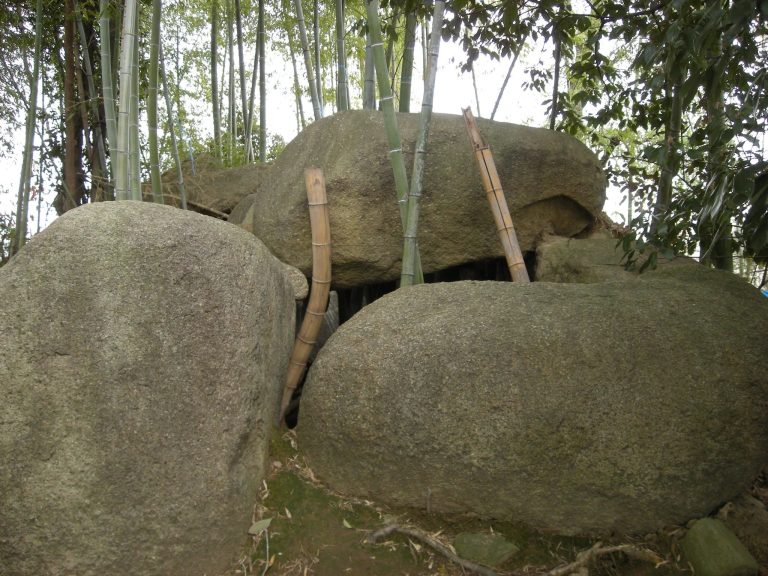
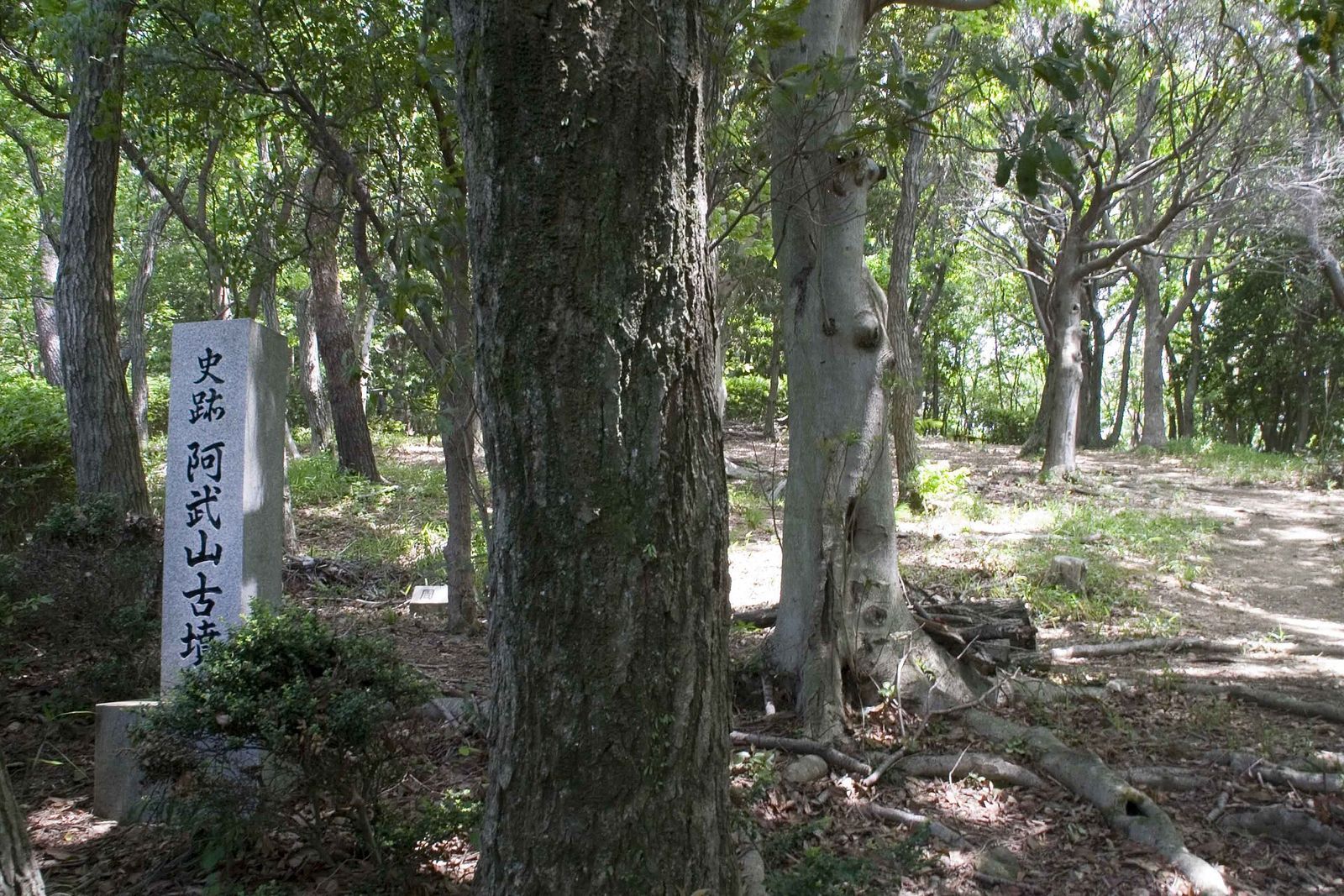
Abuyama Kofun is a seventh-century Japanese tomb of the Asuka period in Nasahara, Takatsuki, Osaka Prefecture, Japan. The Asuka period, from the late sixth to early eighth century, was an era of early Japanese state formation. Fujiwara no Kamatari, a court statesman and founder of the Fujiwara clan, is the leading proposed identification for the person buried here, but the attribution is not certain.
Tradition and proposed identity
A tradition dating to around the middle of the Heian period, Japan’s era of classical court culture (794–1185), says Kamatari was first buried at Ai in Settsu, a premodern province corresponding broadly to part of present-day Osaka. It says his remains were later moved to Tonomine in Yamato, broadly corresponding to part of present-day Nara Prefecture. During the Edo period (1603–1868), people worshipped nearby Shogunzuka Kofun as Kamatari’s ancient tomb.
Other proposed occupants of Abuyama include the seventh-century court nobles Soga no Kurayamada no Ishikawa no Maro and Abe no Uchimaro. The burial’s high status and later scientific and archaeological findings have supported the Kamatari identification, without settling it.
Discovery and investigation
The burial chamber was uncovered by chance in 1934, during construction of Kyoto Imperial University’s earthquake observatory. The Osaka Asahi Shimbun announced the discovery on April 29, and speculation that the tomb belonged to a high-ranking figure of the Asuka period drew more than 20,000 visitors.
The investigation became contentious. Kyoto University’s archaeological laboratory was initially consulted but then denied further access, while Osaka Prefecture objected to the rough treatment of the remains and their rapid deterioration. At a meeting with government ministries, officials argued that further examination might be sacrilegious because the deceased was exceptionally high-ranking and could have had an imperial connection. They ordered the tomb reburied. The Home Ministry also sent police to protect the deceased’s dignity amid the crowds, and pressure on the investigation left it incomplete.
Later evidence and interpretation
Before the chamber was covered, observatory staff took X-rays and samples. The original X-ray records resurfaced in 1982, when the observatory was demolished, and were analyzed in 1987. The analysis indicated serious injuries to the spine and lower back, followed by survival and treatment, a period confined to bed, and death from possible complications. The injuries may have resulted from a fall, perhaps from horseback or from a height. A fall from horseback would fit a tradition about Kamatari’s death, but it does not establish who was buried at Abuyama.
Abuyama Kofun became a National Historic Site of Japan in 1983, and the surrounding area was developed as a historic park in 1989. In October 2014, bricks found at the Higashinara site were noted for their close resemblance to bricks from the tomb. This supported a proposal that Mishima Betsugyo, a villa associated with Kamatari and thought to have stood at Sawaragi, was where he stayed before the Isshi Incident of 645. That political upheaval triggered the Taika Reform, the reforms that followed it. A 2024 study of the excavated crown provided further support for the proposed identification, though other occupants remain possible.
Remains
Precinct and perimeter
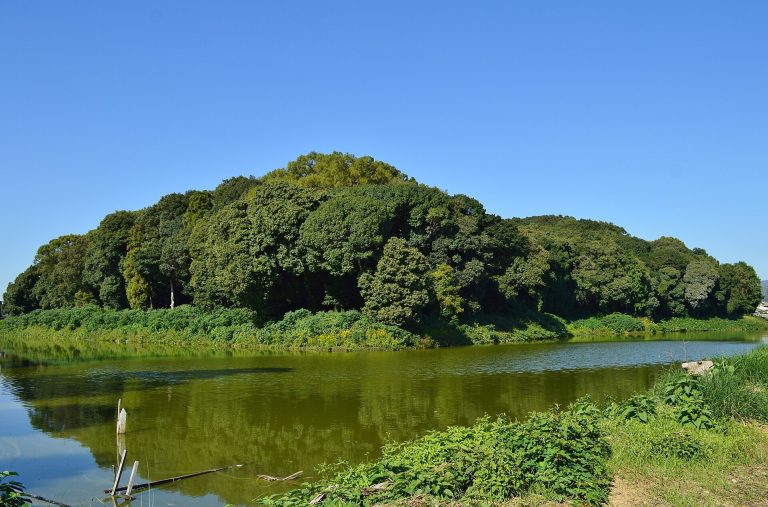
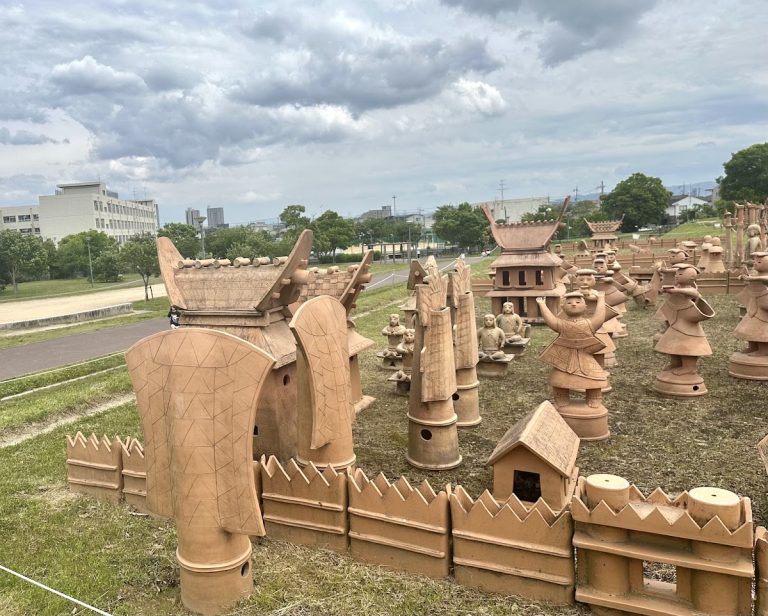
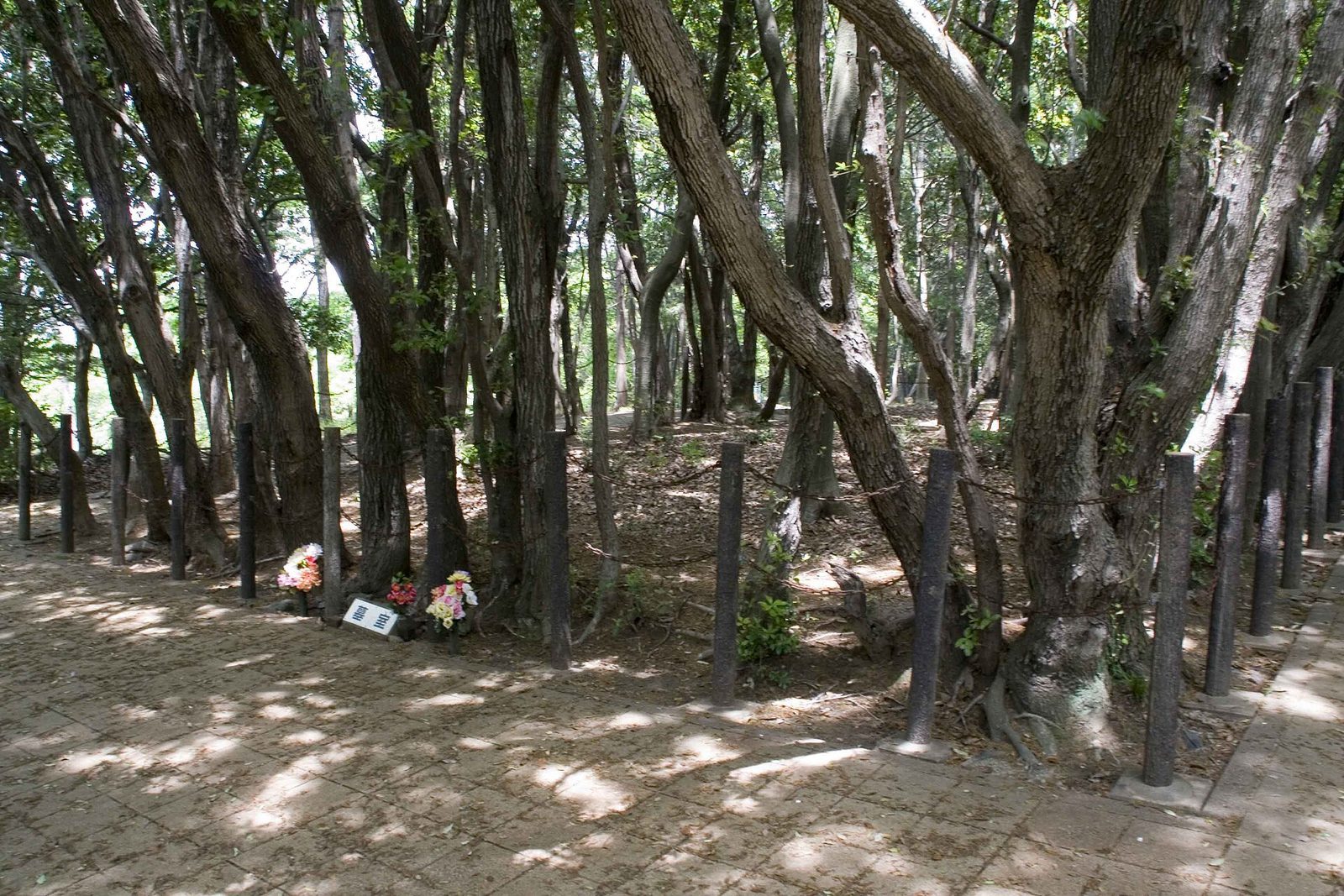
The tomb’s circular precinct, about 82 metres across, lay at an elevation of 281.1 metres on the slope of Mount Abu, at the boundary between Nasahara in Takatsuki and Ai in Ibaraki, Osaka Prefecture. A shallow ditch or dry moat marked its edge, which was also lined with rows of cylindrical haniwa, clay funerary objects placed around tombs. Near the centre of the precinct, just below ground level, stood the stone-built burial chamber.
Burial chamber
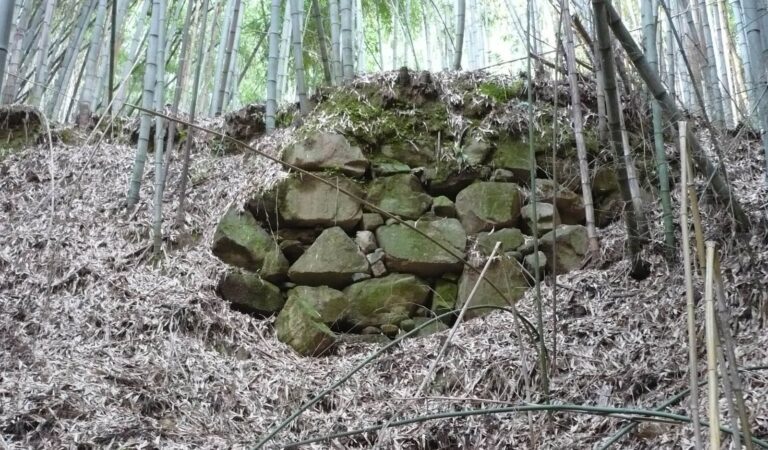
The chamber was built from cut stone and plastered on the inside. Tiles covered its roof, and earth was placed over it so that the top lay level with the surrounding ground. The chamber was backfilled after the 1934 investigation.
Coffin and burial objects
A stand supported a coffin made by hardening multiple layers of cloth with lacquer. Its exterior was black and its interior red; Abuyama was the first place in Japan where this coffin type was found. The coffin held the almost complete, mummified remains of a man around 60 years old, with flesh, hair and clothing preserved. The man had a strong frame and an elbow condition known as pitcher’s elbow, an injury associated with repeated throwing. He appears to have been wrapped in brocade. Numerous gold threads extended from his chest toward his face and head, and his head rested on a pillow woven from glass beads. The excavated crown bore features associated with the Great Woven Crown, the highest court rank and a title also linked to ceremonial headgear. Kamatari received this rank, as did, exceptionally, a prince of Baekje, an ancient Korean kingdom. Radiographs of the crown’s fabric revealed a distinctive tapestry weave.