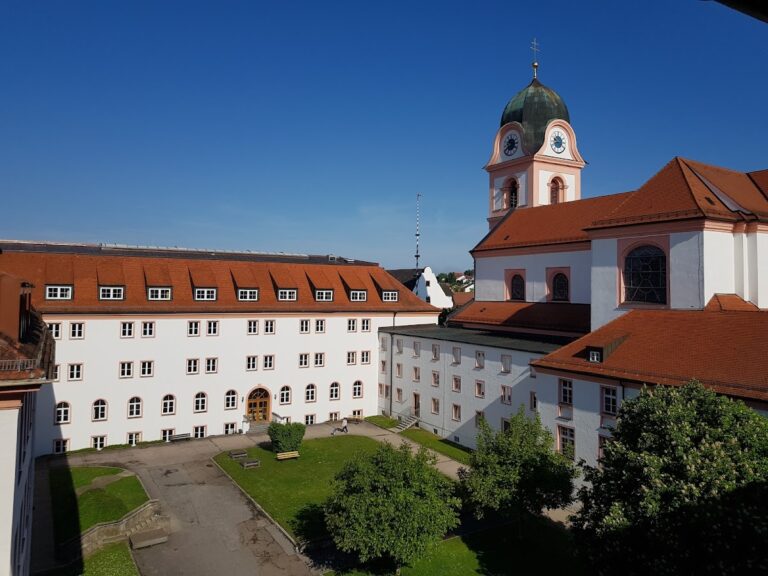
Schloss Zaitzkofen: A Bavarian Castle and Former Hofmark Seat

Site at a Glance
- Rating
- 4.5
- Popularity
- Very Low
- Country
- Germany
- Primary era
- Early Modern
- Eras represented
- Medieval, Early Modern
- Civilizations
- Duchy of Bavaria, Holy Roman Empire
- Site type
- Domestic
- Remains
- Castle
On this page10 sections
History
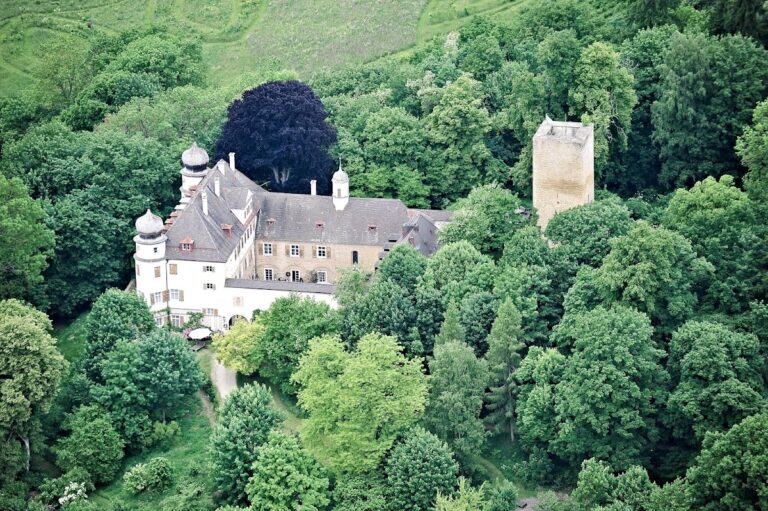
Schloss Zaitzkofen is a historic castle in Germany, in the municipality of Schierling, whose principal form was built around 1730 under the lords of Königsfeld. The site developed from a Bavarian settlement established between about 500 and 700 on the Roman road known as the Via Augustana, which ran from Abensberg to Straubing. Its history reflects the transition from ecclesiastical ownership to secular lordship and, later, to religious institutional use.
Early settlement and ecclesiastical authority
Under Bishop Ambricho, the Prince-Bishopric of Regensburg, an ecclesiastical principality in which the bishop held both religious and territorial power, already possessed property at Zaitzkofen. The monastery of St. Emmeram also exercised authority there, while a man named Uzzant of Zaitzkofen held an allodial estate, meaning land owned freely rather than as a feudal grant.
By the middle of the tenth century, St. Emmeram appears to have held judicial authority in Zaitzkofen. The settlement is also associated with several medieval donations to Paring Abbey. On 4 November 1220, Konrad of Zaitzkofen gave several farms to the abbey for the benefit of his soul. His son, Haeinricus of Zeitzkoven, a ministerial of the cathedral church, and Haeinricus’s wife Beatrix likewise donated a farm to the church at Paring. A ministerial was a member of the medieval service nobility who gained office and status through service to a territorial or ecclesiastical ruler.
From episcopal holding to Hofmark
On 16 October 1240, Bishop Siegfried of Regensburg granted Friedrich of Berg Zaitzkofen Castle as a feudal holding. Under Friedrich, Zaitzkofen developed into a secular lordly seat. Afterward, the Prince-Bishopric is no longer recorded as a landholder there.
Local judicial and administrative officers continued to manage the settlement. Tristan was recorded as judge in 1337, followed by Eberhard the Falkensteiner’s association with Zaitzkofen in 1356. Peter the Falkensteiner held the Mallersdorf judicial office in 1384, while Hans of Pinkofen was judge in 1390, Jobs of Tosch in 1399, Heinrich of Hägadem in 1402, and Konrad of Mausham administrator and judge in 1404.
In his testament of 3 April 1422, Peter the Falkensteiner named Heinrich and Hanns, the sons of his niece Barbara and her husband Jörg Fraunberger, as principal heirs to Zaitzkofen and Falkenfels. Hans Fraunberger held Zaitzkofen until 1440, and Balthasar Maushamer was its administrator in 1443. In 1448, the Hofmark belonged to Kunigunde of Eck, Hans Fraunberger’s widow. A Hofmark was a Bavarian manorial jurisdiction whose lord exercised local administrative and judicial rights over an estate or settlement.
The Paulsdorfers and Königsfeld
A dispute between the Fraunbergers and Paulsdorfers developed in 1470. In the following year, Duke Ludwig awarded the Zaitzkofen properties to the Paulsdorfers because the Fraunbergers had no male descendants, while compensating the Fraunbergers financially. The Paulsdorfers were recorded as holders in the land register in 1470. By 1500, Hans Paulsdorfer and Georg of Günsberg were listed as the lords of the Hofmark.
The lords of Königsfeld held Zaitzkofen from 1510 to 1808 and became Imperial Counts in 1685. Their elevation was probably a reward from Emperor Charles V for services in Spain. Johann Georg II, Imperial Count of Königsfeld, oversaw the construction of the present Schloss Zaitzkofen around 1730. The castle chapel had been endowed around 1720, shortly before this rebuilding.
In 1786, Zaitzkofen was raised to a free lordship. On 3 April of that year, the Zaitzkofen entail lordship received the right of the sword, or jus gladii, which allowed its holder to impose severe criminal penalties, including capital punishment. This status connected the castle and its estate with the highest level of local judicial authority.
Modern ownership and religious use
In 1809, the castle passed to Maximilian Joseph von Montgelas. Zaitzkofen was then a life fief held from the Crown. From 1820, it possessed a lordship court with the approval of King Maximilian Joseph. On 1 October 1832, the Prince of Thurn and Taxis acquired the Montgelas estates in the Regen district. The Zaitzkofen lordship court was dissolved on 4 October 1848 and assigned to the Mallersdorf district court.
In 1926, the castle passed to the White Fathers and later to the Mariannhill Missionaries, both Catholic missionary congregations. It now houses the International Seminary of the Sacred Heart and serves as a priestly seminary of the Society of Saint Pius X, a traditionalist Catholic priestly fraternity.
Schloss Zaitzkofen is protected as a historic monument and is also listed as an archaeological monument for medieval and early-modern evidence in the area of the castle, formerly a fortress. The site is registered under Bavarian monument-record numbers D-3-75-196-57 and D-3-7139-0212.
Remains
Castle buildings and surviving entrance
Main castle building
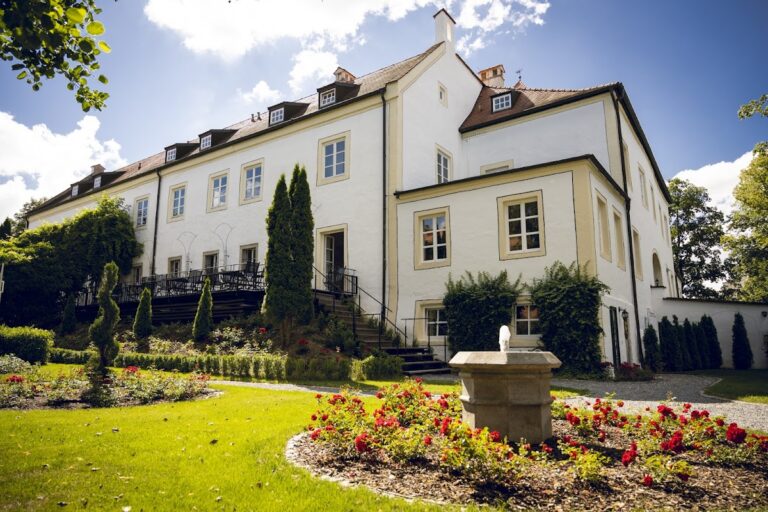
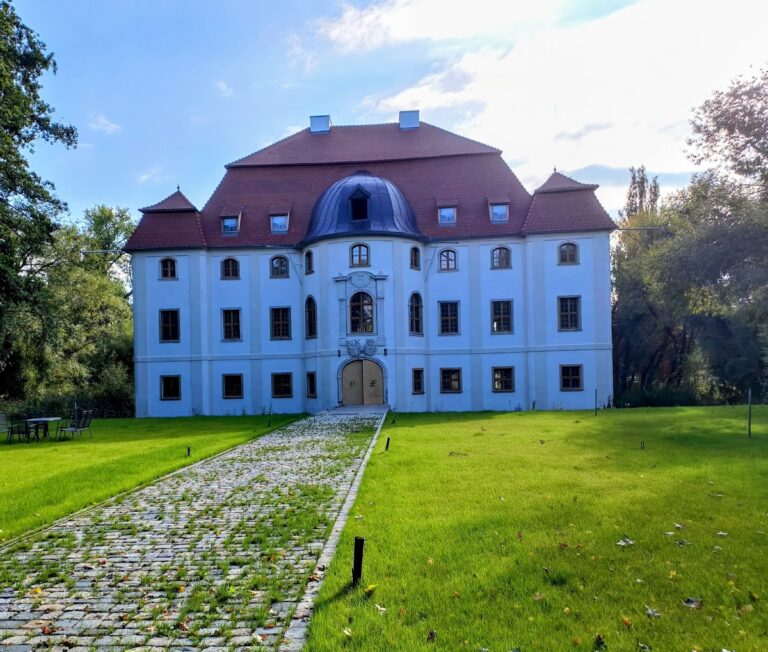
The principal structure is a broad, three-storey building dating in its present form from around 1730. It has projecting corner sections, a mansard hipped roof, ashlar portals made from carefully cut stone blocks, and shouldered, or “eared,” windows framed by projecting edges. These features define the surviving appearance of the rebuilt lordly residence.
Castle chapel
The castle chapel occupies the second storey of the building. It was endowed around 1720, before the main reconstruction directed by Johann Georg II of Königsfeld. Its position within the residence reflects the continuing religious component of the castle complex alongside its role as a seat of lordship.
Entrance remains
Parts of the castle entrance also survive, including rusticated pillars whose surfaces are finished with a deliberately rough, textured treatment. These remains preserve evidence of the approach to the former castle and contribute to the archaeological interpretation of the site as a place with medieval and early-modern defensive history.