Schloss Unterbaar: A Moated Manor Castle in Germany
Site at a Glance
- Popularity
- Medium
- Country
- Germany
- Primary era
- Early Modern
- Eras represented
- Early Modern, Modern
- Civilizations
- Duchy of Bavaria, Electorate of Bavaria, German, Holy Roman Empire
- Site type
- Domestic
- Remains
- Castle
On this page4 sections
History
Sixteenth to eighteenth centuries
Schloss Unterbaar is a sixteenth-century moated castle in Unterbaar, Germany, built by Michael Riederer (1473-1520) as the manor house for the Hofmark Unterbaar. A Hofmark was a Bavarian manorial jurisdiction whose lord held local rights, including some judicial authority.
The Riederers transferred the property in 1563. It was remodeled in the Baroque style during the seventeenth century, a style known for elaborate decoration and dramatic effects. In the early eighteenth century, the brothers Franz Marquart and Franz Ludwig Schenk von Castell undertook a major renovation. The associated Schlossbrauerei Unterbaar was founded in 1608. Later owners included the noble families Moreau and Arco-Zinneberg.
Twentieth century and after
The Himmelsbach family, timber wholesalers from Freiburg im Breisgau, bought the estate in 1916. During the 1920s, they remodeled the castle, including its facade. Gustav Einstein of Augsburg acquired it in 1928. After he fled Nazi rule, ownership passed to Hans Emslander in 1933.
After 1945, the castle housed elderly people displaced from the eastern territories. Following a lengthy process to recover ownership, it was returned to Einstein in 1956. His daughter, Else Spirak, also identified as Sajovic, sold it in 1962 to the Barons Groß von Trockau. They operate the brewery, while the castle itself has been left vacant.
Remains
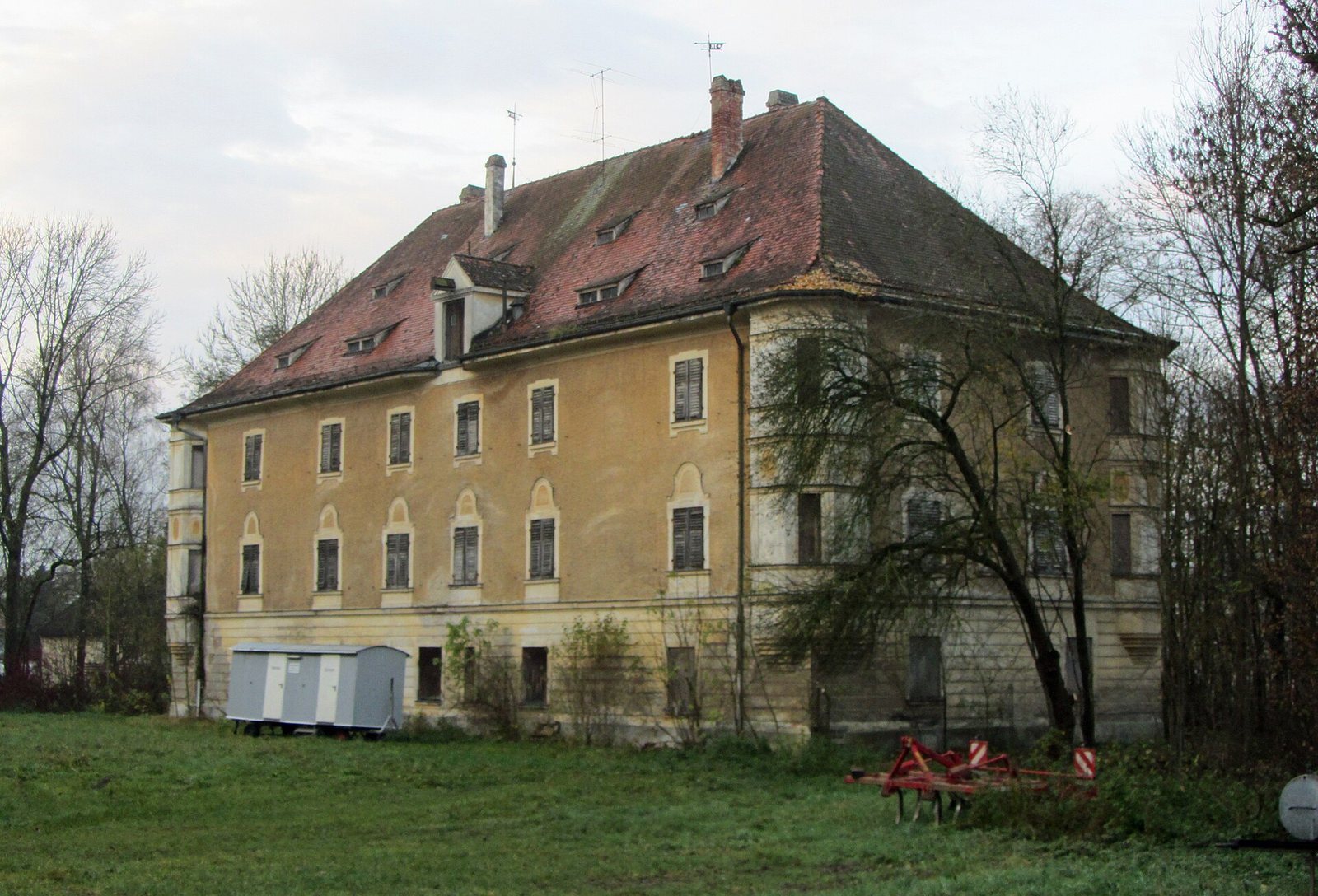
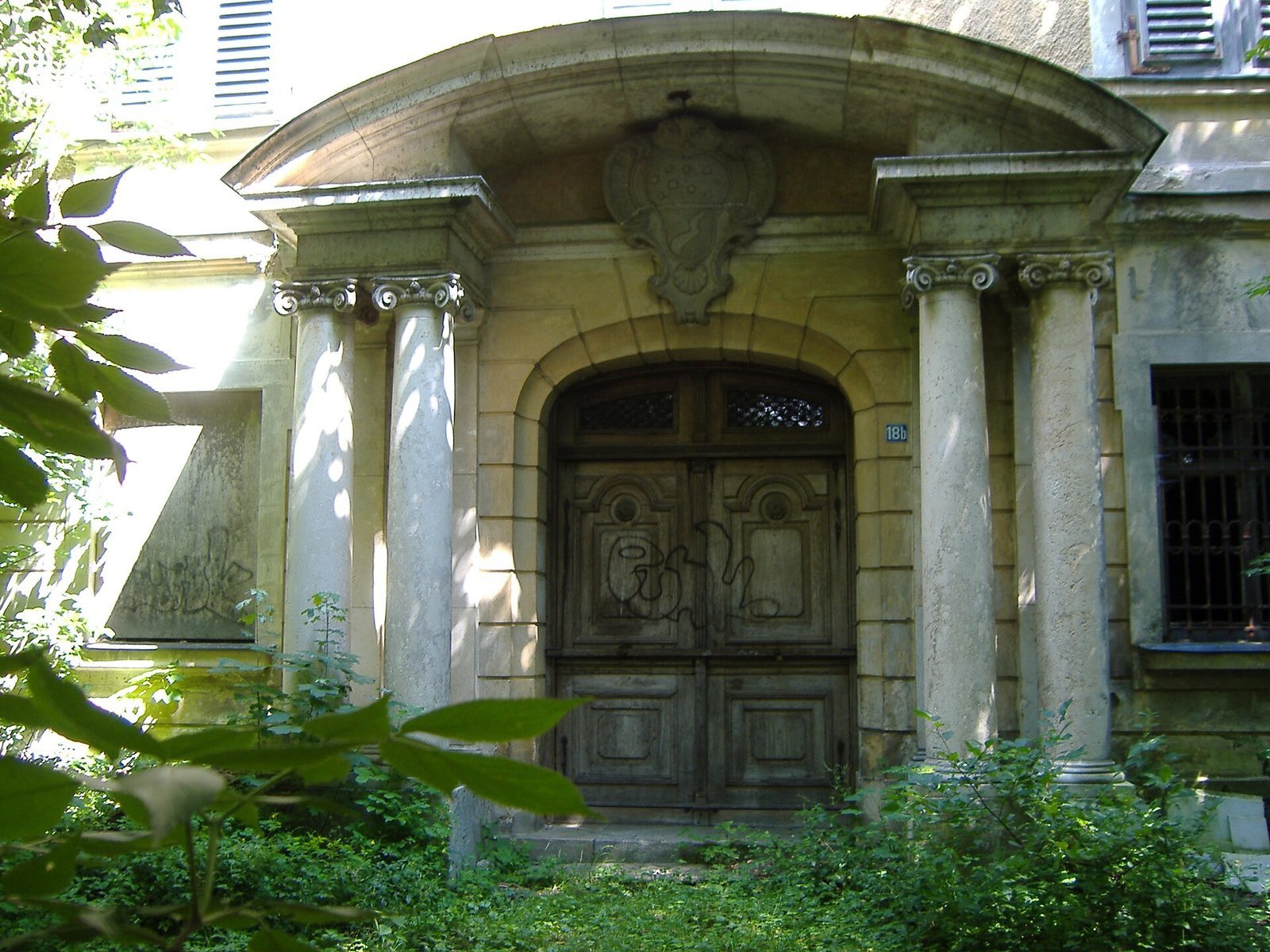
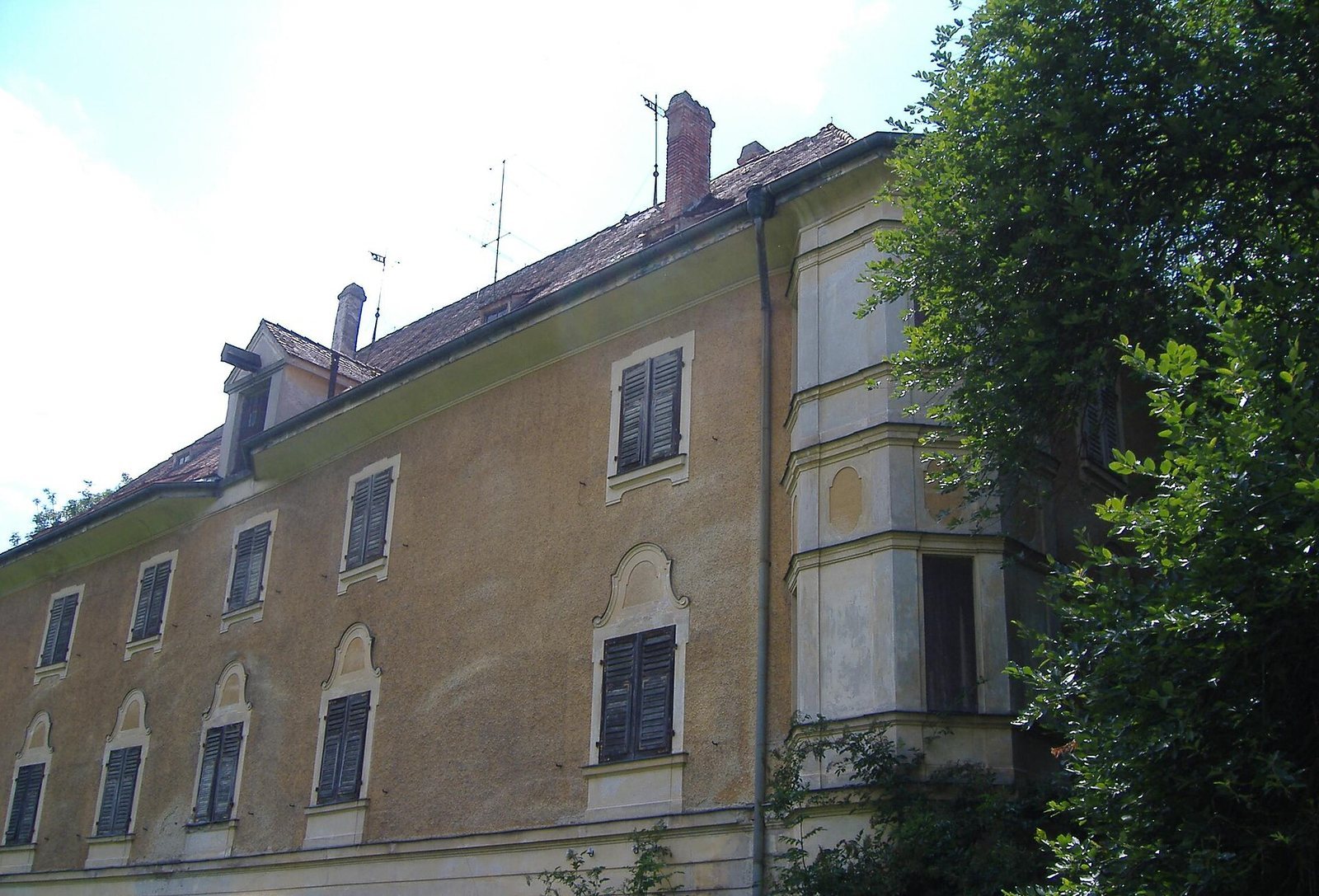
The castle stands on a small island, with a bridge crossing the surviving section of its moat; the bridge’s iron railing is deteriorated. The three-storey building has a plain base level beneath two upper storeys, and four polygonal bay windows round its corners. Several first-floor windows retain shell-shaped ornaments, while some have Baroque stucco surrounds. The original roof, whose ends had a tiered outline, was probably replaced about a century ago by a roof sloping down on all sides and covered with flat clay tiles with rounded ends. Windows with box-shaped frames probably date from around the same time. A shallow, curved canopy above the entrance rests on decorated paired supports. The Himmelsbach family coat of arms above it depicts a sky with nine stars and a stream; the stars are said to represent the family’s children. The castle is in very poor condition and is surrounded by dense shrubs and trees.