Schloss Rechenberg: A Hohenstaufen-Period Castle and Palace in Germany
Site at a Glance
- Rating
- 4.8
- Popularity
- Very Low
- Country
- Germany
- Primary era
- Medieval
- Eras represented
- Medieval, Early Modern
- Civilizations
- Holy Roman Empire
- Site type
- Military
- Remains
- Castle
On this page11 sections
History
Schloss Rechenberg is a medieval castle and later palace in Germany, in Rechenberg, now a district of Stimpfach in Baden-Württemberg. Originally called Burg Rechenberg, it belongs to the Hohenstaufen period, the era when the Hohenstaufen dynasty held the German kingship and imperial title during much of the twelfth and thirteenth centuries. The castle was probably completed in 1227, although construction may have begun earlier, and it is first recorded in 1229.
The Knights of Rechenberg
From 1229 to 1405, the Knights of Rechenberg were associated with the castle as seneschals and ministeriales of the Counts of Oettingen. A ministerialis was a legally unfree but socially elevated medieval official or military retainer who could hold a castle and perform administrative or military duties for a ruler or noble lord. The recorded connection places Rechenberg within the network of lordly administration and military service that shaped the region during the Middle Ages.
Changes of Lordship
After several transfers, Burg Rechenberg passed to the noble family of Wollmershausen in 1409. In 1429, the Wollmershausen family received the lordship of Rechenberg as a fief from Ellwangen. A fief was property granted by a superior lord to a vassal in return for service. During the fifteenth century, the property belonged to the Adelmann family, but Ellwangen bought it back in 1526. Part of the lordship was then granted as a fief to the Steinhauser family of Neidenfels.
In 1538, the emperor granted Rechenberg the privilege of exercising high justice. That same year, Heinrich Steinhauser von Neidenfels zu Rechenberg began transforming the medieval castle into a palace. The change in name from Burg Rechenberg to Schloss Rechenberg reflected the sixteenth-century practice of calling an expanded and more residential castle a palace. The existing south building was erected in 1571.
Later Territorial and Modern History
The Steinhauser line became extinct in 1608. Its allodial possessions, meaning hereditary property held outside a feudal relationship, passed to the Berlichingen heirs of Neunstetten, while the fief returned to Ellwangen. The lordship later moved from Ellwangen rule to Ansbach rule, before coming under Prussian rule in 1796, Bavarian rule in 1806, and Württemberg rule in 1810.
A youth hostel opened in the castle in 1953, and the Youth Hostel Association purchased the complex in 1966. The castle continued in that use until summer 2018, when the association sold it to a private individual. The nearby Schlosskirche became the burial church of the Berlichingen family while the Berlichingen line of Neunstetten held Rechenberg. It now serves as the Protestant village church of Rechenberg.
Remains
Castle Layout and Defences
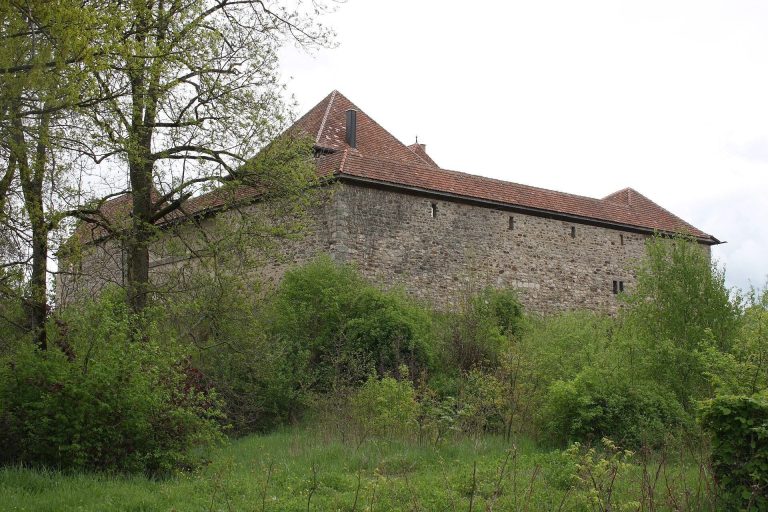
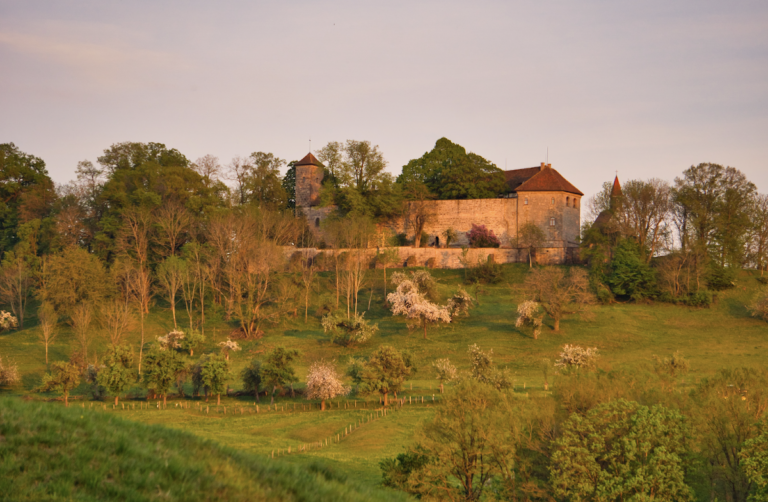
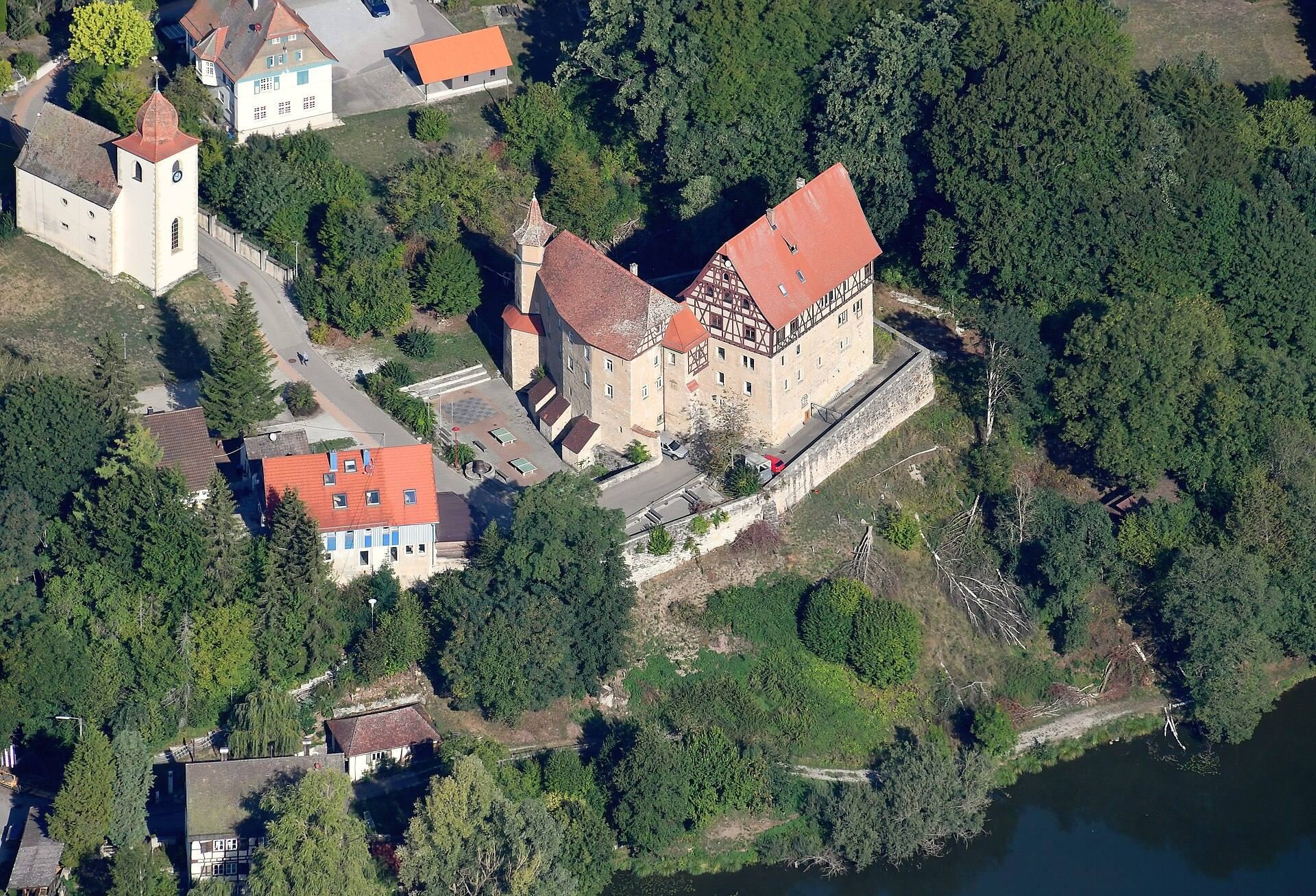
Schloss Rechenberg stands on a projecting spur beside the Mühlweiher, above the Rechenberger Rot. Its lowland-castle plan corresponds to that of a water castle, and the complex lies at an elevation of 450 metres above sea level. The surviving buildings are enclosed by a well-preserved curtain wall, the defensive wall surrounding a castle, with defensive towers. A neck ditch, a ditch cut across the access side of a spur, surrounds the castle and remains especially well preserved toward the village.
Entrance and Defensive Towers
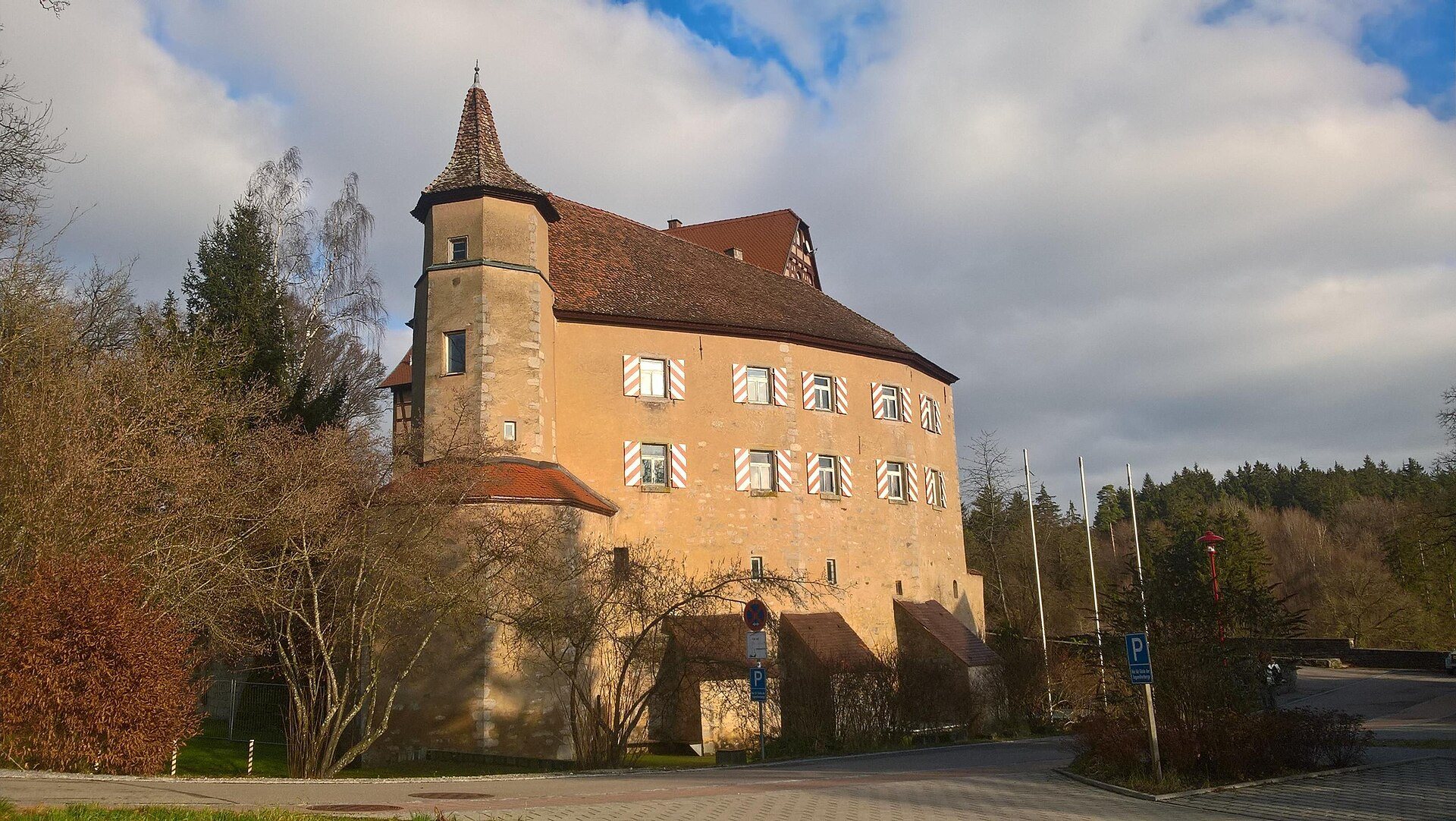
The present entrance crosses a stone bridge. The earlier approach is believed to have used a wooden bridge with a drawbridge. A round defensive tower occupies the southwest side of the curtain wall, while a second, smaller tower stands on the north side. The south building adjoins the larger tower. Together, the ditch, bridge, enclosing wall, and towers preserve the main defensive framework of the medieval complex.
Residential Buildings
The Palas
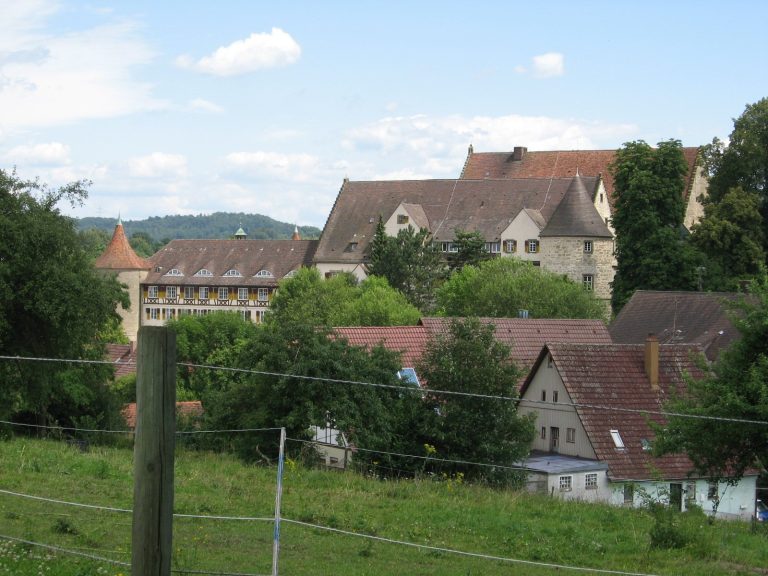
The palas, the principal residential and representative building of a medieval castle, occupies the eastern part of the site. It originally had a stone ground floor and two upper stories. A later half-timbered story was added, using a timber framework with infill, and the building received a steep roof containing space for three additional floors.
The South Building
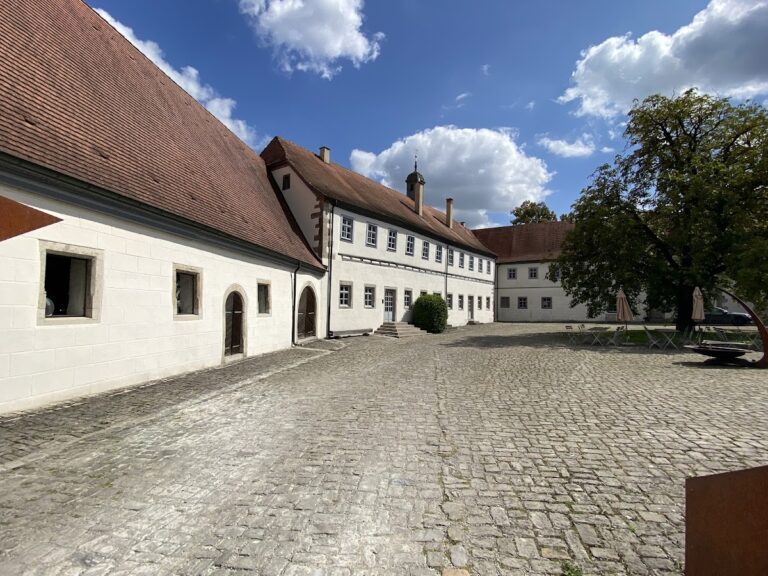
The south building, erected in 1571 during the conversion of the castle into a palace, forms part of the surviving complex beside the larger defensive tower. Its construction belongs to the period when the site was being adapted from a medieval stronghold for the residence and representation of Heinrich Steinhauser von Neidenfels and his family.
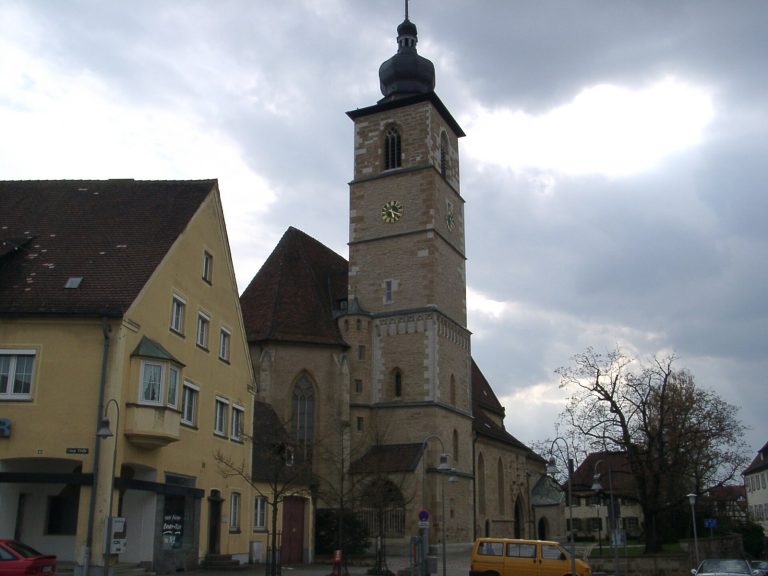
A sixteenth-century alliance coat of arms belonging to Heinrich Steinhauser and Dorothea von Wollmershausen is displayed at the castle. The couple was buried in St. John’s Church in Crailsheim, where their monumental epitaph remains in the choir.
Schlosskirche
The Schlosskirche stands a few metres from the castle. Its walls contain numerous Berlichingen tomb slabs installed in a form resembling epitaphs. The Berlichingen coat of arms is displayed above the altar, with the pulpit standing above it. The church’s tomb slabs and heraldic decoration preserve its connection with the Berlichingen family and its role as the family’s burial church during their tenure at Rechenberg.