Poschwitz Castle: A Renaissance Water Castle in Germany
Site at a Glance
- Popularity
- Low
- Country
- Germany
- Primary era
- Early Modern
- Eras represented
- Early Modern, Modern
- Civilizations
- Electorate of Saxony, German, Holy Roman Empire, Kingdom of Saxony
- Site type
- Domestic
- Remains
- Castle
On this page7 sections
History
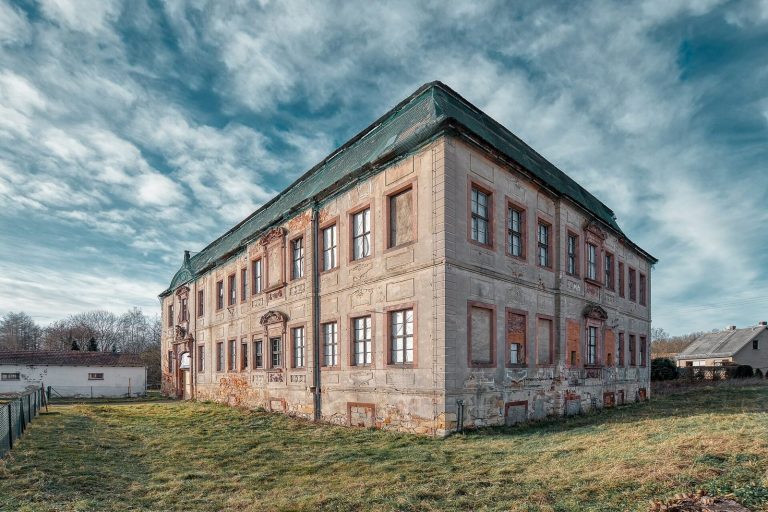
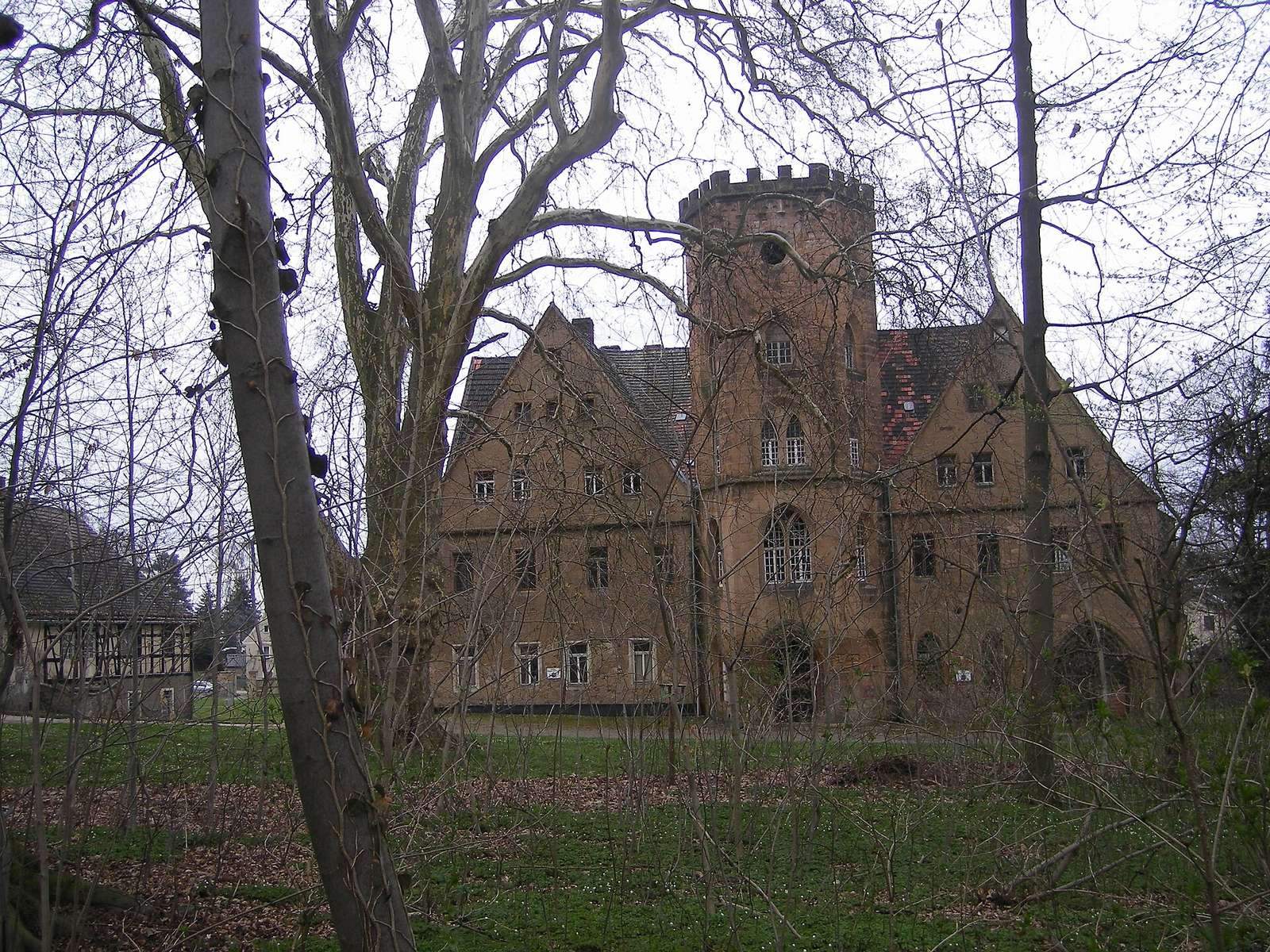
Poschwitz Castle is a stone-built water castle in Germany, meaning a castle built on or surrounded by water that could contribute to its defenses. The site originated around 1264, and Friedrich von der Gabelentz built its present Renaissance castle in 1580.
Medieval ownership and the Renaissance castle
Otto von Poschwitz was the castle’s first documented owner, holding it from 1264 to 1274. By 1388, it belonged to Albrecht I von der Gabelentz, who also owned the Nobitz manor. Albrecht’s grandson Hans received Windischleuba as a fief, or land granted under a feudal relationship, in 1455. In an inheritance division in 1499, Georg II von der Gabelentz gained the Poschwitz and Nobitz manors.
A fire destroyed the water castle in 1507. Georg II acquired Windischleuba from his brother Heinrich in 1515, and Georg’s son Sebastian received the family’s three manors as fiefs in 1536. Friedrich von der Gabelentz took over the Poschwitz estate in 1580 and built the present castle.
The estate, gardens, and nineteenth-century life
Wilhelm Ludwig von der Gabelentz owned the estate from 1774. He began enlarging and redesigning its old pleasure garden, and later owners added further gardens. Hans Carl Leopold von der Gabelentz took over the estate in 1806. It covered 71.24 hectares in 1803, and he combined its two ponds into one. In 1813, a scholarly circle around him devised Skat, a German trick-taking card game.
Hans Carl Leopold’s son Hans Conon von der Gabelentz (1807 to 1874) became one of the estate’s most prominent lords. He served as president of the regional legislature of the Duchy of Saxony-Altenburg, a German territorial state, until 1870.
Late nineteenth century to expropriation
The estate measured 137.9 hectares in 1873. After Hans Conon’s death in 1874, his sons Hans Albrecht and Georg inherited it. Franz Liszt visited during their tenure to give a concert. Georg’s son Albrecht von der Gabelentz (1873 to 1933) inherited the estate in 1893. By the early twentieth century, the family had held it for about five centuries, and the agricultural operation also served in part as an experimental station for fruit growing. The family acquired property at Remsa in 1912, and the estate covered 172 hectares in 1923.
After Albrecht died in 1933, his widow Olga took over the estate, then measuring 126 hectares. The 1945 land reform in the Soviet-occupied zone of Germany redistributed and expropriated large estates, and Olga lost Poschwitz. Hanns-Conon von der Gabelentz, then director of the Lindenau Museum in Altenburg, had established a local-history museum, but the expropriation went ahead. The valuable linguistics library of Hans Conon von der Gabelentz and the family’s playing-card collection were taken to the Soviet Union as war booty. Other parts of the collection later became state property in the German Democratic Republic, were restituted, and were subsequently sold.
State use and recent changes
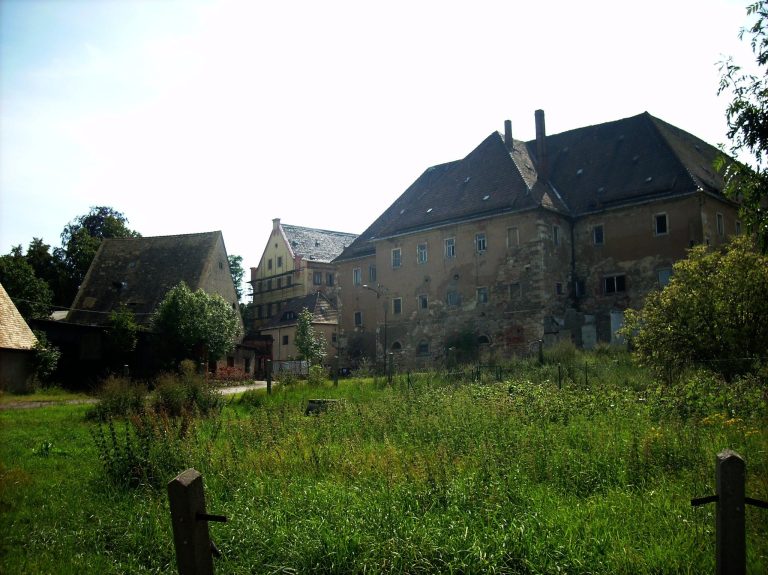
From 1971 to 1991, the castle housed apartments and the headquarters of a state-owned horticultural enterprise. The stable and the gateway through the farmyard were demolished in the early 1970s, and the barn was demolished in 1988 and 1989. After deterioration during private ownership, emergency work to stabilize the roof area was carried out in 2013.
Remains
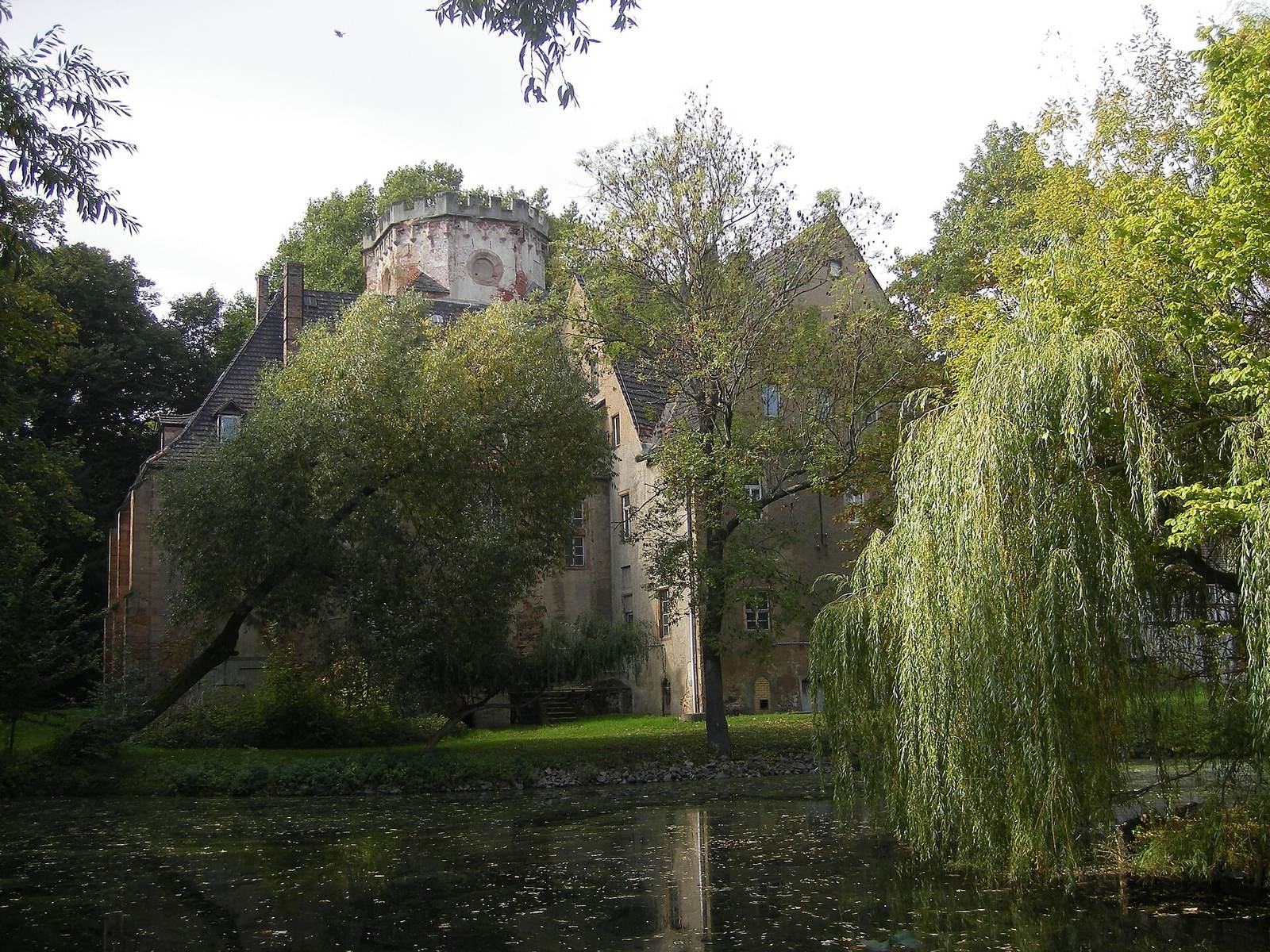
The site brings together the stone-built castle, an estate pond, and a park west of the castle. The park covers approximately 5,000 square metres, while one pond remains after the estate’s two ponds were combined and reduced to one.
Castle
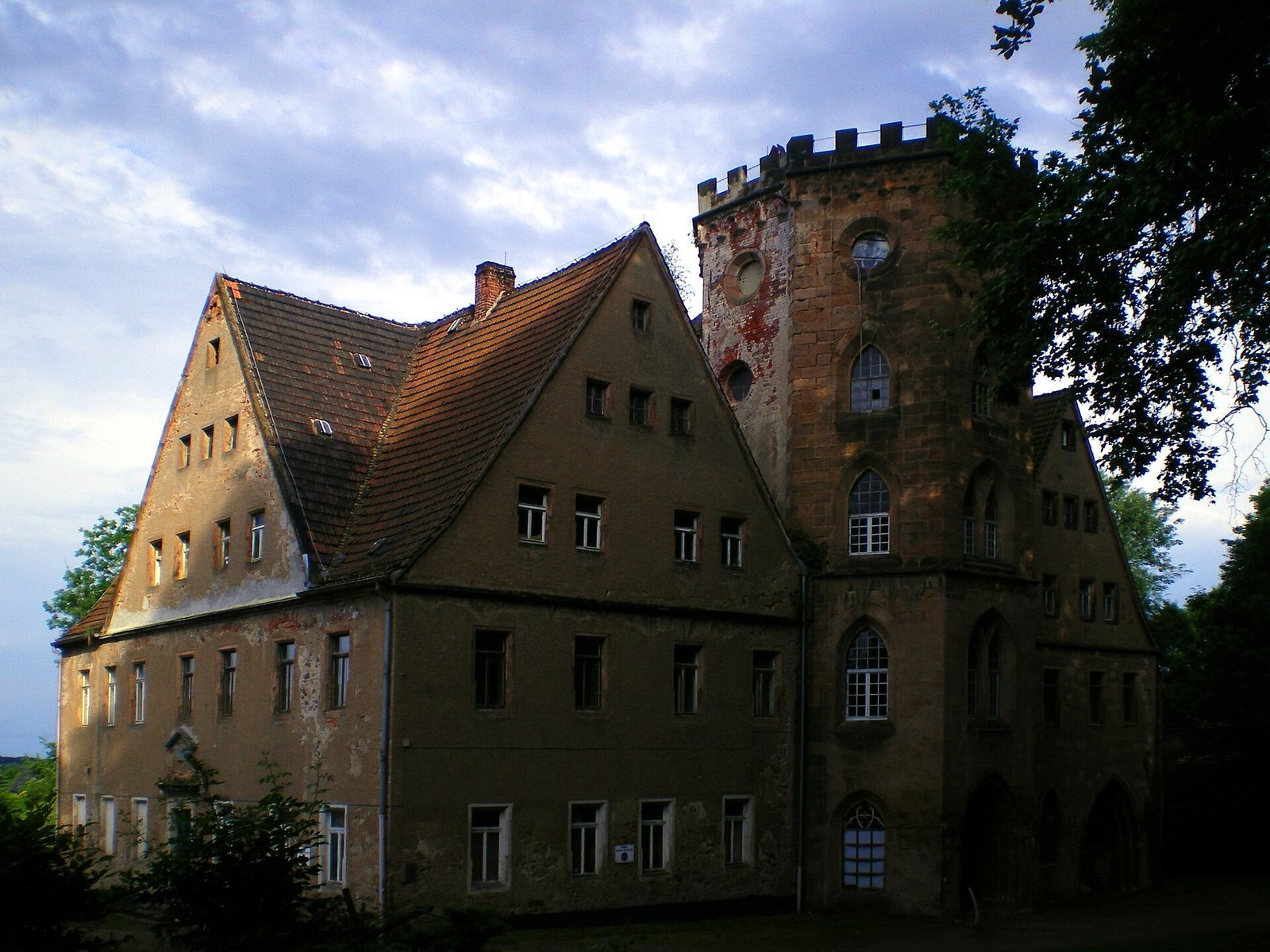
The present castle is built in Renaissance forms. Its south wing, added between 1842 and 1847, is Neo-Gothic, a revival of medieval Gothic architecture. The castle’s Neo-Gothic tower top was removed in 1961 because it had become unsafe. Its living quarters were remodelled in 1903 and 1904.