Pitten Castle: A Medieval Border Fortress and Later Hunting Lodge
Site at a Glance
- Popularity
- Medium
- Country
- Austria
- Primary era
- Early Modern
- Eras represented
- Medieval, Early Modern, Modern
- Civilizations
- Austria-Hungary, Habsburg, Habsburg Austria, Holy Roman Empire
- Site type
- Domestic
- Remains
- Elite Residence
On this page8 sections
History
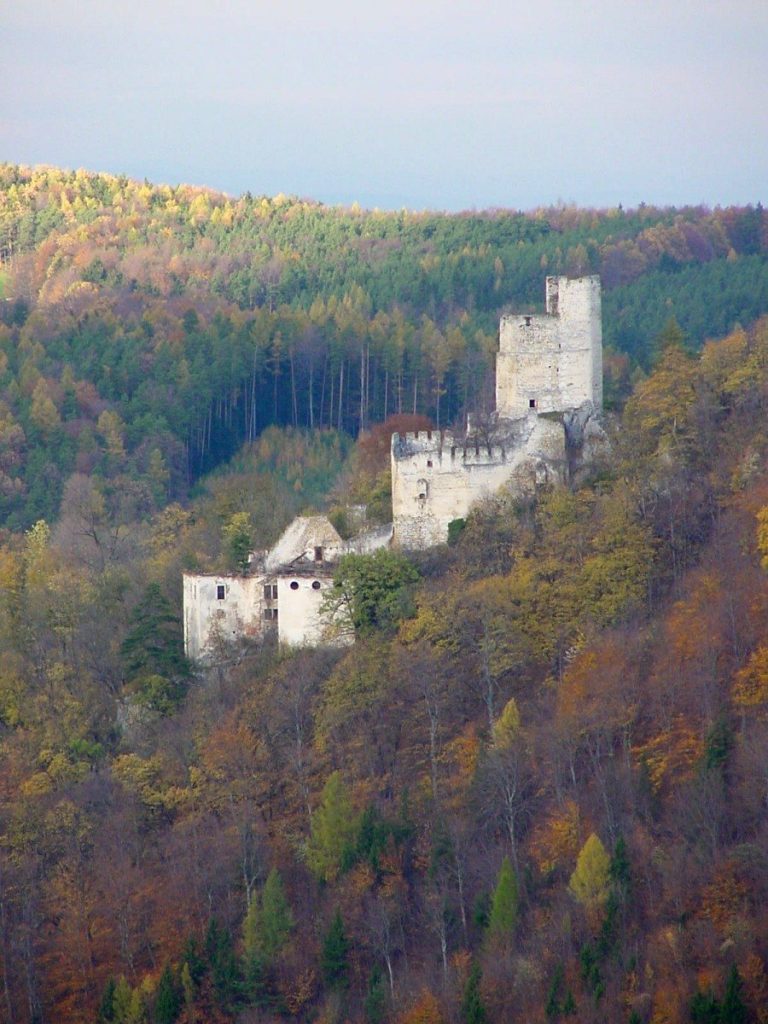
Pitten Castle in Austria is a medieval stronghold, probably established in the mid-11th century on an earlier earthen fortification. Its position helped secure the border with Hungary. A tower surrounded by a moat and wooden palisades had already been recorded at the site in 869.
Early fortification and medieval rule
Magyar, or Hungarian, forces invaded in the early 10th century and withdrew around the middle of that century. The castle is first mentioned in 1094 and also appears in the Nibelungenlied, a medieval German epic poem. From the 12th century, the Counts of Formbach, a medieval noble family, ruled the region and adopted the name Pitten.
After the Formbach line ended, the castle passed to Ottokar III of Styria, a margrave, or frontier ruler, and then to the Babenbergs, a ruling dynasty. When the Babenberg line became extinct, the Habsburgs seized the castle. They governed it directly or granted control to others until the 15th century.
Sieges and rebuilding
The castle was sacked in 1463. In 1482, Matthias Corvinus, king of Hungary from 1458 to 1490, captured and destroyed it after a four-year siege. A local legend tells that, as supplies dwindled, castle administrator Wolfgang Teufel sent Corvinus his remaining hares, bread, and wine to make the stores seem plentiful. Corvinus initially lifted the siege, but destroyed the castle after discovering the deception. In recognition of Teufel’s ruse, he awarded him the Pitten Corvinus Cup, now held by the municipality of Pitten.
The castle was rebuilt and enlarged after Corvinus withdrew. It withstood Ottoman Empire forces during campaigns into central Europe in 1529 and 1683. By the mid-16th century, the Teufel barons owned the property. In the 17th century, the family renovated it and strengthened its defenses, but financial difficulties led them to transfer it to Hans Balthasar Hoyos. It later belonged to the lordship of Frohsdorf, a landed estate and its jurisdiction, and eventually passed to Carolina Bonaparte, Countess of Lipona, Napoleon Bonaparte’s sister and a former queen consort of Naples. By then, the castle was in poor condition.
Conversion and later ownership
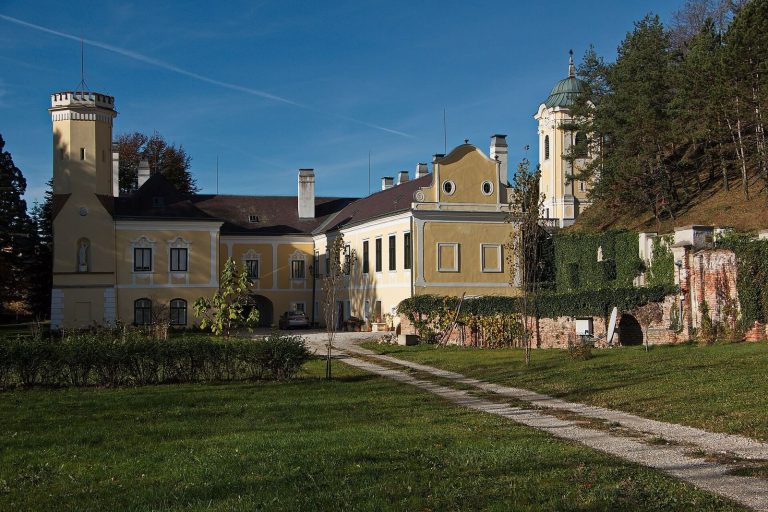
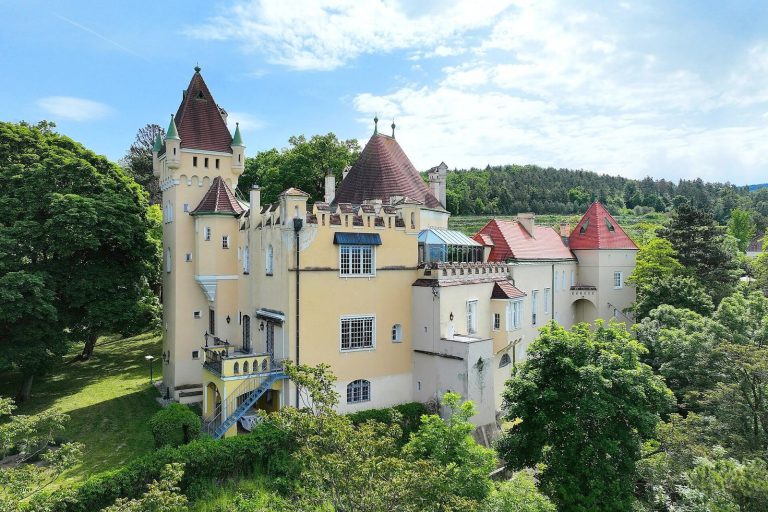
A major conversion around 1840 was followed by an expansion with residential wings in 1884. The former fortress became a hunting lodge, used chiefly as a base for aristocratic hunting parties. The chapel was desecrated after the 19th-century restoration. Ownership passed to the Parma branch of the Habsburg family in 1883, and Prince Don Jaime of Bourbon became owner in 1890. After the castle returned to Habsburg ownership, it was sold into private hands during the 20th century.
Remains
Setting and medieval fabric
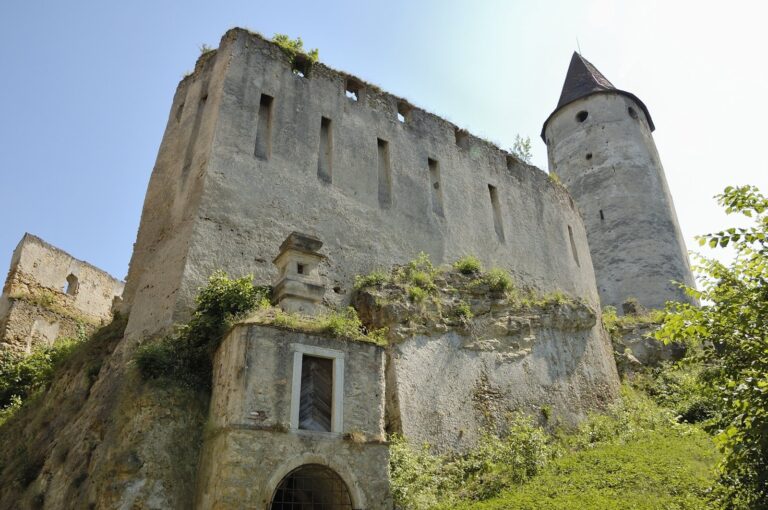
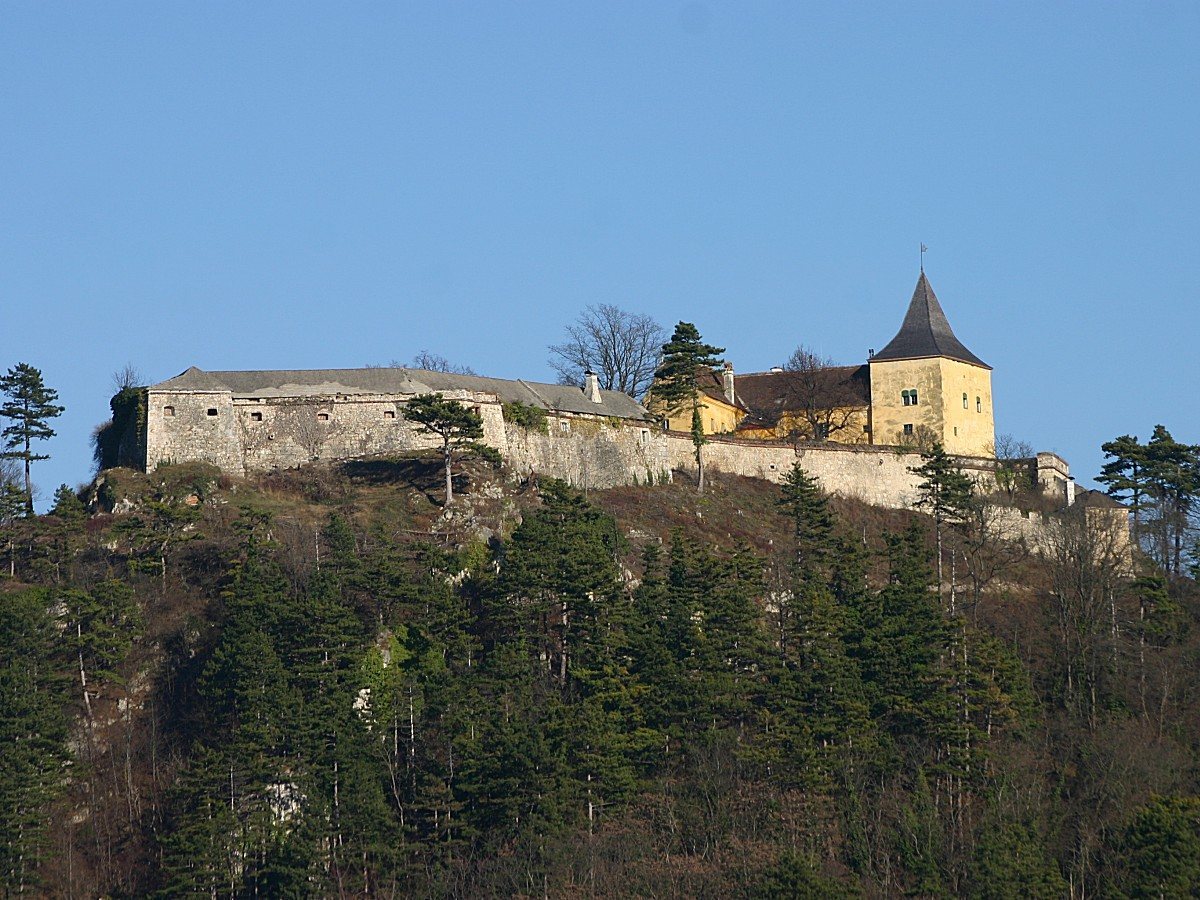
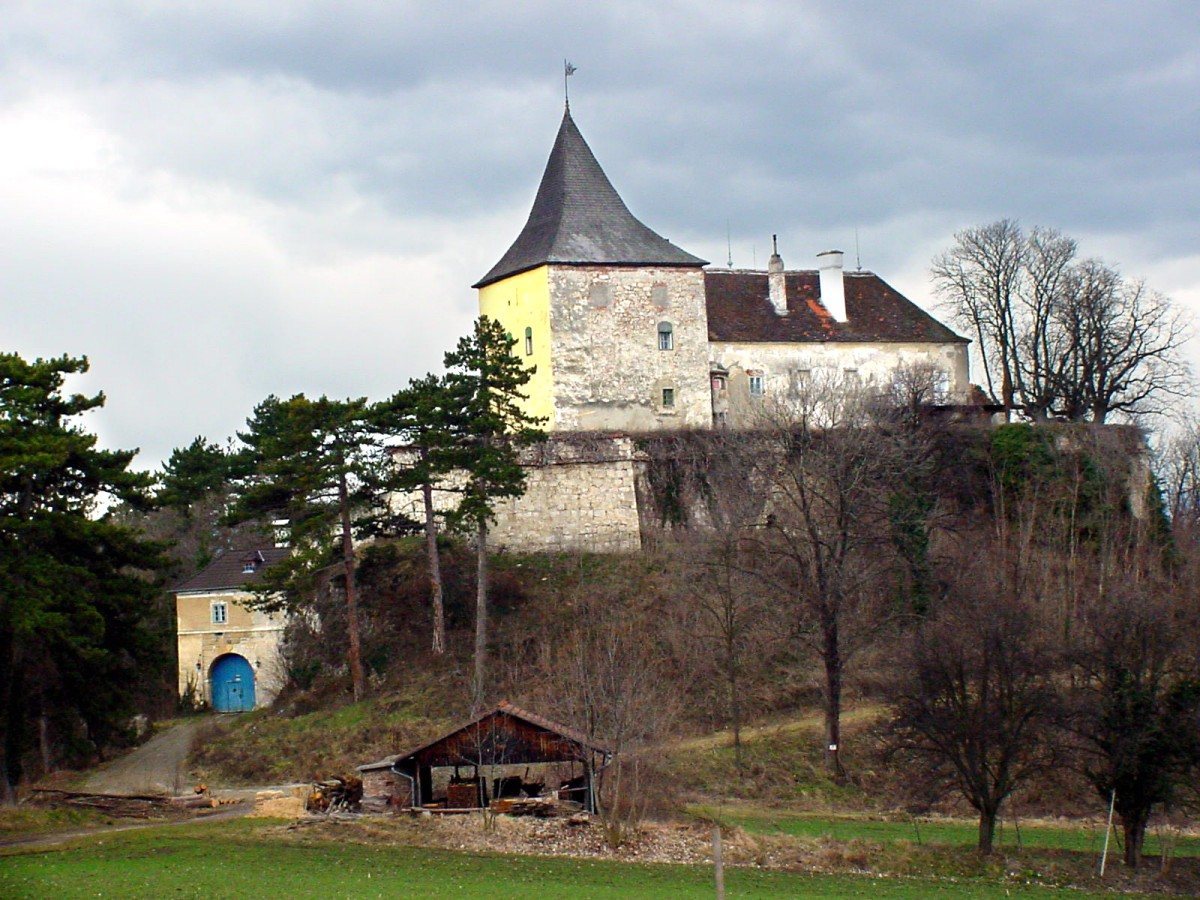
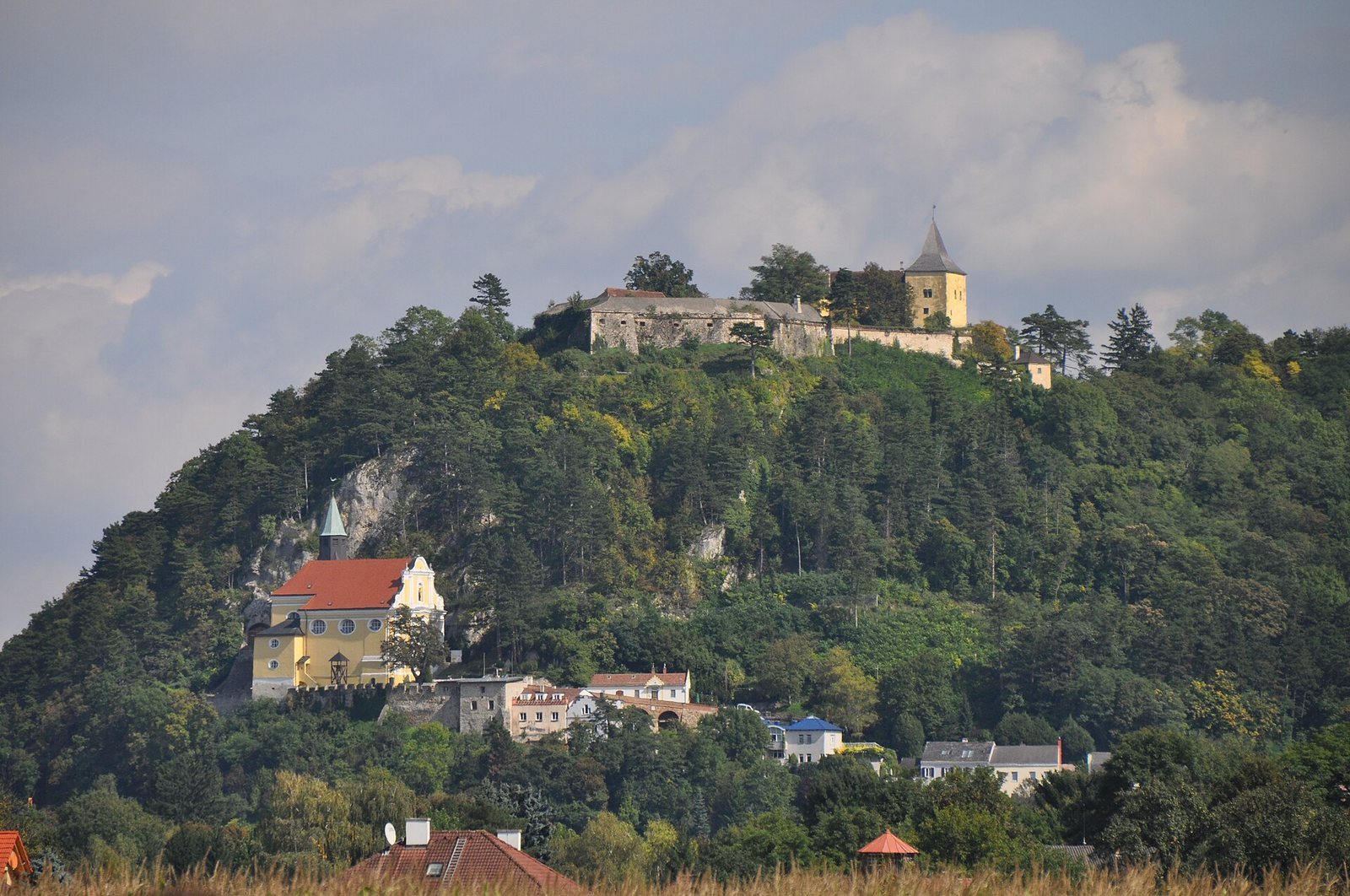
The castle stands on a rocky spur above Pitten’s parish church. Its extensive grounds are enclosed by a perimeter wall with bastions, projecting defensive structures. A section of medieval wall built from carefully cut stone blocks survives on the western side. Historical depictions also show the castle’s earlier form.
Palace and courtyard
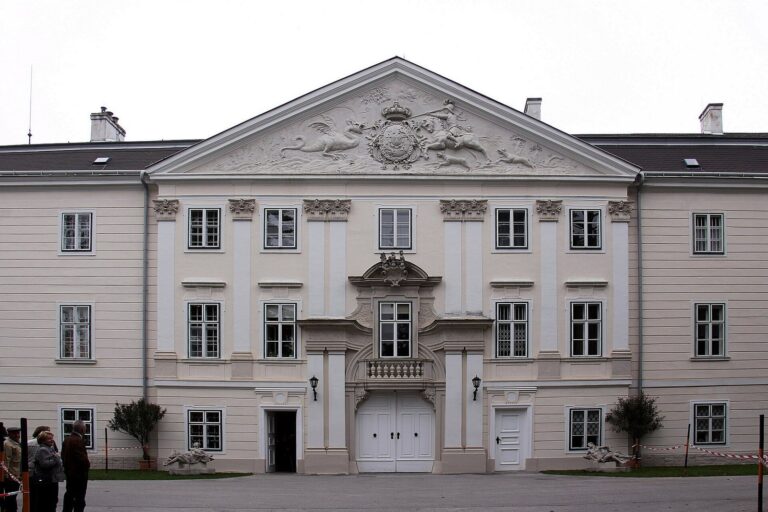
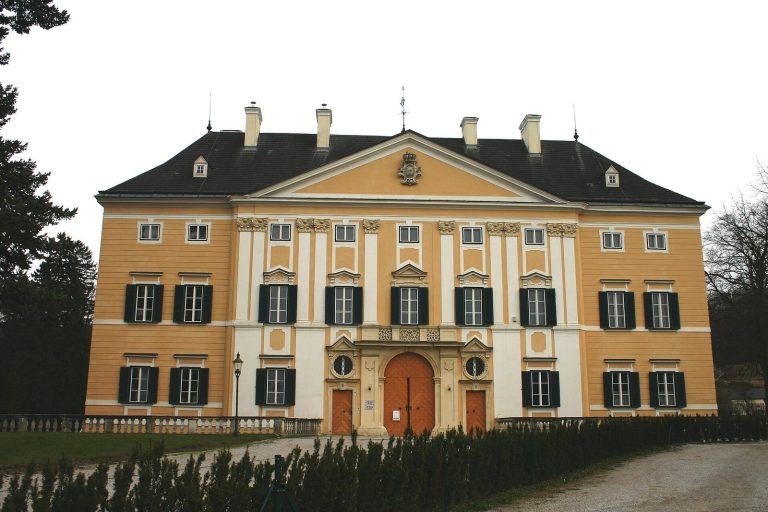
The surviving palace has a Renaissance appearance, reflecting the revival of classical forms that spread through Europe from the 14th century onward. Its main entrance portal bears a coat of arms. A ramp leads into a large inner courtyard, where a small chapel stands. The chapel was first dedicated to Saint Catherine and later to Saint Mary.
Hand-dug well
Johann Christoph Teufel, Baron of Gundersdorf (1567 to 1624), commissioned a well that was dug by hand to a depth of 140 metres. Gunpowder was not yet used for blasting when the well was sunk.